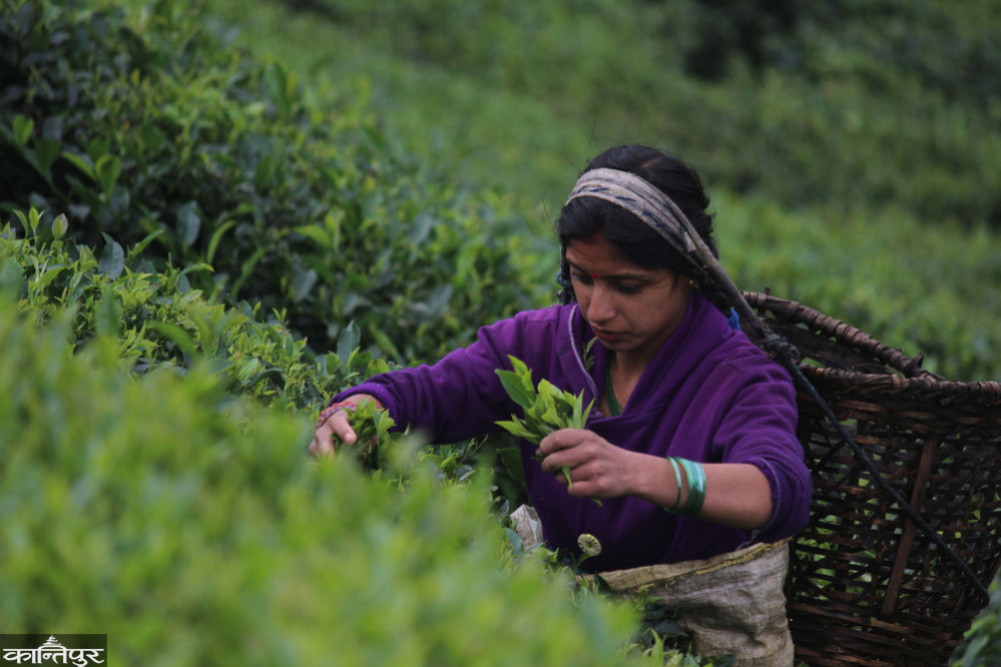
Nepali tea exports have been hampered again after the Tea Board of India reached a warehouse in Kolkata and began collecting samples and testing them.
We use Google Cloud Translation Services. Google requires we provide the following disclaimer relating to use of this service:
This service may contain translations powered by Google. Google disclaims all warranties related to the translations, expressed or implied, including any warranties of accuracy, reliability, and any implied warranties of merchantability, fitness for a particular purpose, and noninfringement.
India has resumed restrictions on tea exports, which were eased on June 20 after a three-week ban.
Tea entrepreneurs say that the traders have started stopping exports after the Tea Board of India (TBI) reached the importer's warehouse and started collecting tea samples for laboratory testing.
According to the traders, samples of each bag of Nepali tea consignments that have reached Kolkata, India, have been collected and sent to the laboratory for testing. They have been instructed not to sell or distribute tea until the test report is received.
Earlier, on April 18, the Tea Board of India implemented a new 'Standard Operating Procedure' (SOP) for tea going to India from Nepal, making it mandatory for laboratory testing, and exports were halted for 21 days. After widespread protests, the Indian side gave written information that it would only do 'random sampling' without testing each truck, and exports resumed.
But now that the samples have been tested at the warehouses again, businessmen are confused, said Shiva Kumar Gupta, senior vice-president of the Nepal Tea Producers Association. ‘After the samples have been collected at the warehouses, the traders are hesitant to buy tea,’ said Gupta. ‘The board’s intention is clear that Indian traders should not buy Nepali tea.’
According to Gupta, samples are collected from each bag of tea sent to the warehouse as soon as it reaches the warehouse and sent to the laboratory. They have been asked to stop selling until the report comes. This is why businessmen have stopped submitting forms for new exports.
According to him, even after more than a week since samples were collected from more than half a dozen trucks that reached Kolkata, most of the reports have not been received. About 50,000 kg of Nepali tea is currently stuck in the Indian warehouse.
Earlier, the Indian Tea Board had also implemented a system requiring importers to submit information including the date of arrival of tea, warehouse address, container details and proforma invoice on the ‘Tea Council’ portal before the tea reaches India. Nepali businessmen have been interpreting this as a non-trade barrier.
According to Indra Adhikari, Agriculture Officer at the Birtamod Regional Office of the Nepal Tea Development Corporation, Nepal produces about 26 million kg of tea annually. Out of this, about 90 percent of orthodox tea is exported, while 80 to 90 percent of the exports depend on the Indian market.