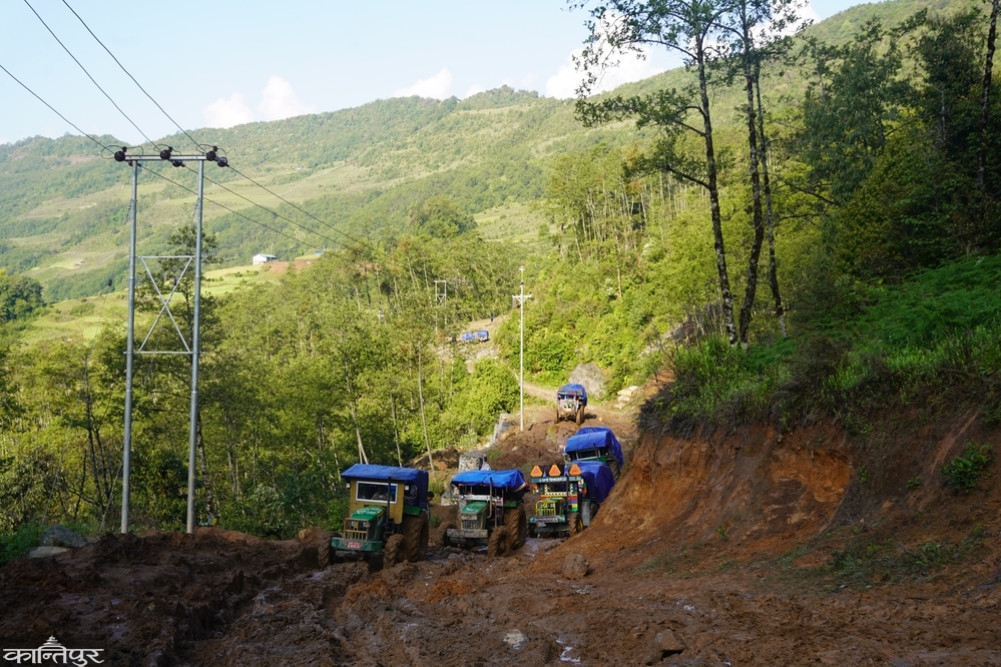
It is claimed that the road not only connects the Himalayas and the Terai, but also lays the foundation for potential economic relations between India and China.
We use Google Cloud Translation Services. Google requires we provide the following disclaimer relating to use of this service:
This service may contain translations powered by Google. Google disclaims all warranties related to the translations, expressed or implied, including any warranties of accuracy, reliability, and any implied warranties of merchantability, fitness for a particular purpose, and noninfringement.
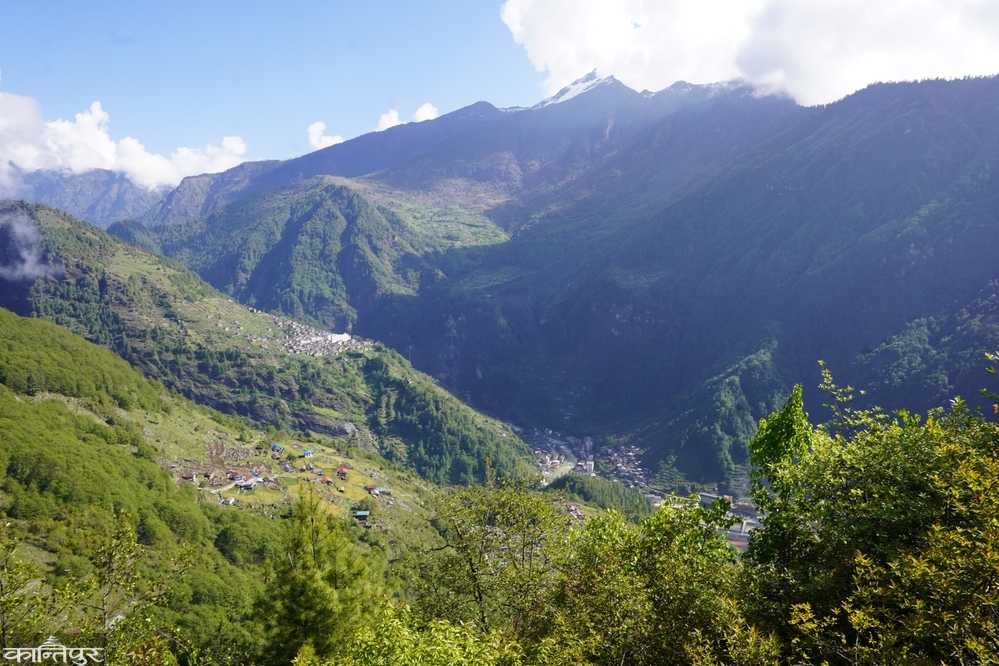
Kimathanka in Sankhuwasabha is one of the most remote mountainous settlements in eastern Nepal. This village, which borders China, was for a long time out of reach of the state. The lack of roads, transportation, and basic services made life difficult here.
Now the situation has changed. The shortest route connecting India and China, which starts from the Jogbani border crossing in Bihar, India, has been connected. This road has paved the way for connecting not only the Himalayas and the Terai, but also the potential economic relations between India and China.
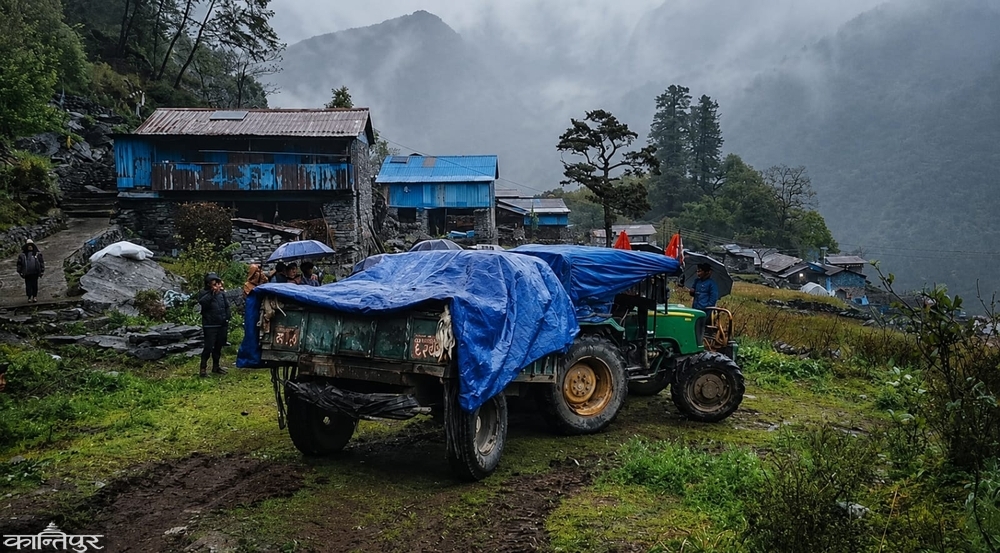
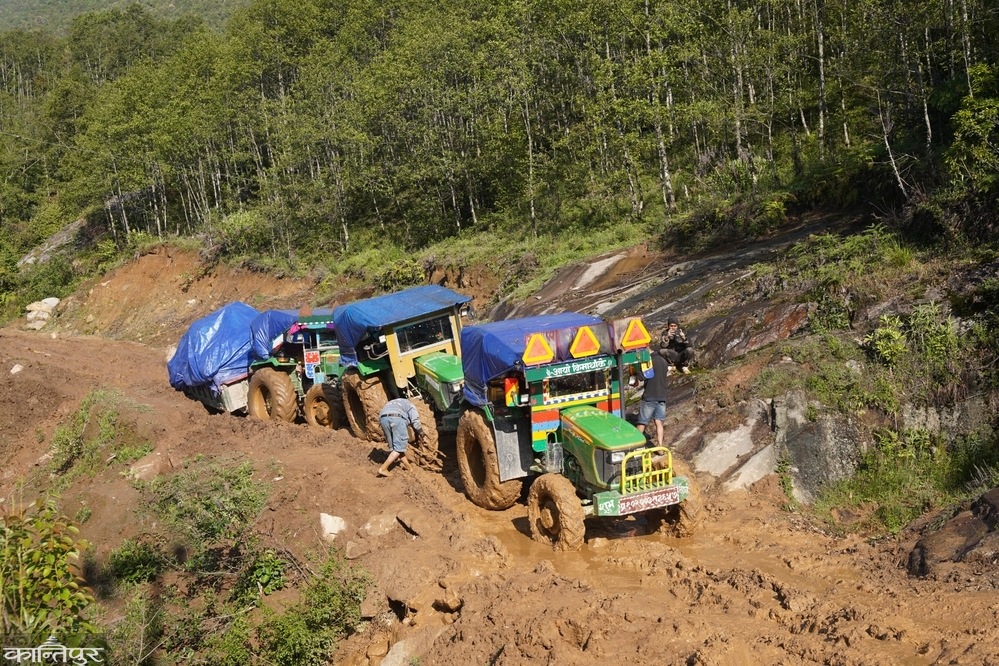
The Bhotkhola area, which was considered limited to the country's map for decades, is directly connected to the national road network. With the opening of the road track in the Khandbari-Kimathanka section, tractors carrying food reached Kimathanka for the first time last Saturday. Bhotkhola Rural Municipality Chairman Wadchhedar Bhote said that when a vehicle reached the remote mountainous village for the first time, the locals felt like they had entered a development village.
The Jogbani-Kimathanka road is seen as the 'Koshi Corridor'. It is a north-south highway in eastern Nepal, connecting the Indian state of Bihar with the Chinese (Tibet) border. This route, which passes through Biratnagar, Dharan, Dhankuta and Khandbari, is also seen as a future strategic trade corridor. The Koshi Corridor is not only a road transport route but also a project with the potential to become a 'land bridge' between two large neighbors, India and China.
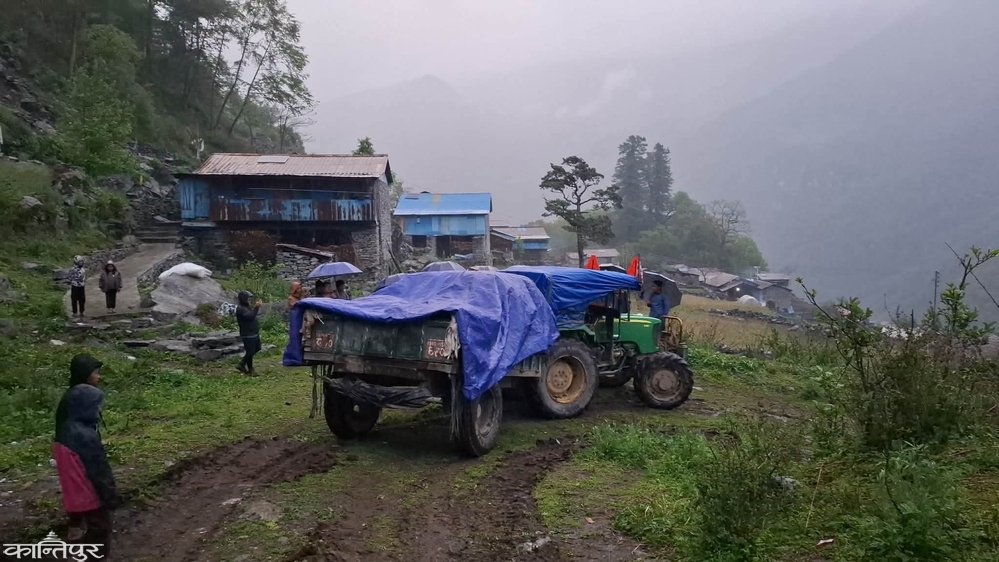
So far, Nepal's international trade and transport have been mainly focused on India. Industrialists and businessmen say that after the Koshi Corridor comes into operation, Nepal has prepared an alternative basis for expanding alternative trade access. If this road is fully upgraded and becomes operable all year round, industrialists and businessmen of Biratnagar expect that transportation time and cost will be reduced, exports and imports will become easier, and it will help in expanding industry, investment and employment. Economist Bedraj Acharya said that this corridor will open up new possibilities for Nepal, which has no access to the sea, to reach the international market.
If it can be developed as a short trade route, especially between India and China, in the future, Nepal can establish itself as an important 'transit country' in the trade network of South Asia, Acharya said. Industrialists and businessmen of Biratnagar have started seeing this road not only as a local access route but as a strategic economic corridor of the future.
With the expansion of the Jogbani-Kimathanka road, industrialists and businessmen of eastern Nepal can directly benefit, said Navin Rijal, former president of the Morang Industry and Trade Association. According to him, if this border is developed as a Nepal-China trade route, Nepal can reap huge economic benefits. ‘This border crossing is easier and cheaper than importing goods from China via Tatopani or the Indian route,’ says Rijal. ‘Not only Nepal, but also China and India can benefit from this route.’ If the road is fully upgraded and becomes operational throughout the year, Eastern Nepal can become an alternative transit route for India-China trade, he said.
Entrepreneur Mahesh Jaju says that this road network can bring great benefits to the Koshi region in the tourism sector. He believes that the local economy will be buoyed by the increase in tourist arrivals. ‘Currently, we are importing goods from China via Tatopani, Kerung and the sea route from Kolkata,’ says Jaju. ‘If we can import through the Kimathanka border crossing, the cost can be significantly reduced. This route can prove to be a boon for us.’
According to industrialists, the Biratnagar-Jogbani region is currently the center of production, import and transportation. If an environment is created for cross-border trade to operate from Kimathanka, cities like Biratnagar, Itahari and Dharan can further develop as industrial centers.
Koshi Province's economy has long been focused on the Terai. 'Now that the road reaches the Himalayas, agriculture, herbs, tourism and cross-border trade can be connected in a single economic corridor,' said Pawan Kumar Sharda, President of the Confederation of Nepalese Industries, Koshi. 'The country can benefit considerably from this.'
According to economists, the road can have the fastest impact on the tourism sector. With easy access to the Makalu Himalayas, Makalu-Barun National Park, Arun Valley and the mountainous settlements of Bhotkhola through Kimathanka, there is a possibility of opening a new route for adventure tourism. Once the road reaches areas that had to be reached by foot or helicopter until now, domestic and foreign tourists will automatically be attracted. 'If we can connect the Tibetan culture, Himalayan lifestyle and natural beauty of the Bhotkhola region with tourism, it will have a direct impact on the local economy,' said economist Acharya.
Roads are not just a line connecting one point to another, but also a basis for changing people's lives. 'Jogbani-Kimathanka road is a milestone for Koshi Province. We should take maximum advantage of it,' he said.
Bhote, Chairman of Bhotkhola Rural Municipality, said that the operation of the road has made it easier to transport local products to the market. Potatoes, millet products, herbs and other agricultural products produced in the Himalayan region can now reach the markets of the Terai. It is hoped that consumer goods from the Terai will reach the Himalayan region at a cheaper price.
'Earlier, it was very expensive to transport goods,' says Bhote, 'now, daily consumer goods can reach cheaply and local products can be sent to the Terai.' According to locals, the biggest problem due to the lack of roads was health services, education and emergency rescue. Now, the compulsion to walk for hours carrying patients will gradually end.
However, economic prosperity does not automatically come with the opening of the road. Economist Acharya says that if cross-border trade policy, customs infrastructure, an investment-friendly environment and a production-oriented economy are not developed, there is also a risk that this road may become just a 'travel route'. 'The road itself is not development, but the basis for development,' says Acharya, 'now the key is how the state connects it with economic activities.'
So far, the economy of Koshi Province has been mainly focused on the East-West Highway. After the operation of the North-South Koshi Corridor, economic activities are expected to expand from the Terai to the Himalayas. In particular, there is a possibility that the Sunsari-Morang industrial area, Dhankuta-Khandbari Pahari Bazaar and the Kimathanka border area can be connected to a single economic chain.
If the government can expand formal cross-border trade with China through the Jogbani-Kimathanka border crossing, this route can develop as a new trade center for Koshi Province. For now, this road has only brought a sense of development to the Himalayan settlements that have been neglected by the state for decades.