40 industries with an investment of 70 billion and 10,000 jobs at risk
We use Google Cloud Translation Services. Google requires we provide the following disclaimer relating to use of this service:
This service may contain translations powered by Google. Google disclaims all warranties related to the translations, expressed or implied, including any warranties of accuracy, reliability, and any implied warranties of merchantability, fitness for a particular purpose, and noninfringement.
The Supreme Court has cleared the way for the removal of industries and factories within 15 kilometers of the site, saying that the development work that threatens the existence of the Buddha's birthplace, which is listed as a World Heritage Site, cannot be accepted. The Supreme Court has made public the full text of the verdict of 11 Bhadra 2082 on Tuesday, not only raising questions about how it will be implemented, but also worrying investors in industries and factories here.
It is seen that the implementation of the Supreme Court's order will directly put 40 industries with an investment of about 70 billion rupees in the area and the employment of more than 10,000 people involved in it at risk. Senior advocate Prakash Mani Sharma had filed a writ petition on 13 Chaitra 2075, claiming that the construction of structures indiscriminately at the Buddha's birthplace has affected the archaeologically important site listed as a World Heritage Site. As soon as the Supreme Court issued the full text, the Directorate of Judgment Implementation, the Prime Minister's Office, the Government of Nepal, which is the respondent in the writ, has sent letters to the industry operators in the area for the implementation of the verdict.
Writ petitioner Sharma said that the letter for implementation of the verdict has been sent through the Attorney General's Office, so it should be implemented as soon as possible. "Since the Supreme Court has made the full text public, implementation should start immediately," he said.
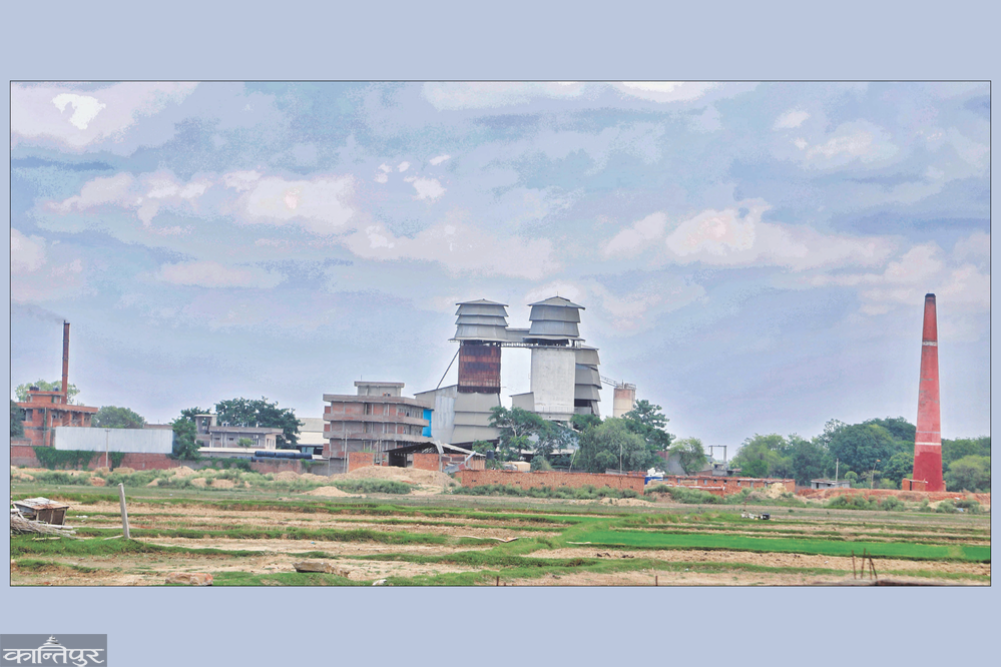
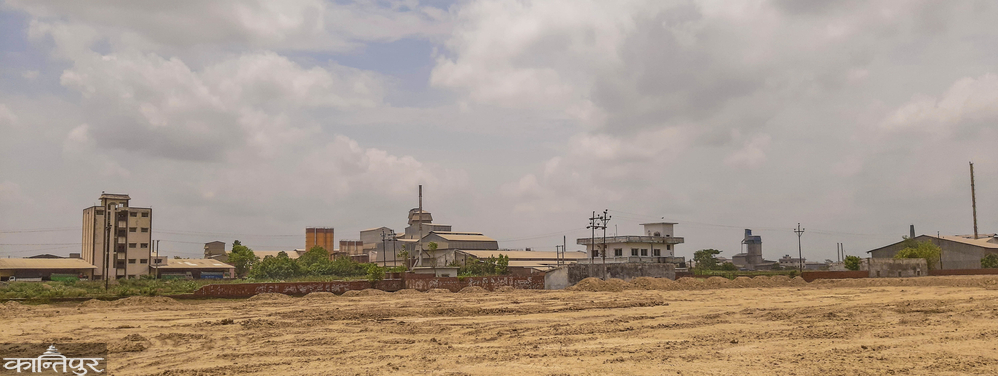
There are 40 industries including 11 cement, two steel, one plywood, refinery, brick kiln and Kutanipisani in the Lumbini Corridor, which is spread over an area of 20 kilometers, from Mayadevi Bethari to West, Sundi, in the north and south. According to the Siddhartha Chamber of Commerce and Industry, Bhairahawa, these industries, which have an investment of around Rs 70 billion, are providing employment to about 10,000 people. If the Supreme Court's verdict is implemented literally, businessmen are concerned that all industries will be affected.
In the fiscal year 2024/25 alone, 1.462 million Nepalis, 570 thousand Indians and 252 thousand tourists from other countries visited Lumbini, which is on the World Heritage List. The issue of not only heritage sites but also tourists being affected by pollution from industries and factories around Lumbini came up for public debate 12 years ago in 2014. At that time, an international Buddhist conference was held in Lumbini with representatives from 32 countries. The declaration issued by the conference called for stopping the pollution from industries located here on Lumbini's heritage sites.
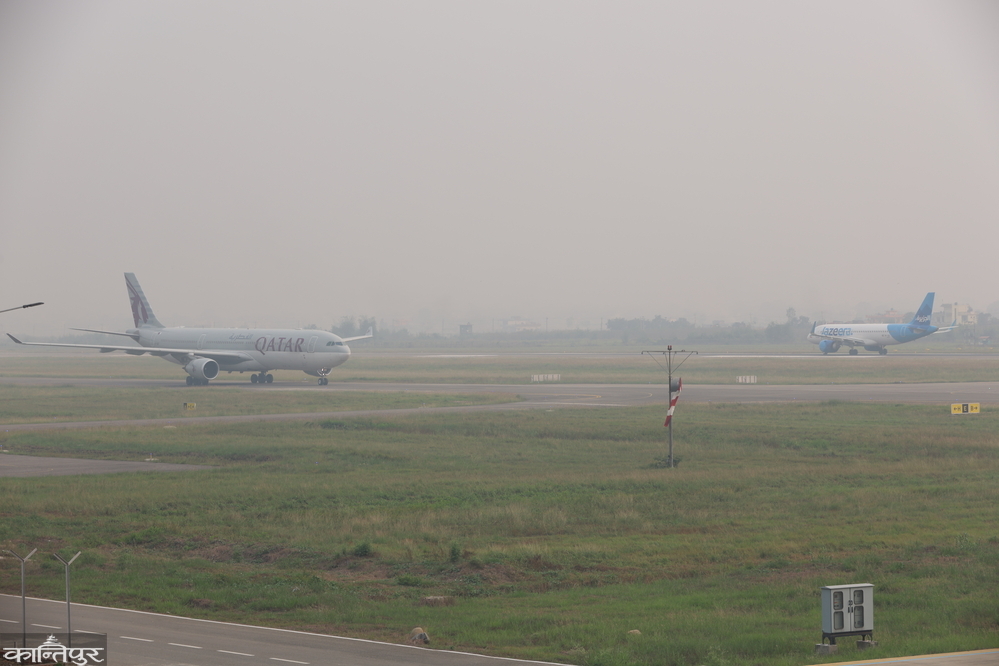 According to Gyanin Rai, Senior Director of the Lumbini Development Fund, the Lumbini Development Fund had written a letter to the United Nations Environment Program (UNEP) under the United Nations Headquarters in Nairobi, Kenya, in February 2011, stating that pollution was affecting Lumbini's archaeological heritage. Immediately after that, representatives from the regional office in Bangkok, Thailand, came to Lumbini and conducted an environmental study.
A bench of Supreme Court Justices Kumar Regmi and Sunil Kumar Pokharel has issued a four-point order, arguing that the environment, archaeological importance, and the protection of the Lumbini area on the World Heritage List are important. The full text states that even in the case of industries registered within 15 km of the Lumbini Development Fund but not yet operational, such industries should make necessary pollution control arrangements before operating the industry so that they remain within the prescribed environmental pollution standards and conditions. ‘The decision to relocate industries that do not comply with the prescribed standards and conditions within the given time period had already been made, but since it has not been implemented, it seems that it should be tightened,’ the full text states.
The full text states that all activities, correspondence and decisions taken by the Department of Industries or the Government of Nepal, the Provincial Government or the Local Government or their subordinate bodies to establish industries contrary to the aforementioned decision taken by the Industrial Promotion Board on 12 Mangsir 2066 for the protection and promotion of the Lumbini area will be nullified by the order of the dispatch. The industries established in this corridor area have a history of at least three to four decades. The government itself had given permission because it was convenient for establishing industries in this corridor, which is 25 km from the Nepal-India border.
Due to its convenient infrastructure and border area, industrialists have been investing in new industries over time. This corridor area with industries falls in Mayadevi Rural Municipality. Municipality Chairman Dhruv Narayan Chaudhary said that there are 9 cement industries within the municipality. He informed that apart from cement, there are industries like food, plywood, yarn, refinery and others in this area. According to him, there are industries and big hotels in Mayadevi-3, 4, 5, 7 and 8 wards.
‘Since we are close to Lumbini, we want the birthplace of Buddha not to be affected,’ he said. ‘On the other hand, we also believe that the investment of the industry should not sink and the locals should not lose their jobs.’ He said that the investment should be protected from being at risk even if it is by compensating the industrialists. ‘In the event that the industry has to be demolished, many locals will lose their jobs,’ he said. ‘The federal government should organize these industries in a safe place.’
The Supreme Court’s decision did not mention only the issue of industries. The impact of the heavy use of the road by trucks to supply cement raw materials and transport the produced cement from the area to the market has also been included as an issue affecting the appearance of the area. ‘Since only 19 tons can be loaded in a truck, 83,500 to 167,000 truck trips are used in a year to transport the raw materials and products,’ the judgment states. ‘In this way, 225 to 450 trucks usually ply the road in a day.
 The movement of such a large number of trucks with heavy loads has caused difficulties in traffic management in the area and the trucks have completely damaged the road.’ Similarly, the judgment also states that a large amount of smoke and dust is emitted from the vehicles plying there while transporting raw materials and exporting the products.
‘When the world recognizes Nepal as the birthplace of Gautam Buddha, a world heritage site like Lumbini is a common heritage not only of Nepal and Nepalese but also of the entire human civilization, so the world community has equal interest and responsibility in its protection,’ the full text says, ‘It is unacceptable to endanger the existence of world heritage sites in the name of industrial development. Such heritage sites provide living evidence of our history, culture, civilization and identity and form the basis for connecting future generations with the past.’
Krishna Prasad Sharma, outgoing president of the Lumbini Province of the Federation of Nepalese Chambers of Commerce and Industry, said that despite the Supreme Court’s order, the process of industrial relocation has not started. He said, ‘There has been no discussion on how the industry can be removed.’ He said that if carbon-emitting industries are banned, the standard and star hotels currently being built in the Lumbini corridor will also be in crisis. Currently, half a dozen standard hotels, including one five-star, have come into operation in the corridor, and many industries in the corridor have already installed pollution-reducing devices after the issue of pollution was raised, he said.
Senior industrialist Rajesh Kumar Agrawal says that old industries should be given a chance to control pollution by setting a time limit. ‘Pollution control standards should be implemented,’ he said, ‘only industries that do not comply with the standards should be removed.’ He says that since the relocation of industries is not possible, there is no option but to close them.
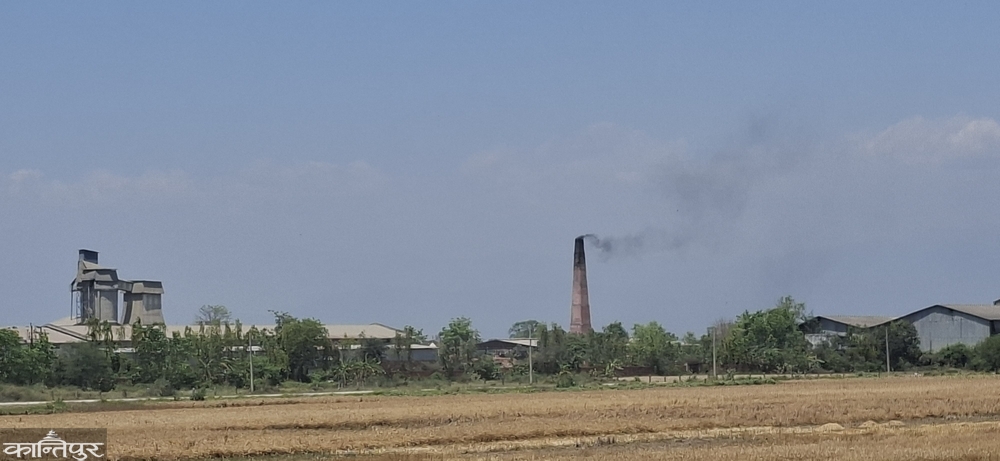
Many industrialists are investing in the Bhairahawa-Parasi corridor after it is risky to set up new industries in the Lumbini corridor. According to the Federation of Nepal Brick Industries, there are 20 brick kilns around Lumbini. According to the Federation’s central co-treasurer Ajay Kumar Gupta, at least 3 to 400 workers are getting employment in each industry. He said that if the Supreme Court’s order is to be fully implemented, the brick industry should be closed. He said, ‘If the decision is implemented without thinking, investors will drown.’
 Thakur Prasad Shrestha, President of the Lumbini Province of the Federation of Nepalese Chambers of Commerce and Industry, said that the government should move forward sensitively while implementing the court’s order. He says that the government should move forward by listening to the problems and pains of industrialists and businessmen, not only the court. ‘Lumbini is our jewel,’ he said, ‘but it is not good to displace industrialists in the name of Lumbini.’
He said that the court order will not only affect industrialists but also lose employment opportunities. He believes that the problem will worsen as the investment made by the bank in the industry is also at risk. He suggested that it would be better to do it only by providing compensation in case of relocation.
Netra Prasad Acharya, President of Siddhartha Chamber of Commerce and Industry, Bhairahawa, said that the state’s decision to establish industries and then remove them would not send a good message. However, if the court’s decision has to be implemented, he said that compensation should be provided and relocation should be done.
On the one hand, industrialists are saying that they will lose jobs and face investment crisis, while on the other hand, Lumbini’s historical heritage is facing crisis due to the industries operating here. In 2015, the Ministry of Science, Technology and Environment conducted a study on the environmental condition and pollution of Lumbini, concluding that the air here was toxic due to the smoke emitted by industries and that it was affecting the heritage. Rai, Senior Director of the Lumbini Development Fund, said, “The study has confirmed that pollution has affected the archaeological heritage of Lumbini.”
Immediately after the writ petition was filed in the Supreme Court on Chaitra 13, 2075, a committee was formed in Bhadra 2077 under the coordination of Yagyanath Dahal, Joint Secretary of the Ministry of Forests and Environment, to conduct an on-site study of the condition and status of industrial operations around the Lumbini Protected Area. The committee measured air pollution from 11 cement, two steel, one plywood, refinery and brick industries in the corridor and concluded that the amount of substances and water emitted from industries near the Lumbini Development Fund premises did not meet the standards.
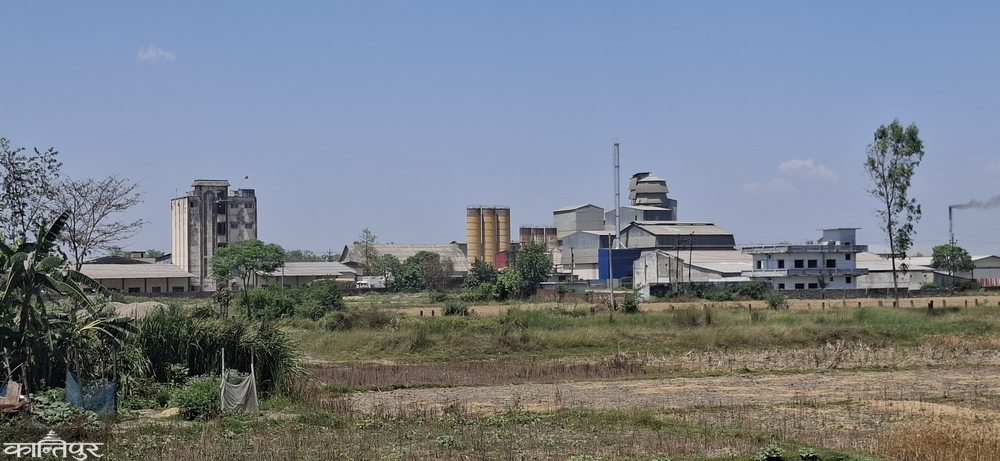 The study committee measured the distance of the industry from the Lumbini Protected Area, air quality, and the total amount of dust particles in the air, TSP (Total Suspended Particulate) PM 2.5, PM 10 as prescribed by the Government of Nepal. Similarly, waste and water emitted from the industry were collected and tested. In addition, the noise pollution of the industry was also measured. The technicians on the study committee studied the pollution control devices installed in the industry, the wastewater treatment plant of the industry, the boilers and chimneys installed in the industry, and other technical aspects.
Senior archaeologist Vasant Bidari says that the heritage area is being affected due to increasing pollution and harmful particles. He says that the Ashoka Pillar, which is considered the most important heritage, is weakening due to this pollution. In 2070, UNESCO consultant and stone expert Constantino Meucci conducted a detailed study of the pillar. In which, pollution from sulfur and smoke was seen on the outer area of the pillar. "Pollution is now twice as high as it was then, and the impact will only increase," he said.