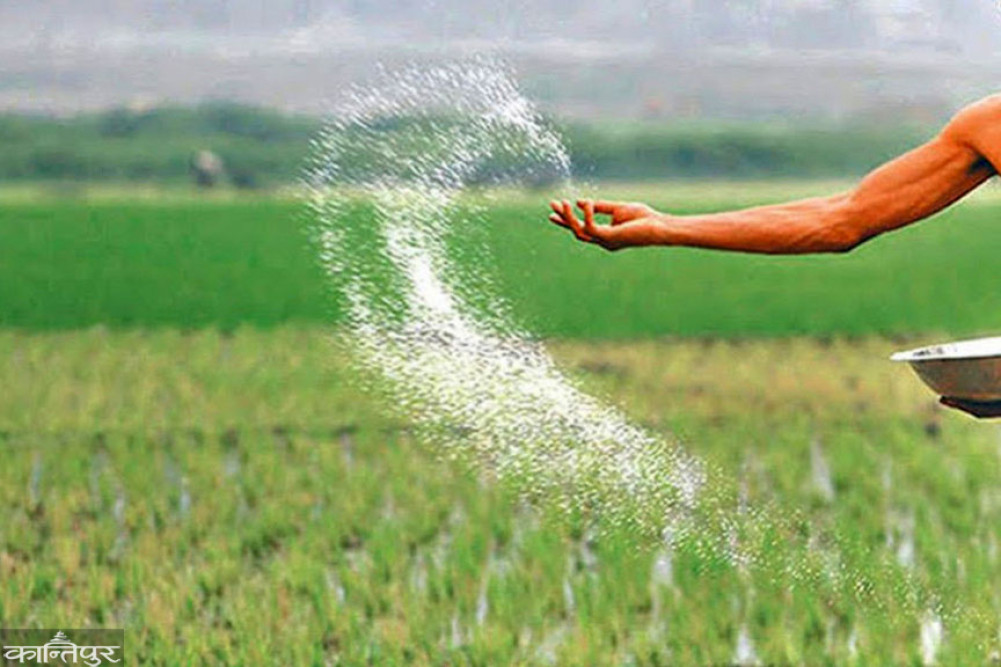
With global price increases, supply disruptions, and the end of the agreement with India, the risk of a major fertilizer shortage in Nepal has increased, with production expected to decline and food prices expected to rise.
We use Google Cloud Translation Services. Google requires we provide the following disclaimer relating to use of this service:
This service may contain translations powered by Google. Google disclaims all warranties related to the translations, expressed or implied, including any warranties of accuracy, reliability, and any implied warranties of merchantability, fitness for a particular purpose, and noninfringement.
The impact of the chemical fertilizer crisis caused by the ongoing tensions in West Asia has already begun to be felt in the US and Europe. The main crop planting season is underway in the US and Europe. Its impact is also seen in Nepal during the first crop planting season that will begin within the next few months.
Even after a month of tensions in West Asia, there is no sign of the situation calming down. Experts say that if the import of chemical fertilizers is completely blocked, it could lead to a decline in production and crop failure.
Despite a partial improvement in supply, Nepal does not seem to be able to purchase sufficient quantities of fertilizers due to rising costs. Low production is certain to increase food prices sharply next year.
Iran has set limits on shipping through the Strait of Hormuz. About 20 percent of the world's oil and one-third of fertilizer trade are carried through this sea route. As a result, shipping rates are increasing day by day.
China, the world's largest producer of nitrogen and phosphate fertilizers, is currently prioritizing domestic supply. Due to this, the possibility of urea shipments resuming immediately is low. Paddy sowing in Nepal usually takes place in Ashar and Shrawan. The new government is currently under great pressure to manage essential chemical fertilizers and agricultural inputs.
According to the Ministry of Agriculture and Livestock Development, there is currently 137,663 tons of fertilizer in stock. It is safe for the upcoming paddy sowing. The ministry has said that an additional 45,000 tons of fertilizer are on the way and will arrive in Nepal within a few weeks. If farmers do not use it in other crops such as maize, about 183,000 tons of fertilizer will be available during the main time of the upcoming paddy sowing. But at least 250,000 tons of fertilizer will be required during the three-month paddy sowing period.
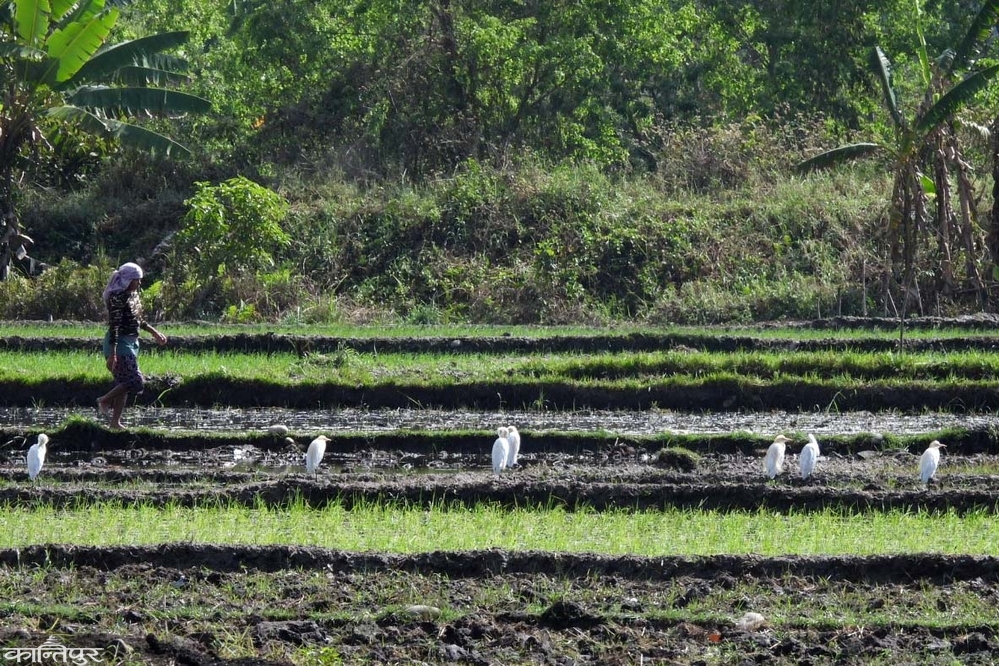 Even if Nepal invites bids for 90,000 tons of imports and makes an agreement, it will be difficult to import fertilizer due to supply disruptions and price increases, government officials say. Even if an agreement is reached for fertilizer imports, it will take time for the country to import fertilizer, says Bishnu Prasad Pokharel, managing director of an agricultural materials company. “Fertilizer producing companies in West Asia are closed, citing ‘force majeure’, and fertilizer supply is delayed even as per the agreements already made,” he said.
Sanket Bhattarai, assistant chief executive officer of the ‘Salt Trading Corporation’, which supplies 30 percent subsidized fertilizer to the government, said that there is a difference of up to $400 per ton in the prices quoted by suppliers. “Due to the difference in prices, the possibility of suppliers transporting fertilizer on time is very low,” he said.
Even if the corporation invites new bids with revised rates due to price volatility in the international market, it is not certain whether the supplier company will come or not. Bhattarai said that the price of urea was $519 per ton earlier, but now it has reached $900 including transportation costs.
According to the ‘free on board’ condition, the supplier takes responsibility for completing all the export processes and loading them onto the ship, the price of fertilizer has reached $850 per ton. Therefore, there is a gap of more than $330 per ton between the contract rate and the current factory price, which has led to a situation where the supplier has to bear a loss of more than $300 per ton.
Experts say that suppliers often back out of contracts when prices fluctuate. When prices rise sharply, they consider it advantageous to let the ‘performance bond’ (deposit amount) be forfeited instead of delivering the goods at a loss. In 2019-20, when fertilizer prices were high, 7 out of 10 suppliers in Nepal were unable to supply fertilizer on time.
Since the re-bidding process is very slow (about 6 months), only a few suppliers can supply fertilizer on time. That is why experts say that Nepal has been facing frequent fertilizer shortages. “If this crisis continues for a few more weeks and no alternative solution is found, only 50 percent of the fertilizer required for the upcoming rice season may be available,” Bhattarai warned.
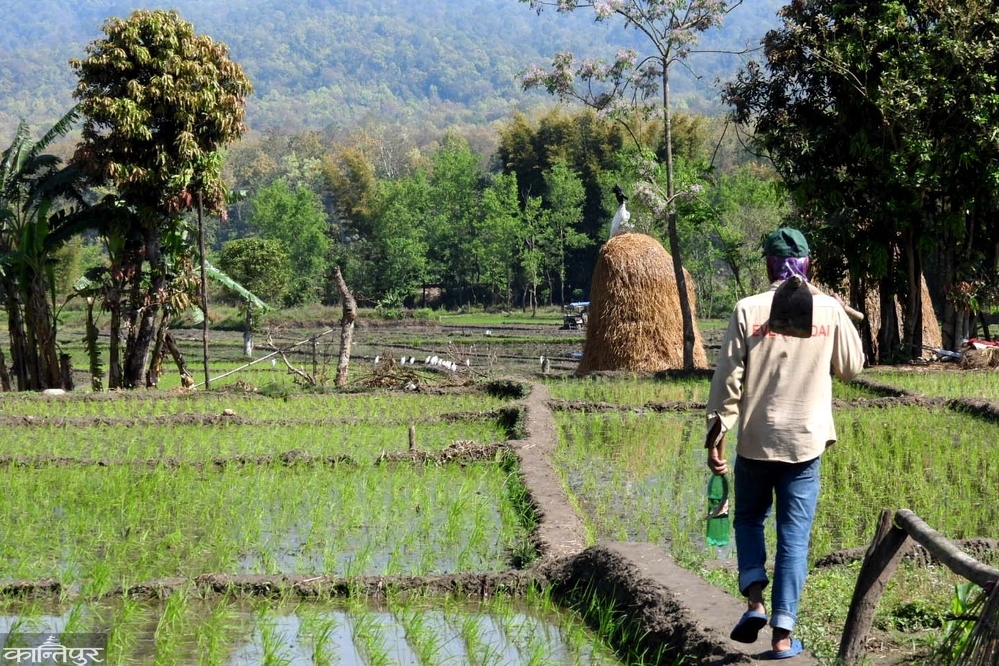 Countries in West Asia, including Saudi Arabia, Qatar, Oman and the UAE, are major suppliers of urea, sulfur and ammonia. The Gulf region is the main source of fertilizer imports in Nepal. Although Russia is seen as an alternative, the process has been complicated by the reluctance of Nepali banks to open letters of credit (LC) with Russian suppliers.
Rice is the main food crop in Nepal, accounting for 67 percent of total food consumption and more than 50 percent of calories. Rice, which is consumed at 137.5 kg per capita annually, is considered important not only for food security but also as a cheap source as it contains 23 percent of the total protein required by the body. Experts say that the shortage of chemical fertilizers will lead to a decline in agricultural production, an increase in the price of consumer goods, a decrease in farmers' income, and an increase in the country's food import expenditure, which will increase the country's foreign trade deficit.
The government has allocated Rs 28.82 billion for importing fertilizers for the current fiscal year. Subsidized urea is distributed through cooperatives at Rs 18 per kilogram, of which 90 percent is subsidized. The subsidized price of DAP is Rs 46. The increasing subsidy burden will also create great pressure on the government coffers. The 2021 report of the Auditor General's Office has pointed out major policy weaknesses in the supply and distribution of chemical fertilizers. The report also states that the government does not have accurate data on the actual need for fertilizers.
Nepal has about 3 million hectares of arable land, half of which is used for crops like rice, wheat and maize. The report also states that the government has been able to meet only 63 percent of the annual demand of 600,000 tons. The budget for chemical fertilizers is another major challenge. A USAID report states that although Nepal has an annual demand of 600,000 to 800,000 tons of fertilizer, 70 percent of it comes from illegal (stolen) sources.
Nepal has been dependent on illegal sources of fertilizer for decades, claims a former Salt Trading Corporation official. But this year, India, the world's largest supplier and consumer, is also under pressure to secure fertilizer supplies. If there is a shortage in India, cross-border smuggling into Nepal will also decrease, which will further distress farmers. India imports 13 percent of its urea and 60 percent of its DAP requirements.
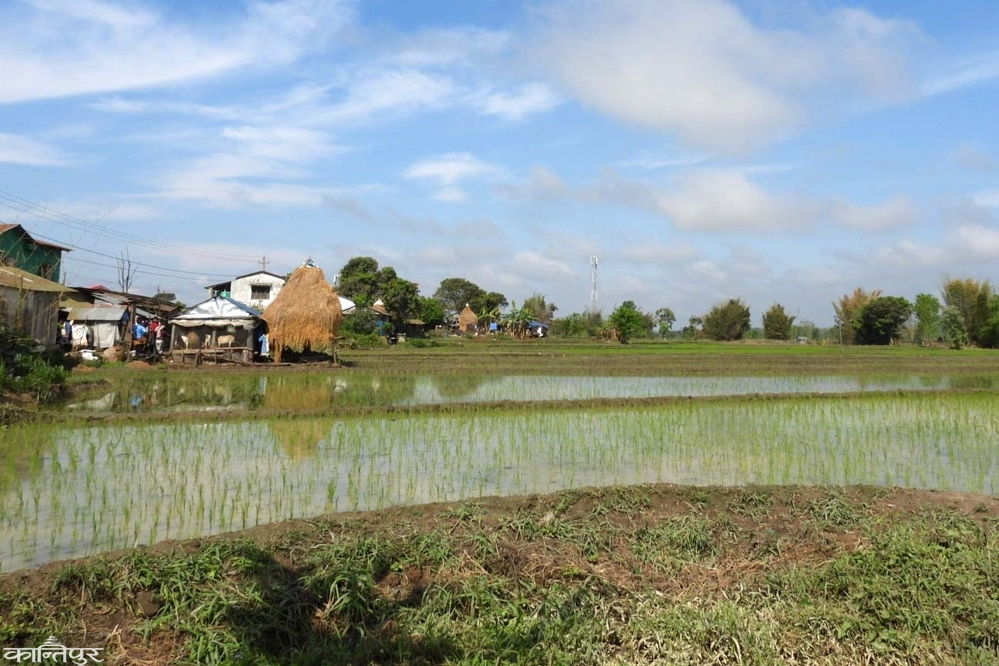 The main raw material for urea production is liquefied natural gas (LNG), which serves as both an energy source and an input to production. Within two weeks of the conflict, gas supplies to the fertilizer industry have fallen by 70 percent of demand. DAP production requires ammonia extracted from natural gas.
With fertilizer stocks already under pressure, the ongoing conflict in West Asia has raised concerns that if demand for crops continues to remain high through the monsoon season, prices will rise further, raising overall farming costs.
Nepal and India signed a five-year government-to-government (G2G) agreement on fertilizer supply on February 28, 2022. The agreement promised to provide Nepal with 1.5 lakh tonnes of fertilizer in the first year and 2.1 lakh tonnes in the fifth year. But the agreement expired on Tuesday. Ramkrishna Shrestha, chairman of the agricultural materials company and joint secretary of the Ministry of Agriculture, said that the draft for the renewal of the agreement has been sent and that the Indian side is studying it.
The agricultural materials company supplies fertilizers with 70 percent subsidy. ‘We are a close neighbor of India, we are expected to support Nepal after the renewal of the agreement,’ he said, ‘Our demand for India is very small, that is why we are confident in providing fertilizers.’ He said that various options are being discussed to avoid the shortage of chemical fertilizers.
Especially during the shortage of chemical fertilizers, politicians have repeatedly said that they will establish an indigenous fertilizer factory. The 63rd meeting of the Investment Board of Nepal, chaired by the then Prime Minister KP Sharma Oli, had decided to review and proceed with the detailed feasibility study of the chemical fertilizer production center.
‘This is a wrong idea,’ said a retired Salt Trading official. ‘It would be even more risky and expensive for a country that cannot import 500,000 tonnes of ready-made fertiliser annually to import raw materials and run a factory.’ The official claims that investing billions of rupees in such projects risks becoming another ‘white elephant’ (a burdensome project that does not yield returns).
Even large economies like India and China have been importing a large part of their fertiliser demand. The official suggested that Nepal could consider joint ventures with fertiliser factories in West Asia or Southeast Asia. ‘This will ensure easy access to raw materials and a stable supply for Nepal,’ he said, ‘and also ensure potential dividends from sales in other markets.’