We use Google Cloud Translation Services. Google requires we provide the following disclaimer relating to use of this service:
This service may contain translations powered by Google. Google disclaims all warranties related to the translations, expressed or implied, including any warranties of accuracy, reliability, and any implied warranties of merchantability, fitness for a particular purpose, and noninfringement.
All people are not equally responsible for the environmental crisis that has reached a serious level in the present time. Just as all people are not equally responsible for the environmental crisis, the effects of the environmental crisis are also not the same for all people. The cause of the environmental crisis is the capitalists and upper class people.
Due to the capitalists' production and consumption, the environment has been destroyed and a crisis has arisen. But the serious effects of the crisis are widely falling on the people of the lower class (proletariat) and marginalized communities. Environmental damage, ecological damage, physical damage, economic damage, human damage caused by environmental crisis are affecting the lower class excluded from the state mechanism and distribution of products.
As the existing economic system is not in the interest of the lower class, the people of the lower class are bound to suffer a lot of damage due to the crisis. Even within the lower class, marginalized communities including women, Dalits, tribals, tribes and communities of African origin (black) have less access to resources and resources and the impact of the environmental crisis is more serious on them.
When talking about the impact of environmental crisis on women, it is very important to understand that as women are not a single or equal group, the impact of environmental crisis is not the same on all women . Therefore, the environmental crisis in the unequal social and economic structure basically affects the lower class women; Within that too, women who are suffering from oppression including labourers, landless and squatters, Dalits, tribals and tribes, blacks, immigrants, disabled women are more affected. According to social hierarchies, social status and the level of oppression, the effects of environmental crisis on women become more intensive.
Most people from lower classes and marginalized communities, especially people from the Global South, depend on agriculture and natural resources for their livelihood. But recently, due to the neoliberal (capitalist) economy and environmental crisis, there has been serious erosion in agriculture and local production systems. Along with this, the compulsion to go to capitalist centers and production centers to do wage labor for livelihood has been added.
However, patriarchy controls the mobility of women and the responsibility of domestic labor is also on the shoulders of women, so the majority of men leave the field for wage labor. As a result, the entire burden of distressed agriculture and gujaramuchi production and domestic labor has fallen on the shoulders of women, adolescents, children and the elderly population.
Although the presence and role of women in the agricultural economy is ignored and not counted, single women and a large number of women have been dependent on agricultural production for a long time and have been playing an important role.
Even among the women of the lower class, women involved in rural and subsistence production have to deal with the environmental crisis in a different way, while the burden of the environmental crisis is different on the women who are forced to wage labor in capitalist production centers and service sectors due to the lack of means and means of their own production. Also, the caste system has made the crisis more serious. Therefore, in this article, to find out the impact of the environmental crisis, the women of the lower classes of different social and economic status have been analyzed on the basis of production and on the basis of further oppression of the caste system.
The impact of the environmental crisis on women involved in subsistence production systems, working women and Dalit women is as follows.
Women involved in agriculture and subsistence production
Most women from lower class, tribal and marginalized communities depend on agriculture and subsistence production system. Livelihood production system mainly depends on natural processes, natural resources and state agricultural subsidies, services and facilities.
But the production system is in a serious crisis as the environmental crisis has caused catastrophic changes in the climate and weather cycle, natural processes, and all the components of the environment. Due to reasons such as drought, dryness, changes in the rain cycle and decrease in the amount of rain, excessive heat, the land suitable for agricultural production is being desertified rapidly. The situation of destruction of agricultural products, decrease in production, and no production at all is being created . As a result, the purchase of seeds and technology that can deal with climate change, additional investment for irrigation, additional labor and additional investment and borrowing for that has arisen.
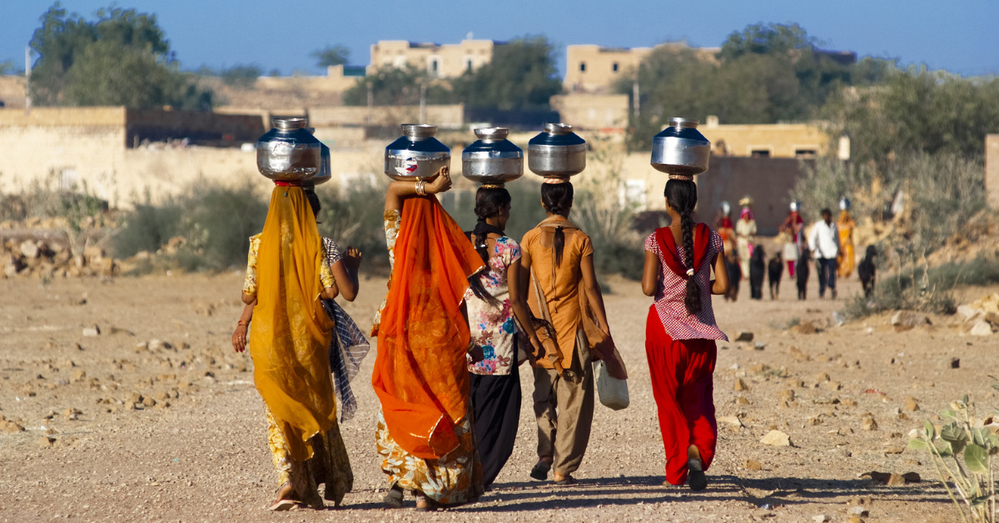
In addition, domestic products based on natural resources, such as: weaving of hats, making ropes, raw materials needed for enterprises, grass needed for cattle, and straws are also lacking . The means of livelihood and income of tribal communities such as Raute, Majhi, Bote, Bankaria, who are living entirely on natural resources, are in crisis.
Due to the environmental crisis, the workload of those women has also increased. When agricultural production is low, more time and labor are being invested to increase production . More struggle and investment of time is needed for the resources and raw materials needed for agricultural production and domestic industry . Due to the lack of grass and brooms, firewood, water and other resources, they have to go far and wide.
Communities with a livelihood based on natural resources: such as fishing communities are in a position to invest more labor and time due to the scarcity of natural resources. The responsibility of taking care of other members of the household: children, elderly and sick, disabled members has also come solely on the shoulders of women . On top of this, due to pollution and diseases caused by the environmental crisis, dependent members are getting sick more often, so more time than before has to be spent on care and domestic work.
Due to the shortage of drinking water, cooking wood, and food, more time has to be spent for these resources. Apart from this, as most of the men have to go out for wage labor, the burden of social work has also fallen on the shoulders of women . In this way, women involved in subsistence production have to bear the burden of production, domestic labor and social work. Due to the increased labor period and workload, women are not able to participate in the labor market and earn more income, and participation in social and political activities has also decreased. Which has also affected their personal character-development and self-reliance.
Girls are also pushed to the responsibility of helping in domestic labor . They are being deprived of school education and other opportunities due to the burden of carrying water, going to the forest to collect firewood, and taking care of siblings.
The situation caused by the environmental crisis has also increased the risk of gender-based violence. Due to the depletion and scarcity of natural resources and resources, it is necessary to reach far and wide in search of things like firewood and drinking water for energy. Irrigation facilities are not always available as rainwater has decreased and water sources have dried up.
so that you have to go to the fields for irrigation even during the night . In this way, the risk of sexual violence has been increased due to the need to be available at any time and at any distance for the search and production of livelihood resources. In addition, the risk of sexual violence against women and girls is high during environmental crises and displacement.
Due to the serious impact on production due to environmental crisis, lack of other means of livelihood, increasing workload, food shortage, food insecurity, extreme poverty, hunger, lack and difficult daily life, high risk of disaster and crisis created physical, human disease and persecution women involved in agriculture and subsistence production of the lower class have been persecuted a lot . The patriarchal system and parental responsibilities have more negative effects on women and adolescents physically, mentally, and reproductively.
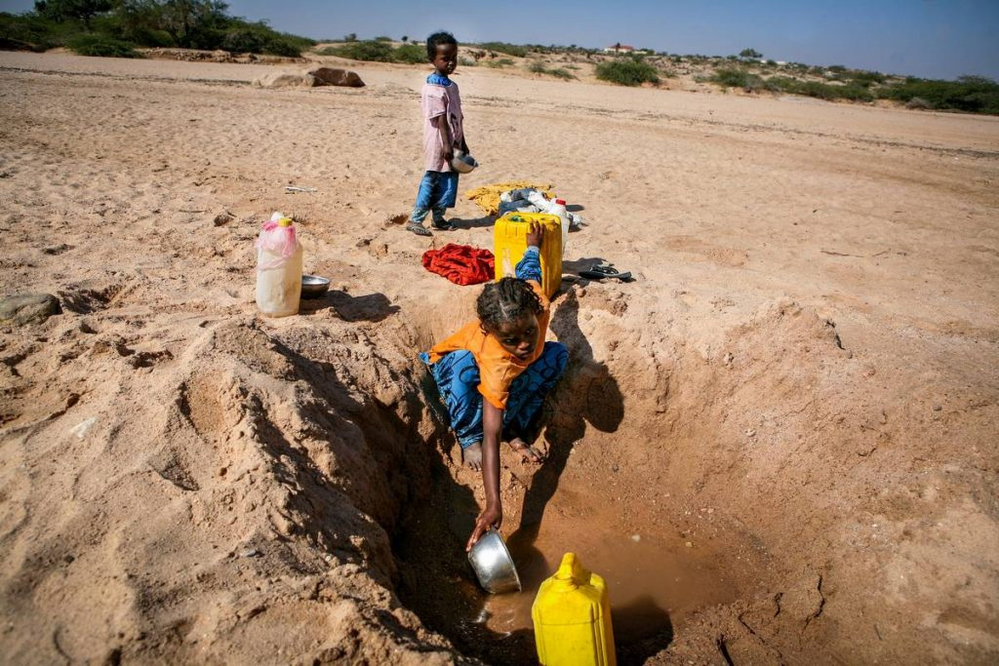
In this way, the rural population has been evicted from traditional and subsistence production, forced to live a life of extreme poverty and suffering, and the land of the state has weakened. The minimum services provided by the state have been reduced. On the one hand, due to the adoption of neoliberal policy, there has been a forced reduction in the limited agricultural subsidies, production technology and other concessions provided by the state in the past, and on the other hand, the state is also cutting other public expenses sharply as it works more for the benefit of the limited capitalists and less for the common people .
In addition, the authorities of countries like Nepal, which are at high risk of environmental crisis, are spending the remaining resources to deal with the crisis and to restore it from the situation caused by the crisis. In addition, due to the patriarchal social, economic and political system, there is a situation of women's lack of access to agricultural subsidies, concessions and other public services available from the state.
Lack of access to information and technology, women are not allowed to participate in government decision-making processes and implementation, service facilities provided by the state, agricultural programs and technology to deal with environmental crisis, and training. Weather information and environmental information are also out of reach due to lack of time and workload. As a result, some of the crisis-created outcomes that can be reduced cannot be prevented . Due to the environmental crisis, the class and patriarchal oppression faced by dependent women in the subsistence economy has increased. They have been deprived of overall development opportunities due to subsistence occupations and production, eviction from residences and high risk of disasters such as floods and landslides, extreme poverty, excessive work load, etc. .
working woman
Completely evicted from traditional production, without access to the means of production including land, landless squatters, refugees and immigrant women are selling labor as capitalism's production center, service market and domestic workers . For their profit and more capital accumulation, capitalists and owners exploit these working women by making them work for a long time, without giving equal value to their labor, and by giving them extremely low wages. On top of that, capitalism is imposing more unequal wages and discrimination on women workers by using existing social conditions including gender inequality, immigration, refugee status. Capitalism has forced working women to sell labor for most of the day to meet their basic needs and to maintain a low standard of living. However, even the very low wages obtained from the long labor period have now arisen to be spent to deal with the environmental crisis.
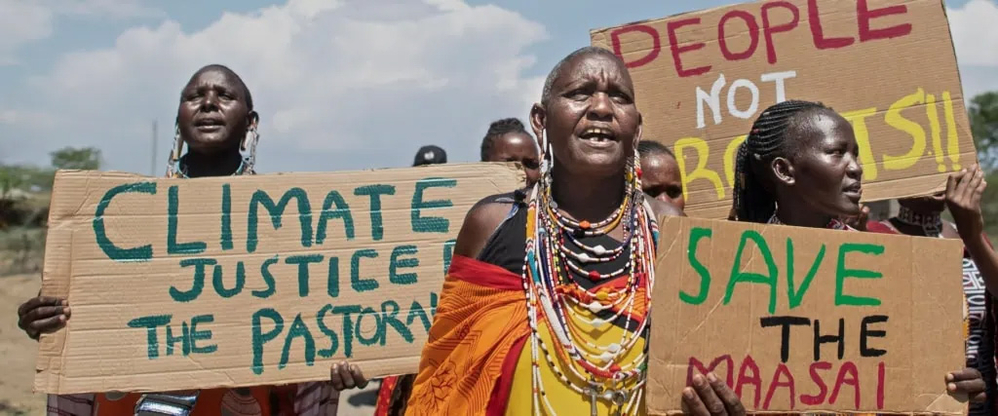
These working women are forced to live in production centers and urban areas, river banks, dirty and unsafe places, unorganized housing and dangerous areas. Along with the environmental crisis, those residential areas are at high risk of disasters such as floods and landslides. In order to avoid those risks, the limited resources have to be spent. The crisis has created a shortage of basic services such as water and energy. Similarly, due to the increase in prices due to the environmental crisis and the lack of food, the low wages are insufficient for food and daily living, and they are further pushed into the abyss of poverty and hunger.
On the one hand, due to the capitalist economy and environmental crisis, the price of all goods and services has increased sharply and the need for resources to deal with various problems caused by the environmental crisis is increasing, on the other hand, the wages of workers have not increased for a long time. They are in a situation where they have to spend their very low wages and resources to deal with the environmental crisis and all the problems that come with it. As a result, they are forced to work for longer hours and have to cut back on basic needs such as food, education, and health.
Due to environmental crisis, scarcity, hunger, they and their family members are getting sick and increasing. This has also increased workload and increased physical and mental health. In this way, the environmental crisis has increased the extreme lack of resources and means, poverty, long working hours, increased workload, mental and physical ill health. On the occasion of social and political activities In addition to bringing a reduction, it has caused serious damage to all aspects of life.
Capitalism is pushing those working women into the fear of unemployment every moment in order to increase profits and low wages. This is also keeping them in a state of fear, anxiety and panic. In addition, the main feature of capitalism is to maintain semi-unemployment and full unemployment in the labor market. Therefore, the situation of women who are in the situation of unemployment or semi-unemployment has become more critical. As the environment is very vulnerable and they don't have any resources, they remain the easiest victims of crisis.
Dalit women
Dalit women who are in subsistence production or labor are more oppressed than other women due to the caste system. Due to the caste system, most Dalit women are forced to live below the poverty line. They are forced to live in a miserable, scarce and unsafe way due to very little access or lack of access to land, discriminatory labor market, lack of resources and means, and exclusion from traditional production due to capitalism. Public and community resources are sure to be lacking due to the environmental crisis. On top of that, as the so-called upper castes control the remaining limited resources, the women of these communities are removed from access to those resources and are in a position to struggle more.
Social, political system and power relations based on caste system do not include Dalit women in any planning, decision-making process and implementation related to the environmental crisis. Due to the existing system, they are less informed about how to avoid the crisis due to their lack of access to environmental information. In addition, due to caste exclusion and untouchability existing in the society, they are not prioritized for assistance and rescue even during calamities. Even if they are displaced due to disaster, the so-called upper caste people do not provide them shelter . Thus women of Dalit community are more persecuted than other women due to environmental crisis.
In this way, the women of the lower class who have been oppressed by the current capitalist economy, the women who have been oppressed by the social and political system, are being further marginalized due to the environmental crisis . are living at high risk of catastrophic disasters and displacement . Due to the environmental crisis, women of the lower class, the lack of resources caused by the reduction in subsistence production, are forced to deal with the environmental crisis even in the case of very low wages and have to bear the increased expenses due to the crisis . Even the very minimal resources that are available have to be spent for the work of dealing with the crisis such as: construction of a house resistant to environmental crisis, reconstruction after damage, maintenance, building walls and making the surface of the house a little higher, and repairing the roof . Similarly, having to spend most of the resources for food production affects the whole aspect.
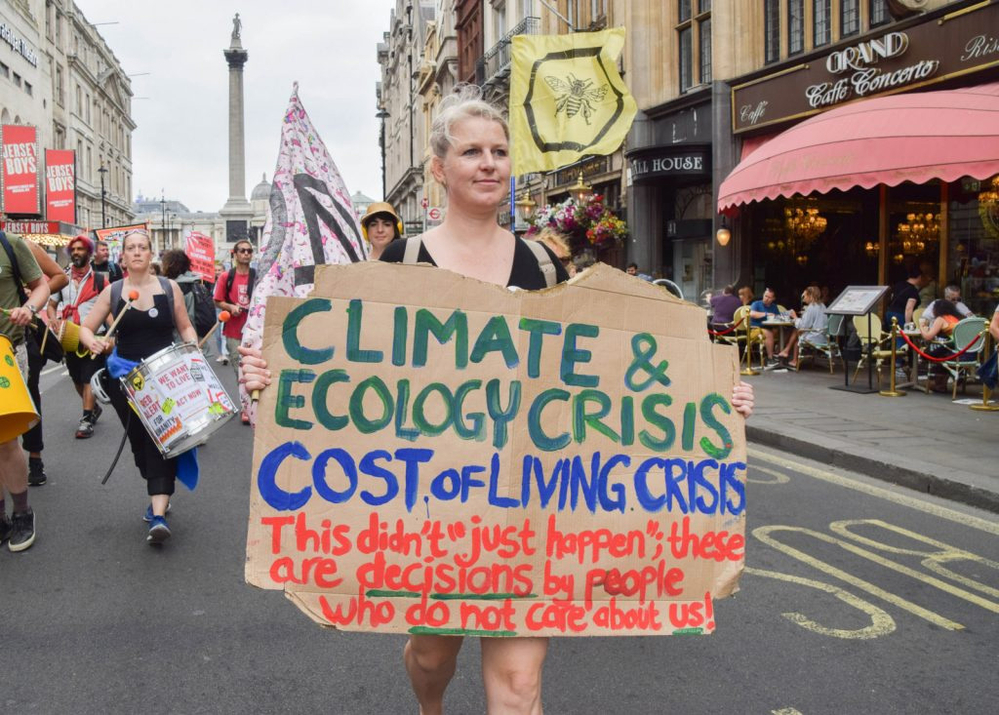
With the crisis, the additional burden of increased gender roles, the existing gender roles and discrimination, the impact of the crisis becomes more profound . For example, women should only eat last after everyone has eaten. If there is less food due to a food crisis, one must starve or be limited to less food . As a result, the amount of nutrition needed by their body will be reduced . Lack of additional resources, nutrition, and rest needed during menstruation and pregnancy affects health and moral development.
Environmental destruction has a serious impact on women's physical and reproductive health as well as on the children to be born. High temperature increases the risk of premature birth, stillbirth, high blood pressure during pregnancy, and diabetes. Due to air pollution, there are problems such as high blood pressure during pregnancy, low birth weight, affecting the brain and lung development of the fetus (Abbas, 2024).
Looking at the gender dimension of food shortage and poverty in statistics, it seems that by 2050, 15.8 million women and girls will be pushed into poverty and 23.2 million will face food insecurity due to climate change. Similarly, there is a large number of women in displacement and death. 80% of those displaced due to climate change are women and girls. Women are 14 times more likely to die in climate change-related disasters than men. During post-disaster displacement, there is not only poverty but also high risk of violence or unwanted pregnancy. (Abbas, 2024). It has been mentioned above that the state is reducing its role . It is making extensive cuts in public services and facilities. Social security is available at very low levels, which are also out of reach of women due to gender discrimination . Women of this category are living in a state of high risk of displacement and absence of state presence to avoid the risk. The
environment is sure to exacerbate the existing class inequality and inequality including gender. Lower class and marginalized communities; On top of that, women are being directly and seriously affected by the environmental crisis. They are forced to live at high risk of poverty, hunger and disasters. As a result, their overall development is being blocked. Therefore, when looking for a solution to the crisis, the social, economic and political status of the Ninna class and the marginalized women within this class should be seen as important. In addition to this, it is necessary to put the issue of environmental crisis, which appears to endanger human civilization, into the center of the class movement, women's liberation movement, Dalit movement and tribal movement.
photo/source:
arumba, T. (n.d.).
Women from the Masai community participate in a Global Climate Strike organized by Fridays For Future . AFP via Getty Images. Retrieved from https://amnesty.ca/what-we-do/ climate-justice/
Barriers for women to succeed in climate action . YourCommonwealth. https://yourcommonwealth.org/ economic-development/barriers-
Food and climate, mutual impact [Image]. We Are Water Foundation. https://www.wearewater.org/en/ insights/food-and-climate-
Abbas, M. R. (2024, December 5). SWANA Women in a Changing Climate. Climate Sirens. https://www.climatesirens.com/our-blog/swana-women-in-a-changing-climate

