- The condition of 13 people from Jajarkot who are suspected to have gone missing in the flood that followed the cloud burst (Arighopte rain) in Dharali is still unknown.
We use Google Cloud Translation Services. Google requires we provide the following disclaimer relating to use of this service:
This service may contain translations powered by Google. Google disclaims all warranties related to the translations, expressed or implied, including any warranties of accuracy, reliability, and any implied warranties of merchantability, fitness for a particular purpose, and noninfringement.
A week ago, 22 Nepalis are suspected to have gone missing due to a cloud burst (arighopte rain) in Dharali, Uttarkashi, Uttarakhand state, India.
According to the Nepali Embassy in Delhi, at least 13 people are from Kushe rural municipality of Jajarkot. But as their condition has not yet been discovered, the relatives who have reached there have started returning home disappointed.
'It is suspected to have fallen due to a landslide as it has not been found anywhere yet,' said Bhadra Bahadur Singh of Talegaon-2 of Kushe Rural Municipality, 'Neither has the search been completed nor is there any hope that they will be found.' His relatives Karna Bahadur Singh, Ram Bahadur Singh, Man Bahadur Singh, Nim Singh and Ravin Singh have not yet been contacted.
Last year on June 25, three people from the same house were buried in a landslide in Shimla, Himachal Pradesh, India. 50-year-old De Bahadur Oli, his 48-year-old wife Bhima Oli and 16-year-old son Mohan Oli of Triveni Rural Municipality-9 Khare of Rukum West were killed in the landslide. But they have not got any relief yet. Ward President Hari Bahadur Khadka said, "We have to fight in the court to get relief. Those who have not yet received anything, the family is in trouble after the death of three people from the same house." But his family is also forced to work as a laborer in India, who cannot eat even for 3 months from their own crops.
Last year 9 and 13 residents of Karnali lost their lives in 2080/81. 39 people of Karnali died in India due to floods and various accidents during 5 years, 5 people are still missing
On July 18, 2080, 3 youths from Kalikot were killed in a landslide in Garikunda, Rudraprayag, Uttarakhand, India. Prakash Tamrakar Tamta of Khadachakra-1, Tek Vishwakarma and Devi Vishwakarma of Ward No. 2 lost their lives in the landslide. According to Dhamendra Biswakarma, a relative of Tech in Kedarnath, they used to carry heavy loads of pilgrims at Gaurikunda, where the footpath to Kedarnath temple starts.
In 2013, nearly 300 Nepalis went missing in Gaurikund and Kedarnath areas. Last year alone, 9 residents of Karnali went to India and died after being buried in a flash flood, according to the data of the provincial police office. According to the office, 13 people lost their lives in the financial year 2080/81. Similarly, 6 people from Karnali were killed in other accidents in India last year, according to the office. According to the data of the provincial police office, 39 people have lost their lives in India due to floods and landslides and various accidents in a period of 5 years. 5 people have gone missing during this period. "The number of people who go to work in India from Karnali is large, most of them take risks and work in dangerous places," said Provincial Police Chief DIG Madhav Shrestha.
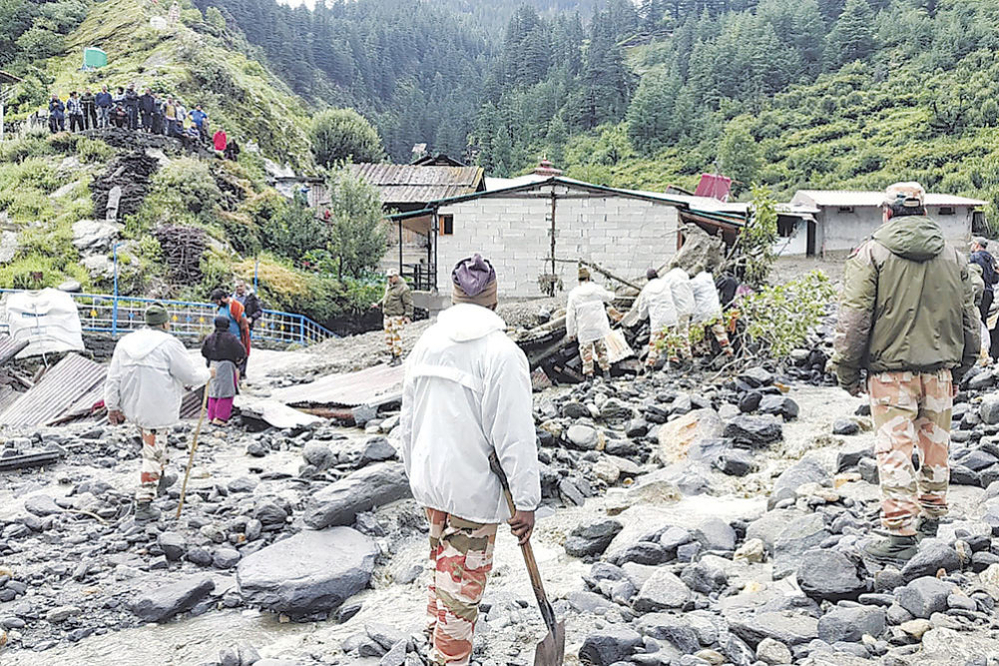
Tek Bahadur Khatri, president of Karnali Ekta Club in New Delhi, India, said that the victims of the accidents so far have not been able to get appropriate relief. According to him, to get relief, either the government should take diplomatic initiative or fight the case in court. "It is known that only people who have died in a traffic accident or in an organized organization have received relief. For those who went to work through local contractors, the contractor has given them the usual expenses," he said.
Most of the locals of Karnali, who go to Uttarakhand and Himachal Pradesh in India, work as agricultural laborers, construction workers, carrying heavy loads, carrying tourists on dollies and backs, said Kushe Rural Municipality Chairman Harichandra Basnet. "After planting in June, those who entered India return home to observe Dasain. They plant crops again in October-October and come back to bring in wheat and barley in Baisakh," he said. He informed that he did. Although there is no data on how many people have gone to India from the municipality, he estimates that nearly 7,000 people go to India every year for local work.
According to Tank Bahadur KC, a teacher of Nepal National Basic School located in Kushe Rural Municipality-4, the families of those who go to Uttarakhand in India for seasonal work are weak. "Right now, due to the earthquake, the poor have become poorer. They have to leave their families in temporary shelters and go for seasonal work in order to eat and live alone," he said.
He said that most of the people who went to Uttarakhand went to collect Dasain expenses. "Therefore, any number of people can get a job at any time," he said, "but they have no insurance, no salary and other benefits according to the government rate. In case of death, they are satisfied with the normal expenses."
According to the results of the National Census-2078, nearly 46 percent of people are unemployed in Karnali, which has a population of about 1.694 thousand. Out of which 5 lakh 14 thousand 818 people went for foreign employment according to the census data. Out of which almost 86 percent i.e. 4 lakh 42 thousand 743 people are forced to work in different places of India. According to Karnali Province Planning Commission, the unemployment rate in Karnali is 9.7 percent.
Those who go to other cities in India work on temporary jobs, while most of those who go to rural areas such as Uttarakhand and Himachal Pradesh do risky jobs such as agricultural labor, building houses, carrying heavy goods, and carrying tourists on dollies and backs, said Devikakumari Singh, vice president of Kushe Rural Municipality. "Nepalese who go to Delhi, Mumbai and other cities do temporary (contract) work in various industries, factories, hotels, they have monthly wages, vacations, insurance and other facilities, but in places like Kedarnath, Badrinath, Gaurikund etc., they do seasonal work, these jobs are mostly on daily wages," he said. Even in Uttarakhand, the risk of landslides is high.'
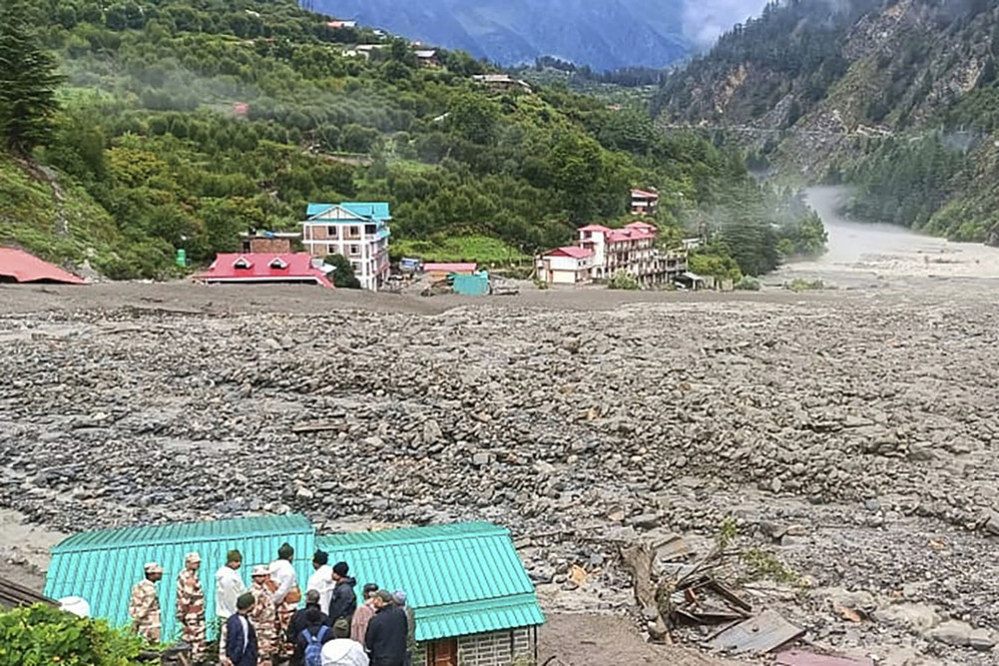
Kamal Lamsal, vice-professor of Midwest University, said that the government does not care much about the Nepalese victims of such disasters. "In 2013, at least 300 Nepalese disappeared in Gaurikund, Uttarakhand, came to the Indian media, but neither the Nepal government tried to investigate them in detail," he said, "Neither the Indian government did the work of publicizing the truth." At that time, the Uttarakhand government gave relief to its citizens but did not give it to the Nepalis.
Civic leader Durga Prasad Sapkota says that the unemployment problem is increasing in Karnali due to various employment programs, cooperatives, groups, consumer committees etc. "When the local government came to their homes, everyone hoped to get a job," he said, "due to the local government's arbitrary tax and price hike, it became more difficult for the poor to make a living, due to which there was no option to go to India to raise their families." He said that there is a problem when the provincial ministers are allocating the schemes of the employment program in a worker-oriented manner, and the returns are being reduced.
The Chief Minister of Karnali Province, Yamlal Kadel, said that the attention of the federal government has been drawn for the search and rescue of flood victims who went to India a week ago. "We are trying to connect as many people as possible to employment through various employment programs and development plans, but a large population is going to India for employment," he said, "necessary initiatives will be started to support the families of those affected by the flood in earning a living."

