According to the tourism professionals, if a systematic tourism development plan is planned and implemented, it will not only help the Far West, but also the country's economy.
We use Google Cloud Translation Services. Google requires we provide the following disclaimer relating to use of this service:
This service may contain translations powered by Google. Google disclaims all warranties related to the translations, expressed or implied, including any warranties of accuracy, reliability, and any implied warranties of merchantability, fitness for a particular purpose, and noninfringement.
Crossing the Triveni at an altitude of 3,860 meters above sea level and climbing towards the peak of Badimalika at an altitude of 4,200 meters, they found the footpath covered with snow. The higher they climbed, the lower the cloud was. The snow was adding to the misery.
081 In the second week of the month of Chait, there was three to four feet thick snow in Badimalika. No matter how hard it was to move up the ladder, they never lost courage. Because they proceeded with the determination to rebuild the temple on the peak of Badimalika . Nepalese army team Pushing away the snow, he moved forward finding a path.
The Nepali Army, on its own initiative, initiated the construction of an artistic temple in Badimalika, which is a heritage of religious faith and a unique gift of nature. However, short time, difficult terrain, transportation of construction materials was not a good thing . For that, a lot of preparation and well-thought-out arrangements had to be made.
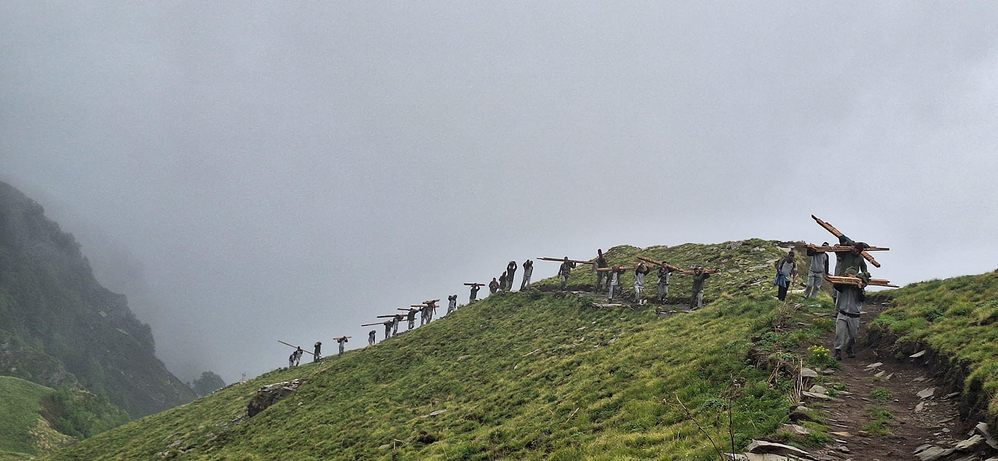
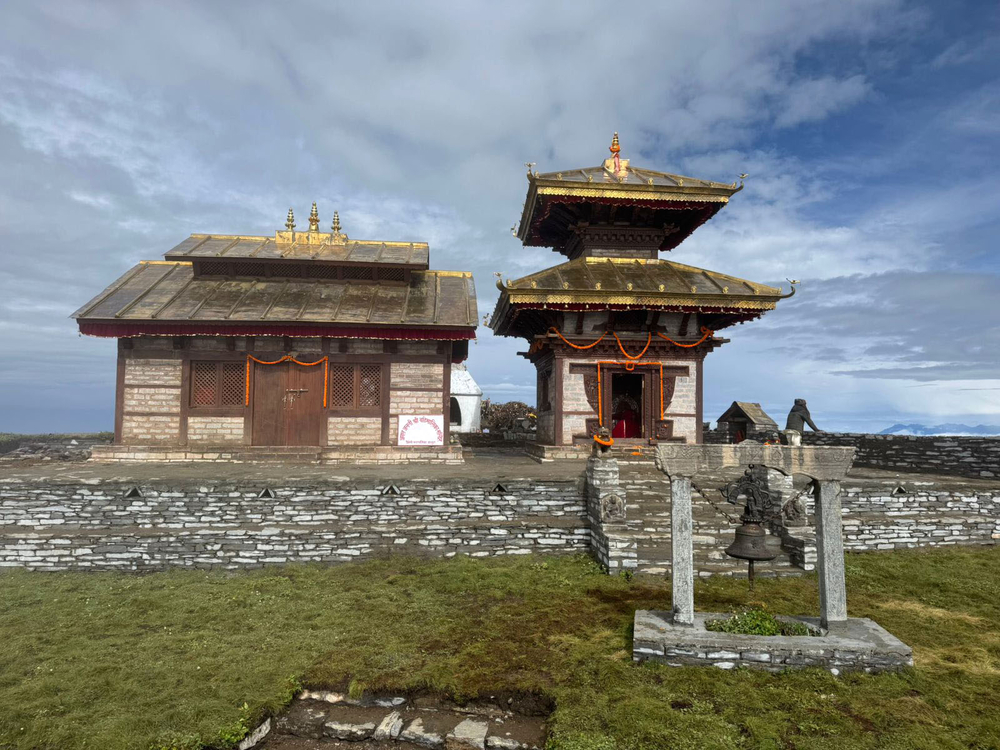
As a heritage of religious faith since ancient times, Badimalika is considered a unique gift given by nature to the human race, with many cracks, huge patans (pattans) more than a fragrant garden and a treasure of biological diversity. The Nepali Army had started the plan to rebuild the artistic temple in this temple located in Triveni Municipality-6 of Bajura.
The Nepali Army has completed the reconstruction of the artistic temple and the Havan Kund (Yagshaala) on June 23, after working on a war footing after facing many challenges. The temple of Goddess Bhagwati, which was completed by the Nepali Army, is not only a physical structure, it is important and rare in many ways.
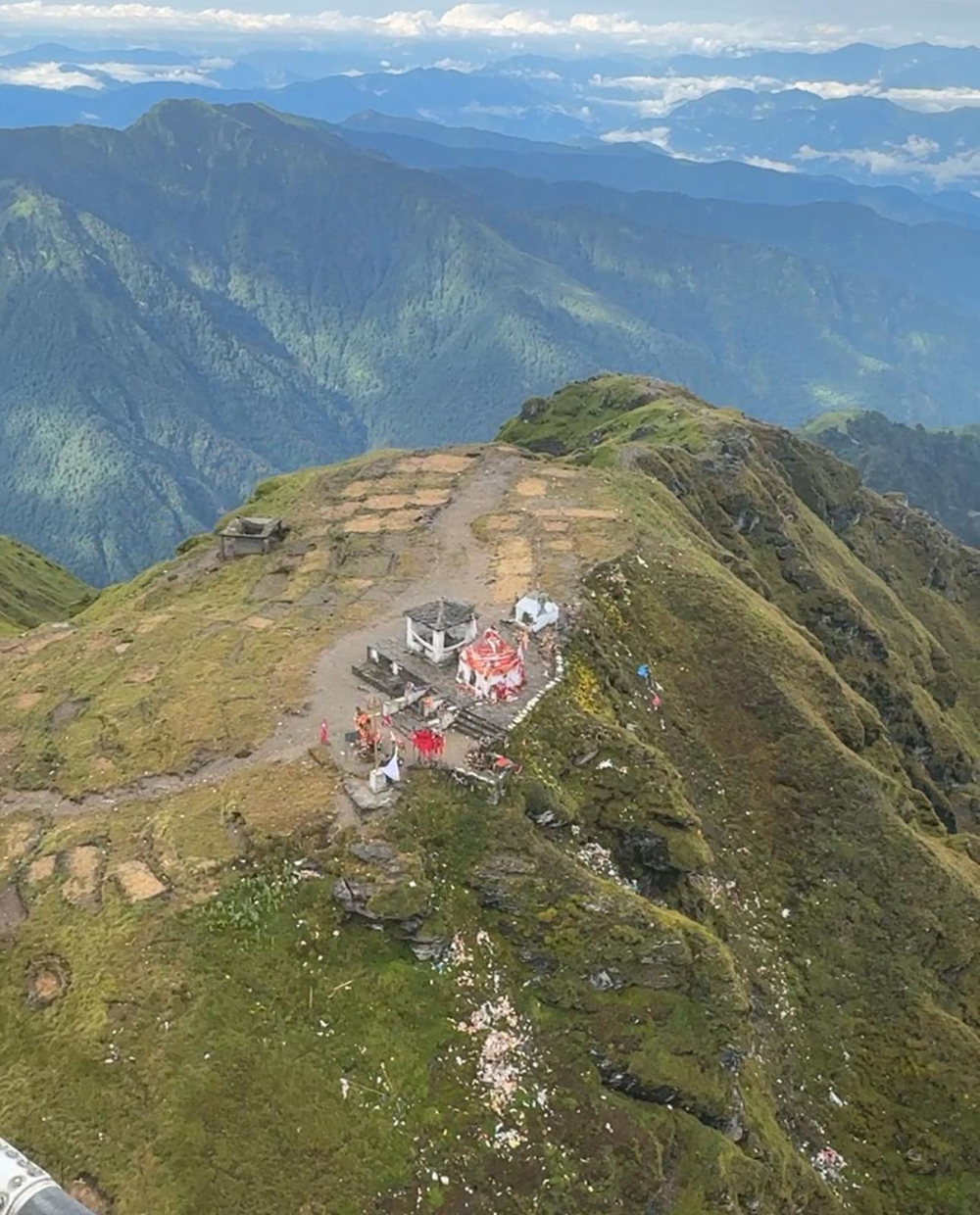
First of all, the temple built in Badimalika is the highest artistic temple in the world. There is a preliminary study by the Nepali Army that no artistic temple of the goddess has been built anywhere else at an altitude of 4,200 meters.
Secondly, it was not a good idea to complete the construction of an artistic temple in a city where it snows most of the time . It was possible only with the hard work and risk of the army. After the Nepali Army completed the construction of the temple in Badimalika in coordination with the Triveni Municipality, it is being praised from all sides. The more important aspect is that the importance of capital has been exposed more.
The Nepali Army completed a long study cycle to build an artistic temple in Badimalika. Initially, in August 2008, a joint team including the Department of Archeology and Nepali Army engineers conducted an on-site study of the Badimalika area for the reconstruction of the temple. At that time, the archeology department prepared the design of the temple in Shikhar style . But it was not possible to build a temple of that style due to lack of space and heavy load.
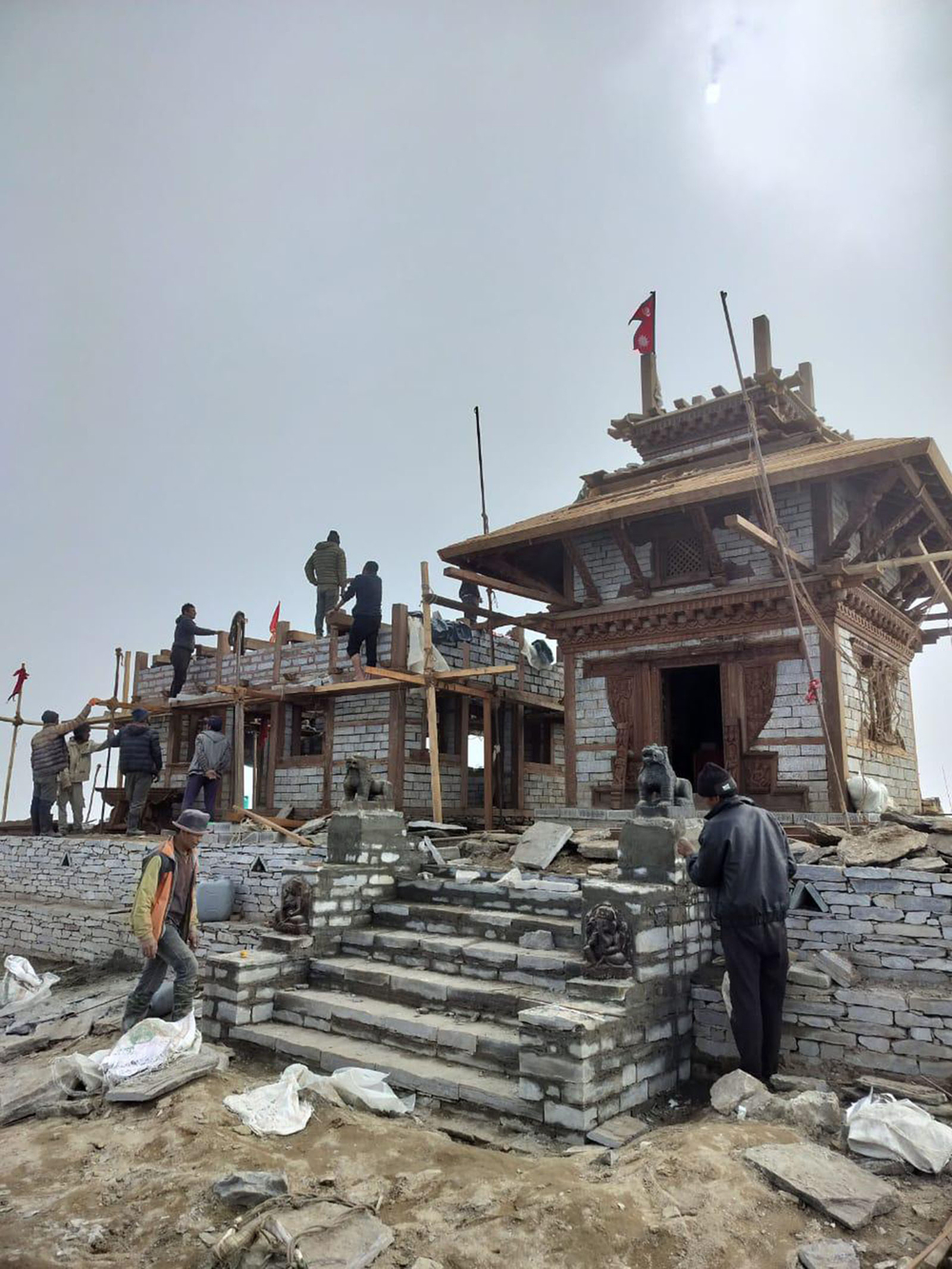
Due to the lack of space and weak terrain for the construction of the Shikhar style temple, the second design was prepared in the style of the ancient Shaileshwari temple in Doti. But a third design was prepared after the archeology and army technical team concluded that the construction of a temple of that design would be inappropriate in Badimalika. "Currently, the temple that has been rebuilt in Badimalika is a Nepali style temple," said Ram Bahadur Kunwar, spokesperson of the Department of Archaeology.
Nepali Army Spokesperson Rajaram Basnet said that the Badimalika Temple was built according to the Ancient Monuments Act 2013. According to the army, the temple and havan kunda (sacrifice hall) at Badimalika have been reconstructed with equal importance based on historical importance.
Sena Khatanapatan
There is heavy snow most of the time except from May to August. Difficult place, it was challenging to complete the construction of the temple in a short period of time . Therefore, the Nepalese army covered the chance of less snowfall for about three months from March to June for the construction of the temple. General Shiv Prasad Paudel was entrusted with the command to carry out the action plan which Nepali Army has advanced with great importance.
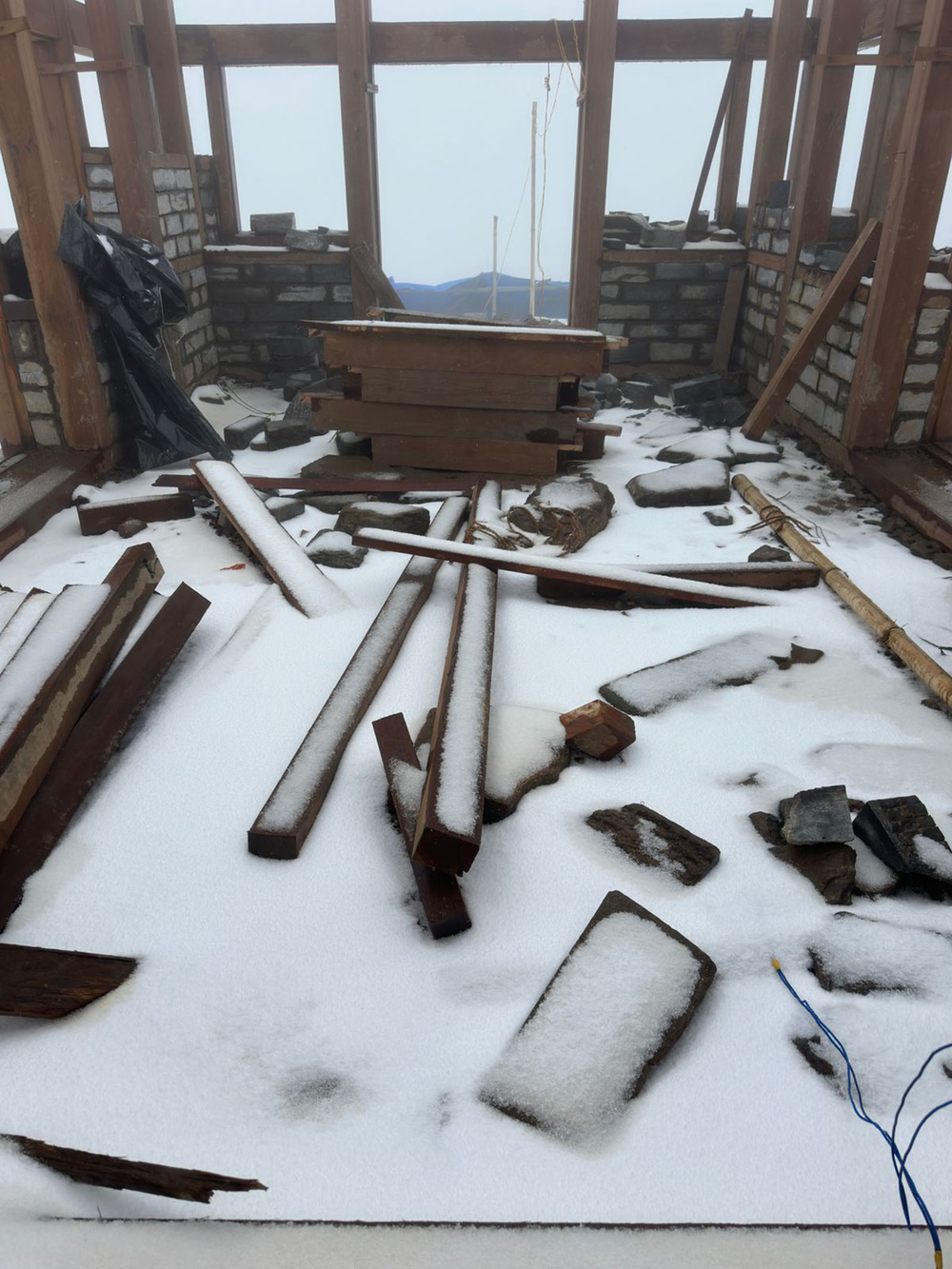
A well-thought-out plan was created by the team led by Mahasenani Paudel to decide on the plan to rebuild the temple in Badimalika. Assessing that it would be easier if there were locals with experience in Badimalika land use, the army chose the locals of Triveni Municipality-6 Pandahara, a village in Fendi of Badimalika, as workers.
General Paudel along with a sufficient number of soldiers sent a group of 21 people under the leadership of 34-year-old Vikram Budha and Dhan Bahadur Budha of Pandara to Badimalika in the second week of Chait 081.
Initially, when they reached Badimalika, there was three-four feet of snow on the way to the temple area. We had an idea of the way. "We reached the temple area with the help of a rope, finding a way, avoiding the thick snow," said Vikram. According to the
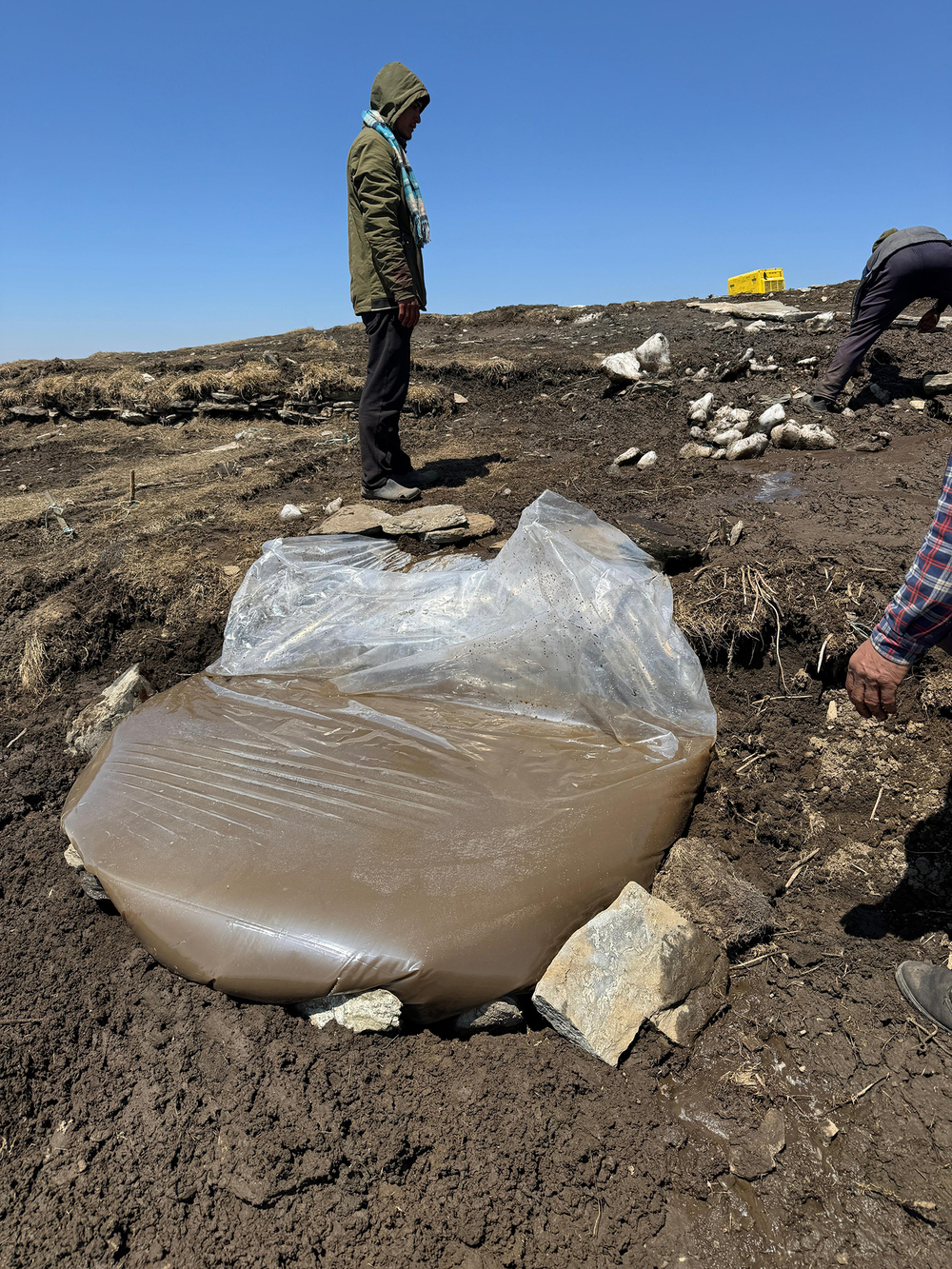
action plan, at first they had to reach Badimalika and drain the water. The water in the temple area is the cleanest. Although there is a source of water in the Basudhara in the middle of Pahara, it was not possible to reach the Basudhara. When there was no other way, they collected water by collecting snow. In addition to the source of drinking water, the most important need was the lack of water to run stone cutting machines and to make mud for masonry. Little water was not possible for that . Thousands of liters are needed.
Where there is a problem there is a solution∕They dug big holes in the slightly steep ground . Plastic bags with a capacity of one thousand liters were laid in that pit. He made a pile by collecting snow above the hole. When the sun shone in the afternoon, the snow melted and collected in the bag of the pit . That way they collected more than 15 thousand liters of water.
For convenience, the army had established temporary barracks in three places . Bajura's Mana, Phulchadhauna and temple construction site Badimalika was set up in temporary barracks and an army unit was kept with health workers. They arranged accommodation by pitching four tents for living in the Badimalika temple area.
They snowed every night till 22nd of May . There was no night without snow in the capital. The temperature was minus 8 degrees . It was not possible to go out of the tent at night,'' General Paudel said, 'However, according to the action plan, we had to work at a war level . In that order, he had to go up and down for 60 hours in one week at that high altitude. However, while living in Badimalika for such a long time, he did not have to face much crisis any day . No one had any health problems.'
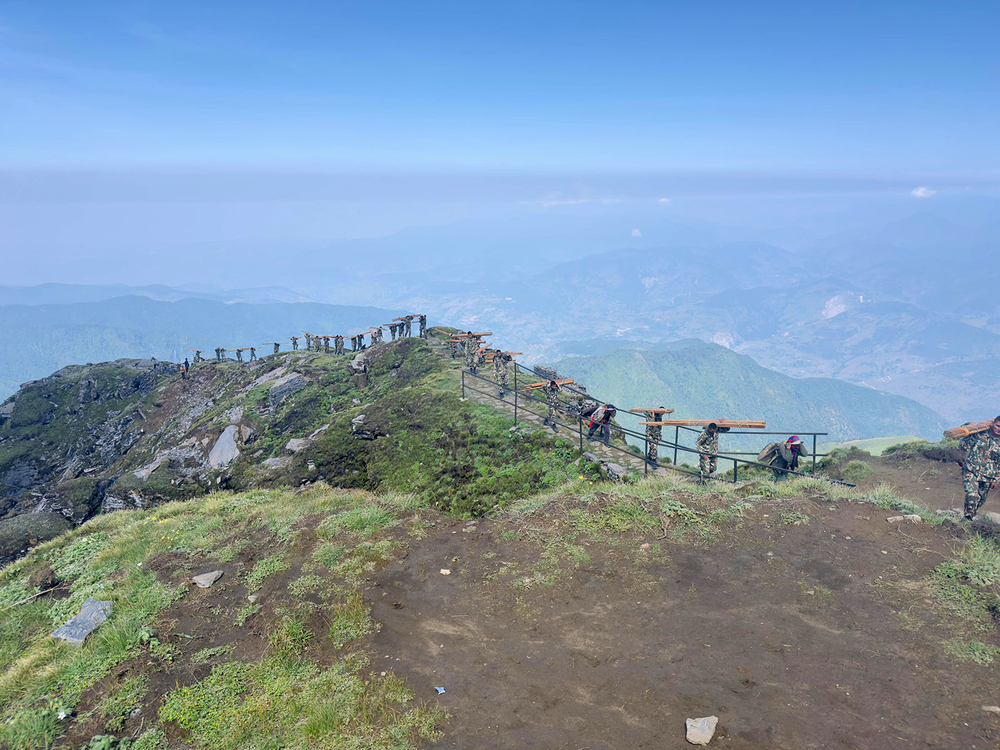
The army used a helicopter from Martadi, Bajura headquarters, to transport materials including large pieces of wood prepared for the Lamolamo temple. Some light and short pieces of wood and sand were carried from Mana to Badimalika. To reach Badimalika from Mana, one has to cross a steep ascent of at least two days . 17 tons of materials required for the construction of the temple were transported by helicopter and 33 tons of materials were delivered by truck.
An artistic temple on archeological standards
The temple built by the Nepali Army in Badimalika is as artistic as the construction materials used in it have been chosen with equal importance. According to Mahasenani Paudel, cement and iron were not used in the construction of the temple. Instead of cement, lime and lime brought from Kathmandu have been used.
According to the design of the temple, sal wood was prepared and brought to Dhangadhi. The stone was collected in the Badimalika area and the copper roof was taken to prepare the Kalikadh in Kathmandu.
The Nepali Army has said that it has spent around 20 million from its own funds. "Ours is only technical assistance, the budget is borne by the army," said Kunwar, the spokesperson of the Department of Archaeology.
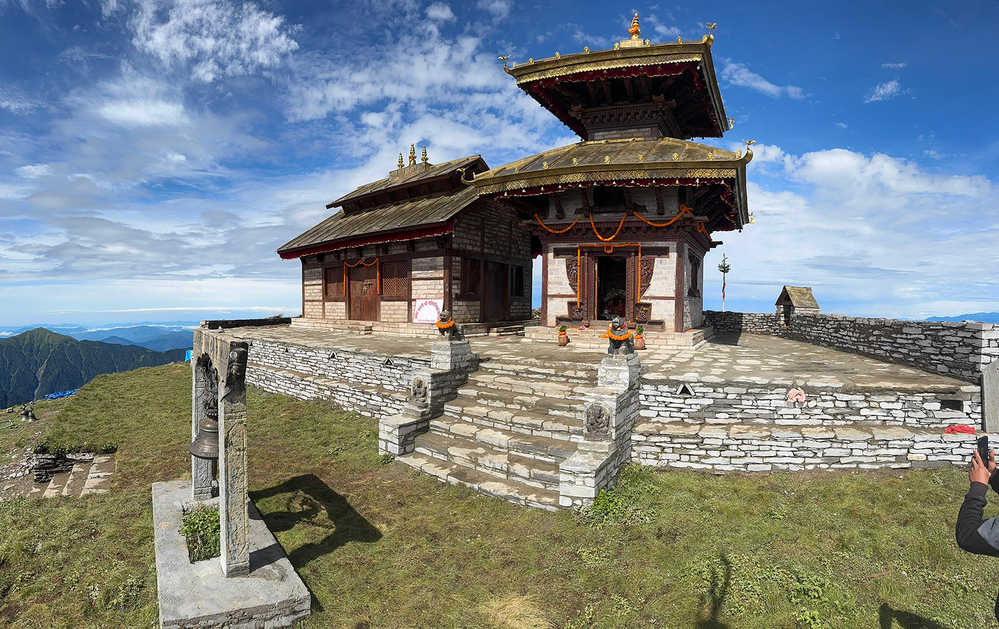
Netraraj Padhya, the priest of Badimalika, said that since 50 years there has been an initiative for the reconstruction of the temple, he felt proud that the construction work has been completed under the leadership of Commander-in-Chief Ashokraj Sigdel. Mayor of Triveni Municipality Karna Bahadur Thapa said, "Two years ago, we completed the construction of the temple in Nateshwari". Now, the construction of an artistic temple by the army in Badimalika is a pride not only for the Triveni municipality, but also for the country.' The army had selected the experienced Kaligad and sent it to Badimalika to build an artistic temple and Yagyashala. "Experience of working at height was mandatory to work there," said General Paudel, "we brought two people from Kaligarh Lalitpur to do the wood work. They had the experience of being involved in the construction of the royal palace of Bhutan.'
The army also set criteria in the selection of Kaligad for stone work. Six stone masons were sent to Badimalika, including two stone cutters, two stone cutters and two stone cutters.
"Those masons who have experience working in Ladakh in India have been brought from Bhaktapur and Dolakha," said General Paudel. Similarly, four Shakya Kaligads from Bhaktapur were chosen for the work of fixing the roof. 21 support workers were taken from Bajura's Triveni Municipality-6 Pandhara. "We worked as a helper in the work assigned by the army," said Vikram Budha of Pandhara.
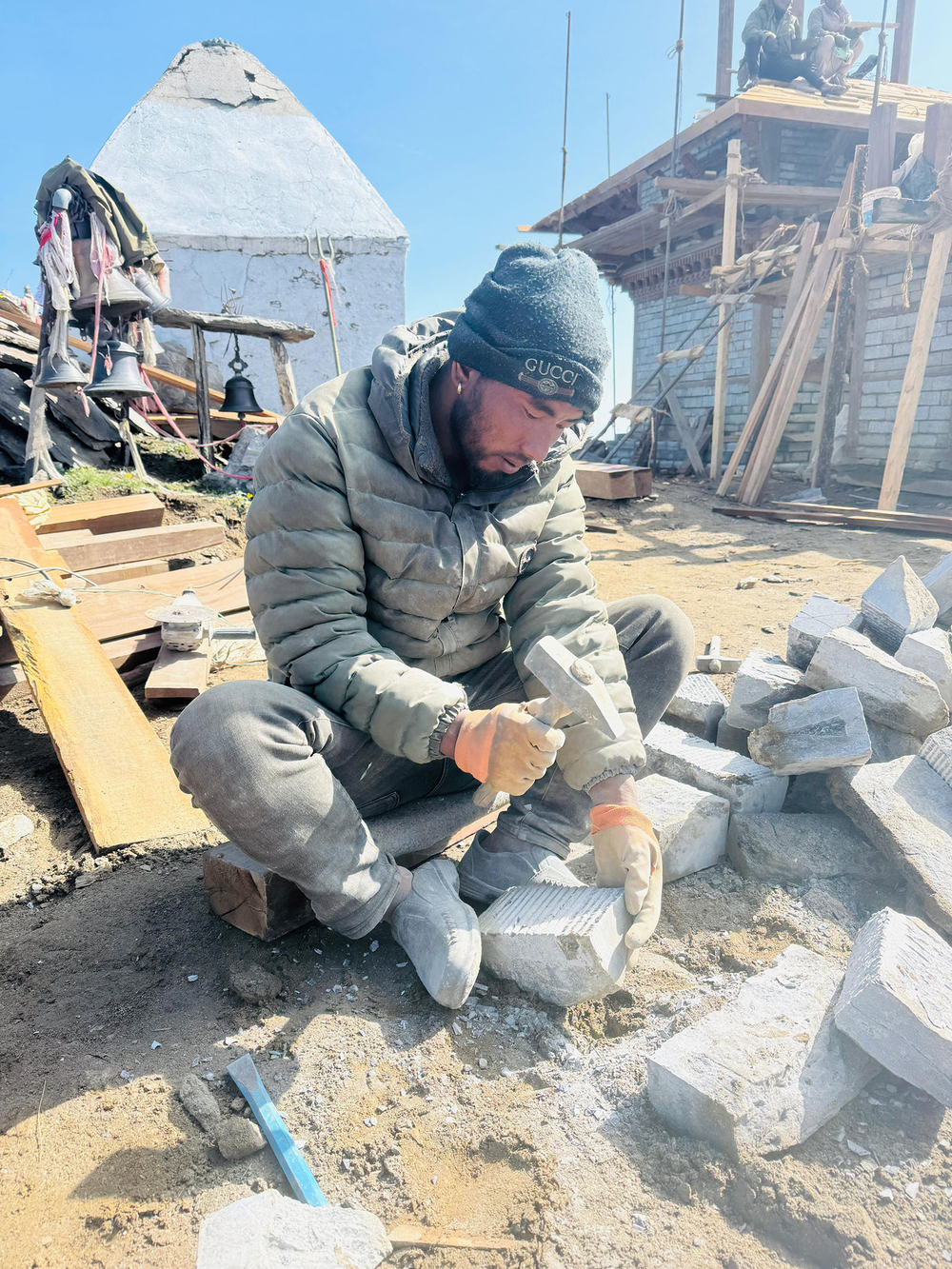
History of Badimalika Temple
According to priest Netraraj Padhya, Badimalika temple was established in the primitive times. As mentioned in the Mansakhanda of Skandapurana, after Satyadevi sacrificed her father Dakshaprajati on fire, Mahadev began to visit the earth with the dead body of Satyadevi . In this way, Satyadevi's limbs began to collapse and fall. Wherever Satyadevi's limbs fell, Shaktipeeths were established. At the same time, on Mallagiri in Bajura, his left knee collapsed. There is a legend that Badimalika's temple was established in Mallagiri and worship started.
According to Jaharsingh Thapa of Bajura, a teacher of Badimalika, the first deuro (temple) of Badimalika Devi was built by Deepraj Chhatyal of Bajura . Then in Shaka 1591, King Veerbhadra Shahi of Kalyalvanshi of Jumla brought stones from a place called Kalapani in Dhadakot of Bajura and built a temple in Badimalika. In 1679, the Kalyalavanshi king Shudarshan Shah repaired the Badimalika temple and installed the statue. After that, around 036-037, the temple was built on the initiative of Chhatra Bahadur Shah, the chairman of the then District Development Bajura and the priests of Paima.
Nepali Army's Major Malika relationship
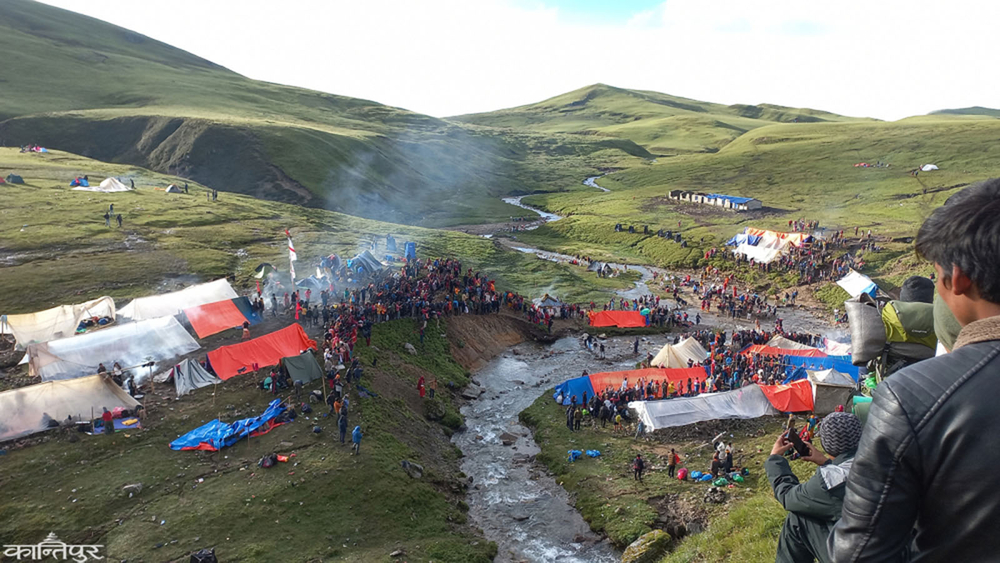
Badimalika is the favorite goddess of the Nepali Army . According to Jaharsingh Thapa, a scholar of Badimalika, since Amarsingh Thapa's time, the Nepali Army had a close relationship with Badimalika.
According to priest Netraraj Padhya, till 032 years Nepalese army also had a tradition of worshiping on Shravan Shukla Chaturdashi day. But because common people also worship on that day, priest Netraraj Padhya says that after 032 years, at the suggestion of Khaptad Swami, the army and the then king started the tradition of worshiping on the Ashtami Tithi of Jeshtha Shukla Paksha .
At that time Sakbar Raja, Khaptad Swami and the Chief of Army Staff used to reach Badimalika themselves for worship. But after the assassination of King Birendra, the practice of worshiping by the king and the head of state was broken . But the army has maintained the tradition of worshiping . According to Pujari Padhya, every year Bahinipati and now Pritnapati reach the Puja from Dipayal representing Senapati.
Pooja traditions – Doti's 'Petaro', Jumla's 'Doli'
Every year on Shravan Shukla Chaturdashi (the day before the full moon) there is a tradition of worshiping at Badimalika temple. Due to the popular belief that if you visit Badimalika, you will get the desired boon. Pilgrims reach Badimalika not only from Nepal, but also from places like Kumaon, Garhwal, Pithoragarh in Uttarakhand, India.
For the Puja of Badimalika, official worship materials (Doli) were sent from Jumla representing the then Sinja state, while the practice of sending government worship materials (Petaro) from Doti representing the Doti state is still in place. There is still a tradition of government teams leaving for Badimalika on Nagpanchami from the Jumla District Administration Office with the doli of Chandannath.
From the time of Amarsingh Thapa, it was a custom to send 'doli' to Badimalika. It is customary to call official worship materials as doli. As it is customary to reach Badimalika from Shilagarhi in 15 days, on the day of Shravan Pratipada, the pooja team departs from the headquarter Shilagarhi to Badimalika .
For this year, the official dol has moved from Siliguri, the headquarters of Doti, to Badimalika Mandir on Friday. Doti's doli has a tradition of including bhurudi of Deepayal, (paddy leaves) and Akshata of Vaidyanath of Achham . It is customary for the Nepali Army, Nepal Police and the Armed Police Force to bid farewell to the District Administration Office Doti after a special pooja. Then after worshiping at Shaileshwari and Malika temples in Shilagadi, the team will proceed towards Badimalika .
There was no road transport facility like it is now . It was a tradition for Doti's team to reach Badimalika on the 15th day. During that time, staying in a certain place and doing mandatory worship at a certain temple on the way was recognized. Even though there are road facilities now, the same custom has been maintained . It is a religious tradition that the team reaches the capital only on the 15th day. 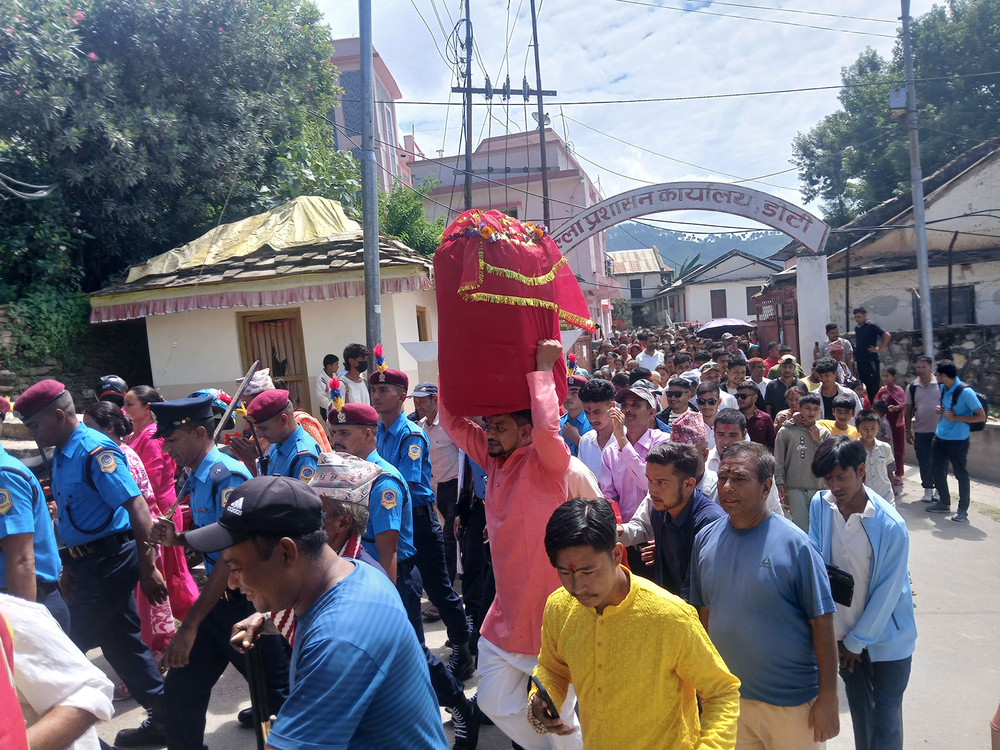
The worship team that traveled from Shilagarhi to Purvi Chowki Rural Municipality-1 Phulaut in Doti, on the second day to Dhanukanda in Purvi Chowki-5, then to Marku in Achham, on the next day to worship at Bimkot in Achham via Baidyanath Dham, a famous religious place in Achham, after worshiping for three days at Lavadungra in Chhatara of Bajura, after worshiping for three days at Lavadungra in Chatara of Bajura, tourism activists from Doti have continued the trend. Raman Shrestha says .
From there, the journey begins by worshiping the doli at the Darbar Malika Mandir in front of the District Administration Office Jumla . During that time, after offering salutations to Batuk Bhairavanath, Chandannath Baba and Darbar Malika, there is a tradition that the government doli of Jumla will leave for Badimalika to worship at Badimalika.
On the day of sending doli for Badimalika Puja, the locals send dhwaja, akshata naso to the headquarter Khalanga. Based on the popular belief that the wish of the heart will be fulfilled, there is a festival-like activity in Khalanga on that day. It is a religious tradition that the official worship team of Jumla including Petaro reaches Badimalika after 18 days of walking and returns to Jumla headquarters Khalanga after offering prayers. On the day of Nag Panchami, Petaro in Jumla leaves for Badimalika and reaches Badimalika temple on the ninth day.
Although the official worship team will not come from Kalikot district, the district administration office has mobilized a team of security personnel. On the other hand, the district administration office has formally sent a government worship team from Bajura district where Badimalika is located. According to Amar Bahadur Khadka, Mayor of Badimalika Municipality, it is a tradition for the official worship team departing from Bajura to be saluted by the Nepali Army, Nepal Police and Armed Police forces at the open stage in front of the District Administration Office along with Panchebaja and Panchkanya in Martadi.
Devotees from all over the country and neighboring countries of India come to make a pilgrimage to Badimalika Mela. Trivenidham, which is the confluence of three rivers, has a special significance . After bathing in Triveni, the pilgrims climb towards the Badimalika temple. The next morning after worshiping at Badimalika Temple, they return to Nateshwari Temple in Triveni Municipality of Bajura on the same day. It is believed that the cycle of Badimalika darshan is completed after worshiping at Nateshwari temple .
Badimalika also has a method and tradition of worship. "In the beginning, Gorakhnath's petaro is offered along with the doli from Doti, then there is a tradition of offering Chandannath's petaro from Jumla," says priest Padhya, "Three days ago, the Ashagurja (silver worship pot) taken by the priest of Badimalika and the chhatra taken by the Brahmins of Calikot are customary to worship . After that, the priests take the pooja water and leave for the Badimalika temple.
Fairs and worships have been held in the Badimalika temple since ancient times. According to Netraraj Padhyaya, the priest of Badimalika Temple, there is a record of his family being worshiped since 14 generations ago. According to the Pujari family, in 1883 King Ran Bahadur Shah certified Badimalika as an area of national religious faith with a red seal. It is said that King Ran Bahadur Shah himself also visited Badimalika.
It is a tradition to visit the Nateshwari temple in Triveni municipality after the Badimalika Puja. Upadhyaya, the priest of Badimalika, says that after visiting Badimalika, it is a religious belief to visit Nateshwari Bhagwati in Triveni Municipality of Bajura. Pilgrims tie rakshabandhan to Nateswari and return to their destination after offering prayers.
It is mentioned in Skandapurana that it is mandatory to see Badimalika after visiting Mansarovar. According to priest Netraraj Padhyay, there is a popular belief that after worshiping here, one will get the desired boon.
fascinating capital
Badimalika area is spread at 4 thousand 216 meters above sea level. According to Division Forest Office Bajura, Badimalika is spread over an area of about five hundred square kilometers. The attractive Triveni area in Badimalika with 22 Samathar Hariya Patan (branches), colorful flowers blooming on those branches, Triveni, Vishnupani, Khetiveti, Lauri Vinayak, Dharmadwar are the main attractive places of Badimalika area .
There is a strange scene in the fields planted since ancient times, pits prepared for planting rice, handfuls of seeds thrown in between. There is a possibility of ice skating in Triveni Patan during snowfall. This area is also considered to be extremely rich in biological diversity. Forest technicians say that hundreds of species of herbs are found here . The natural beauty here attracts everyone.
During the trip to Badimalika, the green hills, high spits, many small temples, rivers, waterfalls, etc. spread far and wide along the road in the Patan area attract the mind. The fatigue of the journey is erased by the beautiful view of the Badimalika area . The many species of flowers blooming in Patan are an additional attraction of this area . But there is a lack of physical infrastructure in the capital. Easy access, toilets, drinking water, shelters are not available here.
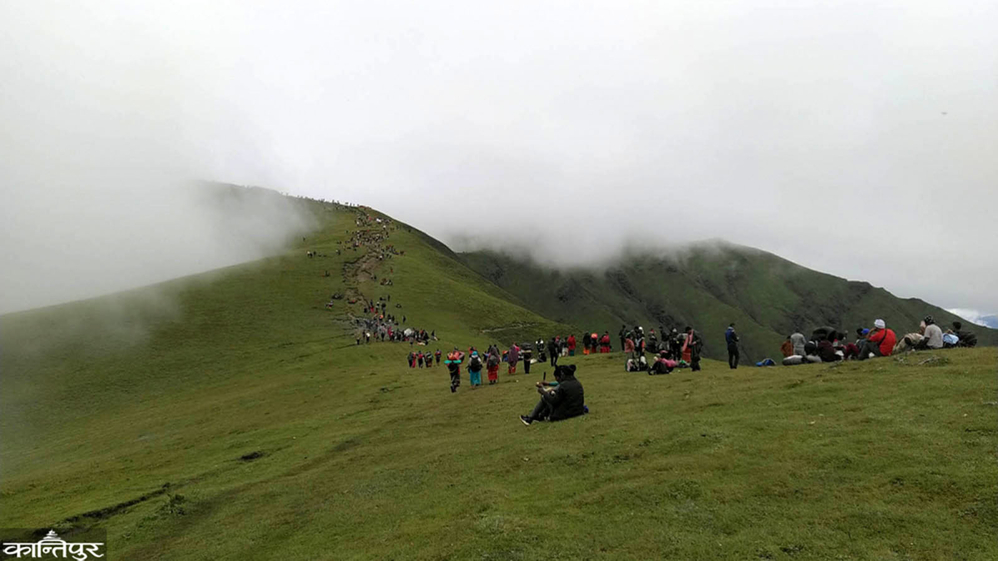
Biodiversity reserves
"It was tempting to see several herds of antelopes and deer in Badimalika, like the herd of elephants seen in Shuklaphanta National Park," said Mahasenani Paudel, who led the construction of the temple.
Valuable Herbs Kutki, Forest Garlic, Sugandhwal, Padamchal, Bhootkesh, Biojadi, Panchaunle and more than 45 species of rare and valuable herbs are found in Badimalika area, according to the Division Forest Office Bajura . In addition, plants such as lath salla, gobre salla, which produce tassol, which is used in cancer medicine, are abundant in Badimalika. neglect in
preservation
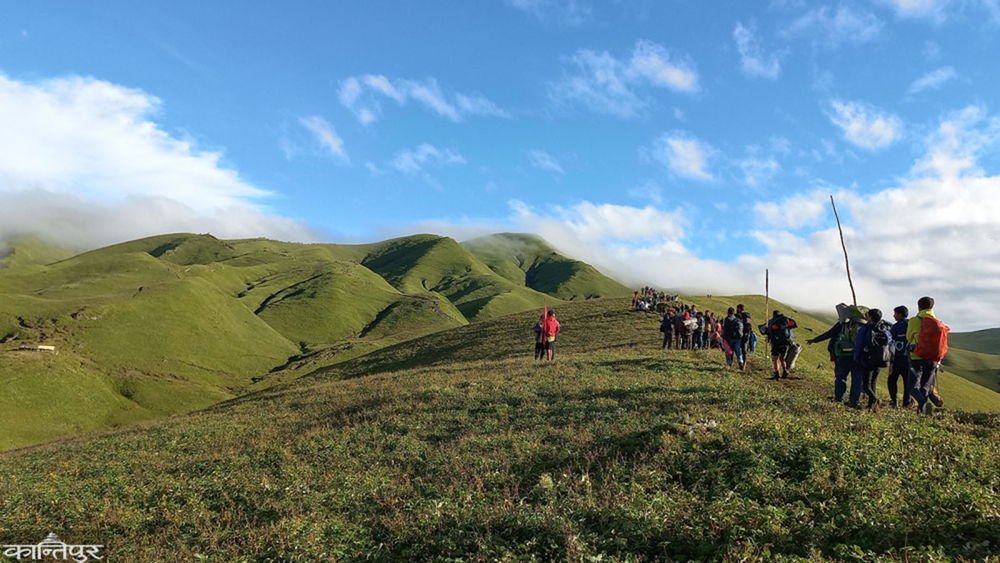
Nature's vast and rare gift has never been a priority of the government. Neither the Nepal government nor the state government has done any concrete work for the sustainable development of the capital. Residents of this area have been pleading for decades to make the city a protected area and move forward with the long-term tourism development plan, but no one listened. Tourism professionals have been pointing out that if a systematic tourism development plan is planned and implemented, it will not only bring prosperity to the Far West, but also to the country's economy.
In the budget statement of 068/69, the government had also mentioned that the Badimalika area will be promoted as a protected area . But did not implement . Conservationists say that the biodiversity of Badimalika is being destroyed due to illegal grazing, arbitrary road construction, herb and wild animal smuggling. "If the government does not advance the conservation plan, it will be difficult to save the biological diversity of Badimalika," says Gyanendra Dawadi of Gorkha, "Roads are being dug at will from various places in Bajura and Kalikot". If a road is dug in Patan, the biological importance of the Patans of Badimalika will be destroyed.
Khadka, the mayor of Badimalika in Bajura and Karna Bahadur Thapa, the mayor of Triveni Municipality, say that despite their many efforts, neither the union nor the state government has given the necessary importance to the development of tourism in Badimalika.
Related News:
Unmatched Badimalika [Photo Feature]
Suffering Badimalika
Inherited Badimalika: Flowers, herbs and wildlife are disappearing
The same priest who has been going to Badimalika for 13 years

