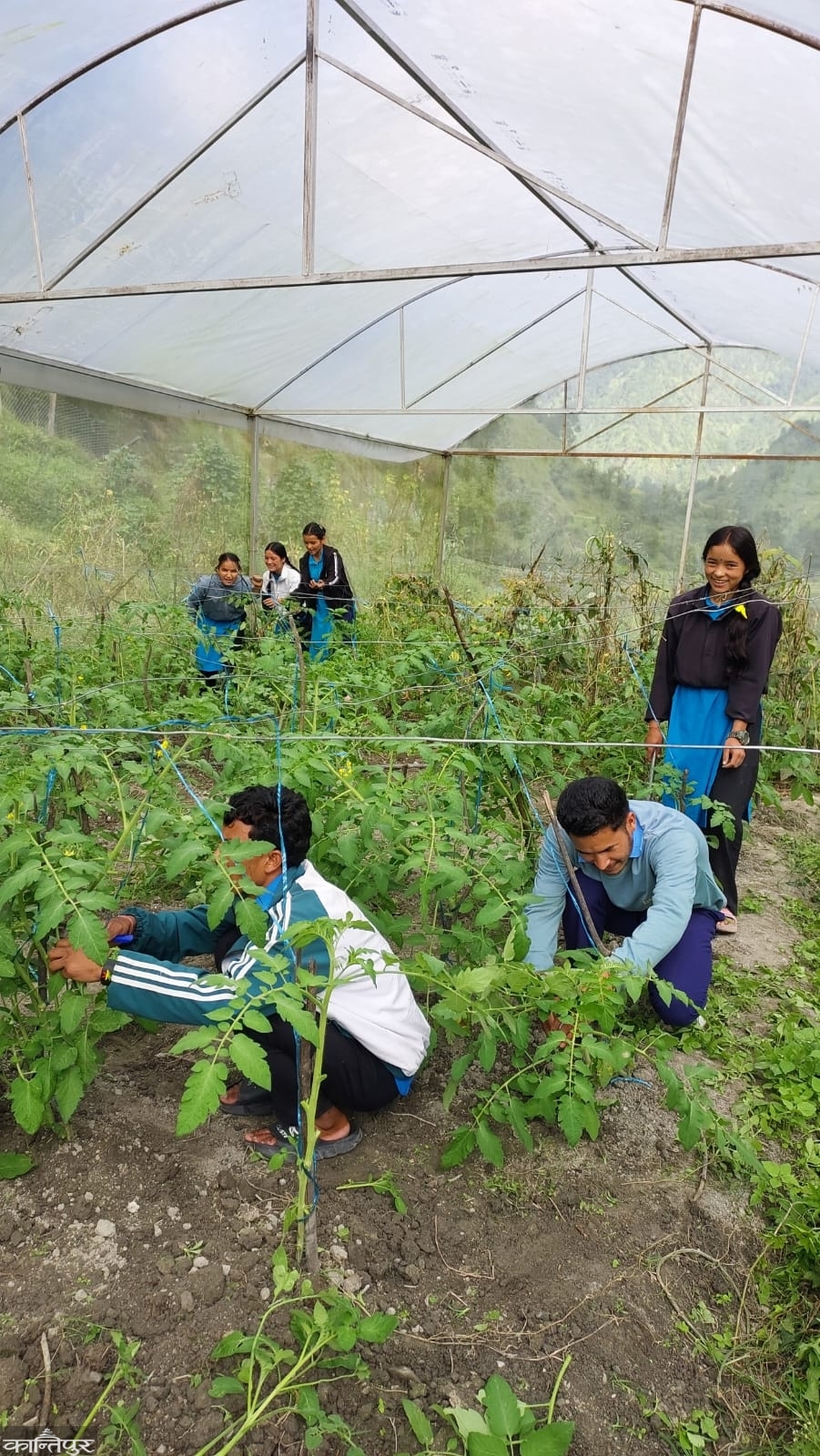
The students say - 'Since the income is also there, I don't have to ask much for tuition and other expenses from home.'
We use Google Cloud Translation Services. Google requires we provide the following disclaimer relating to use of this service:
This service may contain translations powered by Google. Google disclaims all warranties related to the translations, expressed or implied, including any warranties of accuracy, reliability, and any implied warranties of merchantability, fitness for a particular purpose, and noninfringement.
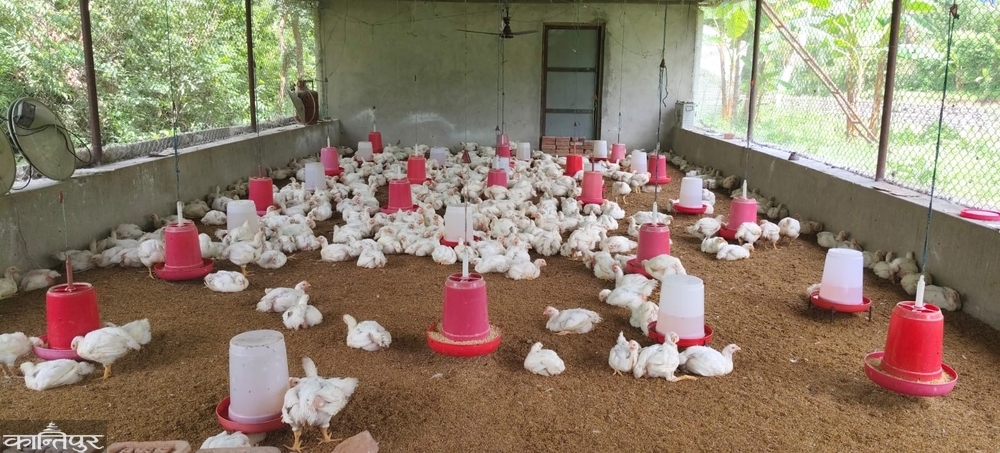
Dipesh Basnet of Barbardia-7 Rambapur in Bardia is studying veterinary subject for three years at Janjyoti Secondary School in Surkhet. Studying in the second year, he and two other friends are rearing chickens in the school. Initially, they started raising chickens of local breed and have been rearing broilers. He said that he started raising chickens as part of the 'studying-earning' program from a few days after coming to school.
"I came to study after learning about the school," he said. In the beginning, up to two dozen chickens of local breeds were kept for learning. Now there are 500 broilers. We work together as friends.'
According to him, income is also being generated from this. He said that he did not have to ask much for education and other expenses from home. He said that sometimes he only asked for insufficient amount and he planned to do business by sending money home gradually. He said that all the investments for the business were made by the school. He said that there is a rule to invest after earning and to keep all the income. He said that many other friends are also doing various businesses in the school.
Janjyoti Secondary School located in Barahtal Rural Municipality-5 Baddichaur of Surkhet has started the 'Reading-Earning' program from the year 2068. The program was started after the 18-month and three-year classes for technical education, veterinary and agriculture were conducted in the school. Principal Narayan Sigdel informed that the school has planned to start the 'Reading-Earning' program as the children who come to study in the school will be studying for 6 hours and the rest of the time will be free. "In the school where agriculture was started, the experimental classes were not conducted properly," he said, "The school has started a program to teach students practical things and make students who can earn a living after studying."
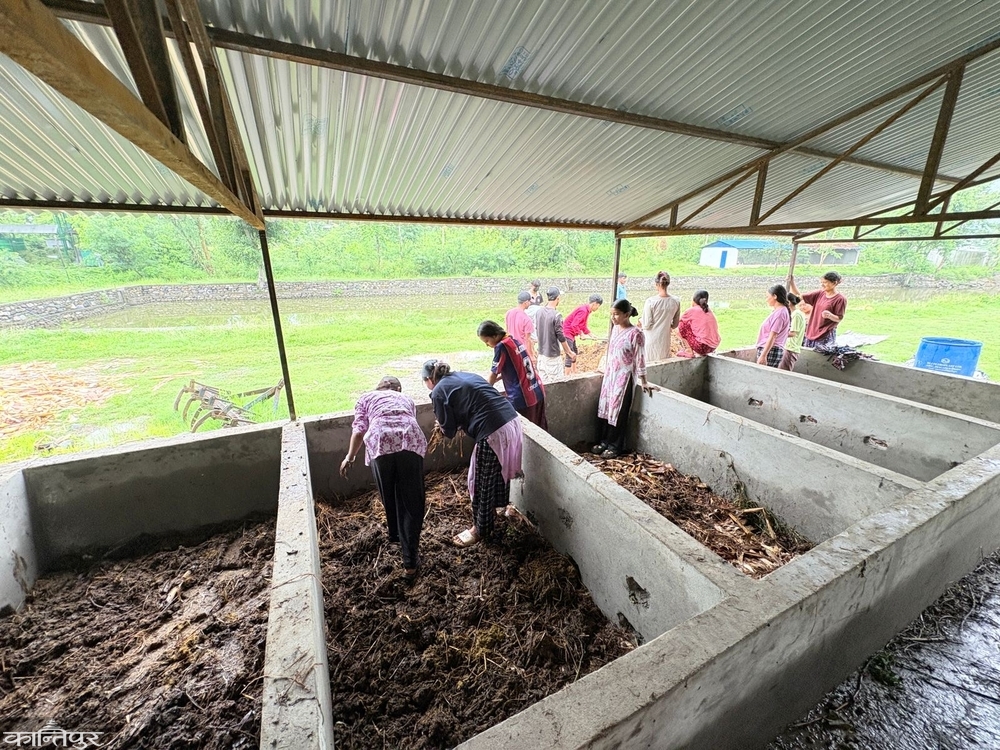
Students who want to start a group business with a loan from the school first form a group . Choosing which business to offer to the class teacher. Accordingly, the teacher recommends the school to give the loan. It is giving loans from at least 5000 to 1 lakh rupees to students . "We have involved the students in the business by adopting the method of search-research and expenses," he said. If you have to do business with a lot of investment, we will provide loans even if it is through the banking process. The amount collected in that fund is given as a loan by the school.
The Government has started the 'Reading, Earning' program which started from the financial year 2078/79. But Janjyoti started before the government's program. Education and Human Resource Development Center had initially selected 140 schools for the study and earn program. 20 schools of Karnali province were selected for the Learning by Earning (Learning by Earning) school support program under the President's Educational Reform Program. Targeting students up to class 12 who are studying in technical fields, the government has prepared a procedure to implement the study and earn program.
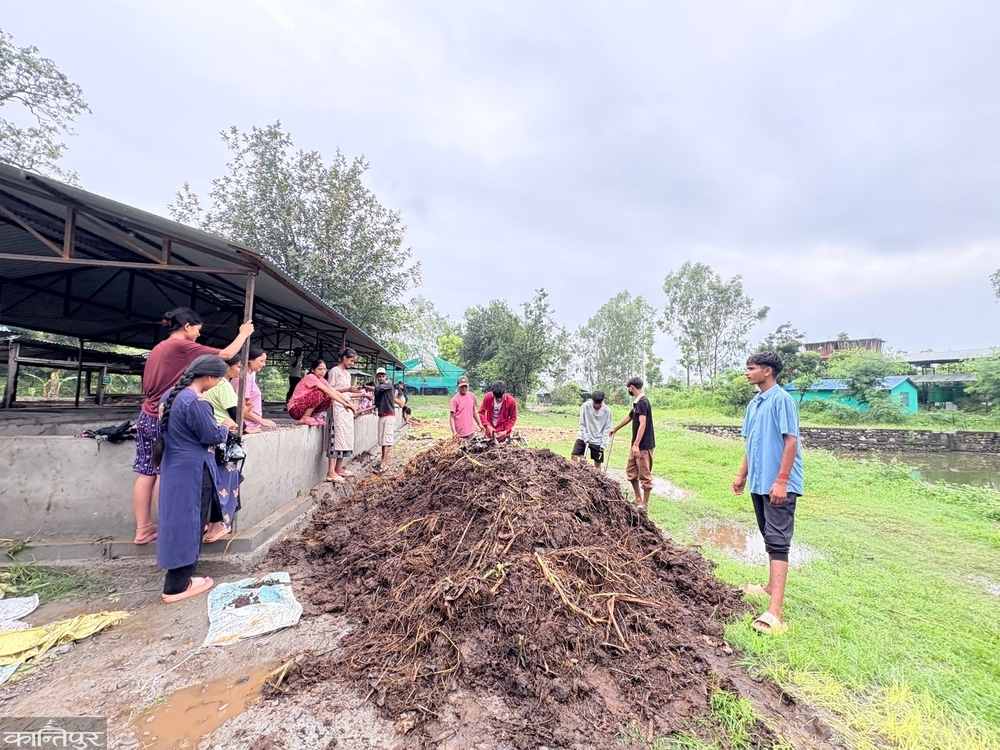
Currently Janjyoti offers 18 months of technical education and 3 years of agricultural veterinary education. Students are earning while studying. The school is also applying this program to ordinary students and parents. Principal Sigdel said that the program is being conducted very successfully.
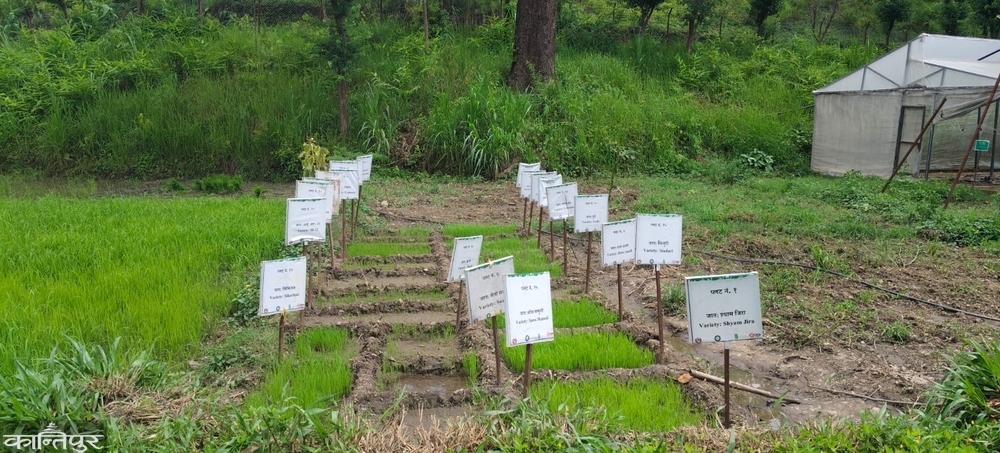
Students have reared ducks, chickens, ducks, and ducks. They are also cultivating rice, bananas and other vegetables. After coming from outside Churapote in the market, the girls of classes 11 and 12 were trained. They are doing Churapote weaving business . Some are doing it in groups and some are doing it alone . According to the school, more than 300 students have benefited from this program so far.
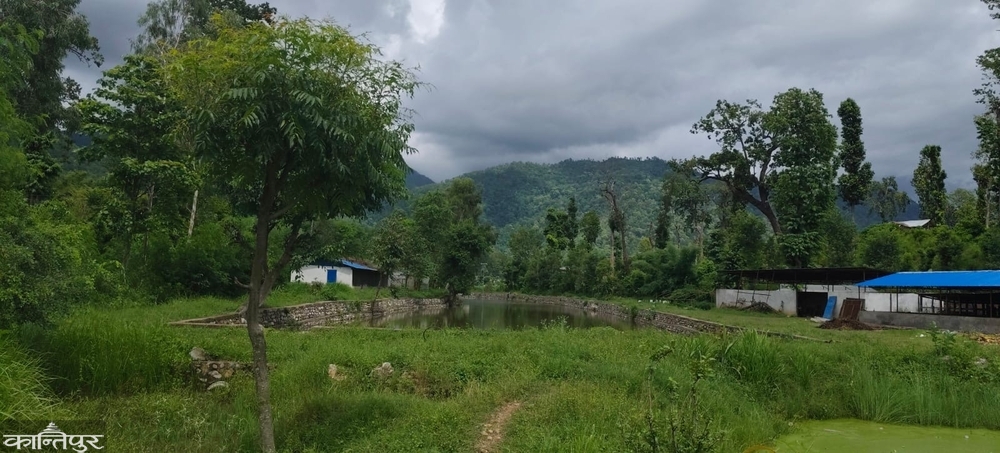
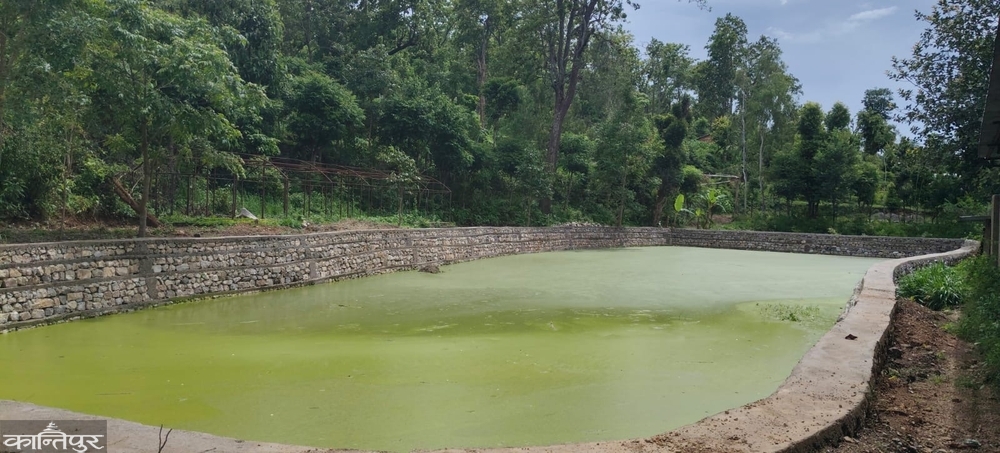
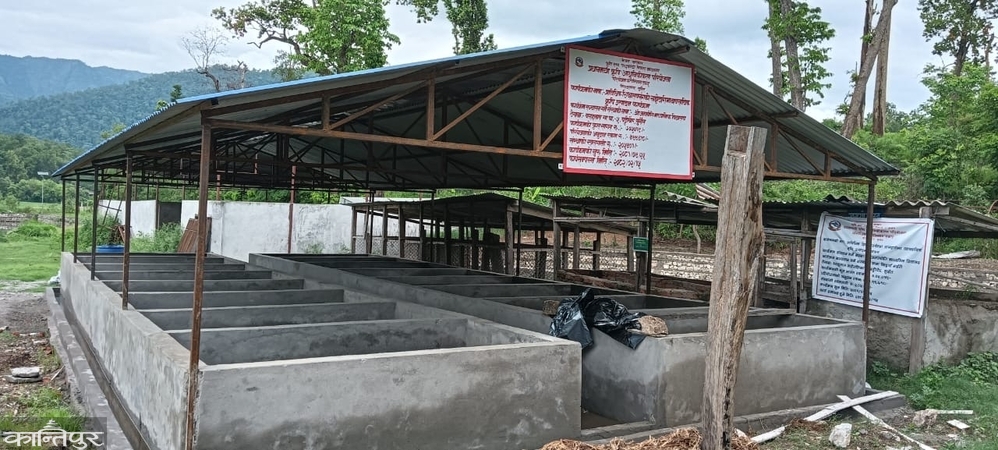
In the beginning, the school had 6 ropani of land . This is where the program was started . Now the school has attached 20 bighas of land . Fish farming has been done by making a fishpond in 1 bigha . The school acquired the land from the Mahayagya . The state government had given a budget of 5 million. Various other organizations also supported the school. The school farm has a tunnel and a goat farm . More than 50 goats have been reared. Students who have completed their studies are also doing business there. The school helps to find the market . Students send their products to the market. Its school has also been coordinating. Students from Karnali, Sudurpaschim, Lumbini and other provinces come to study in
school. Students have been covering expenses with the money they have earned. Sigdel said that teachers and students from many districts except Karnali reached the school to watch this program. According to him, the government started the program after it started in this school. Principal Sigdel said that many schools in Karnali have started. But the Ministry of Social Development and the Directorate of Education Development, which looks after the education of Karnali, do not have data on how many schools in Karnali have implemented the study and earn program. Suvarna Kumar Khadka, Deputy Secretary of Educational Development and Social Development Division, says that since the budget goes directly from the center to the local level, they are not aware.
Nepal National High School of Gurvakot Municipality of Surkhet has also implemented the study and earn program. Principal Dhal Bahadur Khatri informed that the school started the program from 2079 with the help of the Union Government. According to him, the government initially gave a subsidy of Rs. 10 lakh. In the technical school from 9th to 12th grade, the students are cultivating vegetables along with chicken farming and mushroom cultivation.
Last year 9 students joined the program, now there are only 4 . The school has 18 acres of land. But he said that students are less attracted to the program. 'Holiday happens,' he said, 'Teachers and students go home for holiday . Work will be interrupted and there will be problems.' But some students are doing . He said that they are also collecting general expenses.
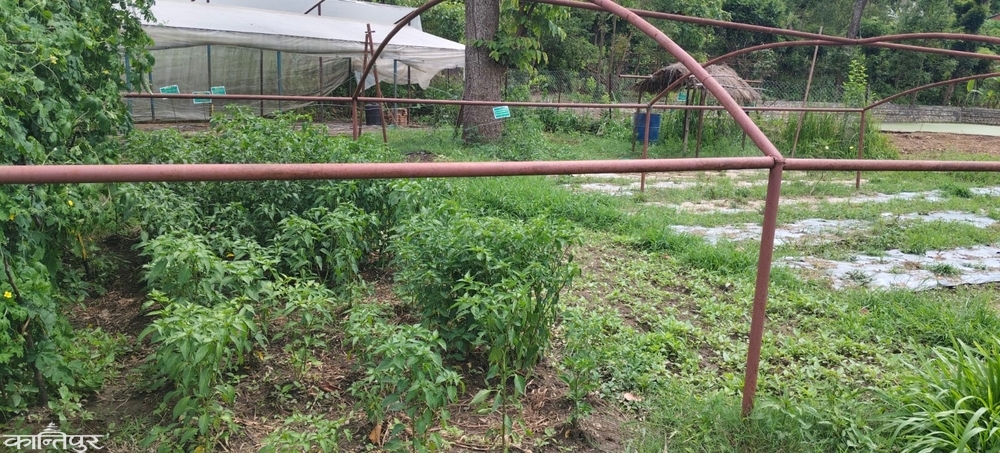
ooo
The maize planted by the students of Tribhuvan Mavi in Badigad rural municipality-2 Kharwang of Baglung has grown very well this year . Mustard was also good in winter. The students have also done mass planting of paddy on 4 acres of land rented by the school.
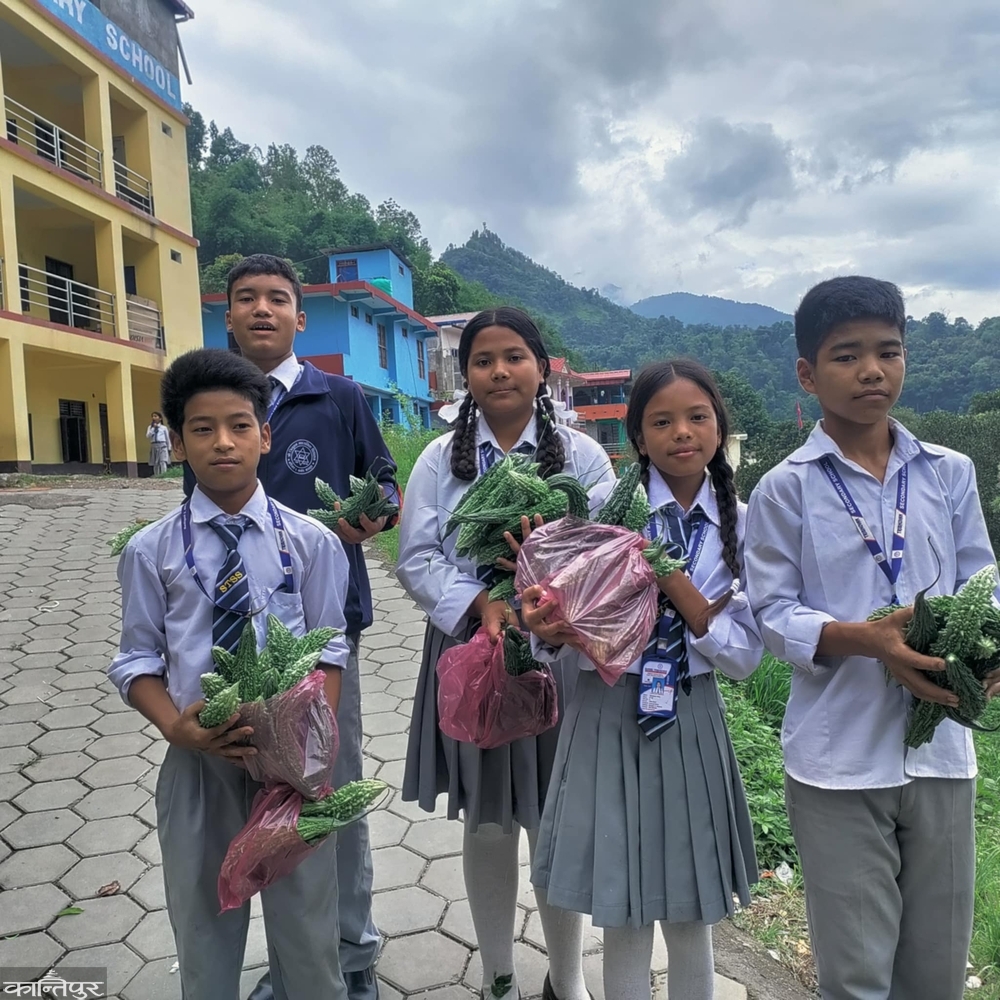
The teacher takes the students to the farm and teaches them how to grow crops. There are 3 plastic hi-tech tunnels on the school land. In those tunnels, vegetables such as golbeda, bodi, chilli etc. are cultivated . Students have earned from grain and vegetable farming. The headmaster Dhalmani Bhandari said that the income has been consolidated and spent according to the need. "The students from classes 9 to 12 have cultivated together with the 200,000 seed capital given by the Gandaki state government.
Bhandari said that this income helped to buy health and hygiene materials from Kapikalam. "Children will also learn how to work, save and make good use of it," he said, "They can remember more when they get to the tunnel one day and work." In this work, 100 students work in shifts. He said that he joined the campaign while earning and studying.
Galkot Mavi located in Galkot Municipality-3 has also cultivated vegetables on the leased land. Since there is an agricultural technical teacher here, the students have started getting information about crop science and not just farming and earning. He said that the students were able to read about the effect of water scarcity on agricultural crops from the problem of leaf curling of Golbeda . Science teacher Gangaram Subedi has been teaching many things about vegetable cultivation inside the plastic house and food crops outside.
Bindu Basnet, a class 12 student, said that since the teacher teaches what kind of vegetables and crops can be planted in what climate, the students can also help their parents at home. In a different style than studying and teaching by working hard in the classroom, the students here go to the farm and enjoy the agricultural work . This is their regular karma . They have also earned by producing well. Farming is also done on 3 plastic high-tech plants and other vacant land on the leased land of 40,000 per annum. Vegetables such as cabbage, cauliflower, cabbage, chilli, greens, radish and other vegetables are produced in Hitech and mustard, wheat, rice etc. are produced in Chhevai. The school has also conducted the study of agriculture under the faculty of science . The production of wheat, corn, banana and rice and oilseed crops also provides lunch in schools.
Apart from that, the study and earning program was conducted in Sarvodaya High School of Jaimini Municipality-5, Nepaltara High School of Tarakhola Rural Municipality-3. After the government of Gandaki province gave 2/2 lakh rupees for this program, the school is making regular income by using it as seed capital. City Education Officer Khemprasad Acharya said that the interest in agriculture among students has increased and they have also helped in buying educational materials by earning.
ooo
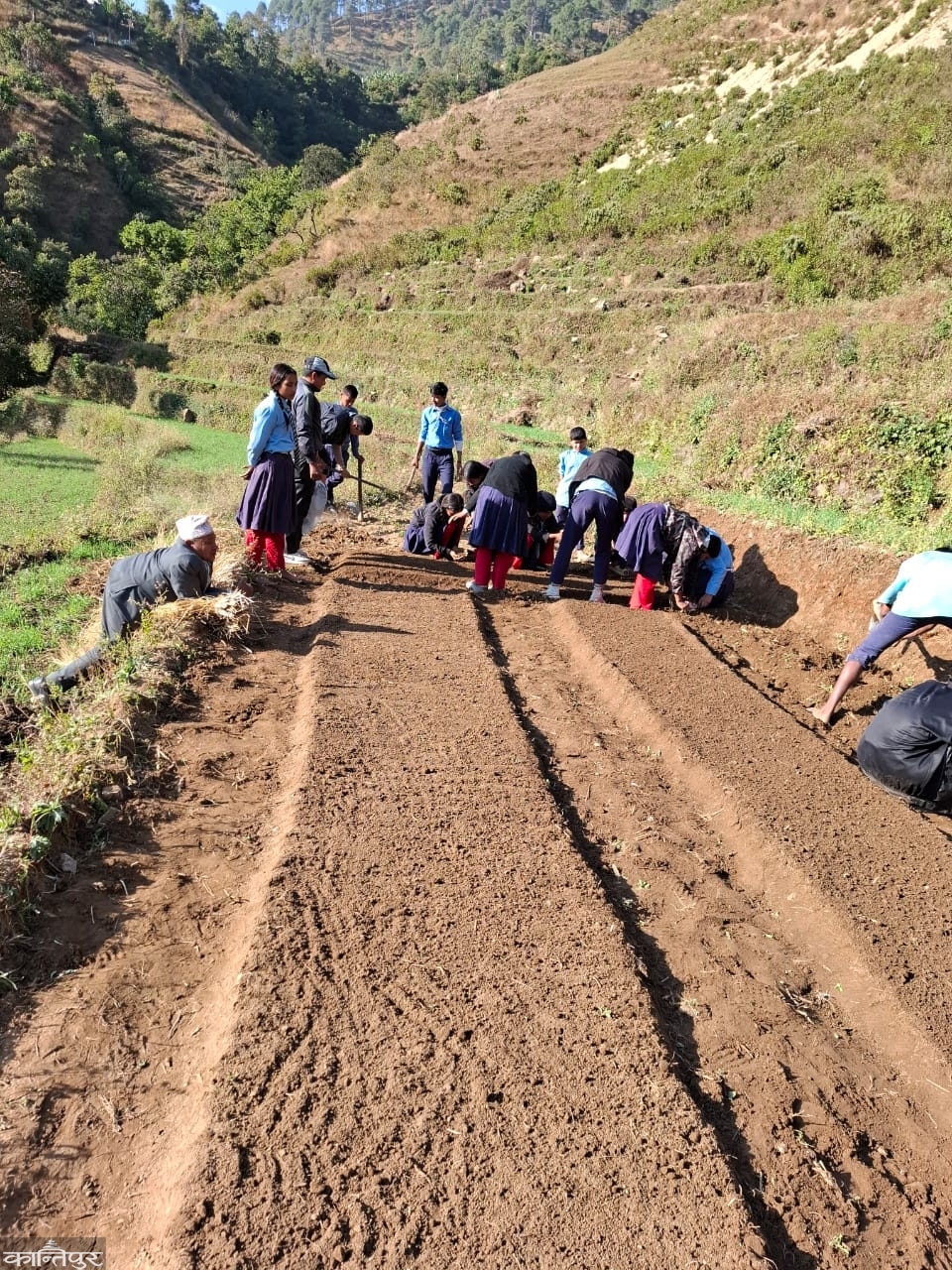
The time after Friday vacation is special for Manoj Hamal, Anita Mahat and other students studying at Satyavadi Madhyamik School Bhaunera located in Badimalika Municipality-2 of Bajura . The students of other classes go home after school is dismissed on Friday afternoon. But 45 students from class seven to nine including Manoj, Anita, tend to tend the vegetable garden that the school is running.
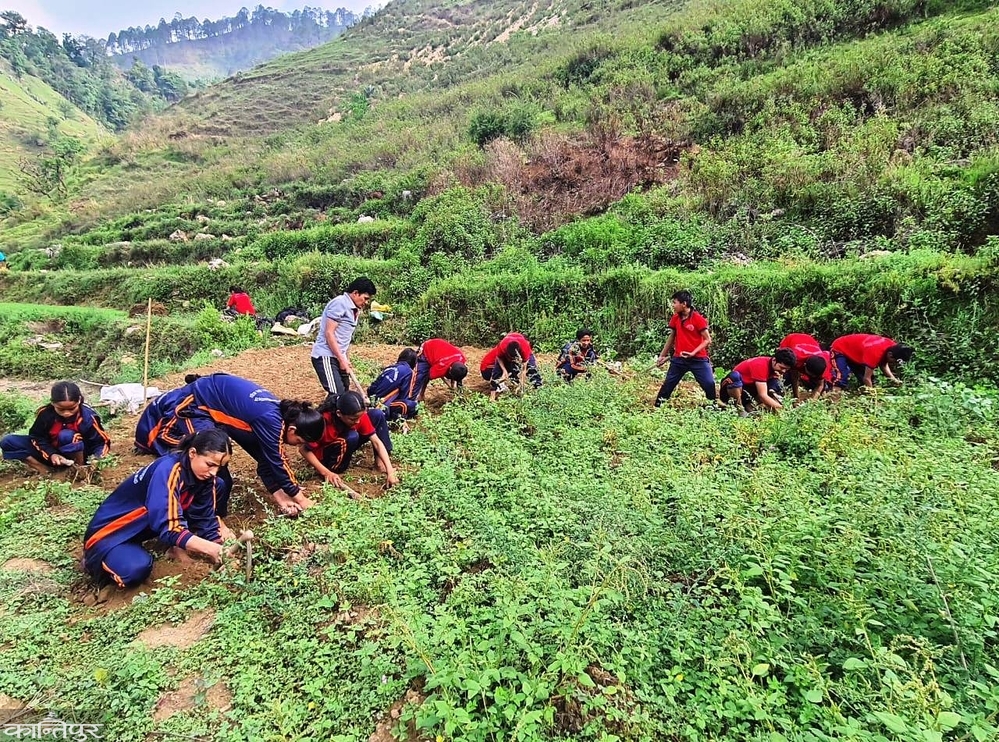
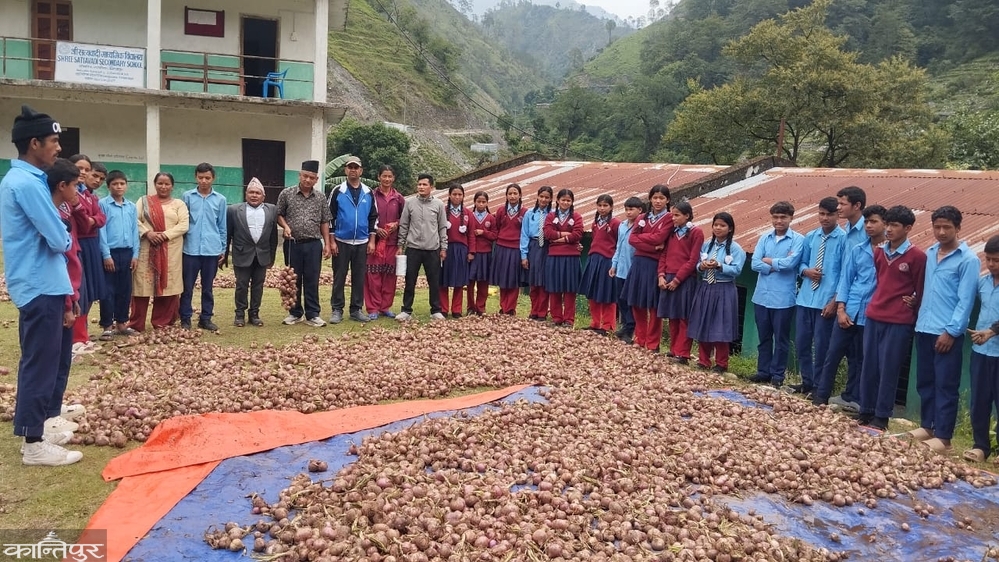
This year, students have produced 15 quintals of onions and 9 quintals of potatoes by participating in the 'Reading, Earning' program conducted by the school. The school is about two hours away from Bajura headquarters Martadi. The area where produced vegetables and fruits are sold is the headquarters Martadi. In Martadi, the selling price of onion is 60 rupees per kg and potato is 50 rupees. Ward President Dammar Mahat said that the ward office of Badimalika-2 gave five lakhs to the school. "With the same grant money, we have decided to conduct a program for students while studying and earning," said Ward President Mahat. According to the principal Hamal, with the permission of the parents and the cleanliness of the students, they have been included in vegetable farming as an extra activity. More than two hundred students are studying in the school. Among them, only 45 people who agreed were made to participate.
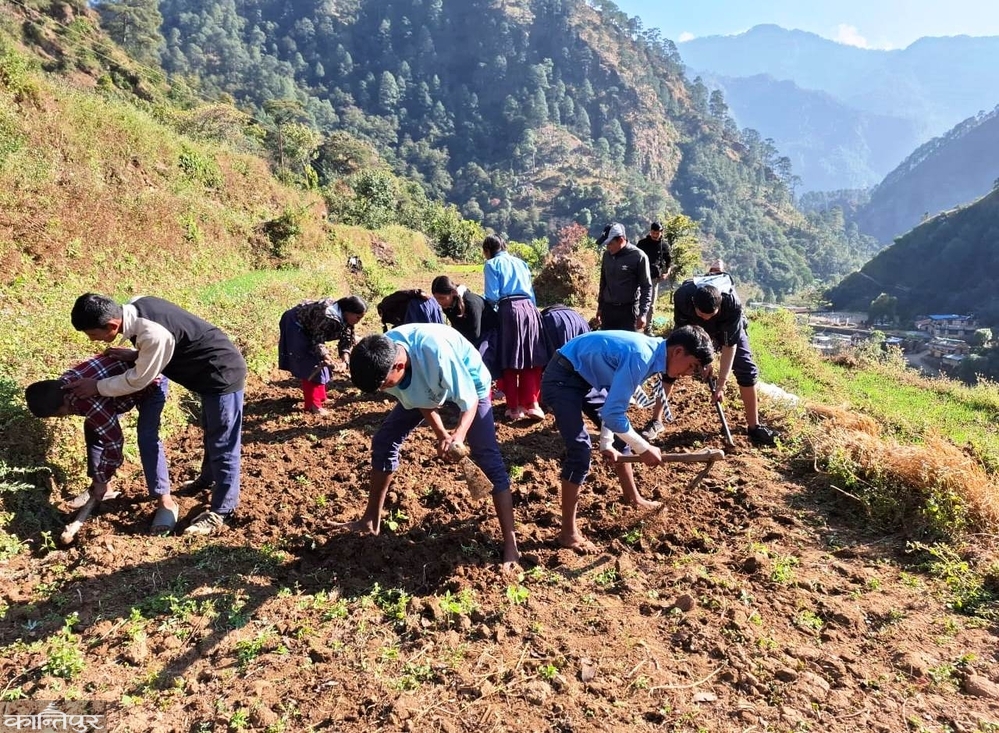
The ward office has kept the program under the plan of 'Wada Gaurav'. Ward Chairman Mahat says that a campaign has been started to make students skilled in farming including seasonal and non-seasonal vegetables, potatoes and onions. "Our school does not have any grant support from anywhere else," Mahat said.
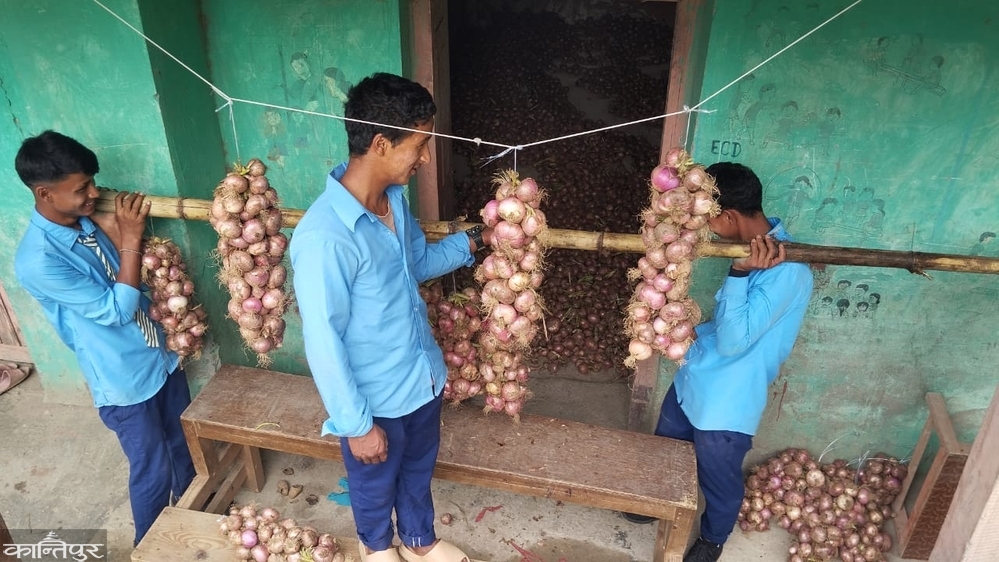
Principal Man Bahadur Hamal said that the school is cultivating vegetables by renting five plants of land from local Madanraj Pandit and Karna Bahadur Rokaya. Ward president Mahat said that 20 percent of the income from the sale of produced vegetables will be kept in the school's account and 80 percent of the amount will be distributed among the participating students. "There is a plan to open accounts for the students and deposit them in their accounts," Yagya Rokaya, the source of the program, said, "Now we have stored onions and potatoes." There is a plan to sell it after the price increases.'
There are 24 public schools in Badimalika Nagar area. Among them, Satyavadi of Bhaunera, Choyakot High School of Razali, studying and earning program has been conducted . According to the municipality, vegetables, choya pods, dustbins and straws are produced in Choyakot. Mayor Amar Bahadur Khadka says that there is a plan to expand the program to other schools in the coming year. After
was not successful as expected, Kirtichour Mavi of Bajura is running the program 'Reading, earning' with the support of the state government and the federal government. In that school, the students are rearing chickens in the school. According to the school, the school received a grant of four and a half lakhs from the budget of the current financial year 081/82 from the Directorate of Education Development under the government of Sudurpaschim Province. "Last year, a grant of ten lakhs was received from the Education and Human Resource Development Center Sanothimi of the Ministry of Education, Science and Technology," said teacher Poojan Thapa, "Students from classes nine to 12 have been made to participate in the program."