- Daily production of 2.5 tons of compost from rotting waste in Dhangadhi - Birgunj is becoming clean due to the fear of fines - 'Clean Tilottama' discussed in the world- Gulria makes fertilizer from garbage and distributes it for free
We use Google Cloud Translation Services. Google requires we provide the following disclaimer relating to use of this service:
This service may contain translations powered by Google. Google disclaims all warranties related to the translations, expressed or implied, including any warranties of accuracy, reliability, and any implied warranties of merchantability, fitness for a particular purpose, and noninfringement.
Garbage management has become a challenge at most local levels in urban areas. In some municipalities, there are sometimes disputes between local and affected area residents and public representatives-employees regarding garbage. Some municipalities have been dumping garbage in places like forests, rivers, and public areas. Some local levels have not only managed waste systematically, but have also been generating employment and income by processing it.
The Dhangadhi sub-metropolitan city of Kailali is turning the waste into 'Mohar' by collecting and managing it. In the last fiscal year 2080/81, the sub-metropolitan environment, water supply and sanitation management branch chief engineer Ashok Awasthi said that they earned 25 lakh 50 thousand rupees by waste collection and processing. According to him, the private sector has been awarded a contract for waste management for 72 lakhs in the current financial year. "The contract amount is increasing at the rate of 10 percent every year," he said.
The sub-metropolitan city, which is conducting the 'Hamro Dhangadhi, Safa Dhangadhi' campaign, has banned littering. For the sanitation campaign, the sub-metropolis has been organizing sanitation committees for one and a half years from toll booths to schools. When collecting from homes and public areas, decomposable and non-decomposable waste is collected separately . "Now the market is very clean," said Pramesh Bhatt of Dhangadhi Taranagar, "even the garbage collected at home is taken every week by the municipal vehicle."
Dhangadhi is a sub-metropolitan city with 56 tons of garbage produced daily. For the purpose of classifying and re-using the waste, the sub-city has established a micro classification center. In Saraswati Toll located in Dhangadhi-2, in July last year, a micro-waste classification center was established along with a biogas plant. Non-perishable plastic, iron, rubber, paper and lead waste has been separated and stored.
After the contract was placed, the burden of garbage collection in Dhangadhi sub-metropolis has also decreased. The center collects 21 tons of waste daily from 9 out of 19 wards and sells the collected waste after classification. In other 10 wards, waste is being collected by placing dustbins in commercial centers through sanitation campaign.
"In the last financial year, 40 million was spent on the entire management, including staff, vehicles, for garbage collection," said Engineer Awasthi, "this expense has been reduced this year." The sub-metropolis had collected 56 tons of garbage in the past years. Currently, 43 tons of waste is being collected by private partners and 13 tons of waste is being collected by the sub-metropolitan city. Awasthi said that by activating the four pillars of waste management (policy, budget, physical infrastructure and public awareness), success has been achieved in waste management.
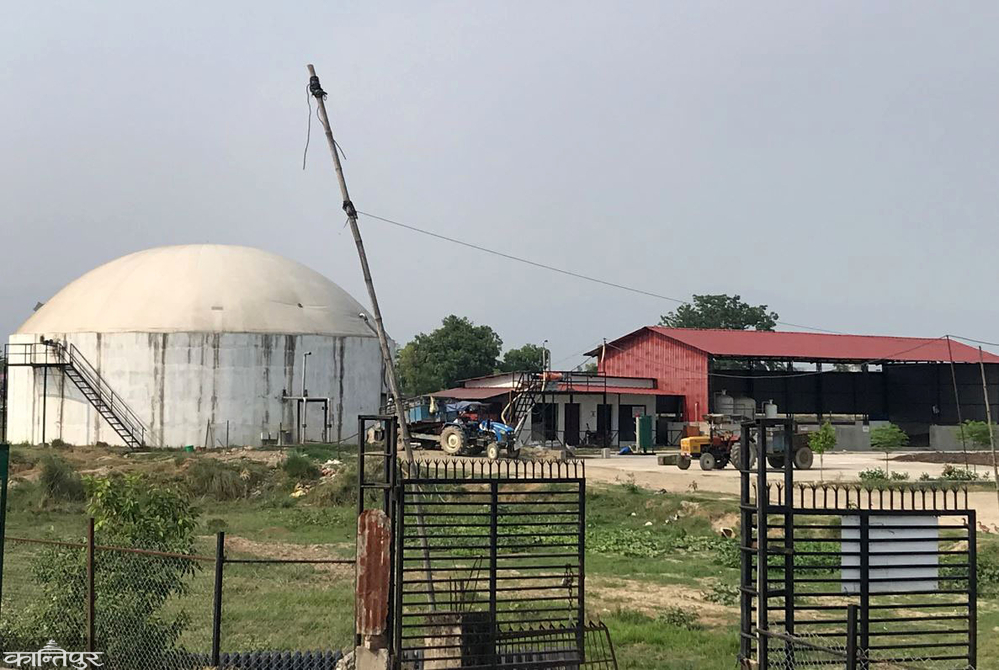
A biogas plant has been installed in partnership with Sub-metropolis, Alternative Energy Promotion Center and Dev Training Center. The sub-city is producing Compressed Natural Gas (CNG) from waste . According to the sub-metropolis, 60 cylinders of gas are being produced daily. The sub-metropolis is also producing two and a half tons of compost every day from the rotting waste . 18 tons of waste is consumed daily in the biogas plant.
Sub-metropolitan has mobilized facilitators for public awareness in Vadawada and Toll Sanitation Committee has been formed in Toll Toll. According to the sub-metropolis, sanitation committees, educational institutions (private and government) and eco clubs that have done exemplary work in accordance with the public awareness and participation policy regarding waste management from home to school are being rewarded.
On the occasion of its foundation day, the sub-metropolitan city honored the ideal toll sanitation committee of Dhangadhi-2 by giving a scheme equal to 10 lakhs for its excellent work by contributing to the 'Our Dhangadhi, Clean Dhangadhi' campaign . Similarly, Behdaba Mavi of Ward-16 and Rising Star English School of Ward-6 were honored with Rs 500,000/- for their excellence in cleanliness.
Mayor Gopal Hamal said that the concept of 'Zero Waste' will be implemented for the sustainable management of waste using a technology-based management system . Mayor Hamal says that policies such as installing plastic bottle collection equipment, upgrading toilets in public places, preparing consumer database system, solid waste management and information system, ENWAS database system, making laws for faecal waste management and protecting surface water resources have been taken in Dhangadhi, which has banned plastic in the city.
An integrated waste management center and faecal sludge management system are being constructed in Dhangadhi-7 Patela by the regional urban development program of the government. Dhangadhi sub-metropolitan city has also been awarded as a founding member of 'Zero Waste Network City'. Global Alliance for Incinerator Alternatives (GAIA) has given the founding membership of the network for Dhangadhi's success in managing municipal waste generated in the city. Birganj changed after
campaign
Until three-four years ago, guests coming to Birgunj used to wrinkle their noses seeing the dirt and stench here . There used to be heaps of garbage on the main road of Birganj from morning till evening. Most of them used to throw garbage in front of their houses. And only the next morning, the Kuchikar of the metropolis used to pick up that garbage . But now the scene has changed .
There is no garbage on the streets of the metropolis. In the past, the garbage that was hardly collected once in the morning is nowadays collected up to three times a day. Those who dispose of garbage from houses, shops, offices, commercial establishments in the busy streets are afraid of paying fines. Those who hide from their homes by throwing garbage on the bodies of passengers in plastic bags are now reluctant to do so. Now everyone throws garbage in the tractor that comes to collect the garbage . A guest who comes to Birgunj says, 'How is this possible!' Indians from across the border have also started praising the cleanliness of Birgunj.
Rajeshman Singh, head of Birgunj metropolis, says that his first priority is the cleanliness of the metropolis. "In terms of cleanliness, Birgunj was criticized and ignored, the manpower of the metropolis was not being utilized," he said, "Cleaning campaign was launched with determination, and its positive results can be seen now."
At present, a team of 19 cleaners under the office of the metropolis is engaged in the cleaning of large drains and large areas within the city area, he said. Similarly, he said, 3 hundred and 50 sanitation workers from the sanitation contractor are engaged in sanitation in all 32 wards daily. 49 tractors, 4 excavators, 1 broomer, 1 backhoe loader and other machine tools are constantly in use for cleaning the metropolis. He said that every area is being cleaned twice a day. Cleaning and garbage collection is done up to 3 times a day in temple and busy market area. He said that the change in the cleanliness of the metropolis is possible because there is work to increase, collect and pick up garbage even at night. 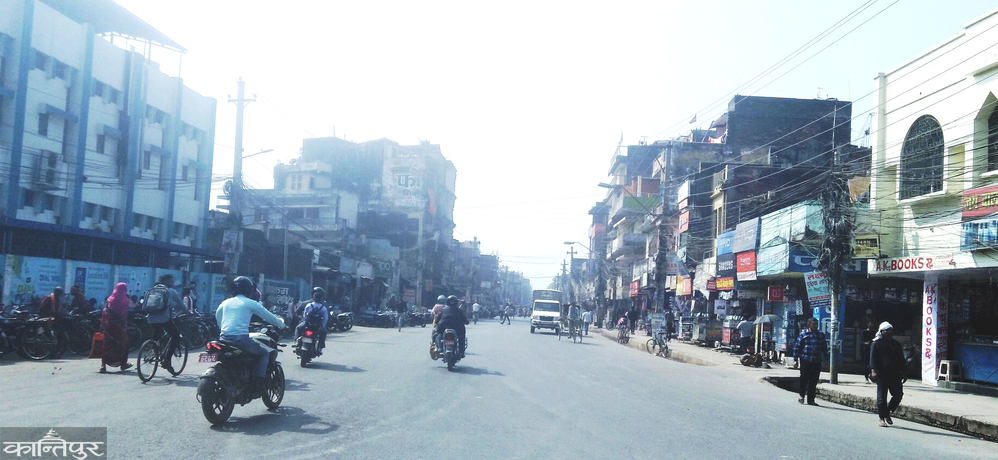
In the beginning, the bad habits of metropolitan residents were seen as the main obstacle to success in the sanitation campaign. Mahanagara Pradhan Singh claims that after the fines for littering on the streets were started from 17th December 2079, the trend of littering has gradually decreased and now it is zero. 42 lakh 43 thousand 1 hundred 5 rupees were collected by fining 1 thousand 435 people till 2079 Chait, the year the
campaign started. In the second year i.e. 079/80, 15 lakh 36 thousand were collected from 591 people. In the third year 080/81, 19 lakh 35 thousand 300 rupees were collected from 609 people. Until March 2081/082, when 235 people were prosecuted, 771,000 were collected. Chief Singh also says that the trend of littering has decreased and the number of fines is decreasing every year after the imposition of fines.
8 years ago, due to the lack of landfill sites, garbage was thrown everywhere in the metropolis. Now that the waste has been dumped at the site, there has been a massive reduction in waste and odor. The site, which can be used for 20 years, collects 65 to 75 tons of waste daily, apart from the soil of the canal. Sardar Jaspal Singh, president of Prakriti Seva Pratishthan, says that this is the beginning of the cleanliness campaign of the metropolis and it is yet to be completed. He said that not only the main roads, public places and urban areas of the metropolis should be prioritized for cleanliness, but all 32 wards and rural areas should also be prioritized. He said that the main drain of the metropolis should also be prioritized for cleanliness.
Tilottma, which has gained fame with the participation of local people,
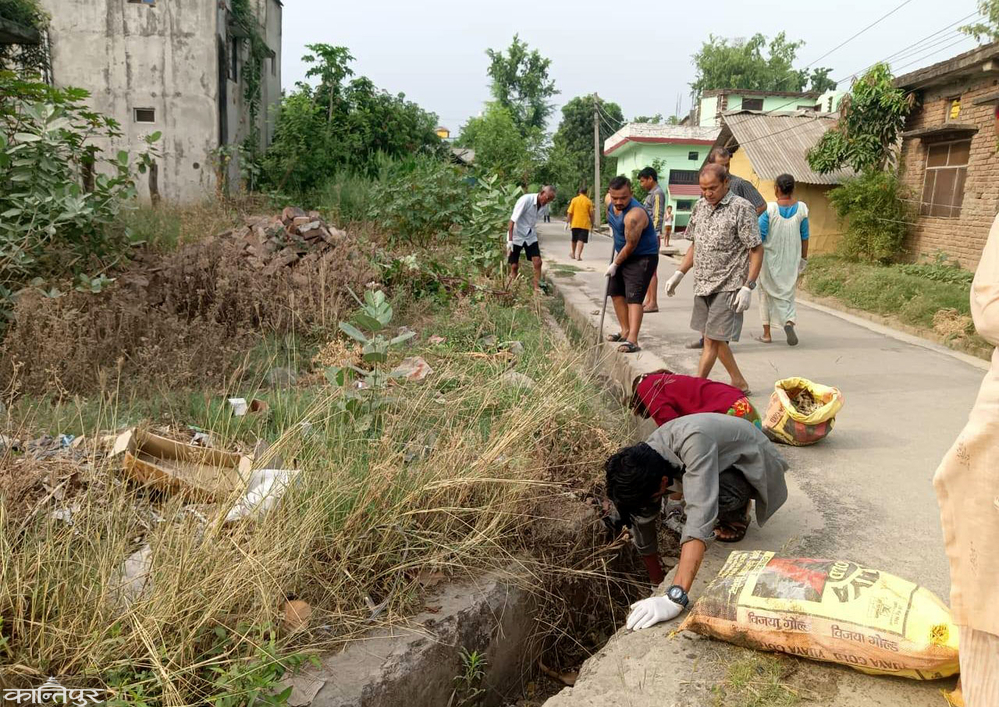
Tilottma of Rupandehi has become internationally known due to its new efforts in cleanliness. In order to collect and manage the garbage of 17 wards in Tilottama Municipality, a sanitation program is conducted in the municipality on the 1st and 15th of every month under the leadership of one village development organization of one ward. An organization called Environmentally Beautiful Nepal has taken responsibility for the waste management of Wards 1, 3, 4, 5 and 6. The organization manages waste in public areas that are not temporarily inhabited. Similarly, in Ward 2, after the decision was made to manage the waste by the locals, ward level cleaning and waste collection is being done temporarily. 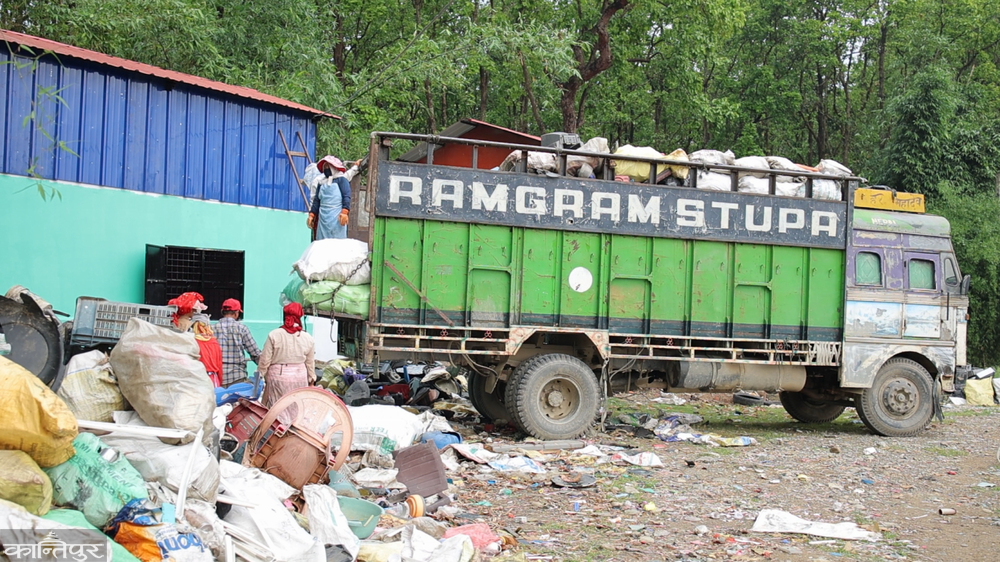
Chairman of Ward 2, Dil Bahadur Bhattarai said that the locals have moved forward with the aim of keeping their ward clean. Garbage has been managed in the vacant area of Shankarnagar Community Forest where trees cannot be planted, and the smell has been removed as the rotting waste is composted by the locals. The regular cleanliness and greening promotion campaign with the participation of the locals has been an extraordinary success. With the active participation of local citizens, students, social workers and employees in the campaign, there has been an excellent practice of city cleaning.
in 'Green Tilotta': The 143rd series of the city sanitation and green promotion campaign, which is being conducted under the slogan 'Clean Tilottama', has ended on 1st May. Tilottama has launched such a campaign by centralizing public participation and environmental awareness. The city's Green Clean Tilottama campaign has been selected in the Ecological Transition and Environment group for the Best Practice in Citizen Participation Award called by the International Observatory on Participation Democracy.
When the application for the 2025 award was requested, among the best 40 out of 137 local and state governments of 37 countries in the world, Tilotta also succeeded in the final competition and won the award of the best vote collector . Also, Narayan Aryal, Chief Administrative Officer, gave information about garbage management and green cleaning in Argentina through a presentation.
120 people are engaged in cleaning work in Tilottama where about 20 tons of garbage is collected daily. The city has been conducting sanitation campaigns on the 1st and 15th of every month at the ward level, encouraging the locals to participate in waste segregation, collection and management.
Mayor Ramakrishna Khan said Tilotta has become known in the world for cleanliness due to the participation of citizens. He informed that in Ward 8, the housing association is working through the waste collection and processing center. He said that the cooperative has been collecting, processing and selling waste from 11 wards under the 'Green Revival Promotion Project'. He said that by collecting the garbage from Ward No. 7 to 17, the cooperative is earning 4 lakhs per month by recycling the reusable items. The cooperative is processing waste by keeping 7 different machines. 52 people have got employment in that center. 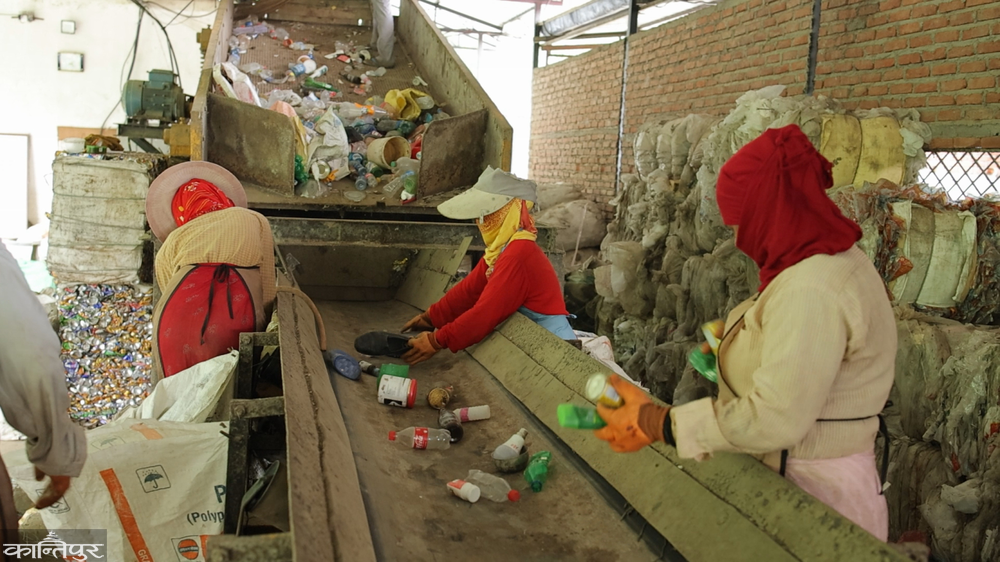
The center, which has the support of UNDP, is known as a sample processing center in Nepal. The municipality has also claimed it as the first processing center in the country. Khem Gautam, chairman of the cooperative, said that by increasing the 6 bigha area of the Karhaiya Community Forest, which is currently being used, they will make compost, sell it from there, and bring waste from other wards to the processing center to become commercial. He said that people who come to visit this center from different parts of the country learn and also call him to train in different places.
"We have distributed 2 dustbins, one for putting rotable waste, the other for non-rotable waste", he said, "non-rotable waste is brought to the center, rotable waste is composted at home, we have trained them". He said that the treated garbage is sold at 80 rupees per kg after looking at its usage. Not only recyclable, but non-recyclable plastics such as biscuits, gutkha, noodles and other plastics are sold to the industry to be used as briquettes (environmentally friendly firewood). According to Tilottama Municipality, it has become a successful example of clean and orderly city building in cooperation with community, cooperative, private sector and local government.
Gulria makes fertilizer from waste and distributes it for free.
In 2062/063, Gularia municipality built a landfill site to manage excreta-based materials and waste produced in the city after it was declared an open defecation-free municipality. In coordination with the community forest located in Gulria-8, the municipality also helped in fencing and tree planting to protect the forest along with waste management.
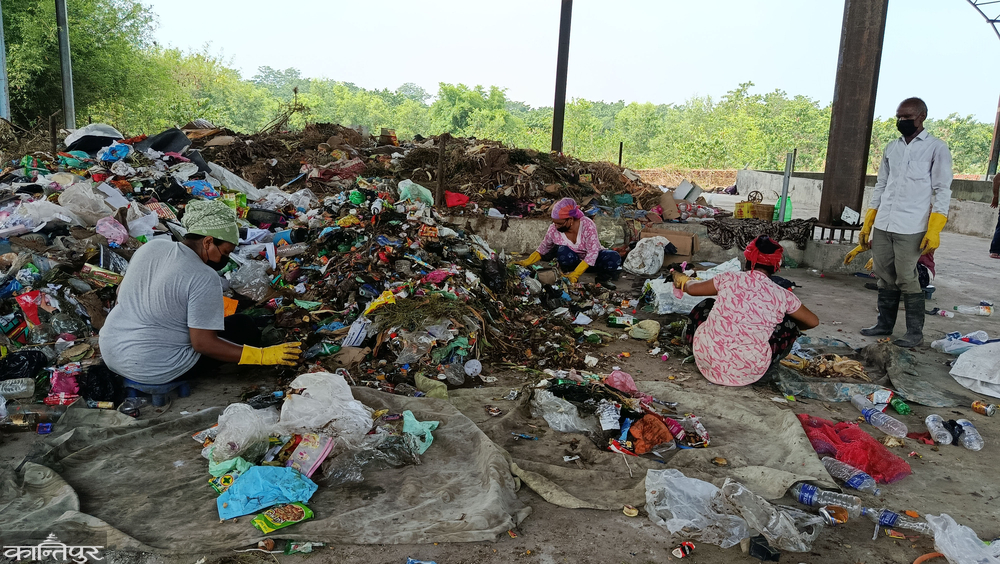
How to manage faecal matter by emptying the city residents' toilets after they are full, Gularia made a plan and after coordinating with Kathmandu's Enfo organization for technical support, the plan to manage waste and generate income became possible.
Mukund Aryal, information officer of Gulria Municipality, said that the community has a great contribution in waste management. "It has been successful because it is a demand base program," he said, "Gularia Municipality has allocated a regular budget of 30 to 40 million every year for integrated waste management. Likewise, there is a tanker, 2 tractors to pick up garbage, a tipper and 15 human resources to empty the full toilets of the residents.
According to him, the waste collected from the city is taken to the landfill site and separated into biodegradable and non-biodegradable. The non-biodegradable lead is managed by burying, plastic bottles, iron etc. are sold and the biodegradable waste is separated to make bio-fertilizer . The final product from the fecal waste treatment plant is also mixed with the rotting waste separated for organic fertilizer and organic fertilizer is made . The product organic fertilizer has been distributed free of charge to the general public for use in flower gardens. Information Officer Aryal told that there is a plan to generate income by marketing the organic fertilizers produced.
- Arjun Shah (Dhangadhi), Shankar Acharya (Parsa), Sanju Paudel (Lumbini) and Ramprasad Chauhan (Bardia)

