Farmers increasing income along with production after adopting 'climate uplifting technology'
We use Google Cloud Translation Services. Google requires we provide the following disclaimer relating to use of this service:
This service may contain translations powered by Google. Google disclaims all warranties related to the translations, expressed or implied, including any warranties of accuracy, reliability, and any implied warranties of merchantability, fitness for a particular purpose, and noninfringement.
There are 2 plastic tunnels in the garden of Kaushila Nepali, the president of the Samaj Parintar Farmers Group located in Narharinath Rural Municipality-9 Fourth of Kalikot. Where vegetables such as tomatoes, cucumbers, cauliflower, chillies grow for twelve months. It has been four years since she stopped using farm chemical pesticides while keeping 50 local breeds of chickens by making semi-closed cages at home.
She uses three types of organic pesticides prepared from cattle urine, and after the management of manure, cattle manure has started to reach 8 ropani land easily . She said that she is earning 15,000 to 30,000 rupees per month from vegetable farming and poultry farming. "The village has become self-sufficient through vegetable farming," she said.
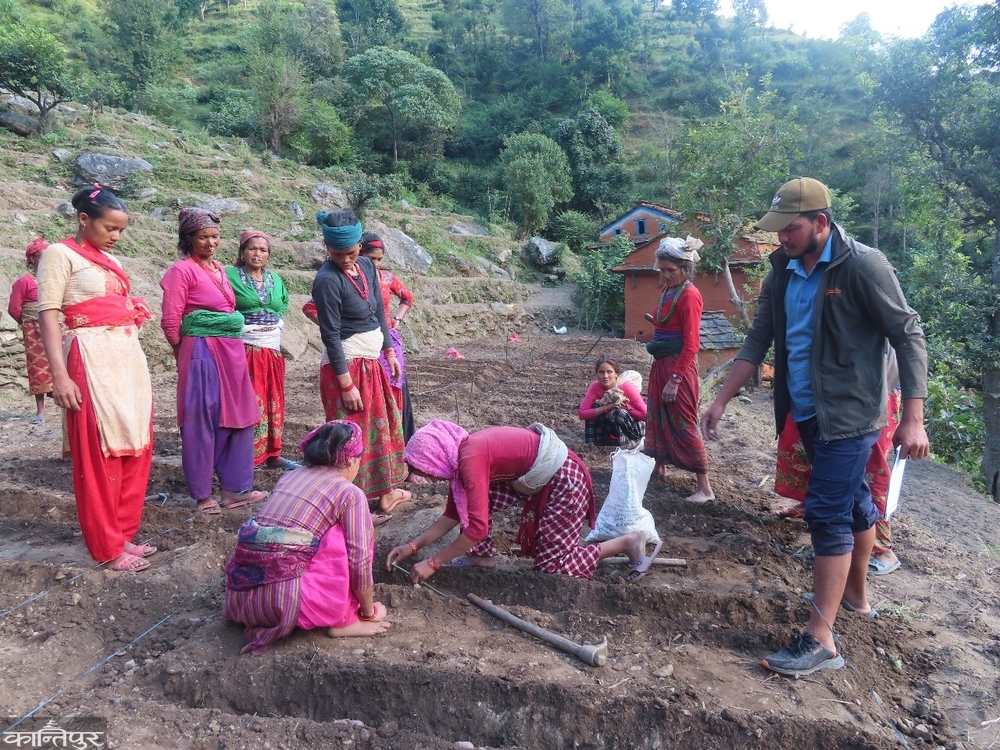
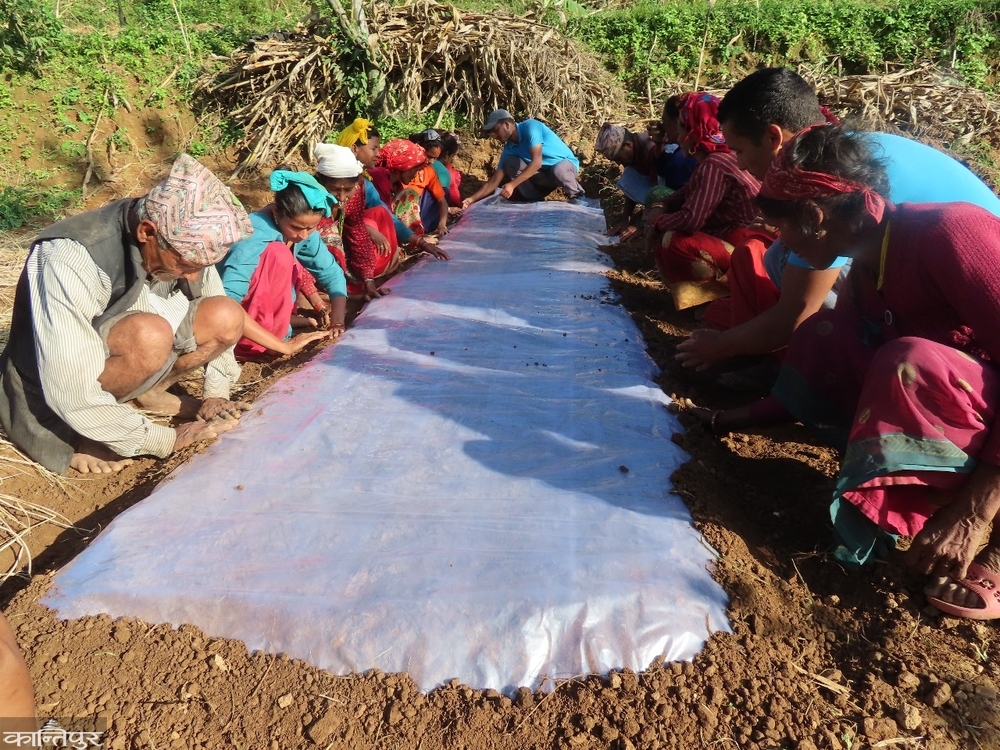
His neighbor Atirupa Shahi's garden has been growing pesticide-free vegetables for four years. "Due to the use of chemical pesticides, the fertility of the soil was becoming weak. After starting organic production, our vegetables have reached the headquarters of Manm and Surkhet," she said. Vegetables have been cultivated using plastic tunnels in all the houses belonging to the group. Tara Shahi, a member of Makhamli Farmers Group, said that 'Bio Pesticide' was used when the disease outbreak was seen. According to him, methods such as Tande nursery, 'hotbed', 'solarization' have been adopted for soil purification. When using these methods, if the fertility of the soil does not go away in the air, the outbreak of diseases will be reduced. She said that the waste water was used in the karesabari after the installation of water tanks in the houses. "The use of adaptation technology is making the soil suitable for crops and farming," she said, "After improving the soil at home, organic fertilizers are being produced to reach both grain crops and vegetables. Years have passed since the use of hybrid seeds and chemical fertilizer drugs in the fields have passed." Dila Pariyar, a member of the Social Change Farmers Group, said that farmers need favorable weather for planting and growing crops. "Climate change has affected the agricultural sector the most, we are facing the effects of drought, low grain production, floods and landslides," she said. After the use of technology, it has become easier to avoid the effects, we have started planting dry crops to reduce the effects of climate change.' According to Pariyar, an emergency fund has been set up in the group. Nepali said that the members of the group deposit 50 to 100 rupees monthly and if there are any problems, they take a loan at 12 percent interest. Sangita Pal, climate change officer of Courage Nepal, said that an Akshaya fund of 10,000 rupees has been established in all farmer groups. According to him, women have been included in the group to reduce the impact of climate change by drawing a crisis plan.
The rural municipality has also supported the campaign of the farmers' group. After the heavy rains caused by disasters including floods and landslides, Village Vice President Kamal Bahadur Shah said that the Local Disaster and Climate Uplifting Act was passed in last year's winter session. According to him, farmers' groups have been mobilized to declare a climate-sustaining municipality within 2 years. "We have passed the law to create a climate-enhancing municipality, emphasis has been placed on environment-friendly, sustainability and food security," he said.
Vimala Khatri of Shivalaya Rural Municipality-5 Thalaraikar of Jajarkot said that after she started cultivating organic vegetables, vegetables started fetching good prices. According to him, traders come to the garden to buy vegetables. A member of the cooperative farmers group, she informed that she is earning 250 million rupees annually by cultivating seasonal vegetables in 2 plastic tunnels. "Gothem manure management has reduced the dependence on chemical fertilizers," she said, "We have made organic pesticides using three types of animal urine, which is helping to control diseases and increase the fertility of the soil."
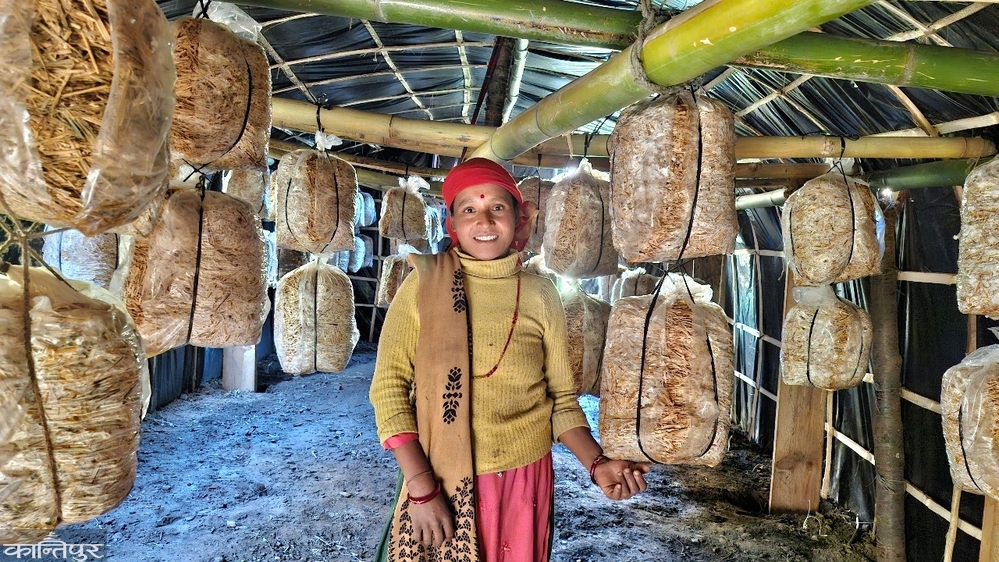
Nainsara Rana, a member of Chandrasurya Farmers Group located in Shivalaya Rural Municipality-2, also said that climate She is growing various vegetables and mushrooms in 2 plastic tunnels by adopting uplifting methods. He says that he is earning up to 25,000 rupees per month. She said that due to climate change, problems such as long droughts, no rains, excessive rains, and more outbreaks of diseases have been observed. According to him, to prevent this effect, drought tolerant crops have been planted in the village.
Senior Climate Change Officer Hari Prasad Adhikari said that temperature is very sensitive for agricultural crops. According to him, due to temperature and excessive rainfall, some crops flower early while others bloom late . "The reproductive process of flowers also affects the production process, even if it is too cold, it will affect the fruit of the crop," he said, "due to which the Raithane crops are disappearing, new varieties of crops are taking their place."
Village Chairman Sher Bahadur Shahi said that the campaign to create a climate-sustainable municipality has been started by mobilizing 1,157 members in 45 groups in Shivalaya. In order to make the farmers more technology-friendly, SMS has been started to be sent to mobile phones recently about the weather, market price of vegetables and measures to control the outbreak of various diseases.
According to Chandra Bahadur Shahi, Chief of District Agriculture Development Office, Kalikot, about 600 farmers and people's representatives, employees and leaders are receiving information about the 3/3 day weather forecast on their mobile phones. "Weather information has helped to plant and import seasonal vegetables and crops," he said. Farmers have been helped in the marketing of vegetables, farmers have been able to control diseases in vegetables on the basis of SMS.'
Karnali state government has been conducting organic agriculture as a campaign for 6 years, said Bakhat Bahadur Khadka, spokesperson of the Ministry of Land Management, Agriculture and Cooperatives. The Ministry has allocated Rs 4 billion this year for the Organic Karnali Campaign. "We have tried to increase productivity by making farming environment-friendly and climate change friendly, we have branded Raithane crops with a valuable logo for marketing," he said, "Incentive subsidy program has been implemented for farmers, we are supporting organic fertilizers and seeds."
Minister of Land Management, Agriculture and Cooperatives Vinod Shah said that the provincial government has prepared 12 bases for organic Karnali, including tightening the use of chemicals and harmful pesticides in agricultural produce, producing organic pesticides through 6 industries, and establishing pesticide laboratories. "We are giving subsidies on the basis of area in vegetable and fruit cultivation with 9 types of Raithane crops, farmers are also getting various agricultural tools as subsidies," he said, "we are also assisting in irrigation, necessary seeds and marketing of the produced products to increase production." 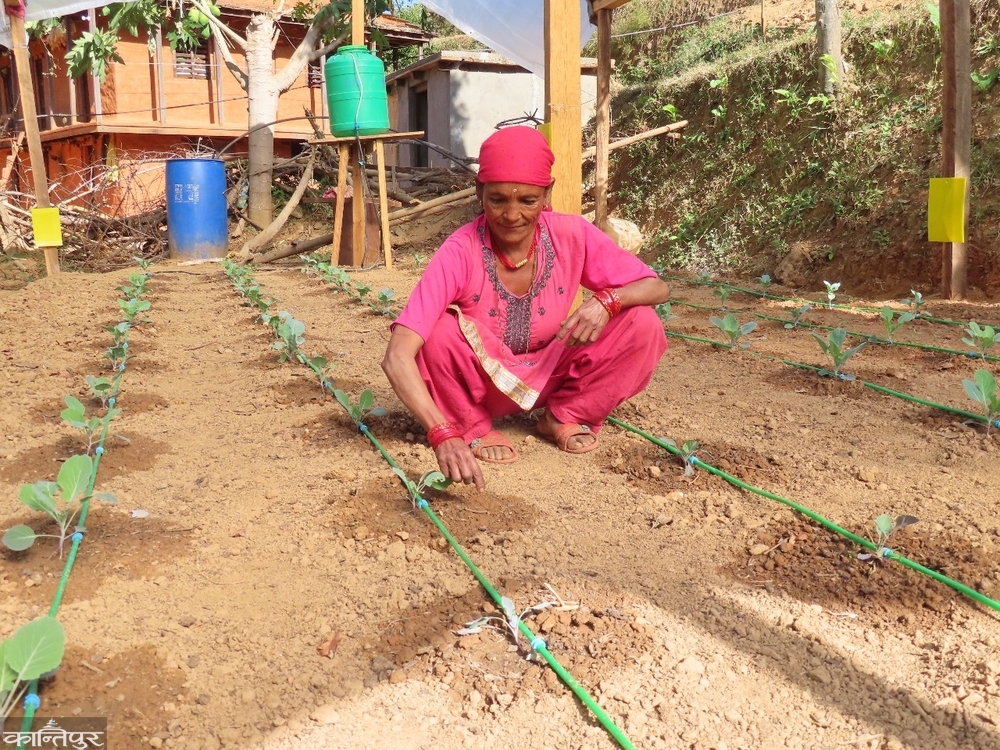
The Karnali state government decided to protect Raithane crops by preparing the basis of organic agriculture in Karnali from the first cabinet meeting on February 6. The state government has also passed the Organic Agriculture Bill-2075 in the state assembly.