The 'Janyuddha Museum' at Tila in Rolpa is in a bad condition
We use Google Cloud Translation Services. Google requires we provide the following disclaimer relating to use of this service:
This service may contain translations powered by Google. Google disclaims all warranties related to the translations, expressed or implied, including any warranties of accuracy, reliability, and any implied warranties of merchantability, fitness for a particular purpose, and noninfringement.
There are several houses where the fighters lived inside the camp (cantonment) of the then Maoist fighters in Tila Garigaon, Triveni Rural Municipality-7 in Western Rolpa. In it, the kitchen, toilet, playground and other structures used by the Maoist fighters are also kept. From the bottom to the top of the hill of Tila, those structures are old and starting to collapse.
After the Maoist came to the peace process, the then fighters stayed in that cantonment until the army was adjusted. The women and men fighters braved the cold and stayed on those hills and helped to complete the peace process . Most of the fighters in the cantonment, which is close to Dahwan in Nuwagaon, where the main camp-the fifth headquarters of the militants, returned home, but only a few participated in the army adjustment.
Tila's cantonment was one of the 28 cantonments established across the country according to the agreement between the government and the Maoists to bring the then Maoist fighters to a peaceful path. Ladaku Rolpa with headquarters at Dahawan had subsidiary cantonments in Dang along with Tila, Dahawan and Ungha.
Shuk Bahadur Rokamar, one of the commanders of the fifth division of Ladaku, which is headquartered in Dahawan, recalled about Dahawan and the division, "We were placed on the hill of Dahawan, where cold winds flow, to help us in the peace process." We endured the cold for years . Finally, the peace process also ended.'
Most of them did not want to participate in the army adjustment due to the creation of various factions within the Maoists. Therefore, most of them got a chance to leave the fighting position and re-establish themselves in the society as citizens . Only a few of them returned to their homes, while many migrated to other places or reached foreign employment. Commander Roka, who has a house in Jelbang, Rolpa, became an employee in the secretariat of Nanda Bahadur Pun, the then high commander of the militant group who became the vice president twice. One of the two assistant commanders of the division, Raj Bahadur Budha, born Rolpa Kureli, became active in politics. He became the head of Rolpa District Coordination Committee. Currently, he is a central member of the party. Another assistant commander, Ramlal Roka, who belongs to Mirul Ghar in Rolpa, joined the then Vaidya group and is now independent. 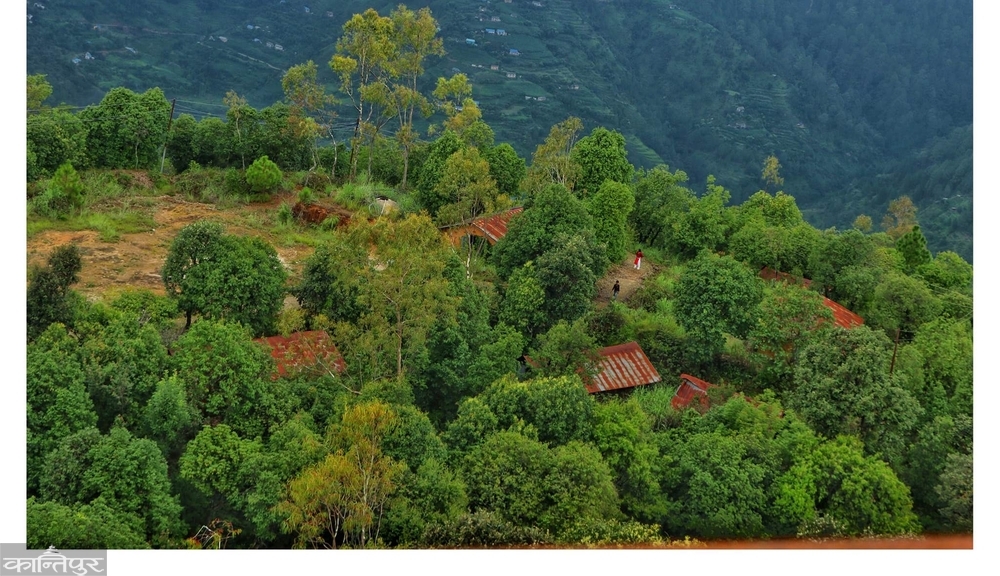
What is the condition of the cantonments where the fighters are staying? What is the status of the structure built there? Also, commemorating the people's war, where did the decision to build only structures come from? Many such questions are in front of everyone .
At this time, not only the structure and the cantonment site are abandoned, the Maoist leader also does not care . At first, there was an attempt to protect the cantonment and make it a tourist spot. But later everyone forgot. After coming to power, the Maoist leader has forgotten to see and develop the cantonment. The state had invested crores of rupees while making the cantonment. But later, after being neglected by them, most of the cantonments are now in a dilapidated state. The cantonment of Tila is also in a forgotten state. The locals hope to make it a tourist area.
Workers and people's hope
Currently, a building has been built in Tila with the investment of the state. A fence surrounds the cantonment area . Apart from that, old structures have not been preserved. Arjun Dangi, a former student of Maoist, says, "If the structure where the fighters live can be protected like zinc, there is a strong possibility of developing domestic tourism." The state needs to make a plan for that.' He said that the houses where Maoist fighters lived, other structures used by them and the training ground, playground etc. were neglected.
Although the state has invested to make the cantonment a museum, he said that the importance of the cantonment has decreased due to the lack of a solid plan. He has objected to leaders and workers forgetting the cantonment and creating a meso to earn the state's budget. He claims that the development of this sector cannot be achieved by the habit of workers who forget the old and make money in the name of creating new.
Intellectual and local teacher Ganga Chinchal Budhamar also insists that instead of preserving the structures within the cantonment, there is a competition for new additions and work that can afford the budget. After seeing the behavior of the leaders and workers, he wrote on the social network, "The work of Tila's museum should be done quickly, it should not be made a failure." Locals should be able to exclude uncooperative parties or people.''Like his opinion, there was also a discussion on this issue among the locals. 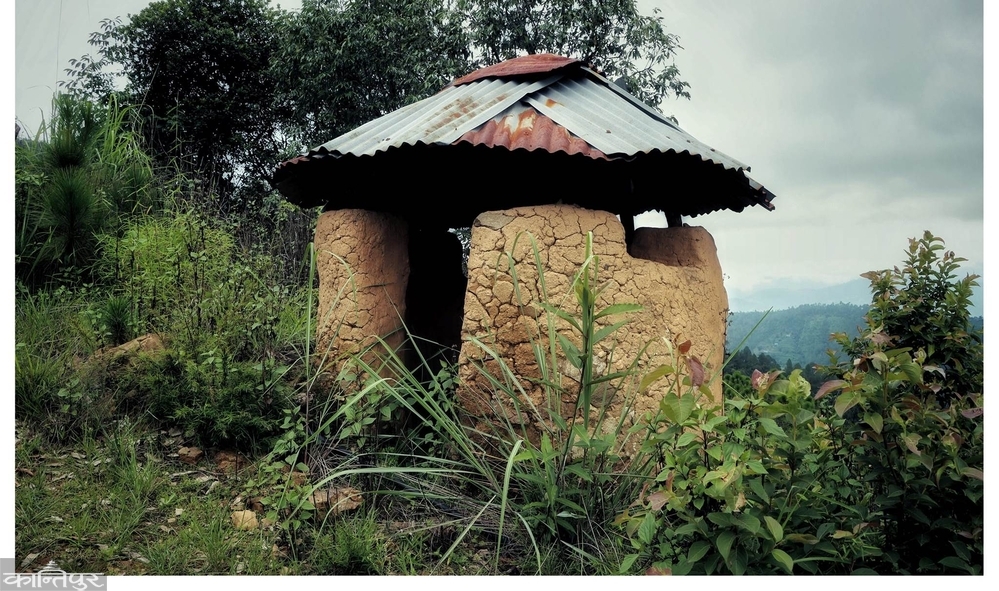
The local Harilal GC, who has been running the hotel for a long time, also said that Tila can be more known as a brand and everyone's support for that Said it was necessary. Even though the budget is allocated, many people are worried about whether it will be used properly and work will be done on time. Therefore, most people believe that the role of political party leaders will be in favor of that concern.
A museum has been built there with the help of Lumbini State Government. If the tourism importance can be increased by protecting the erstwhile cantonment area spread over an area of about 7 hectares including private and public land, there can be a new dimension in the development here. The government claims that the museum was built to give a glimpse of the then 'people's war' to the camp. At the initiative of the rural municipality, the state and federal government Former Chairman of Triveni Rural Municipality, Shantakumar Vali, said that the museum was built after budget allocation. According to him, the first year the wall, the second year the building and the third year the fence, camp maintenance and the construction of footpaths etc. Since then, the provincial and federal governments have been providing regular amounts.
Tila-based People's War Museum Steering Committee member Krishna Kumar Nepali said that the committee has not been given responsibility for development. "We received the information informally that the state government appointed us as members," he said, "but we did not get the job responsibility."
Local Man Bahadur Pun and Lalsari Ghartimar along with Nepali were made members of the Museum Conservation and Steering Committee in 2079. There is a provision that the coordinator of the committee will be the head of the district coordination committee. But the committee has not been able to conduct much activity.
The government has so far spent more than three crores on Tila step by step. According to the locals, the current year is about one crore. Budhamgar, a local teacher, said that the plan was implemented through the consumer committee. According to him, if the old structures are preserved, more attraction will increase . Teacher Budhamgar said that only if the plan to make the camp site in Tila safe and make it a tourist attraction is moved forward, the budget sent by the federal and state governments is considered to be properly utilized. 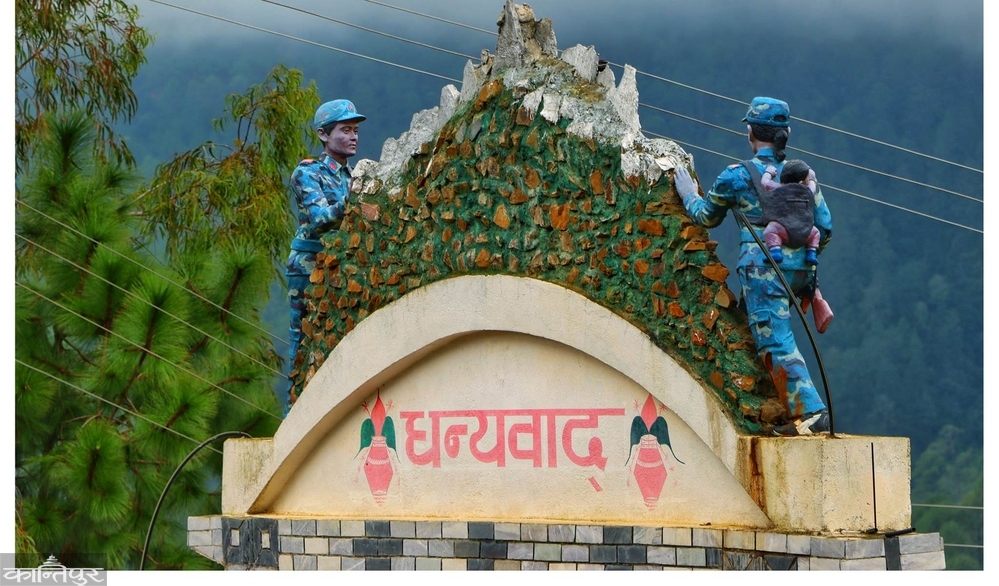
The then Chief Minister of Lumbini State Government, Kul Prasad KC, allocated the budget for the first time to protect the Tila area reflecting the time of armed conflict. He said that he has a preliminary plan to give a glimpse of the historical times by building the People's War Museum.
During the camp, 57 small houses and towers were built with government investment to house the fighters. Now most of them are in dilapidated condition. Nevertheless, a unit of armed police force has been kept in Tila to protect the physical structure. The locals have planned to increase the tourist attraction by declaring the area including the forest and the square as a 'guerrilla trekking area'. Balkuram Pun, a young tourism businessman who is involved in the promotion of tourism in Rolpa, said that it would be good if a footpath could be established in the same area.
Triveni-7 Ward President Bhan Bahadur Ghartimagar said that the museum will provide more support to make Tila as a historical place. He said that we should think about making plans by changing the living standards of the locals. The museum is located on the main road of Saheed Marg from Dang to Holeri, Ghartigaon, Thabang and East Rukum. Should . Lalsari Ghartimagar, a local woman entrepreneur, said that by preserving the old structures, the importance of war tourism will increase. Although the practice of building various structures in the people's war memory from the multi-crore budget of the state is widespread, there is little interest in human development. 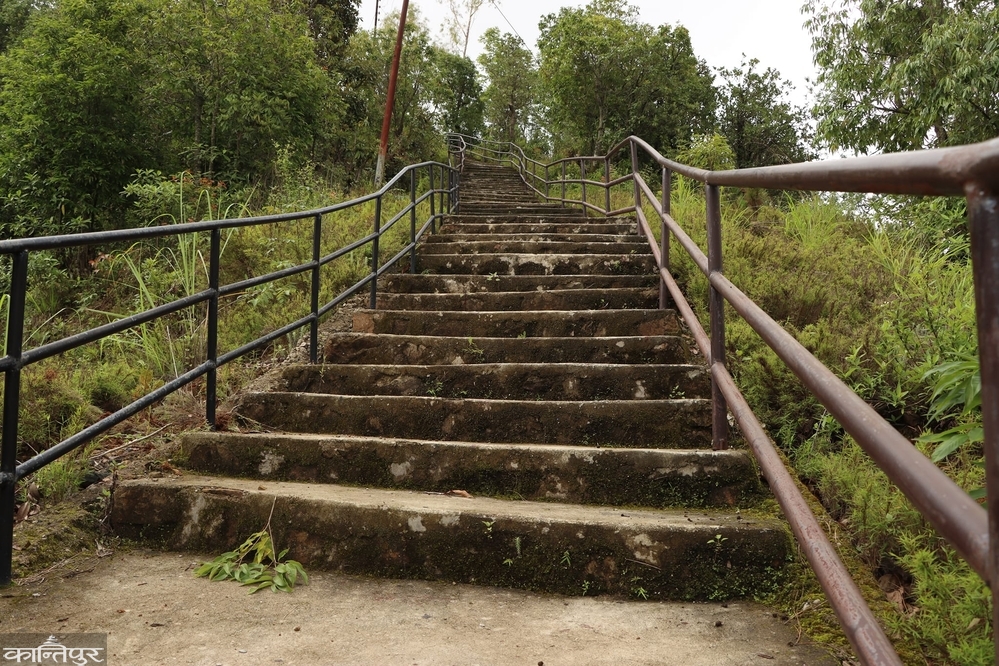
Since the then armed conflict of the Maoists started from Rolpa, a plan has been put forward to create a 'guerilla trekking area' by developing various areas to reflect the military era. The local level can play a key role in exploring the possibility of tourism development by developing, protecting and building structures in various places.
A touristic plan was already introduced, mainly covering areas including Thabang and Jaljala. For the commemoration of the People's War, attention has been paid to building a museum building and constructing a footpath. On the first day of the Maoist conflict, the place where the police post in Holleri was destroyed by the attack of the militants on the first day of the Maoist conflict, has been protected as a war memorial by the rural municipality.

