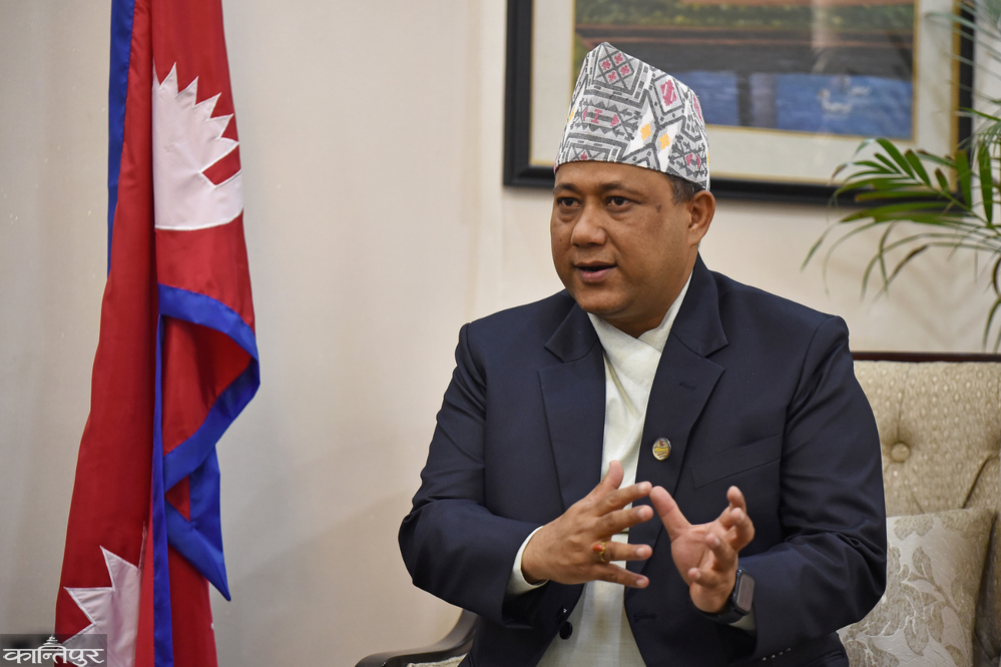
In an interview with Kantipur, he says, ”The border issue should not be made a subject of exaggeration. The solution is that we can work on it in an institutional manner rather than on issues of domestic political consumption.”
We use Google Cloud Translation Services. Google requires we provide the following disclaimer relating to use of this service:
This service may contain translations powered by Google. Google disclaims all warranties related to the translations, expressed or implied, including any warranties of accuracy, reliability, and any implied warranties of merchantability, fitness for a particular purpose, and noninfringement.
The government has completed 100 days since its formation after the 21 Falgun elections. The government has made good governance and economic prosperity its main issue. Accordingly, the Ministry of Foreign Affairs is saying that it will take forward economic diplomacy. The government has adopted a policy of turning the progress of two neighbors, India and China, into an opportunity for Nepal's development. During this period, Foreign Minister Shishir Khanal has paid official visits to India and China. Rajesh Mishra and Anil Giri spoke to Foreign Minister Khanal for Kantipur about the work done in the foreign sector in the past 100 days, upcoming priorities, the impact of global geopolitics on Nepal, and neighborly relations: The government has completed 100 days since its formation with a two-thirds majority. During this period, you have assumed the responsibility of the Ministry of Foreign Affairs. What has been achieved in foreign affairs? The government's 100 days are considered an important 'benchmark'. After the Rashtriya Swayamsevak Sangh (RSS) won the elections, various criticisms and doubts were expressed about international relations. How do we view international relations? How can we manage relations between neighbors? The questions of capacity and 'intention' were on us. I think that the message that a balanced, serious and cooperative government has been formed in Nepal and abroad after 100 days has gone out. I understand that Nepali society has received positive answers to the questions that were raised when the new government was formed. Our government is more interested in two issues - good governance and economic prosperity. The promises made by the party while going to the elections and the 100-point list given by the government collectively cover these two issues. The Ministry of Foreign Affairs is also paying a lot of attention to this. How to facilitate the services provided to Nepali citizens around the world and how can the Ministry of Foreign Affairs actively 'engage' in economic diplomacy? We are mainly working on this.
When I was in charge of the ministry, the issue of Nepali 'documents' being 'fake' was very much in the news in Portugal. Nepalis were facing legal troubles there. When I was in charge of the responsibility of the Minister of Foreign Affairs, I had to face the same problem. We made diplomatic efforts to resolve it. To a large extent, it was resolved. Another complex issue is that we formed the government in the shadow of the ongoing war in West Asia. On one hand, there was the impact that it could have on the economy. On the other hand, there was the impact on Nepalis living in West Asia. We worked with more attention on that. We facilitated them by operating a 24-hour ‘hotline’. We conducted some ‘rescue flights’. When those in exile were in trouble, we were able to at least give the message that ‘Nepal Government exists’. Recently, the work of ‘digitalizing’ the ‘consular’ service has been taken forward. Basically, we have been able to give the message inside and outside the country that a strong government has been formed in Nepal, that we are trying to work for good governance and prosperity. We have also conveyed the message that we are willing to cooperate with friendly countries for that. Such a message has been conveyed during my visits to the neighborhood, visits here from abroad, and meetings with ambassadors.
The government has put forward a diplomacy to turn the rise of two neighbors, India and China, into an opportunity for Nepal’s development. Has any achievement been achieved in that regard in the first 100 days?
Now we are emphasizing on the implementation of old projects rather than new projects. We have many mechanisms with both our neighbors. There are development projects. Work has been done to advance existing development projects. When I went to India or China, I did not sign any new development project. It is seen that the 'Wish List' is made public during every visit, but it is not transformed into practice. If there is no transformation, the Nepali people will not get the benefits of it. Our emphasis is on advancing existing projects rather than the achievements of that showy visit. We are saying that we should do what can be done quickly. For example, let's look at the Ring Road of Kathmandu. The issue of building the second phase of the Ring Road has been taken forward with the help of China. Similarly, some issues have also been taken forward with India. These include the Ayodhya-Janakpur railway and the East-West railway. The agreements are old. They were not made after this government was formed. We are focused on how to take them forward. There is an agreement with China to upgrade the main border roads. Discussions are underway to move those works forward.
Has the government made some roadmaps to benefit from the progress of the two neighbors?
There are some priority issues of the Nepal government. The Ministry of Foreign Affairs has taken them forward. There are two to four basic issues that can be benefited from by the two countries. There is the issue of 'connectivity' of air, road and railways. The more we connect, the more trade is facilitated. That helps tourism. We have given more emphasis to the issue of 'connectivity' from both sides. Energy-related issues are progressing on both sides. We are trying to figure out how to do it a little faster. We have requested both countries for more air routes. We have requested more air routes to operate Pokhara and Bhairahawa airports. We are giving more emphasis to connectivity, energy, tourism and technology. We are saying that we should become a dynamic bridge between the two countries. However, it can be given concrete form only if we can do the basic work to strengthen it.
No initiative is seen being taken from the Prime Minister's level in foreign affairs. There may be some complaints from friendly countries about that. How easy or difficult has that made it for you?
The kind of public image and popularity that the Honorable Prime Minister has. He is very popular not only in Nepal but also outside Nepal. I have come to that conclusion from my visits and discussions with ‘diplomats’ of other friendly countries. I am also more curious about him. The Prime Minister’s current priority is on important issues within the country, including good governance. He is mainly busy with that in the first hundred days. Gradually and as the need is felt, he will also be involved in issues of international concern. His directive is that the ‘primary’ leadership in international affairs should be the Ministry of Foreign Affairs. The Prime Minister’s understanding is that if the institution is strong, we can conduct ‘official diplomacy’ and ‘foreign policy’ well. I have communicated that understanding. I have found that he has taken it in a positive way.
So, will the Prime Minister’s ‘diplomatic engagement’ increase now?
There has been a long-standing complaint that individuals and personalities dominate foreign affairs rather than institutional structures. We are trying to institutionalize it by learning from that. In that sense, the institutional mechanism and the Ministry of Foreign Affairs remain at the 'front'. However, after some time, when the time seems appropriate, there will naturally be other issues including the Prime Minister's visit.
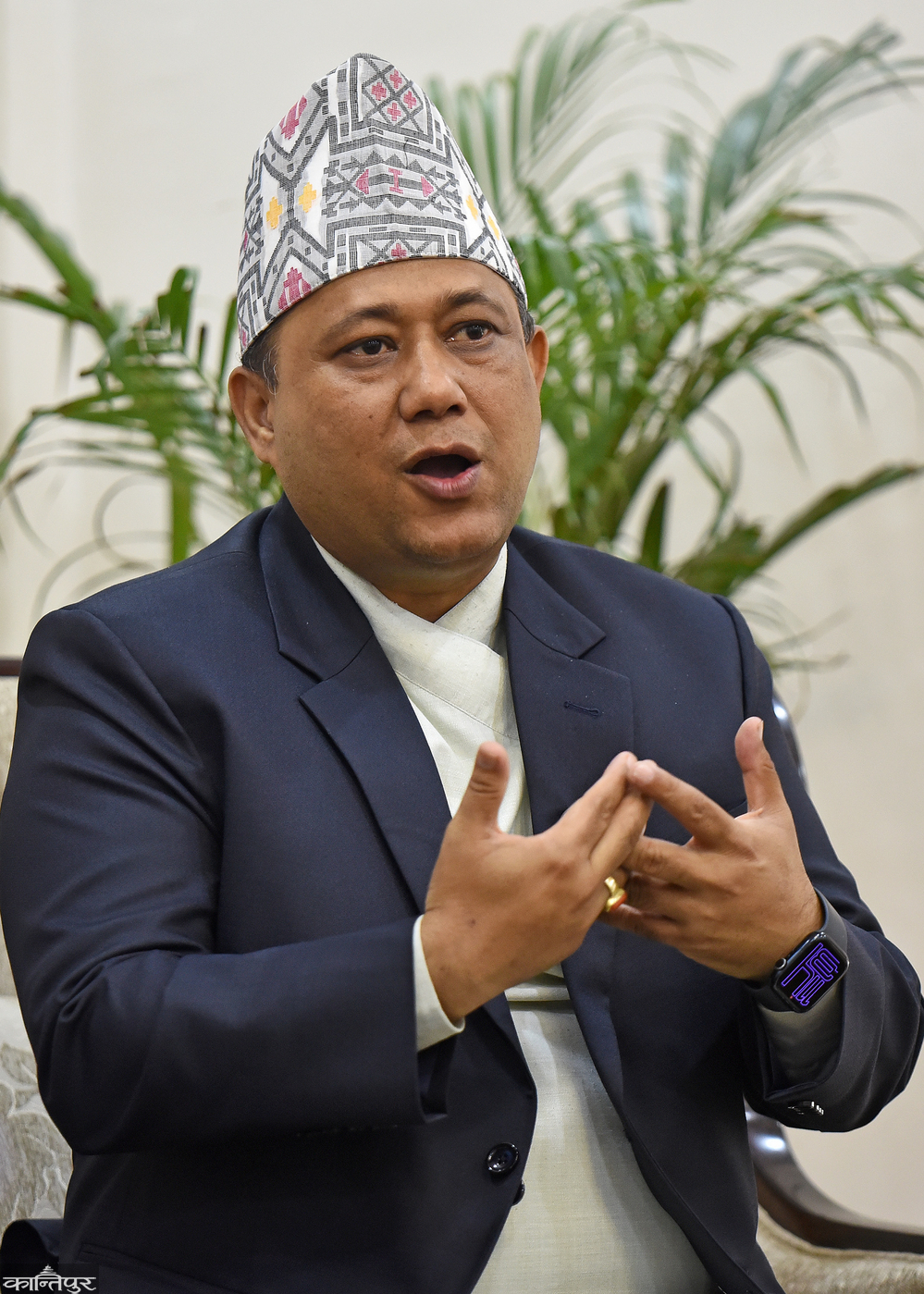 There is a topic of 'departure' in diplomacy. He is talking about relations in a new way, leaving behind the old 'baggage'. This may include the topic of 'investment' or 'trade'. For that, the Prime Minister himself should discuss important issues with India or China, right? But will a 'hardline' like not going abroad for a year also mean that Nepal will lose the opportunity it could have?
As far as I understand, the Prime Minister has not set such a 'hard deadline'. I do not have such instructions. He is ready for it whenever and wherever the need arises. The Prime Minister's 'engagement' should yield 'significant' results. If we think about the issue of international visits, I see more emphasis on what achievements it will bring. However, I am not aware of the issue of 'timeline', nor am I instructed. This is just a topic of discussion outside, I don't think there is any truth to it.
You visited India and China. How much did they get convinced by your visit? China is said to also view this government as 'pro-West'. India is certainly interested in that too. Did you manage to overcome such doubts?
In my understanding, it seems that the relationship has gone much further than expected. A new government, that too of a political party and character that does not have a long history - how will it present itself? When they look at us, how will we present ourselves especially to India and China? There must have been some doubts. Being new, naturally there are questions. The meetings during the visit and the subsequent feedback coming from the formal and informal 'channels' have made it feel that the relationship has progressed. We had a dialogue in both countries for much longer than the formal time given to us for the meeting. And, in the manner in which the dialogue took place, we kept the subject matter 'comprehensively'. Since it was the first visit, it was a 'familiarization' visit. There was no talk of signing any projects. The purpose was to establish the relationship and to resolve any doubts they had. So, I found that there was a very open discussion on all issues and they took the issues I raised very positively. And, I also saw them giving instructions to their team. The visit was better than expected. Not only were the doubts cleared, but the door to cooperation was also opened.
The word 'BRI' was not in the 'statement' that came when you returned from your visit to China. Why is that?
I said earlier that there was an open discussion on all issues. However, this was not a 'meeting' to 'negotiate' a specific issue. Therefore, no specific 'project' was signed. Nepal has already signed the 'BRI'. Basically, the country has already signed it. 'Framework Agreements' have been made. However, we want to study the needs of Nepal, 'financial modalities' and the feasibility of the project to be implemented within it. However, that was not the purpose of the current visit. It is not difficult to advance projects that benefit Nepal, have high economic returns, and that we agree on in terms of financing. There has been a theoretical discussion about that. When discussing many issues, that issue was also discussed. However, the discussion did not focus on this issue. All issues have been touched upon, including the BRI.
Which project in the 'BRI' has been selected to work on?
We are interested in the BRI projects. However, there is no specific 'position' as of today. There is also the issue of 'financial modality'. The 8 billion 'RMB' that China has committed since 2014 has not arrived. I raised that issue. There was an open discussion on all issues. However, in this meeting, only specific issues were not discussed.
Your Chinese counterpart said to you, 'A close friend is more useful than a distant neighbor.' In what context did you say that?
It was a very informal conversation. It was a conversation during a 'dinner' outside of bilateral discussions. My counterpart Wang Yi had returned from a visit to Mongolia that morning. In that context, I asked him how his visit to Mongolia went. He said this in that context. Mongolia is a neighboring country of China. However, the old Mongolian government's position was that there is also a 'sky neighbor', that is, a third neighbor. He discussed that Nepal did not take such an 'official position'. In the case of Mongolia, he said that such a position is not appropriate, in the sense that a close neighbor is more important than a distant relative. When he said this, China is certainly interested in Western activities in Nepal. That is understandable.
You have moved from being the head of the Foreign Department of the Rashtriya Swayamsevak Sangh to the position of Foreign Minister. There is competition between powerful nations. How difficult is it to 'face' the current geopolitics?
Of course, there is competition between powerful nations. We also feel it. The world is under the influence of such competition. We also have issues of interest to our neighbors and other powerful nations. We must state our issues clearly. हाम्रा राष्ट्रिय हित र स्वार्थका विषयलाई स्पष्ट ढंगले राख्दा त्यसलाई उहाँहरूले अत्यन्तै गम्भीरतापूर्वक लिनुहुन्छ । त्यस आधारमा हामीले कसरी संवाद गरिरहेका हुन्छौं, त्यो महत्त्वपूर्ण हुन्छ । सय दिनको अनुभवले त्यही सिकाएको छ ।
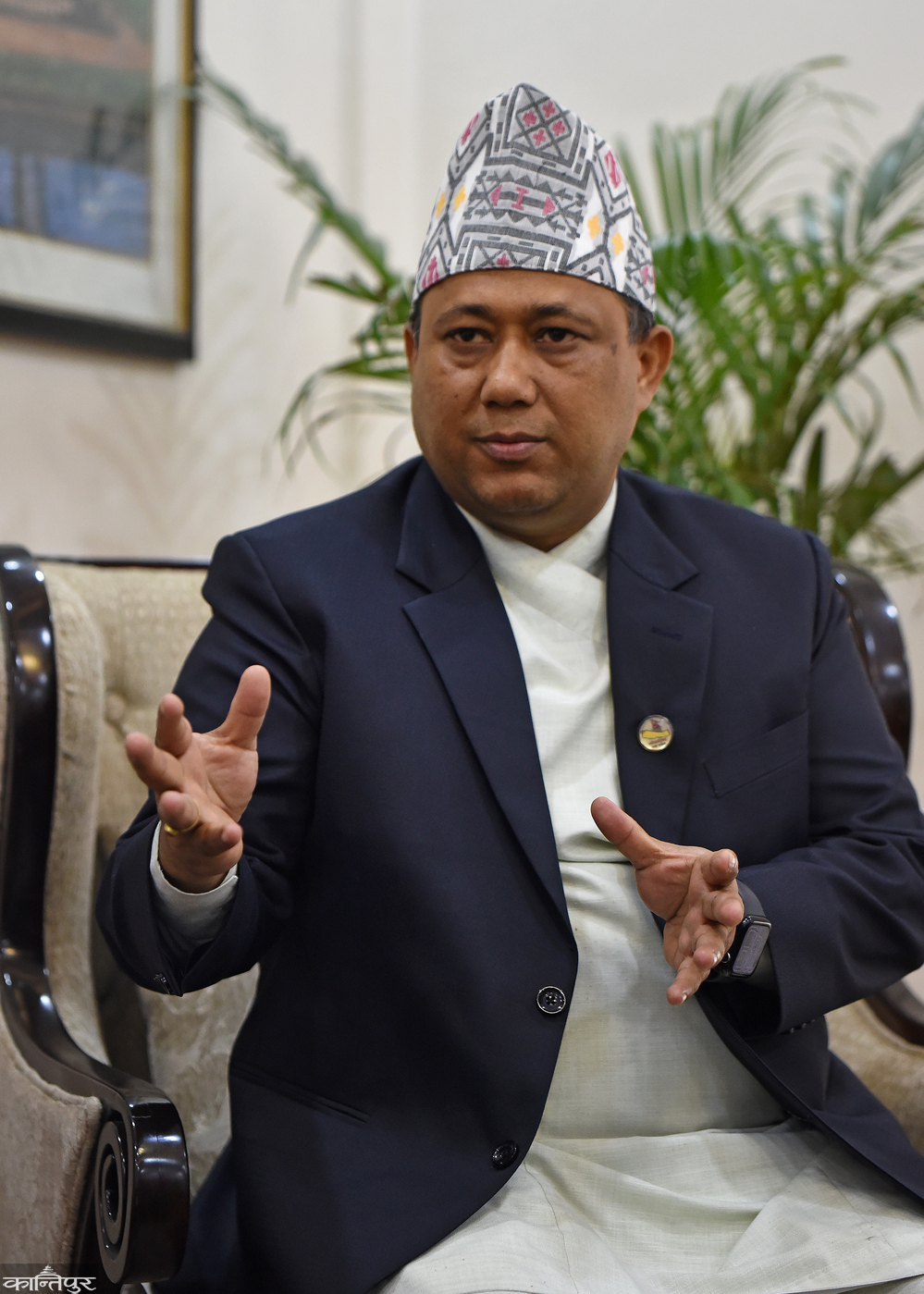 नेपालले भारत र चीनसँगै अमेरिकासँग पनि सन्तुलन मिलाउनुपर्नेछ । अरू दातृ निकायका पनि चासो होलान् । यी सबै शक्ति राष्ट्रसँग सन्तुलन गरेर कसरी बढ्न सकिन्छ ?
अन्तर्राष्ट्रिय सम्बन्ध तुलामा जोखेको जस्तो सन्तुलित, समान वा बराबर हुन्छ भन्ने मलाई लाग्दैन । सबै देशका आफ्ना राष्ट्रिय स्वार्थ हुन्छन् । हाम्रो पनि छ । नेपालसँग हेर्दा सबैको केही ‘क्रिटिकल इस्यु’ पनि छ । कुनै न कुनै हिसाबले प्रत्यक्ष रूपमा उहाँहरूको सुरक्षासँग जोडिएका चासोका विषय छन् । हामीले उहाँहरूको ‘कोर इन्ट्रेस्ट’ मा सहयोग गर्न सक्छौं । तर, हाम्रो विकासप्रतिको आकांक्षामा उहाँहरूले सहयोग गर्नुपर्छ । सन्तुलनभन्दा पनि ‘कोर इन्ट्रेस्ट’ मा सहयोगको विषय भयो । परिवारमा पनि सबैको सबैसँग एकै खालको तुलामा जोखेको जस्तो सन्तुलित सम्बन्ध त हुँदैन । ‘युनिक’ सम्बन्ध हुन्छ । ‘युनिक’ सम्बन्धका ‘युनिकनेस’ बढी हेर्नुपर्छ । हामीले अपेक्षा गरेको विकास र समृद्धिको बाटोमा जानका लागि सहकार्यको सम्बन्धमा बढी ध्यान दिन्छौं ।
अमेरिकाको सहयोगमा 'एमसीसी’ परियोजना सञ्चालनमा छ । त्यसको प्रगति कस्तो छ ?
मैले बुझेअनुसार एउटा ट्रान्समिसन लाइन करिब करिब पूरा भएको छ । गोरखपुर–न्यु बुटवल सेग्मेन्टको ट्रान्समिसन लाइन अन्तिम अवस्थामा छ । सडक बनाउने परियोजना अगाडि बढ्ने परिस्थितिमा छ । परियोजना पाँच वर्षभित्रै सम्पन्न गर्नुपर्नेछ । बीचमा अमेरिकाकै साइडबाट काम रोकियो । त्यसले गर्दा केही ढिलाइ हुन पुगेको छ । हाम्रो कारणले भन्दा पनि उहाँहरूकै कारणले भएको हो । मूल रूपमा समय अवधिभित्रै परियोजना सकिने बाटोमा देखिन्छ ।
एमसीसी कार्यान्वयनमा छ । त्योसँगै 'एसपीपी’ सम्झौता हुने चर्चाले पनि ठाउँ लिएको छ । त्यस्तो केही तयारी छ ?
छैन । मैले धेरै पटक सार्वजनिक रूपमा भनेको छु– नेपाल सरकार कुनै पनि सुरक्षासँग सम्बन्धित सहमति नगर्ने नीतिमा स्पष्ट छ ।
भारतलाई एक हजार मेगावाट बिजुली बेचिरहेका छौं । त्यसका बाबजुद हाम्रो ऊर्जा उत्पादन खेर जाने स्थितिमा पुगेको छ । भारतलाई थप बिजुली बेच्ने केही प्रयास गर्नुभएको छ ?
भारतसँग १० हजार मेगावाटको फ्रेमवर्क एग्रिमेन्ट छ । भोलुम बेस्ड एप्रोचमा जाने भनेर मेरो भ्रमणकै क्रममा उठाएको छु । चाँडै ऊर्जा सचिवस्तरीय बैठक बस्दै छ । त्यहाँबाट पनि प्रयास गर्छौं ।
भारतसँग लामो समयदेखि सीमा विवाद कायम छ । वार्ताबाट समाधान गर्ने भनिन्छ । हरेक सरकारले त्यही भन्छ । भारतले पनि भनेको छ । तर, साँच्चै सीमा विवाद टुंग्याउने सन्दर्भमा कूटनीतिक वार्ता कहिले हुन्छ ?
सन् १८१६ देखिको विवाद हो । १८१७ कै लिखितमा त्यस्तो देखिन्छ । संसारमा सीमाका विवाद सदियौं चलेका उदाहरण छन् । यसको समाधान हुनुपर्छ । प्रमाण, तथ्य, तर्क तथा कूटनीतिमा आधारित भएर यसको समाधान खोजिए सहज हुन्छ । सीमाको विषयलाई अत्यन्तै बढी अतिरञ्जनाको विषय बनाइनुहुन्न । घरेलु राजनीतिक खपतका विषयभन्दा पनि संस्थागत ढंगले हामीले काम गर्न सक्यौं भन्ने समाधान हुन्छ । यसमा दुवैतिरको चासो पाउँछु । दुवै छिमेकीसँग बोर्डरको विषय छ । एकतिर बढी र अर्कोतिर कम होला तर दुवैतिर छ । वार्ताका लागि एकदमै विशेष समय तोकिएको छैन । नयाँ सरकार हुँदै गर्दा हामीले जति बढी दुईपक्षीय संवाद, वार्ता र विश्वासको विकास गर्छौं, त्यति नै सहज ढंगले विषय टुंग्याउन सक्छौं भन्ने लाग्छ । केही विषय ‘आउटस्ट्यान्डिङ’ छन् । अप्ठ्यारा छन् । धेरै पहिलेदेखिका छन् । त्यसमा आजको भोलि नै नतिजा आउँदैन । निश्चित प्रक्रियाबाटै आउने हो ।
सरकार भनेको अविच्छिन्न उत्तराधिकारी संस्था हो । तपाईंले धेरै पटक हामीसँग पुरानो 'ब्यागेज’ छैन भन्नुभएको छ । तपाईंले के भन्न खोज्नुभएको हो ?
हाम्रो अन्तर्राष्ट्रिय सम्बन्ध, विशेषगरी छिमेकमा अत्यन्तै व्यक्ति प्रधान, दल वा राजनीतिक विचारको प्रधानता रह्यो । त्यो ‘ब्यागेज’ भनेको हो । कुनै दल र व्यक्तिका आधारमा भएका सम्बन्ध वा स्वार्थको ‘ब्यागेज’ हामीले बोक्दैनौं भनेको हो । तर, पक्कै पनि परराष्ट्र सम्बन्ध भनेको देश निर्माण भएदेखि वा कतिपय अवस्थामा त्यसभन्दा अगाडि पनि जोडिन्छ । त्यही भएर ती विषयहरूमा हामी अत्यन्तै संवेदनशील छौं । त्यसलाई ‘क्यारी’ नै गर्छौं । तर, व्यक्ति वा दलको स्वार्थ पूरा गर्न गरिएका सम्झौता र सहमतिका आधारमा होइन कि नेपालको राष्ट्रिय हित र स्वार्थका आधारमा परराष्ट्र सम्बन्ध अगाडि बढाउँछौं भनेका हौं ।
सरकारको पहिलो सय दिनमा तपाईंले सम्हालेको मन्त्रालयसँग सम्बन्धित पासपोर्टको विषय विवादित बनेर आएको छ । यसलाई तपाईंले कसरी व्यवस्थापन गर्दै हुनुहुन्छ ?
पासपोर्टको केही विषय अदालतमा पुगेको छ । त्यहाँ विचाराधीन छन् । त्यसबारे मैले टीकाटिप्पणी गर्न भएन । तर, मूल रूपमा हाम्रो चासो भनेको सरकारले एक वर्षअगाडि नै पासपोर्ट खरिदको प्रक्रियाका लागि ठेक्का आह्वान गरेको हो । ठेक्का पाएका नयाँ कम्पनीले पासपोर्ट दिनुपर्ने ‘ट्रान्जिसन’ को ‘पिरियड’ छ । ठूलो डाटा ट्रान्सफर गरेर काम सुरु गर्नुपर्ने छ । १०/१५ वर्ष काम गरेको एउटा कम्पनीबाट सम्पूर्ण डाटा अर्कोमा सारेर काम गर्नुपर्ने भएकाले चुनौतीपूर्ण नै छ । एउटा सिस्टमबाट अर्को सिस्टममा ट्रान्सफर भएर ‘फंक्सनल’ हुनुपर्ने विषय भएकाले केही चुनौती छ । सहजताका साथ काम सुरु होस् र नेपाली नागरिकले सजिलै राहदानी पाऊन् भनेर ‘ट्रान्जिसनल म्यानेजमेन्ट’ मा धेरै काम गरिरहेका छौं ।
आगामी दिनमा परराष्ट्र मन्त्रालय र तपाईंको 'फोकस’ कस्ता विषयमा रहनेछन् ?
सरकार र जनताको मुख्य चाहना आर्थिक समृद्धिको हो । त्यही भएर घरेलु विषयले नै परराष्ट्र नीतिलाई निर्देशित गर्ने हो । आर्थिक कूटनीतिलाई प्रधानता दिएर नै हामी काम गर्छौं । त्यसैअनुसार संस्थाहरूको क्षमता विकास गर्छौं । जहाँ आवश्यकता हुन्छ, त्यहाँ मिसन थपिनेछ । कतिपय स्थानमा घटाइनेछ । घटाइने विषय बजेटमा पनि आइसकेको छ । हाम्रो जस्तो देशले अलि बढी सौम्य शक्तिको अभ्यास गर्नुपर्ने हो । त्यसका विभिन्न आयामहरूमा काम गर्छौं । अबको परराष्ट्र मन्त्रालय ‘भिजिवल’ पनि हुनुपर्छ । देशभित्र र बाहिर सबैतिर हामी ‘भिजवल’ हुनुपर्छ भन्ने मान्यताले काम गर्छौं । त्यहीअनुसार भारत र चीनको भ्रमणमा जाँदा त्यहाँका मिडियाहरूसँग संवाद गरें । त्यहाँका जनतासँग पनि सञ्चार गर्नुपर्छ । ‘भिजिवल’ भएर नेपाल सरकारको भिजन स्पष्ट ढंगले राख्ने प्रयास रहनेछ । त्यसले समग्रमा नेपालको ‘पोजिसन’ लाई विश्वमा पुर्याउँछ । अन्तर्राष्ट्रिय मञ्चहरूलाई नेपालको ‘इन्ट्रेस्ट’ राख्न प्रयोग गर्छौं ।
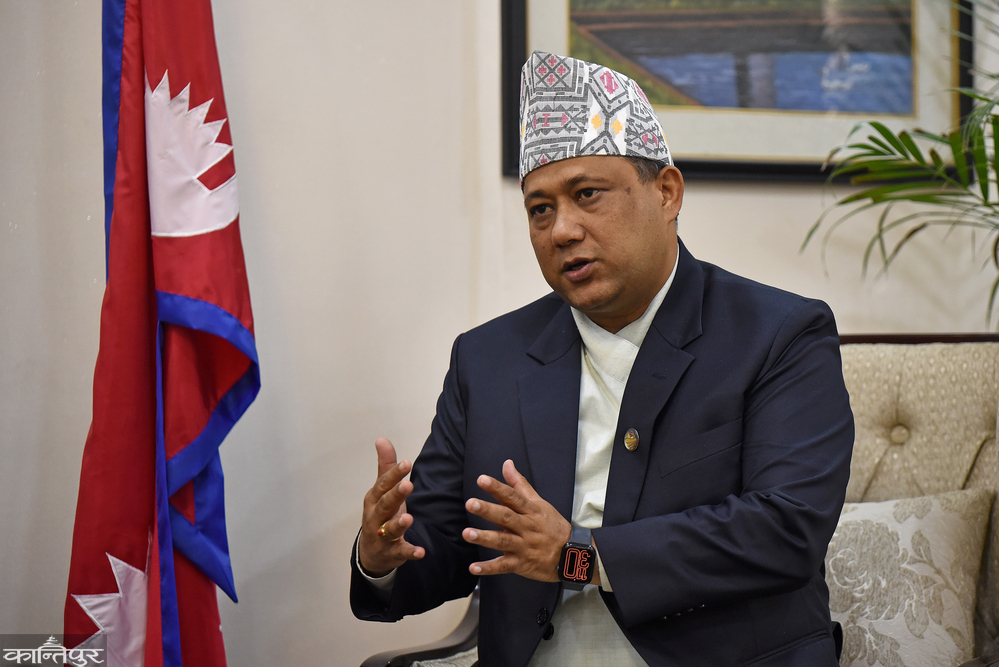 ७५ प्रतिशत दूतावासमा राजदूत छैनन् । खाली भएको लामो अवधि भइसक्यो । राजदूत पठाउने तयारी कहाँ पुगेको छ ? त्यस्तै, आर्थिक कूटनीतिका लागि दूतावासहरूमा स्रोत छैन । त्यसको व्यवस्थापन हुन्छ ?
मिसनहरू खाली छन् । त्यो सही नै हो । यही हप्तादेखि त्यसको प्रक्रिया सुरु हुन्छ । खाली भएका र खाली हुन लागेका २४ वटा मिसन छन् । त्यहाँ राजदूत नियुक्ति हुने चरणमा छ । केही हप्ताभित्र टुंगिन्छ । हाम्रा मिसनहरू ‘कन्सुलर सर्भिस ओरिएन्टेड’ छन् । मिसनको क्षमता बढाउने एउटा विषय छ । दोस्रो, भएका ‘रिसोर्स’ को अधिकतम प्रयोगको विषय छ । एउटा सीमित स्रोत छ । त्यसलाई बराबरी बाँडेर काम गर्ने चलन छ । अब हामीले स्रोतलाई बराबरी बाँड्दैनौं । मिसनबाट आउने आउटपुटका आधारमा स्रोतको वितरण गरिनेछ । प्रत्येक मिसनको ‘स्पेसिक प्रायोरिटी’ छ । सबैले इकोनोमिक डिप्लोमेसीको काम गर्छन् भन्ने होइन । अब ‘स्पेसिफिक’ देश हेरेर त्यसैअनुसार स्रोत बाँड्छौं । अर्को, हामीले नगरेको विषय निजी क्षेत्रको स्रोतको प्रयोग पनि हो । सबै विषयका लागि सरकारी स्रोतमै निर्भरता भयो । चाहेको जस्तो स्रोत सरकारी बजेटबाटै मात्रै नहुने भयो । आर्थिक कूटनीतिमा निजी क्षेत्रलाई पनि संलग्न गराउने सोच हो ।
अन्त्यमा, सरकारको सय दिन पुगेको छ । तपाईं मन्त्रिपरिषद्को एक जना सदस्य हुनुहुन्छ । समग्रमा, सरकारले सय दिनका लागि लिएको लक्ष्य कति पूरा भयो ?
सय दिनमा मूलतः जनतामा आशा जगाउन सफल भएका छौं । सुशासनको अनुभूति दिन सकिएको अनुभव छ । त्यहाँ सफल भएका छौं । सय दिनकै सन्दर्भमा हामीभन्दा अगाडिका सरकार र हामीलाई तुलना गरियो भने अघिल्ला सरकारभन्दा धेरै हिसाबले क्षमता, ‘फेयरनेस’, कार्य, ‘डेडिकेसन’, ‘मोटिभेसन’ र जनताप्रतिको समर्पित भावना एकदमै देखिएको छ । त्यसले केही प्रारम्भिक नतिजाहरू ल्याएको छ । चुनावले ठूलो ‘म्यान्डेट’ सहित दिएको आशालाई जगाउन र सुशासनको पक्षमा काम गरिरहेको छ भन्ने स्पष्ट सन्देश सरकारले दिएको छ । अब सबैको अपेक्षा आर्थिक समृद्धितर्फ छ । त्यसलाई पूरा गर्न प्रतिबद्ध छौं । अबका दिनले त्यो निर्धारण हुन्छ ।