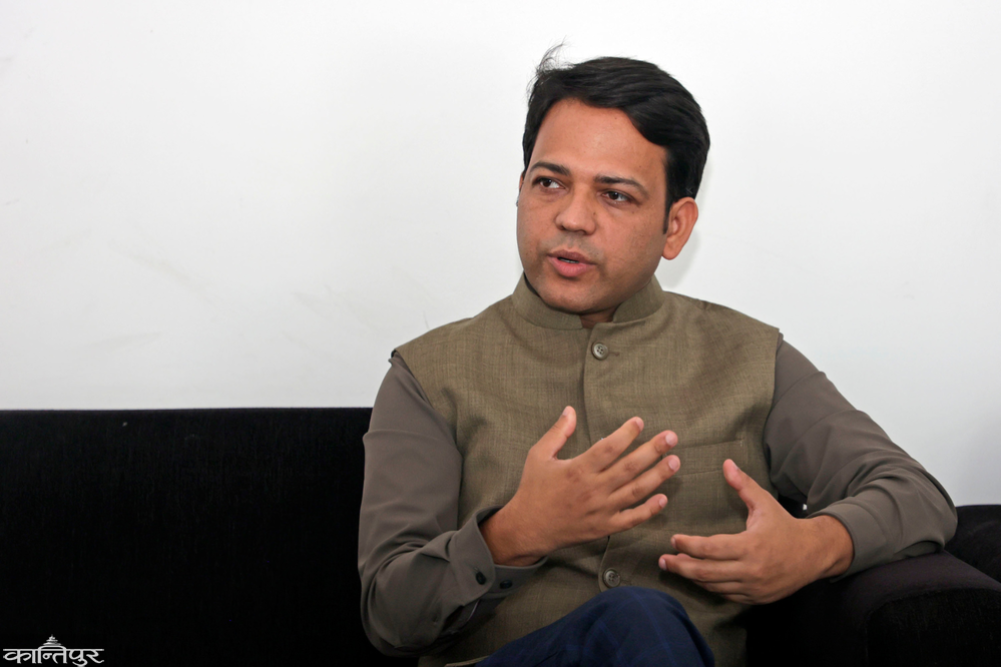
In an interview with Kantipur, he says, ”The party is trying to fill the 'gap' that has been seen in the inclusiveness of the leadership through positions nominated by the president.”
We use Google Cloud Translation Services. Google requires we provide the following disclaimer relating to use of this service:
This service may contain translations powered by Google. Google disclaims all warranties related to the translations, expressed or implied, including any warranties of accuracy, reliability, and any implied warranties of merchantability, fitness for a particular purpose, and noninfringement.
The first general convention of the Rashtriya Swayamsevak Sangh (RSS) has been concluded in Chitwan. The convention held from 20-21 Ashad has elected a new leadership under the chairmanship of Ravi Lamichhane. It is also claimed that it has given clarity to the party's policy. From the experience of the convention organized four years after its establishment to the priorities and role of the RSS in the present day, Jaisingh Mahara and Raju Chaudhary spoke to the newly elected General Secretary for Kantipur: You have been elected as the General Secretary from the first general convention of the RSS. How is your experience going?
In the election process, especially when the votes are being counted, you keep wondering what will happen until it is over. If others get more votes, you keep wondering whether you will lose. I had a similar experience in the election for the House of Representatives in Falgun. I thought that I had previous experience during the counting of votes in this election, I would take it in a relaxed manner. It was a natural process. However, the experience after being elected is one of responsibility. This party is in the process of becoming institutionalized and many members have very high expectations from the party. Due to technical reasons, the general convention was completed in double the time allotted. Even during that period, we saw patience in the members. They too have a responsibility, a responsibility with expectations. The friends who came for three days stayed for six days. This is a group of people who love the country and society. History will not forgive me if I do not fulfill the responsibility given by them in the right sense. Therefore, I have felt a great sense of responsibility.
When I contested the parliamentary election, there were rivals from different parties. I competed with leaders from my own party in the general convention. What was the experience of competing against myself?
I am a person who works according to the rules. In this election, when I contested for the position of central member, I did not ask for much vote except for posting a photo of myself registering my nomination on Facebook. I did not design or do any pamphlets. Even when I contested for the position of general secretary, I did not post it on social media. Who should I vote against within myself? Who should I ask for votes for myself? It was like asking. It was a new experience for me. All my close friends were in the election. I didn't feel pressured because I thought that whoever wins, his friend will win. I didn't feel like I had to win the election either. Whereas, there was pressure to win in the House of Representatives election. But there was nothing in this election. I felt comfortable in this election because all the competing friends took it as a natural choice. I also felt comfortable because Manishji and Ganeshji are people who understand the basic aspects of democracy to some extent. It would have been difficult if my friends had taken this election 'personally'. They have also taken my victory as their own victory. When I became the General Secretary, I felt that Ganeshji, Sagarji, and Manishji were also with me on my journey, so I didn't feel much discord.
Some people withdrew their candidatures to support you in the General Secretary position. It was interpreted that you formed a group. Is this interpretation correct?
There are two sides to this. When a person expresses his desire to run for a position, it is a natural thing. It is also considered natural for one person to 'convince' another person and make an analysis like 'help us, why should we fight on our own'. When many people showed their aspirations, the chairman also opened the way by saying 'there are many candidates, reduce them as much as possible, let's get along', so I also asked him to talk to me once. My friends also accepted my words. I spoke not only with my friends who had withdrawn their candidacies, but also with my friends who had not withdrawn their candidacies.
The chairman also tried to 'convince' them all night. But there was no agreement. Why?
Instead of 'convincing' the person, the chairman said, 'You all should start reducing the number'. There was no question of the chairman, a person like a protector, taking the 'side' of any person. He had said, 'Even if you talk 'one to one', I am ready.' Taking advantage of that, all the friends are ready to discuss with each other. Even if someone has said that it is a group, I have already said that it is not our intention. All the friends participating in this general convention are an establishment group. Some may have come forward in the party, some behind. Rather than taking it as an element of a group, I take it in the sense that one person convinced another person with the expectation of support and cooperation in the election, and they gladly accepted it. If we try to analyze it in any other way, it will give a wrong impression of the love and goodwill of those people towards me.
How do you analyze the office bearers who have been elected? How do you see it from the perspective of inclusion?
 I am very happy with the number of women present in the central committee. I am happy that they came to the committee through fair competition. It was understood that women come only through the provincial structure or quota. But that did not happen. Here, you won by bringing popular vote. More women have been elected than we expected. I am happy in that sense. In another sense, I am also sad. The 'composition' of inclusiveness could not be elected in an open competition. We had only 32 people in the central committee as 'cluster composition'. Apart from that, the central committee did not elect the inclusive leadership in the way that should have been done. Two women have been elected as office bearers. Only one person is from the Muslim 'cluster'. The party tries to fill the 'gap' that is seen in the inclusiveness of the leadership through the positions nominated by the president.
You said that we were one in the election. Perhaps pointing to that, the president should have said that if a faction had formed in the end, let's end it here. If a faction had formed in the RSP, how would it end now?
It seems that the leadership bears the most responsibility in this. How does the elected leadership include other friends? The issue of what their thinking is has great significance. It is wrong if there is factionalism even after the general convention. Friends who come to the leadership should use discretion so that everyone in the party does not feel weak for any reason. It is easy to hear but difficult to do. We need to improve on small issues like how transparent the method is, how inclusive it is for everyone. We understand that the chairman or senior leaders have no interest in factionalism. However, it is the leadership's responsibility to eliminate factionalism at the lower level in the name of the core leadership. If all the leadership monitors the activities taking place at the lower level, such issues will be reduced.
There is no presence of Madhesi and Janajati among the office bearers. When nominating, they seem to come from these communities. How do you answer the questions that arise in this context?
There are 11 office bearers to be nominated by the chairman. 4 women have been made mandatory. In addition, we have said that two office bearers should be nominated from the 'cluster' other than Khas/Arya. But what we have to accept is that not everything will be completed at once, in one day, or in two/four years. It will take some time. Today, if we focus only on ‘cluster composition’ and ‘bypass’ others, we may not give 100% leadership to the party again. The party works to gradually develop a ‘framework’ and ‘groom’ the friends of the ‘cluster’ in the ‘right way’ and make them a strong part of the overall competition. Then, they can be gradually included in local elections or other ways.
There was no discussion on the future policy of the Rashtriya Swayamsevak Sangh (RSS) at the general convention. Why was it not considered necessary to discuss the party’s policy at such a large gathering?
In the case of the statute, we had discussed it for about two months. The document was written after discussing it with departments at all levels. No one disagreed. Regarding the chairman’s political report, he has clearly said that there are many amendments to be made to it, even a 4-hour debate may not be enough time, we will discuss it in the future and put the necessary things. For that reason, the party is still working hard to make the document effective. It was one sided to say that there was no discussion on the day of the main event. However, the discussions held before that also seem to cover those issues.
The Rashtriya Swayamsevak Sangh (RSS) was accused of being a group of thoughtless people from the very beginning. How much did the RSSVK manage to theoretically 'depart' from the General Convention?
Until recently, we had been calling it constitutional socialism. Personally, I disagreed with it from the very beginning. The previous explanation was that we would move towards socialism based on the Constitution of Nepal. However, since the Constitution itself is changeable, how much 'valid' constitutional socialism will be for us over time was a question. For example, there is a gap in the Constitution that can change the republic itself. If the issue we have accepted is no longer the same issue in the future, we will have to accept it or not. One of the main 'departures' made by the General Convention is the 'social democracy' that we have adopted. This General Convention said that 'constitutional socialism' is not correct, and that we should 'depart' from it and move towards 'social democracy'.
First, it was said that we would only accept democracy. Now, has the issue of accepting a republic also come up?
We had clearly stated from the beginning that we would accept democracy and republic as written in the constitution. We have written it in the statute. We have also written it in the pledge. In the beginning, our party was small. Therefore, such issues did not reach the people. When the party grew bigger, everyone started showing interest. Those issues also started coming out. That's all.
Is the RSVP trying to express its commitment to a democratic republic within the framework of the constitution?
Since the establishment of the party, we have said that we will include the achievements within the framework of the constitution. We may still have disagreements on some issues of the constitution. But the constitution itself has provided a system for turning disagreements into consensus. There is no need to go outside the constitution for the issues we are trying to achieve. Since the constitution itself has opened all the ways, I do not see that many problems will arise.
Didn't the document presented at the general convention raise questions about federalism and especially the context of the provinces?
Our statute is clear. There is no mention anywhere in the document presented by the chairman that the provinces should be abolished. There was some 'confusion' on the issues presented in the vice-chairman's report. But the chairman's report has also come. It should be understood that whatever issues have come up in the chairman's report is the party's final line.
It was said that 'we will abolish the provincial assembly on the day the party reaches its strength'. How much do you think our socio-political structure allows us to do that?
I am clear on two issues. First, the first need of Nepali citizens is to change the situation. I am still aware that politics should not be done in a way that bakes political bread by saying that the system should be changed. When politics comes forward in the name of system change but there is no fundamental change in the lives of citizens, there is a situation of despair among citizens towards politics. In such a situation, there are things that need to be 'fixed' now, which will worsen if not done, let's 'fix' them. But apart from that, let's focus our main strength on good governance, on economic prosperity. After those tasks are done, let's debate with the people. यसका कोर्स के हुन्, टर्म्स के हुन् भनेर घनीभूत छलफल भएपछि बल्ल अर्को निर्णयमा जाऔं । व्यवस्था परिवर्तनको विषयमा बृहत् बहस हुनुपर्छ ।
तपाईंहरूको महाधिवेशनबाट प्रदेशसभा खारेजीको विषय उठेपछि धेरैले फेरि द्वन्द्व हुन्छ कि भनेर चिन्ता व्यक्त गर्न थाले । दुईतिहाइको सरकार पनि 'पपुलारिटी’को पछि लाग्छ कि, त्यसै कारणले द्वन्द्व हुन्छ कि भनेर चिन्ता जनाउन थालेका छन् नि ?
 चिन्ता गरिनुपर्छ । प्रश्न आउनु पनि स्वाभाविक हो । देशको सबैभन्दा ठूलो दल, जसको दुईतिहाइको सरकार छ । यस्तो सत्ता सञ्चालन गर्ने व्यक्तिहरूलाई सरकारले दिने ‘स्टेटमेन्ट’ ले समाजमा पर्ने प्रभावको विश्लेषण गर्न नपर्ने सुविधा हुँदैन । रास्वपा त्यस पक्षमा सचेत छ । तपाईंको मिडियाबाट के भन्न चाहन्छु भने हाम्रो उद्देश्य भनेको समाजलाई जोगाउने हो, विभाजित गर्ने होइन । यसमा राष्ट्रिय स्वतन्त्र पार्टीको विषयमा चिन्ता नलिन आग्रह गर्छु ।
महाधिवेशनमा सरकार सञ्चालनका सन्दर्भमा छलफल भएन । सरकारलाई पार्टीले ॅगाइड’ गर्नुपर्ने होला नि ? यसमा कसरी काम गर्नुहुन्छ ?
यो धेरै अप्ठ्यारो मान्नुपर्ने विषय नै होइन । राज्य सञ्चालन गर्ने जिम्मा सरकारको हो । सरकारलाई गाइड गर्ने जिम्मा पार्टीको हो । तर राज्य सञ्चालन गर्दैगर्दा पार्टीले सूक्ष्म ढंगले हरेक कुरामा चासो राख्दैन । विगतमा पार्टीले सरकारलाई स–सानो कुरामा चासो राखेका कारण समस्या आएको हो । हाम्रो पार्टी सरकार सञ्चालनमा ‘क्लियर’ छ । सरकार भनेको कुनै व्यक्ति विशेषको होइन । यो सरकार पार्टीको सरकार हो । राष्ट्रिय स्वतन्त्र पार्टी ‘क्लियर’ छ र पार्टीले ‘माइक्रो म्यानेजमेन्ट’ गर्न हुँदैन भन्नेमा सचेत छ । प्रशासन सञ्चालनमा पार्टीलाई रुचि हुनु पनि हुँदैन ।
संसद् कसरी अघि बढ्छ ? तपाईंहरू महाधिवेशन सकेर व्यवस्थित हुनुभएको छ भन्ने सबैलाई लागेको छ । यसको प्रभाव संसद्मा कस्तो रहन्छ ?
तीन दिनको महाधिवेशन हामीले ६ दिनमा पूरा गर्यौं । यसर्थ, व्यवस्थापनको पाटोमा धेरै समस्या छन् भन्ने जगजाहेर भएको छ । हाम्रो सीमितता स्विकार्नुपर्छ । सानो मिहिनेतले अब पुग्दैन भन्ने पनि स्विकार्नुपर्छ । संसद्, पार्टी र सरकार सञ्चालन जस्ता ठूला जिम्मेवारी भएकाले अब कोसिस गर्दै छौं भनेर मात्रै पनि पुग्दैन, त्यसैले सबैले जिम्मेवारी बोकेर जानुभएको जस्तो लाग्छ । तीन दिनको कार्यक्रम ६ दिन पुग्नुमा म लज्जित छु । त्यसलाई कसरी ‘डिफेन्ड’ गर्ने भनेर मसँग कुनै उत्तर नै छैन । लज्जित हुनुबाहेक र यो एउटा ‘डिजास्टर’ हो भन्नुबाहेक मसँग अरू केही छैन । पार्टीका कार्यकर्ताहरूसँग एकदम ठूलो संयमता भएर पो यो महाधिवेशन सफल भयो ।
हरेक ठाउँमा यस्तै संयमता हुँदैन । तसर्थ, यो महाधिवेशन त हाम्रा लागि ठूलो पाठ हो । यसले सिकाएको छ– ६ दिन चितवनको गर्मी त खायौं तर यस्तै किसिमबाट सरकार र पार्टी सञ्चालन गर्दै जाने हो भने तिमीहरूलाई हामी छोड्दैनौं भनेर दिशानिर्देश त हो । यसैलाई आधार बनाएर संसदीय प्रस्तुतिलाई कसरी प्रभावकारी बनाउने भनेर पनि सोच्नुपर्छ । हाम्रो पार्टी आधुनिक तरिकाले चल्नुपर्छ, पुरातन तरिकाले चल्दैन भन्ने विषयलाई यही महाधिवेशनले देखाइसकेको छ । त्यसैले संसद् अझ बढी सशक्त बनाउने, सरकार पनि पार्टीको ‘फन्डामेन्टल’ का आधारमा चल्ने बनाउने र पार्टीलाई विधिमा चल्ने पारदर्शी पार्टी बनाएर २०८४ को निर्वाचनमा आफूलाई तयार गर्ने दिशामा अगाडि बढ्छ ।
पहिलो चरणको निर्वाचन सकेपछि मात्रै प्रतिनिधिको संख्या टुंगो लाग्नु र पदाधिकारी निर्वाचनमा एकतिहाइ मात्रै प्रतिनिधिले भोट हालेको स्थितिले असहज सिर्जना भएन ?
गाह्रो भयो । सबैले मतदानमा भाग लिनुभएको भए मैले पाएको ६ सय भोट पनि २५ सय पुग्थ्यो नि । नम्बर घट्दै गर्दा मेरो भोट मात्रै घटेन । महाधिवेशनमा सहभागी भएर भोट हाल्न चाहेका प्रतिनिधिले नेतृत्वका कारण अधिकार प्रयोग नगरेर फर्किन पर्यो । मेरो भोट बढ्थ्यो कि घट्थ्यो भन्दा पनि पार्टी प्रतिनिधिले आफूले प्रयोग गर्न पाउने अधिकार महाधिवेशन व्यवस्थापनमा भएका कमजोरीका कारण प्रयोग हुन पाएन । यसमा मलाई चिन्ता लागेको हो ।
मधेश प्रदेशमा देखिएको संगठनको विवाद र समस्या तपाईं महामन्त्री भएपछि कसरी समाधान गर्नुहुन्छ ?
 अहिले प्रारम्भमै मेरो कुरा यस्तो हो भन्नुभन्दा पनि म विस्तृत फ्रेमवर्क बनाउनेछु । मैले प्राप्त गर्न खोजेका विषयलाई तत्कालीन, मध्यकालीन र दीर्घकालीन खाका बनाएर सबैमाझ सार्वजनिक गर्न पाएँ भने बल्ल त्यसको अर्थ रहन्छ । पार्टीको संरचनामा मधेश प्रदेशमा मात्र होइन, हरेक प्रदेशमा केही न केही समस्याहरू छन् । विदेशमा भएकाहरूमा पनि समस्या छन् । त्यसलाई समाधान गर्ने काम अहिले आउने महामन्त्रीहरूकै हो । चाडै नै नयाँ महामन्त्री पनि मनोनीत हुनुहुन्छ । हामी दुई जनाबीचको ट्युनिङलाई प्रस्ट बनाएर पार्टीभित्रका जति पनि समस्या छन्, तिनलाई मिहिन ढंगले केलाएर, प्राथमिकताअनुसार समस्यालाई ‘फिक्स’ गरेर अघि बढ्छौं ।
महाधिवेशनका बेला तपाईंलाई धेरै उम्मेदवारले समर्थन गर्नुभयो । कतिपयले मन्त्रिपरिषद्मै केही हेरफेर हुन सक्ने सम्भावना पनि औंल्याउनुभयो । त्यस्तो समझदारी भएको छ ?
अहिले पदको ‘बार्गेनिङ’ हुँदा पनि हुँदैन । अर्कोतर्फ, यसो भनिनु जो–जो साथीहरूले मलाई समर्थन गर्नुभयो, उहाँहरूले केही सम्झौता गर्नुभयो भन्दा उहाँहरूको ‘डिग्निटी’ प्रति नै ‘अट्याक’ होइन र ? ‘टप फाइभ’ नेताहरू चुनावमा को कहाँ जाने, को कहाँ जाने विषय भइहाल्छ । तर त्यसैका आधारमा मन्त्रिपरिषद् वा अन्य ठाउँमा अवसर पायो भन्दै गर्दा त्यो त पुराना राजनीतिक दलले गरेको जस्तै काम हुन्छ । उहाँहरू सबै आफ्नो ठाउँमा सक्षम हुनुभएकाले भविष्यमा स्वाभाविक रूपमा अवसर आउँछ । तर त्यसलाई महाधिवेशनसँग जोड्ने काम भयो भने उहाँहरूको क्षमतामाथिको प्रश्न हुन्छ ।
५१ जना सदस्य कहिले मनोनीत हुन्छन् ? तपाईंसँगै शपथ हुन्छ कि फरक हुन्छ ?
सभापतिले सदस्यहरू मनोनीत गर्नुहुन्छ । तर उहाँको फरक विशेषता छ । पार्टीभित्र छलफल गर्नुहुन्छ । उहाँको आफैं डिसिजन गरेर सोध्नुभन्दा हामीसँग छलफल गरेर मात्रै निर्णय गर्ने स्वभाव छ । ५१ जनाको हकमा पक्कै पनि छलफल हुन्छ । तर विशेष अधिकार सभापतिकै भएकाले उहाँले गर्नुहुन्छ । तर निर्वाचनबाट नै धेरै महिला सदस्यहरू आइसक्नुभएकाले धेरै सहज हुनेछ ।
अन्त्यमा, ३ दिनका लागि आएका महाधिवेशन प्रतिनिधिहरू ६ दिन बसेर तपाईंहरूलाई भोट हालेर फर्किनुभयो । उहाँहरूलाई के भन्नुहुन्छ ?
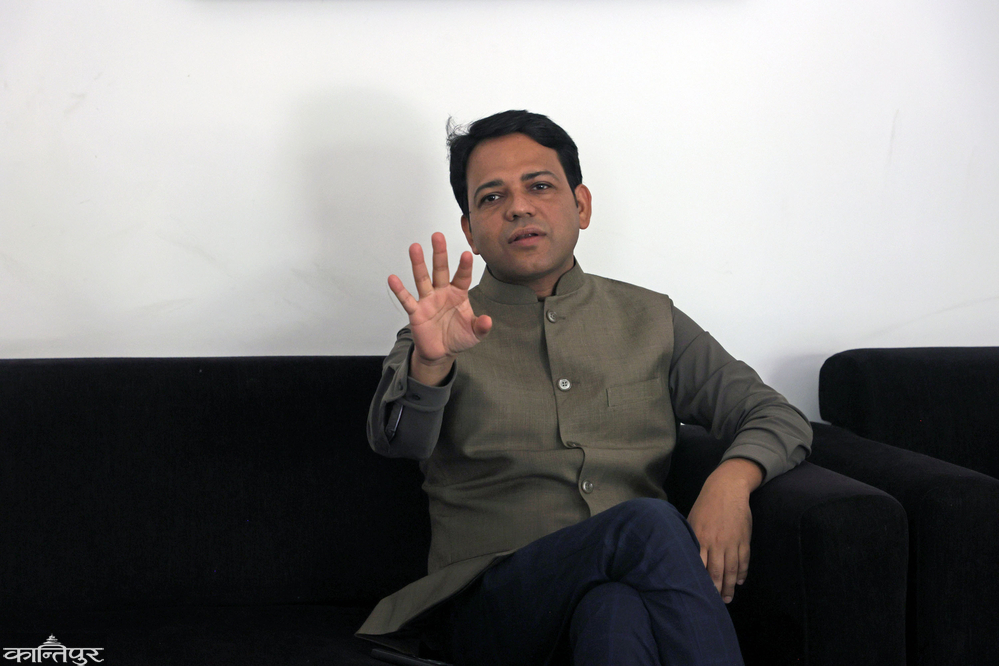 पहिलो त मनैदेखि माफी माग्छु । उहाँहरू जुन पार्टीको परिकल्पना गरेर आउनुभएको थियो, त्यस्तो नपाउनु भएको पनि हुन सक्छ । उहाँहरूलाई के भन्छु भने नियतमा समस्या थिएन । ‘एबिलिटी’ मा समस्या हुन सक्छ । जब नियतमा ठीक हुन्छ, ‘एबिलिटी’ को समस्या पनि बिस्तारै नेतृत्वकर्ताले फिक्स गर्दै जान्छ । तपाईंले यस पटक देख्नुभएको समस्या पार्टीको चरित्र होइन । पार्टी जीवनमा अबचाहिँ यस्तो अवस्था आउँदैन । चितवनको गर्मीमा ६ दिन राखेर सजाय दिए जस्तो भएको छ । यसले मलाई लज्जित बनाएको छ । अब त्यसो हुन दिँदैनौं ।