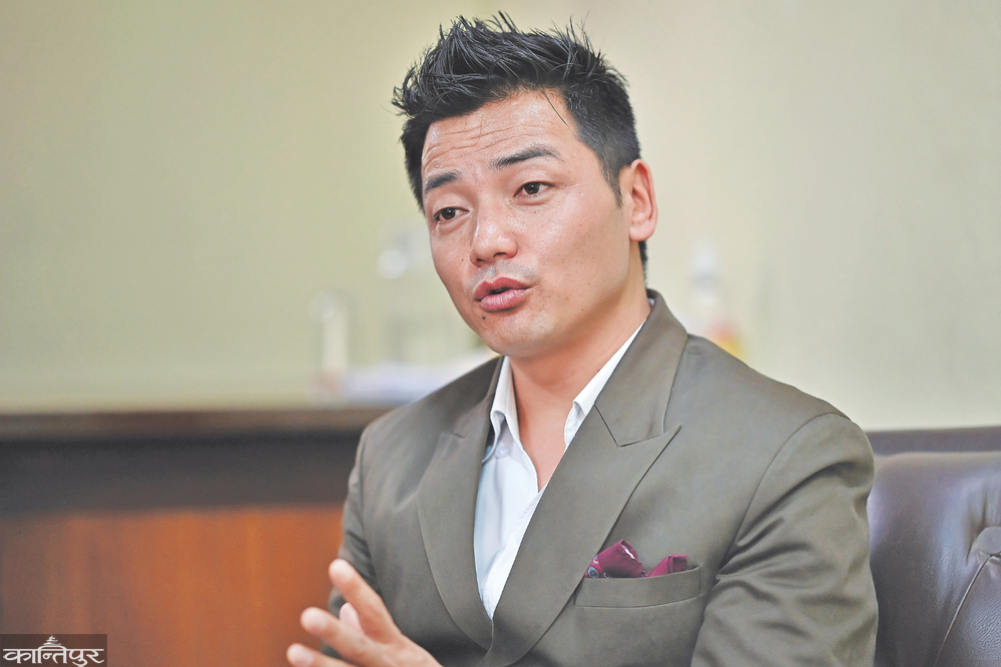
Niskal Rai, the whip of the main opposition party, the Nepali Congress, said in an interview with Kantipur - The government itself should also consider its accountability and responsibility towards the House. If this moral consciousness is developed, many issues will be resolved on their own.
We use Google Cloud Translation Services. Google requires we provide the following disclaimer relating to use of this service:
This service may contain translations powered by Google. Google disclaims all warranties related to the translations, expressed or implied, including any warranties of accuracy, reliability, and any implied warranties of merchantability, fitness for a particular purpose, and noninfringement.
While the President was reciting the policy and program, Prime Minister Balendra Shah left the House. Despite the strong support of the opposition parties, he did not attend the discussion on it in the House, nor did he come to respond. The government's policy and program was passed by the House amid protests and boycotts. Questions are being raised about him ignoring the parliamentary system by not addressing the House and bringing an ordinance after the Parliament session had already been called. Focusing on these issues, Niskal Rai , the whip of the main opposition party in the House of Representatives, Kishor Dahal and Jaisingh Mahara spoke to Kantipur for
:
You are one of the new faces of the Parliament. You have also become the whip of the old party, the Congress. What were your views and expectations towards the Parliament before becoming an MP? How do you feel after being active in the Parliament for one and a half months?
When I was not an MP but starting my political career, I thought that Parliament was the largest sovereign place. I thought that questions and answers make Parliament alive. I thought that the government is restrained and accountable to the citizens. Because, this is the highest place for representatives who have brought the opinions of the citizens. Now I am a member of the House of Representatives. The way I expected it earlier has changed now. It seems that it is not what I thought it was before.
Why did you form such an opinion? Did an incident change your opinion?
There are rules for running the House. However, after raising the issue of the people in the House, the accountability of the concerned party is necessary. This issue is also specified in the Constitution. International practice is similar. We also have our own tradition. I do not know much about the previous Parliament, but I feel that the accountability aspect has been weakened in this Parliament.
Why has the accountability aspect been weakened? Parliament could not force the government? Or, did the government not intimidate the Parliament?
The parliament has not been able to make the government responsible and accountable. There is no doubt about that. Article 76 (10) of the Constitution states that the Prime Minister and the government should be accountable to the House. But that has not been the case. Now, Rule 38 of the House of Representatives Rules has been discussed, where there is a provision that ministers can respond to questions raised on policies and programs in the absence of the Prime Minister. There are other references as well. Overall, it seems that we have not been able to make the government accountable. But the government should also understand answering questions in the House as its responsibility and accountability. At that time, they themselves will also become responsible.
Even though we have been continuously practicing the parliamentary system, the issue of making the government accountable to the Parliament has been challenging. We have not achieved complete success. Who should play what role to make the government accountable to the Parliament?
The opposition party must raise its voice. As the opposition party, the Nepali Congress has been raising its voice politely. We also raised the issue of the Prime Minister's presence and answering during the discussion on policies and programs. We had raised the issue that the Prime Minister should be accountable to the Parliament. But what should be taken into account is that we did not adopt disorderly conduct, we politely raised our questions.
The Speaker also needs to understand the issue. Because, he is the head of the legislature. In the case of policy and program, he could have ruled the Prime Minister by telling the Minister of Parliamentary Affairs. But it seemed that he had become indifferent.
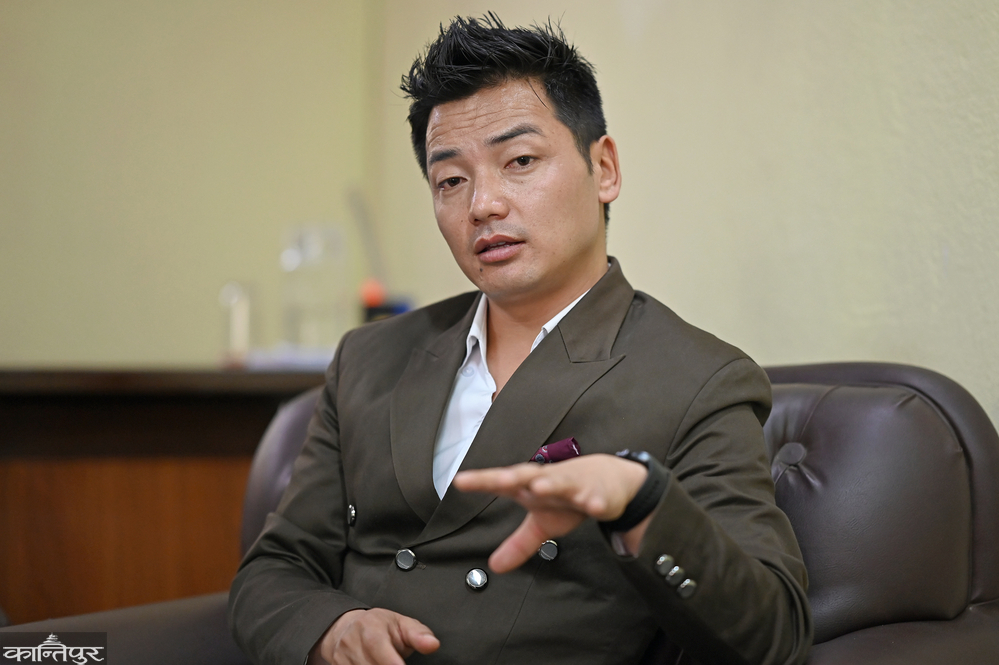 The government also has a responsibility. They themselves are representatives of the people. In a democracy, the government is not permanent. Therefore, the government itself should also consider accountability and responsibility towards the House. If this moral consciousness is developed, many issues will be resolved by themselves.
It is considered that the House is obstructed when any member stands in Parliament. But now the Speaker has warned of taking action. In the meantime, there was a dialogue between you. Nevertheless, the policy and program were passed amidst protests and boycotts. How did this situation come about?
We need to examine this issue with the background. While the President was presenting the policy and program, the Prime Minister got up and left. However, that document was read by the President on the recommendation of the Council of Ministers. Therefore, the policy and program came from the government itself. Still, the Prime Minister did not have the patience to listen until the President read it. I understand that as undemocratic behavior.
Some friends are saying that the Prime Minister has been disorganized. But we should understand that this is also a matter of setting a precedent. Therefore, we should also pay attention to the method and process. Without good process and good practice, good results will not come. On the other hand, we have heard the references made by the current ruling party members in the previous parliament. They had told the story of Hitler. However, this time we did not raise an illegitimate and unfulfillable voice. We only asked the Prime Minister to be present in the discussion to be accountable. The questions raised in the House are the questions of the common Nepali. Therefore, we asked the Prime Minister to participate in the House while raising questions and answering them.
The Speaker has also described the policy and program as the most important document, calling it a one-year roadmap. On the same basis, we had repeatedly asked the Speaker why the Prime Minister should not be present in the discussion and response on the most important document? But he explained Rule 38 of the Rules and its four sub-rules. However, the Constitution of Nepal is at the top. Then there is international practice and Nepalese law. Then there are the Rules.
While giving priority only to the Rules, one should also understand the intention behind making the Rules. Such rules were made considering the situation when the Prime Minister is out of the country or in special circumstances and cannot be present. But it is not possible to avoid participating in important discussions by putting forward the same rule. This aspect should also be taken into account. We had also urged the Speaker to consider Article 76 (10) of the Constitution. We adjourned the House and discussed it. The Speaker had also said that he would discuss it with the Prime Minister and try to bring it. Therefore, with faith and trust in the Speaker, we participated in the discussion knowing that the Prime Minister would be present in the House at least to answer the questions raised on the policy and program. We did not want to stop the policy and program. Because this is the most important document. But the Prime Minister did not come to answer it. Therefore, our protest remained.
There are many references in the past where the Speaker has shown affection for the party he was elected to. Are you starting to suspect that the current Speaker has also started showing similar behavior?
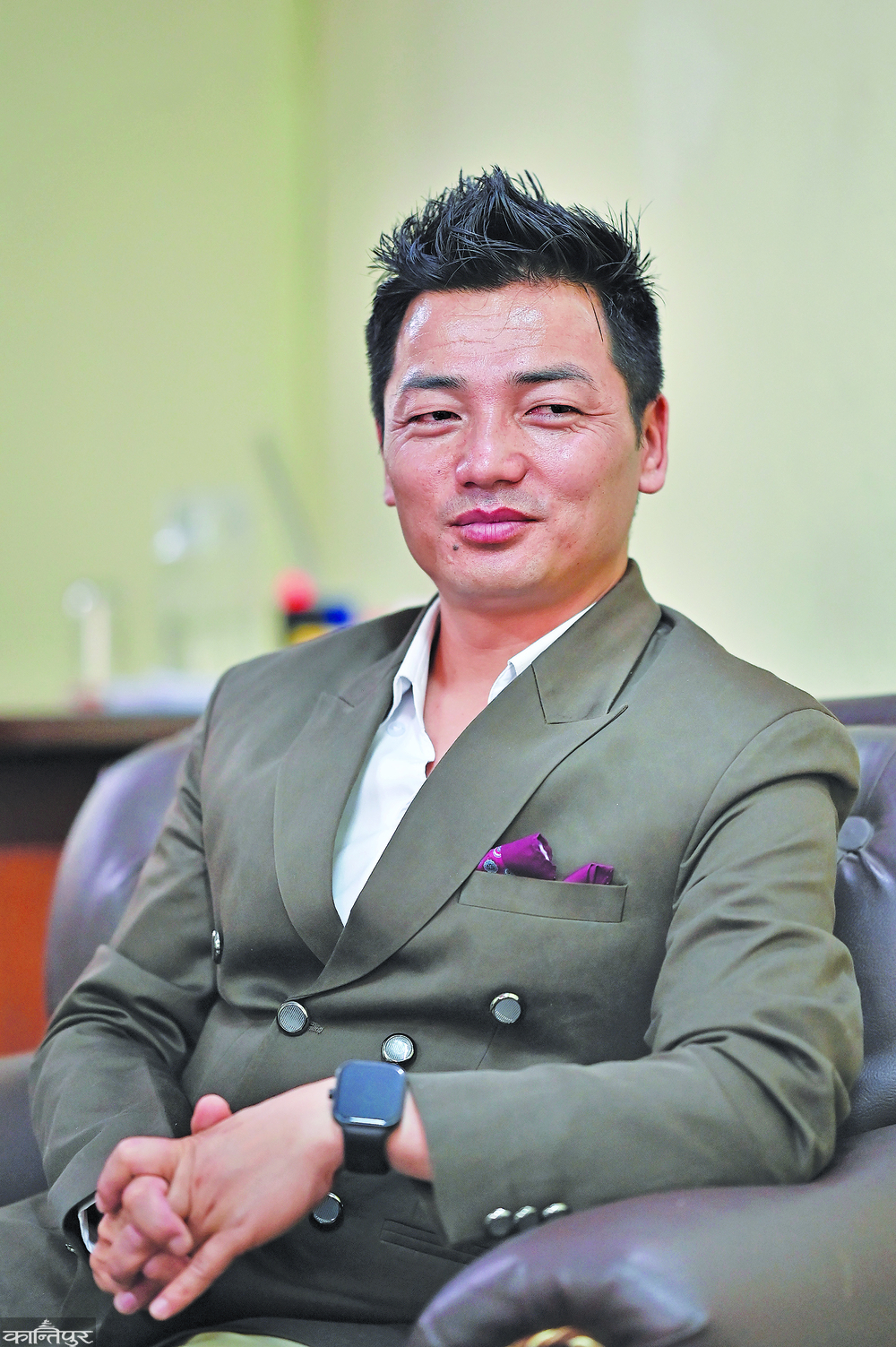 We are still studying the role of the Speaker. For example, I was a Congress candidate until 21 Falgun. But when the vote result came in my favor, since then I have been the representative of all the voters of Ilam-1. Friends who did not vote for me should not expect anything from me and I should not express neglect towards those who did not vote for me. The reality is that the opposition has received more unified votes than I have received. The same is true of the Rashtriya Swayamsevak Sangh (RSS). The ruling Rashtriya Swayamsevak Sangh (RSS) has received 48 percent of the votes, while the opposition has 52 percent of the unified votes. What I am trying to add is that the Speaker was an MP of a party until recently, but after becoming the Speaker, he should rise above the party. He should play his role in a fair manner, keeping in mind how to enhance the dignity of the House and the Speaker's chair.
Now let's come to the government. The Prime Minister did not speak in the first session after the election. The budget session of the parliament was adjourned after it was called. The President got up and left while reading the policy and program. There was no discussion and response on it. What is your assessment of the Prime Minister's behavior towards the responsibility to the parliament?
Prime Minister Balendra Shah is also new to parliamentary practice. However, all of us public representatives need to understand parliamentary practice. Being responsible to the parliament also means respecting the principle of separation of powers. But we see from the Prime Minister's behavior that he is neglecting the parliament. We see whether the Prime Minister has developed a dictatorial tendency, such thinking or two-thirds arrogance.
Let us discuss the government's activities from another angle. After the government was formed, questions were raised about a minister and he was recalled. Our opinion was expressed regarding the property details of another minister in the government. While questions were being raised about that, the Prime Minister used a bulldozer on the Sukum residents. In this way, the government tried to change the subject. When questions were raised about the use of bulldozers in the squatter settlements, the Prime Minister got up and left the parliament while the president was presenting his policies and programs. His behavior was unconstitutional and unconstitutional. This also distracted the public's attention from the issues. I think they have become adept at changing the subject after watching Barry Levinson's Hollywood film 'Wag the Dog'.
The government recommended to the president to convene a session of the house. The house was convened. But the government postponed it again and brought an ordinance. While they have close to two-thirds of the seats in the house. Instead of making laws after sufficient discussion in the house, they gave priority to an ordinance that can be brought in difficult circumstances. Even with such a convenient situation in the house, they are trying to run the state through ordinances. Has he not developed the idea of ignoring the house and becoming an autocrat? It seems that the government is trying to evade the house and the question itself rather than answering the question.
You mentioned that the Prime Minister is the first in parliamentary practice. Are all the issues you are criticizing now due to his lack of experience since he is the first in Parliament or is he playing a role with the intention of weakening the dignity of Parliament?
It may also be a matter of practice. But there are also leaders who have had the experience of the previous Parliament. There are also very learned MPs who understand the practice of Parliament in the 'Westminster' system. There are MPs who understand that openness should be practiced rather than the practice of closing doors. Parliament is alive through questions and answers. But their intention to ignore that very issue is visible. So overall, I see that it is more of an intention than their ignorance.
It has been one and a half months since the government was formed. You are saying that the Prime Minister is intentionally playing a role in weakening the dignity of Parliament. If so, will this system become effective or weak?
I am personally afraid. This parliamentary system was established after a very long effort and many movements. It is the best system established by many Nepali citizens by sacrificing their lives in many movements. Yesterday, there was a comment that no one can get a majority as long as this constitution and electoral system remain in place. There was a comment that the electoral system is very weak and not good. This comment among the leaders and the people has been shattered this time. It has been confirmed that even under this system, a single party can get almost two-thirds of the seats, and a permanent government can be formed. Therefore, the permanent government formed after the election should do well, complete its term, and listen to and understand the concerns of the people. If they do well, we will also be forced to do well. At that time, parliamentary practice will become even more difficult. But ignoring the parliament in this way, not answering the questions raised in the parliament, running away from the parliament, and deceiving the parliament is indifference towards the parliament. And, this will only advance autocracy. It will advance autocratic thinking. This will cause difficulties in the rule of law and order. But the activities they are doing show signs of ‘rule by law’ rather than ‘rule of law’. Are you also afraid that the government’s activities will take politics as a whole to a different and unexpected place?
Responding to questions raised by lawmakers on policies and programs, Finance Minister Swarnim Wagle tried to clarify the theoretical background of the Rashtriya Swayamsevak Sangh (RSS) from the rostrum of the House of Representatives. If we are to believe that, it seems that they understand the dignity of the Parliament. Theoretically, all the leaders of the RSS are clear. It seems that they are also establishing issues like the ‘West Minister’ system and socialism and are further enhancing the dignity of the House. However, looking at the activities of the head of the government or some of the government ministers, it seems that they do not understand those issues. Or we are seeing that they are trying to concentrate power on themselves by ignoring the issues of the parliamentary system and their party principles.
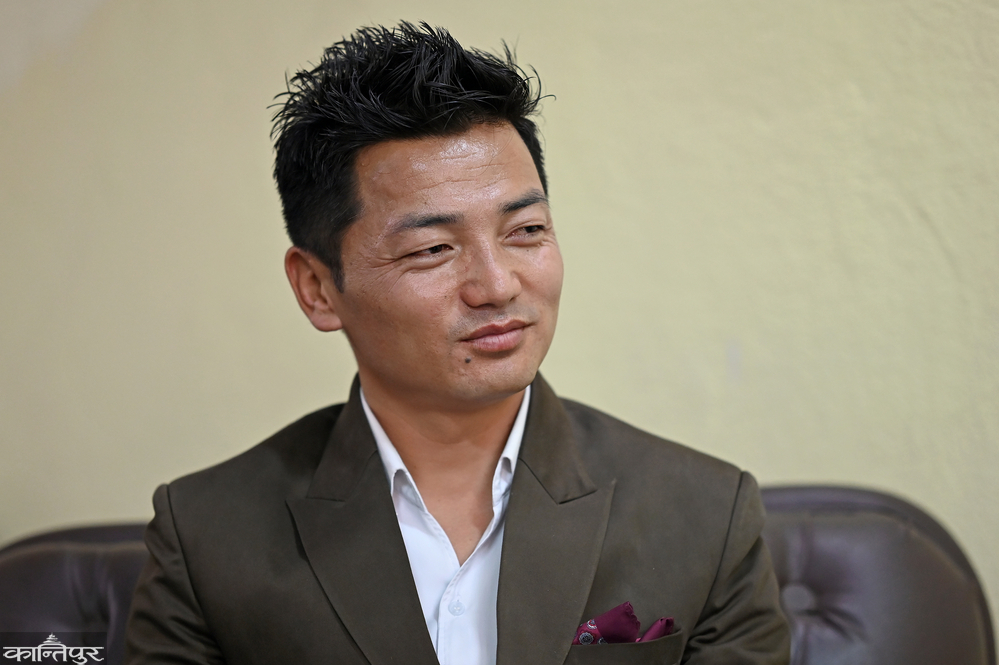 The role of the opposition is also significant in making the House effective. But the role played by the Congress as the main opposition party has also been criticized. Are you having problems with your size or are you not getting an agenda?
Our party has a structural problem. We have not been able to publicize the work we are doing among the people. This has been a problem since the beginning. For example, the current Finance Minister Swarnim Wagle has also said that if we look at the statistics from 2072 to now, we have not achieved much and as expected, but it is not that nothing has happened. But we have not been able to take the same issue to the people. We still have a problem. The people have many expectations. However, it does not mean that the opposition should work as they think. We are not a party that believes in disorder. We want to play a decent role. Protecting the Constitution is the most important issue for us. Because the Congress played an important role in the making of this Constitution. Therefore, we have to raise our voice wisely and decently. We have to keep our voice in the House. This is the example of the opposition role that we want to establish. We do not believe in opposition being always disorderly or opposing just for the sake of opposing every issue. We support the good work done by the government. But, we oppose the wrong work. Which is what we are doing now.
If we look at it this time, we had the numbers in the National Assembly, but we helped pass the policies and programs. In the House of Representatives, we were weak in numbers, which vote was not going to affect them. But, at least we raised our voice for constitutional supremacy. So what needs to be understood now is that in parliamentary practice, the opposition is not seen by numbers. Its voice should be seen. Even if it is an opposition party, the issue it has raised should be seen.
So, is the Congress currently satisfied with the role it is playing in the House?
We are satisfied with the role it has been playing so far.
From the opposition perspective, how do you feel about the overall performance of the government formed under the leadership of Balendra Shah in the past one and a half months?
If we look at the work of the government as a whole, it is seen that they are moving forward with vengeance. They are trying to create a narrative that everything old is wrong. But some of the things done by the old are also good. For example, there were problems in the land commission yesterday, and as soon as the government changed, the commission officials also changed. But there were many good things done by the commission. Many landless people received property certificates. If you look at the website right now, you can see the data. There is data from many local levels. The current government is not looking for continuity in such work. It is looking for data from the Nepali Army. Therefore, by creating a narrative that everything old is bad, they are working outside the rule of law and are making a narrative - this is disorganization. But this is how a nation cannot become successful.
What should they have done?
The government should also respect the good practices done by the old. It would have been better to examine the weaknesses in the past and move forward. But it has not done so. For example, former Prime Minister KP Sharma Oli and former Home Minister Ramesh Lekhak should be punished if they are found guilty in the Gen-G movement. Because no one is above the law. They also say that. But at the same time, the issue of irregularities in the telecom sector has been raised only recently. What I am trying to imply is that he is 'clean' but the land was sold by the mafia. Who was in the place to give the order at that time? He was a current MP. Therefore, if everyone is guilty after sitting in the chair, then everyone should be punished.
The people have been saying for a long time that the youth should be given responsibility for the country. This time, the youth have also dominated the parliament and the government. How do you see the expectations from the youth and the identification with their work?
It is a very pleasant matter for the youth to come into politics. The way the youth look at politics is changing a little. But the youth should also have passion and perspective. They should also have culture. They should have the zeal to lead towards positivity. That is, they should have a cultured zeal. For example, BP Koirala became the party president at a younger age than us. He became the head of the government. We still appreciate the budget he brought at that time. We envisioned that it would be young people like BP.
The first policy and program of the government has been passed. The policies and programs of the strongest elected government in Nepali history should have come, do they seem to have come as they should have?
We do not see the policies and programs as we expected. Their pledge has also been seen. They have said that they have brought policies and programs to support the pledge. They have brought policies and programs in 100 points, like a 100-point pledge. We need delivery more than the number of points. However, many issues are good. They are attractive. But the issue of how to convert them into achievements is difficult. Because we have only limited resources. The issues of where to get resources for the work they have put forward, how to get them, how to get them. Strategically, they appear to be very weak.
There are some new issues in the policies and programs. For example, they have brought the issue of green economy. And there is also the issue of digitization. Our party president Gagan Thapa has also prioritized digitization in ‘Project Government’. I think the government has contributed a little bit from that. Another issue is that the Finance Minister has said that education and health were also included in the policies and programs made by Suvarna Shumsher in 2015. That is correct. Will the same be the case 50 years later? But the important issue is how and how it will be done over time. That is why they are clear about what should be done, but they are not clear about how it should be done.
The government's budget is coming on 15th Jestha. What should it be like?
The budget should be fair. The wrong practices of the past should be ended. Earlier, the budget was prepared based on the leader's access and power. Disruption should be done there. If that happens, all representatives will be respected. People's representatives have their own problems in their own areas. We were not invited during the budget preparation. Our voices were not heard. The meeting that the Prime Minister had called for discussion earlier should have been called by the Finance Minister. After that, there was no discussion. There was no demand for a plan anywhere. It seems that even now, the budget is being prepared based on the leader's access and power. However, the budget prepared by the federal government should not be like that of the provincial government and the local level. It should not be scattered. There are plans of national pride, there are past obligations, there are multi-year plans. Their continuity is needed. On the other hand, new topics are also needed - investment is needed in areas such as science, entrepreneurship and education. Therefore, it is wondered whether such a budget will be prepared. Let's hope that there is a learned Finance Minister. We expect that he will do justice this time.