It is not certain that the head of state or government will come from anywhere, it is certain that there will be leadership from the political level, from China, a person of the vice president level of the party, who is in the portfolio below the president, is coming.
We use Google Cloud Translation Services. Google requires we provide the following disclaimer relating to use of this service:
This service may contain translations powered by Google. Google disclaims all warranties related to the translations, expressed or implied, including any warranties of accuracy, reliability, and any implied warranties of merchantability, fitness for a particular purpose, and noninfringement.
An ambitious program put forward by the government is the Everest Dialogue. Everest Dialogue Forum has been established with the aim of raising issues of international and national importance and discussing them in depth. The first edition of the Sagarmatha Dialogue is being held in Kathmandu from May 2 to 4.
Nepal has invited more than 100 countries for this year's dialogue focusing on 'Climate Change, Mountains and Future of Humanity'. The preparations for dialogue are in the final stage. Rajesh Mishra of Kantipur Rajesh Mishra and Numa Thamsuhang
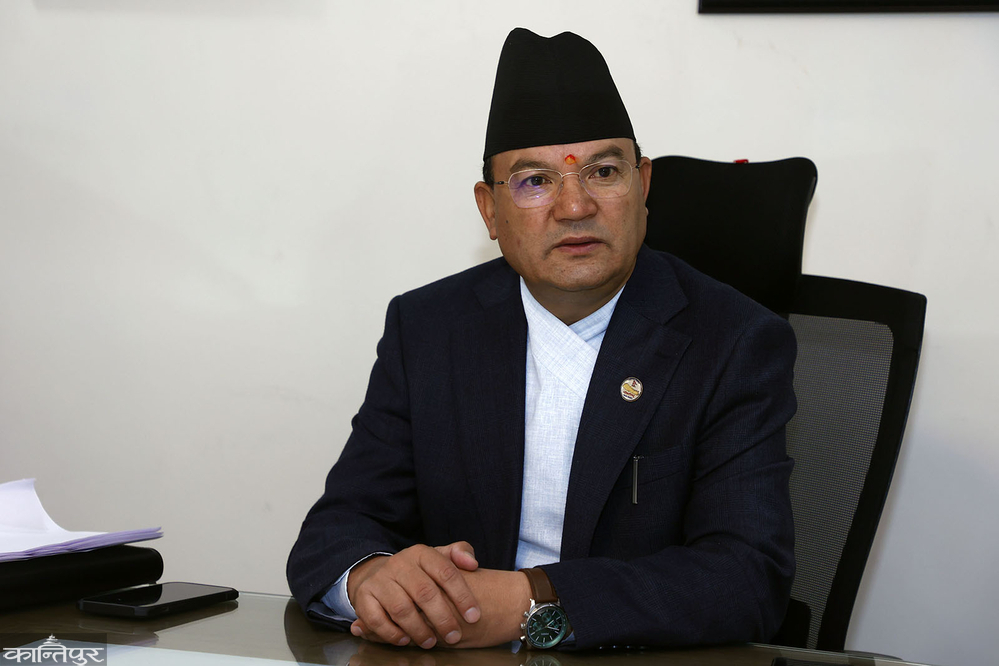
conversation with Ain Bahadur Shahi Thakuri
, Minister of Forest and Environment, Co-Chairman of Everest Dialogue Management Committee
:
Why is Nepal going to organize the Everest Dialogue?
Sagarmatha dialogue was planned to be held in 2076. But it could not happen because of Covid-19. The current government has made it a priority. Nepal has suffered the effects of climate change. We have tried to show the problems faced by Nepal by drawing the attention of the international community to the effects of climate change, especially on the Himalayan region, and the fact that the effects of climate change are increasing day by day.
This year's main theme is 'Climate Change, Mountain and Future of Humanity'. Its main purpose is how to reduce climate change through a collective discussion of the heads of governments or heads of state, policy makers, researchers, and experts from different countries in the world.
 The mountains of Nepal used to be white covered with snow. Now they are black. How to protect it will become a topic of dialogue?
is the main topic that focuses on this. More discussion will be focused on the impact on Himalayan and mountainous countries like Nepal. Because in Nepal the ever-present white mountains used to shine, like silver. Now in the last stage, the snows of those mountains are melting. Glaciers are melting. The glacier is breaking up. The mountains are seen as black stones after melting. The mountains including Machhapuchhre have become black. The situation is affecting Nepal. How to protect it?
How can we keep the mountain in its original state? And, it is not possible for Nepal to take initiative for that. Large countries, industrialized and developed countries, which have played an important role in carbon emissions, have had to suffer the effects of excessive carbon emissions. We talked about this in various international conferences like: COP-29.
photos: Hemant Shrestha/Kantipur
as well as other conferences and international platforms. But those who are responsible countries, we are organizing this program in our own country so that all of them can be seen and experienced directly in Nepal. When we directly see and experience the impact on our country, that country will reduce the impact and carbon emissions. It is also believed that Nepal will receive support from these countries for climate adaptation programs and climate-friendly technologies related to climate change.
You yourself also represent Himalayan district. In your direct experience, how has climate change affected the life of Himalayan people?
Agriculture has been most affected. Water sources are drying up. Due to lack of rains and heavy rains, our agricultural land has been completely washed away. During cultivation, floods and landslides wash away. Due to this the farmers are suffering a lot. The soil there has washed away. Now many of our old traditional farming systems are drying up and drying up. The way in which crops were grown and produced is also decreasing. We are experiencing this directly. Also, herbs are getting less and less in the variety and quantity that they used to get. This has affected the entire sector.
The date of the Everest dialogue is approaching. Where is its preparation?
Its preparations are all complete. A committee of directors has been formed under the chairmanship of the Prime Minister. There is a management committee chaired by the Minister of Foreign Affairs. I am its co-chairman. There are also other officials. Similarly, there are other committees under the leadership of the Chief Secretary. In general, the office of the Prime Minister and the Council of Ministers, the Ministry of Foreign Affairs and the Ministry of Forests and Environment, these three bodies are doing their work comprehensively. Now the names of the participants have been finalized. International guests have been finalized. Everyone knows that we are having a program at Solti Hotel in Kathmandu. How to conduct the sessions there, who will do what? Who will play what role? Everything is ready. The
guests are almost finalized. How many foreign guests have been invited? Who is coming?
We sent invitations to all countries including SAARC countries. We have invited heads of state, heads of government and government ministers, policy makers and experts with long experience in climate change. In particular, we have invited about three hundred foreign guests from countries that play a major role in climate change, countries affected by climate change and others. Time was short. About three months in between we sent out the invitation. It has been said that policy makers, experts, ministers, foreign ministers, some forest ministers, some climate related ministers will come to the dialogue.
Is the head of state or government of any country coming by accepting Nepal's invitation?
The head of state or government is not certain to come from anywhere. It has come from the political level that there will be leadership from many sides. From China, a person of the party's vice-president level, who is in the portfolio below the president, is coming. The Minister of Forest and Environment is coming from India. There is talk of a Deputy Foreign Minister coming from Japan. Similarly, ministers are being represented from Bangladesh, Bhutan.
5 special envoys on climate change from different countries are participating. Ministerial level representatives from 10 different countries have been confirmed. More than 150 foreign representatives from 40 countries are expected to participate. Representatives are also coming from Azerbaijan, which hosted COP-29. The UN Secretary General addresses the program through video.
Large countries, whose activities and industrialization are affecting the climate. Who is called such a big country?
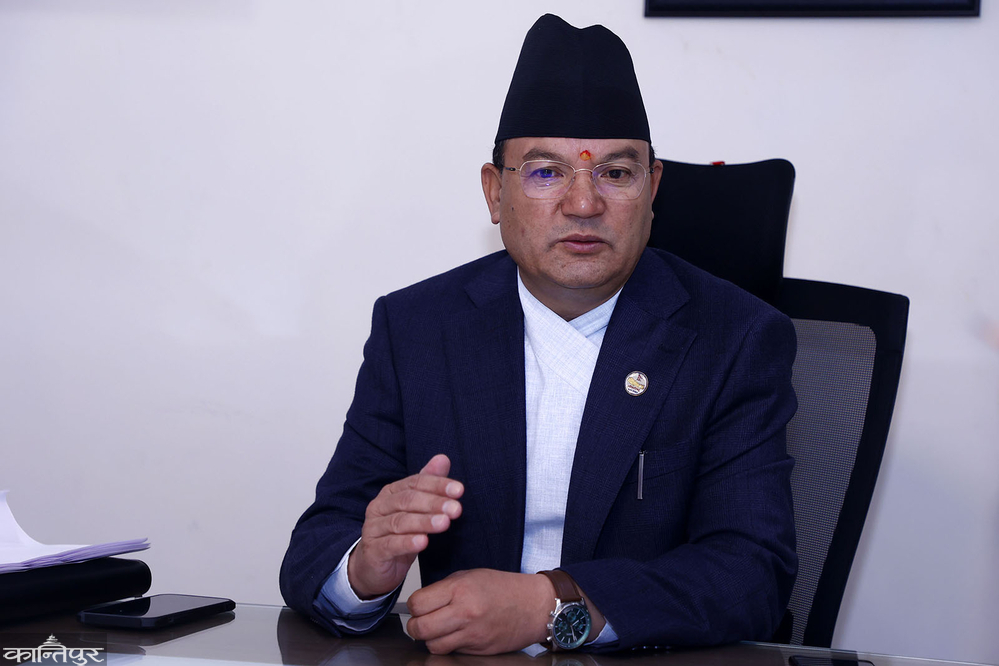
We have called everyone to call. We have invited everyone from America to all countries. We have also called the island nation. We have also called the mountainous country. We have invited all the developed countries Germany, UK, Korea, Norway, Denmark. Although the leadership cannot come there due to various reasons, they are sending the relevant representatives.
What does the 'Sagarmata Dialogue 2025 Declaration', which will be announced on the last day of the Everest Dialogue, mean for Nepal? What is the message to the international community? The manifesto is released on the last day of the
program. It will be inaugurated on May 2. After that various sessions start. Various sessions are conducted on the 3rd as well. The topics of the session are shared. On the morning of the 4th, there is a mountain flight. We offer a direct view of the mountain by mountain flight to the guests who come from outside. The manifesto is issued after the
then returns. The mountains of Nepal have reached this state today due to climate change. Due to this, we will talk about the suffering of the people, the suffering of the people, to reduce the global temperature, to create more pressure on the countries that have played a greater role in carbon emissions, and to reduce the effects of climate change and climate justice.
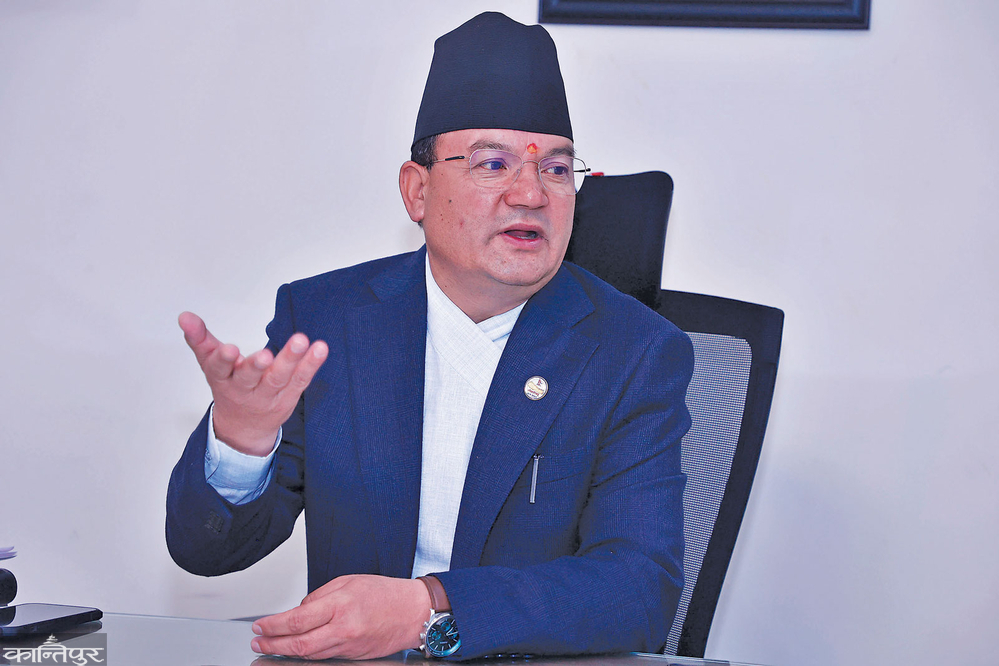
is about climate finance, harm and loss. We are not getting all these things. There is a pressure to achieve all these things. How much is Nepal actually affected by climate change? It is an opportunity to show and explain. Nepal has a negligible role in carbon emissions. However, Nepal has to suffer. Those who come will experience it firsthand. This puts pressure on the international community.
How is Nepal demanding international justice in terms of 'climate justice' to be discussed in the Everest dialogue?
s are conducted in different sessions. Factual matters in this session, Nepal has faced all the problems till date, such as: Floods in Thame and Bagmati Province caused losses of billions of rupees. The landslide that occurred in Melamchi a few years ago was also due to climate change. Kanchanpur in the far west also received record breaking rains. All these are examples of climate change. That is the effect. This is evident from the fact. Researchers have also confirmed. Nepal is a country that deserves the right to climate justice. We show the problems we faced through video. Apart from this, there are researches and reports prepared by researchers. We present documents prepared by experts and the government.
The National Climate Change Policy 2076 aims for sustainable development, climate adaptation and low carbon emissions. How does Nepal plan to ensure cooperation and support with the international community through the Everest dialogue?
We are further modifying this policy and moving forward. The National Implementation Plan for Climate Change Mitigation and Adaptation (NDC) has reached its final stage. We publish it on the eve of the Everest Dialogue by incorporating the suggestions of all concerned agencies and we are also conducting a climate model program.
What is Nepal's expectation from the Everest dialogue?
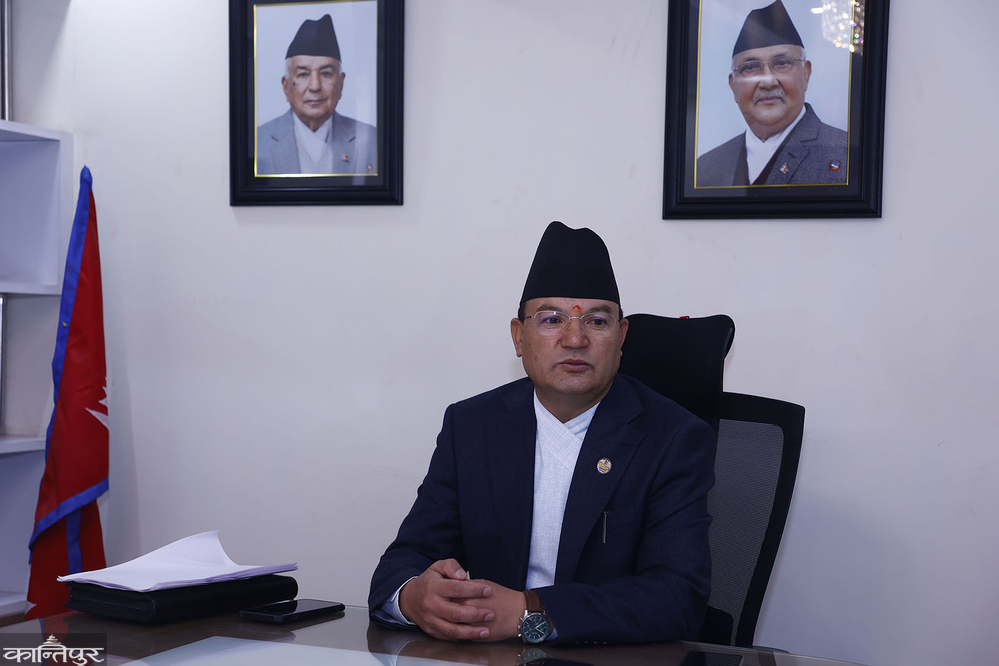
Rich nations are not serious about curbing carbon emissions. They are emitting carbon. Those who have a tendency to be influenced as much as possible, should be pressured a little. so that they do less. The temperature of this earth is not decreasing. To lower the temperature, we have to reduce carbon emissions and go to alternatives. There had to be a transition to renewable energy and clean energy. Like : 'Fossil As for fuel, it has to be reduced and the temperature of the earth is reduced. Otherwise, no matter how hard they try, Nepal will have to bear the consequences. Our expectation is that such activity will be reduced.
which countries play a major role in carbon emissions. He had to do less. This one thing happened. Now to get out of these problems, do you expect some help from these countries? There is definitely a
. Because in the various conferences held in the past, many kinds of agreements have been reached. At that time, it has been agreed that countries that emit excessive carbon will provide climate finance to countries that do not contribute to carbon emissions but are more affected. Recently, the COP-29 held in Azerbaijan's capital, Baku, was also discussed. Like Nepal, many countries have demanded climate finance. But now the rich nation is not ready to give. A middle path has emerged.
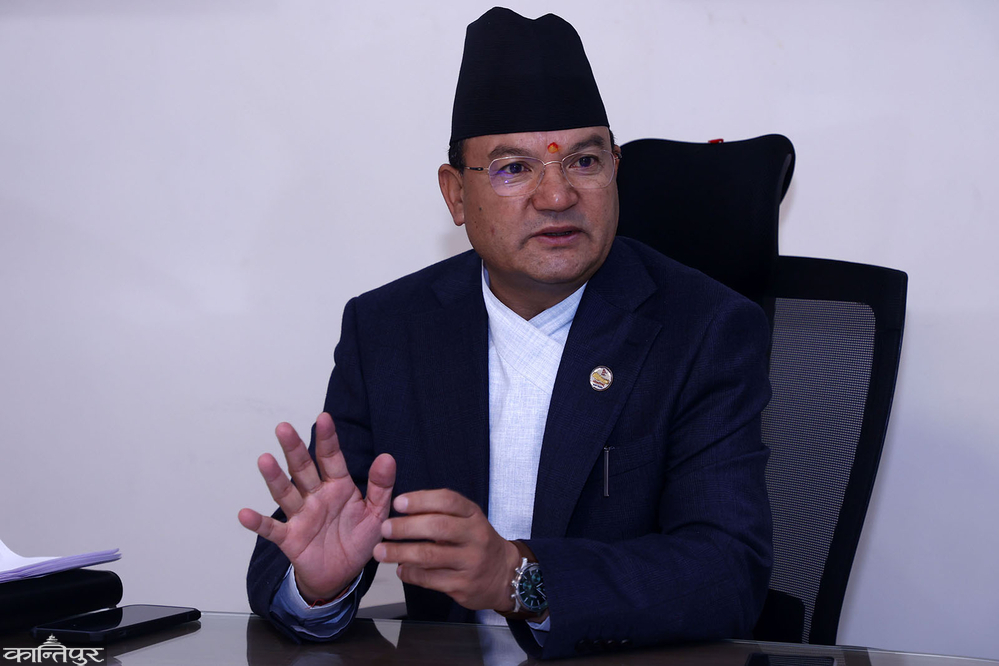
Rich countries have also agreed to provide $300 billion in annual aid to developing countries to prepare for and deal with climate change by 2025. Then there is talk of reducing carbon emissions and keeping global temperatures to 1.5 degrees. Now Nepal has set a target of reducing carbon emissions to zero by 2045. We are developing the necessary legislation and vision to achieve these goals. Other countries should adhere to their commitments and conditions so that they can contribute to reducing global temperatures. Due to the fact that a rich country like Nepal is suffering the effects of climate change, it should be supported in technology and climate finance to reduce and minimize it.
Nepal is holding other kinds of meetings and conferences. This kind of program is being organized for the first time. How many internal preparations are there to organize this program?
The goal with which we have organized this dialogue is that it will help the overall situation of Nepal and the policy taken by the government of Nepal. Even within Nepal, we only discuss that we are affected by climate change. But how responsible should we be? Can we have our own role? What will the local level do? What will the state do? What will the federal government do?
We can contribute to reduce climate change from different areas. It shows the way. And, Nepal is really suffering in the international community. We are trying to give a fresh message that Nepal is really affected by climate change. Because of that, our neighboring countries will also understand the reality. For example, China and India are two huge neighboring countries. We are in the middle of it. It also affects China and India. Our neighboring countries also have a role in carbon emissions. Nepal itself is a country with natural biodiversity. Now we are not in a position to control it by our own role. Therefore, the international community and cooperation have a very important role.
How much will the conflict between India and Pakistan affect the dialogue program? What are the chances?
This came about by chance. Till date this has not created any problem. Foreign representatives are sure to come. One more week left. What form does stress take? It cannot be said exactly what effect it will have.
It is said that Nepal will play a leading role on the international stage on behalf of the mountainous country in relation to climate change. Accordingly, Nepal is advancing this dialogue. What is Nepal's leading role in climate change?
Through this Everest dialogue, we are trying our best to make Nepal the leader of the mountain country. Even in previous programs related to climate change, Nepal is raising its voice for the mountainous country. Therefore, Nepal should lead the mountainous country through the Everest dialogue and the Everest dialogue will make a great contribution for Nepal to advocate and debate it in the world community.
How will Nepali participation and representation be in the Sagarmatha dialogue? We have estimated that around 400 people, both native and foreign, will participate in this event. Among the participants of Nepal, especially policy makers, political figures, then experts, experts who have worked in the climate field, researchers, professors, development partners, ambassadors of foreign diplomatic missions in Nepal, diplomatic chiefs, and the whole sector will be represented. In addition, we have included all classes, regions and communities, since the mountains, hills, plains, intellectuals, students, women and children are all summit dialogues. The participation of all these has been selected.
Now let's change the context a little. He is leading the Ministry of Forestry. What is the role of the Ministry of Forestry? Is it shrinking more than before?
After going to federalism, many roles of the Ministry of Forestry went to the provinces. I found out after I arrived. More authority is in the province. The union that formulates the policy and many things that implement it are under the province. Now, we have started the work of revising the existing laws and regulations, facilitating the various problems faced by the Ministry of Forestry in the past days. In order to deliver services to the people quickly and issues related to forestry and environment, especially land acquisition, environmental impact assessment and other works, are now being carried out in a simple and easy manner. We are revising some rules.
There are some cases of conflict between the state government and the federal government over the forest sector. Cases have reached the court, how have you facilitated this?
This situation has not happened in the last stage. Wherever such a situation has arisen, we are working in a coordinated manner by the state and the union. There are some legal complications in the province. The matter of the forest officer has become a bit complicated. But some laws require that the case be settled there according to federal law. Their confusion on that matter has hindered them from exercising their rights. We are fixing it.
Now preparations have been started to bring the Forest Officer (DFO) under the union government again? The
thing is raised. They are under the province. But because they have to settle criminal cases under federal law, legal complications have been created. As per the international practice: Forest structure in India is at the center. It is through the association that the province (state) there does Khatanapatan. There are also things that are a little more effective when going this way. But now there is no concrete thing that it should be done. In order to make the forest effective, it is easy to implement the laws and regulations of the forest in a simple way.
You have become a federal minister from Mugu representing the Himalayan region. What do you see as the main problem in your place today?