More people need to show leadership and activism to improve education
We use Google Cloud Translation Services. Google requires we provide the following disclaimer relating to use of this service:
This service may contain translations powered by Google. Google disclaims all warranties related to the translations, expressed or implied, including any warranties of accuracy, reliability, and any implied warranties of merchantability, fitness for a particular purpose, and noninfringement.
"Teach for America" established in 1989 with the aim of ending educational inequality prevalent in America has been operating in different countries of the world since 2007 through "Teach for All". Founded by Wendy Cope and Brett Wigdorz, Teach for All is currently working to improve the quality of public school education in 64 countries around the world.
To increase the educational quality of community schools, 'Teach for All' is collaborating with Teach for Nepal as a 'learning partner'. Teach for Nepal has been focusing on the campaign to improve the quality of education by sending volunteer teachers to various community schools since 2070. As part of this campaign, Teach for Nepal has currently deployed more than 40 fellow teachers in schools in Dhanusha, Parsa, Tanahun and Sindhupalchok districts in coordination with the Ministry of Education, Department of Education and relevant district education offices. Wendy Cope, co-founder and chief executive officer of Teach for All, who has been working for the betterment of education in more than five dozen countries for 18 years. What inspired you to take this model outside of the US? What were the challenges faced in expanding it to different countries? For nearly 20 years, I have been entirely focused on reducing inequality in America and its education sector. There was a lot of work to be done, there is still more to do. So I didn't think about other countries. But after requests from people from different countries came to us, we finally decided to take the Teach for All network worldwide. They felt that there should be programs like Teach for America in Nepal, India, Nigeria, Brazil, Austria or other countries. This is what led us to the idea of creating a global network. Then, we founded Teach for All, which brought together like-minded organizations. Our shared goal is to develop collective leadership and ensure that every child can read to their full potential. Many countries like Nepal are struggling with educational inequality. In your experience, what are the key elements needed to transform the education system of a developing country like Nepal? I think, not only in developing countries, but also in rich countries, there is an environment of inequality in education. One thing is clear in all these places. The circumstances into which children are born determine their future, which is a very complex and deeply systemic problem. Therefore, no single solution is sufficient to solve this problem. This requires many changes. The most important thing is that many people need to show leadership and activism to improve education. Government workers, school administrators and classroom teachers, social innovators and outside lobbyists all need to work together. This is why we see the need for collective leadership. Many people in any place must unite with the determination to improve education. They need to get along with each other so that they can learn, collaborate and coordinate together, not just individually. What I have seen for myself in the first 20 years of Teach for America and its impact in 64 countries now, this theory is further confirmed. We attract talented graduates with diverse academic backgrounds and interests into our network, who initially work as teachers in poverty-stricken communities for two years. This experience gives them a strong foundation for teaching and leadership. This person does not leave this campaign even after two years. In two years they make a big impact, but even then they continue to work for educational reform. Some work in their own communities, some work by being involved in schools, some enter politics, and some try to fill the shortcomings of the government system by establishing new organizations (NGOs).
Thus, after years of continuous efforts, we have also realized that we have many people with the power to bring about change, who are able to collaborate with each other to produce real results for the improvement of education.
How long will it take to establish an ideal education system?
This is a very long process. This is also one of our biggest learnings. As it stands now, educational outcomes are declining worldwide. If you look at the PISA results (a study that measures educational outcomes in developed countries), we are now in the middle of a 10-year straight decline. Similarly, large-scale research conducted in low- and middle-income countries shows that, on average, educational outcomes have been declining over the past 30 years. This
is not just for lack of effort. Governments, United Nations agencies, World Bank, teachers and many people are working hard to improve education, but the results are getting worse instead of improving. However, there is ample evidence that reform is possible if we have the leadership capacity. I have seen in various developing environments, including the US, that change is possible.
When many people in a place are dedicated to the same goal and work together to change not only the policy, but also the teaching methodology and the culture of the education system, then positive results begin to be seen. It takes time. It may take at least 10 years or even more to see improvement in the education system in a place. But there is no alternative to this long journey. Because the efforts made so far have not seen any effective improvement in the child's future. Therefore, developing leadership skills and moving forward with long-term planning is the only solution.
We read that 'Teach for All' focuses on collective leadership development. How do you define it and why is it necessary to improve the educational system worldwide?
By collective leadership we mean people from the entire community working for education. Some are in the classroom as teachers, some as school leaders, some as policy makers in government agencies, and some outside the education sector as innovators or reform advocates.
All these people should be dedicated to the same purpose to make the education system effective while ensuring the learning and overall development of the child. When these people connect, they rise above their individual spheres and begin to see the bigger picture of the system as a whole. They discuss with each other, learn, collaborate and find necessary improvement measures. We have experienced that building collective leadership is possible, but it requires a planned effort. This is why we are working on its development through Teach for All. In Nepal too, 'Teach for Nepal' has been trying this for the last 12 years.
Your work has been honored with many prestigious awards. Looking back, what do you think is the most important contribution you have made to the global education system?
I had this idea since I was in college. He believed that all children should have opportunities according to their abilities. They should get such education, which will enable them to make their own future better.
So rather than say my biggest contribution is this collective effort, which has now connected more than a million people worldwide. Not only did this man commit to the first two years, he never left the job after that. More than 70 percent are working long-term, full-time, related to education reform. They are making an impact not only in the first two years, but every year thereafter, which is playing an important role in strengthening the education system.
Today, technology is rapidly changing the education system. What role do digital tools and AI play in the teaching-learning process to ensure equal access and equal opportunity?
I think it can go two ways. If a teacher who believes in equal opportunities and is serious about students' academic and personal development, then AI can be very useful in their hands. AI saves a lot of teacher's time. For example: A year-long curriculum can be prepared in just 30 minutes, which is probably better than what can be found elsewhere.
If not teachers, technology itself can become the cause of increasing inequality. So, we at Teach for All are researching how technology and AI are effective in the classroom, what works and what doesn't. We are trying to understand its impact, especially in schools from extremely backward communities. Our goal is that the teachers we develop will become the leaders of the future, who will show the world how technology can be used in the right way to ensure equal opportunities and excellent education.
Nepal has a long tradition of community-centered education initiatives. How can local solutions be integrated into global educational reform efforts?
actually believes that it should be initiated through local efforts and this is the basic idea of 'Teach for All'. We believe that strengthening the education system requires leaders who are deeply rooted locally. Nepal's best graduates, who are attracted to work in sectors like banking, consulting, oil and gas, need to be invested in strengthening education. Because the person who understands the local environment well, who understands the culture can be the main factor in bringing about changes in education.
We have seen that if local people get the opportunity to learn from similar efforts of other countries, such local leaders can bring rapid progress. Because it helps them understand what is being done elsewhere, shows the latest technology, shows potential. Such exchange prompts local leaders to decide what to adopt, what not to adopt, and to develop their own innovative ideas.
Therefore, one of our 'Teach for All' values is 'Locally Rooted and Globally Informed'. Our network is built on this foundation. Therefore, each organization in our network is independent, locally led, and developed according to the local context. Although we have common goals and visions, each institution is advancing education according to its own local culture and environment. Also, we are trying to ensure that these institutions, teachers and alumni can learn from each other.
In many developing countries like Nepal, education is often affected by political instability, poverty and lack of resources. Which strategies have been found to be most effective in meeting these challenges?
In our experience, if enough people in a place, be they elected officials or anyone else, are committed to a common goal, much can be done regardless of political change. We therefore see collective leadership as a key tool for systemic change.
There is a mindset around the world – systemic change is just policy change. But this is not true in education. Even if the policy is changed, there is no guarantee that the actual student experience will change. Therefore, there is a need to improve the policy, but also a change in teaching techniques and thinking is also necessary.
This is why we are focused on developing people who will not only work within the government. But there should be an initiative to improve the entire education system. An important role can be played even outside the government. We have seen that when there are sufficient numbers of such committed people, education can be improved regardless of the political environment.
What do you say about poverty and lack of resources? How can these challenges be faced?
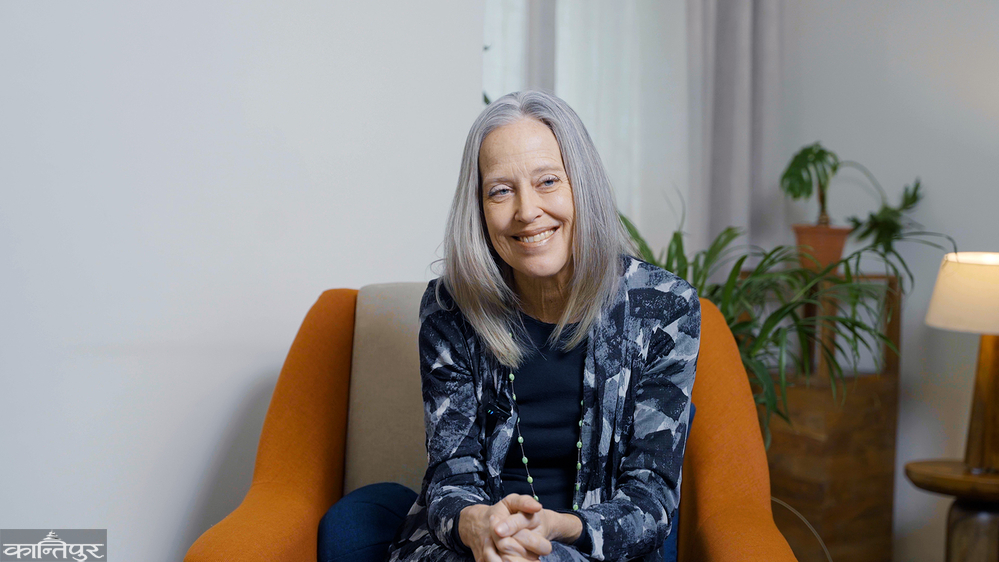
We must continue to support the idea that our future is being built in our classrooms. If we want to redefine the future, the first step is to change the learning process in the classroom. We have seen that communities or nations whose educational outcomes are improving, understand that their future depends on education. That is why they have given first priority to education.
We need enough advocates and leaders to establish this in society. Teachers play the biggest role in fulfilling all our aspirations like peace, sustainability, equality and inclusion.
Your book 'A Chance to Make History' discusses what needs to be done and what is not for reforming education. If you had to update the book now, what new text would you add?
When Teach for All was launched, our focus was on eliminating inequalities within the education system. At that time our efforts were mainly focused on advancing the child within the current system. But, over time, especially inspired by visionary leaders around the world, we realized that this was not enough.
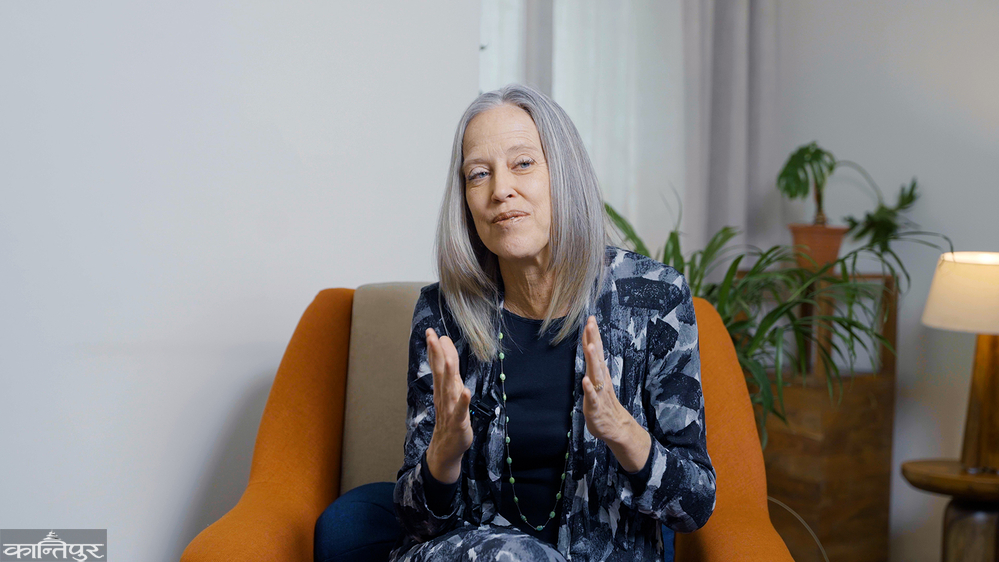
Simply encapsulating the child within the old system is not the solution. The education system currently in use is decades, in some cases hundreds of years old. Therefore, it is important to eliminate inequality, to give all children the opportunities they deserve, but also to redefine the very purpose of education. For that reason, we are no longer limited to improving academic standards across our entire network. Instead, we focus on the holistic development of students, so that they can shape their own future. It requires not only academic skills, but also problem-solving skills, critical thinking, self-determination, the importance of relationships with society and the environment, and awareness of the world.
So, now we are moving towards a new approach to education, which we could not have imagined 15-20 years ago (when the book was written).
For two decades, your efforts to improve the education sector around the world continue. What keeps you motivated? Also, what advice would you give to a young person who wants to make a change?
I was given such a special opportunity that I have been watching the changes in education for a long time. I have seen many communities around the world rise from nothing. In the beginning, inequality or poor educational outcomes were not even discussed. But over time there seems to be a great energy and momentum building.
The greatest inspiration for me is to see the process of change in the entire educational system through the development of a kind of movement and a purposeful approach. I saw that it was possible to change the education system. And that belief keeps me going.
My suggestion is that young people working for change should understand that it is imperative to build collective leadership. Unless attempted alone, the effect may be small. However, if we all can work together for the same purpose, not only the educational reform, but the overall development of the society is possible. Therefore, it is important to move forward by continuously learning, collaborating and thinking long-term.
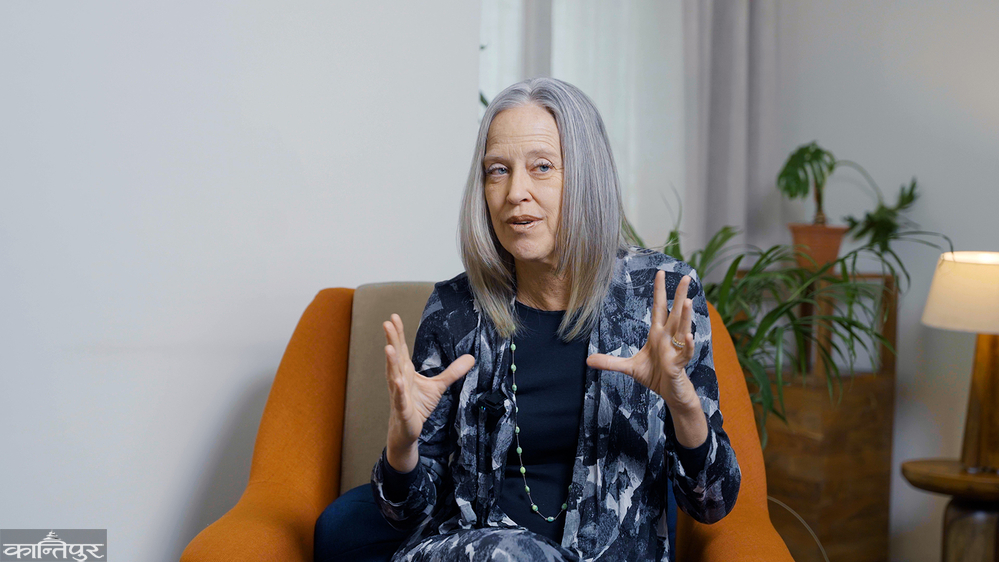
Education has changed a lot since you started Teach for All. How do you see the educational sector developing in the next two/three decades?
The future of education is in our hands. I hope that the role of the teacher will be taken more seriously, which can make a significant contribution in moving the world in the right direction. If we can invest more in education and attract capable future leaders to the sector, new creativity and innovation will come. It helps the students to develop the necessary leadership, which can lead the society in a better direction.
has accumulated experience working with educational leaders from diverse cultural and economic backgrounds. What is the most important thing you have learned about educational leadership?
is the collective leadership we need. In most places, leadership is thought of as a powerful person who sits at the top and makes decisions. But, when we face a major systemic challenge, single leadership is not enough.
What we need is not lone hero leadership, but collective leadership. Where all people within the system actively work from their place, collaborate and build collaborative relationships between people of different ideas and backgrounds.
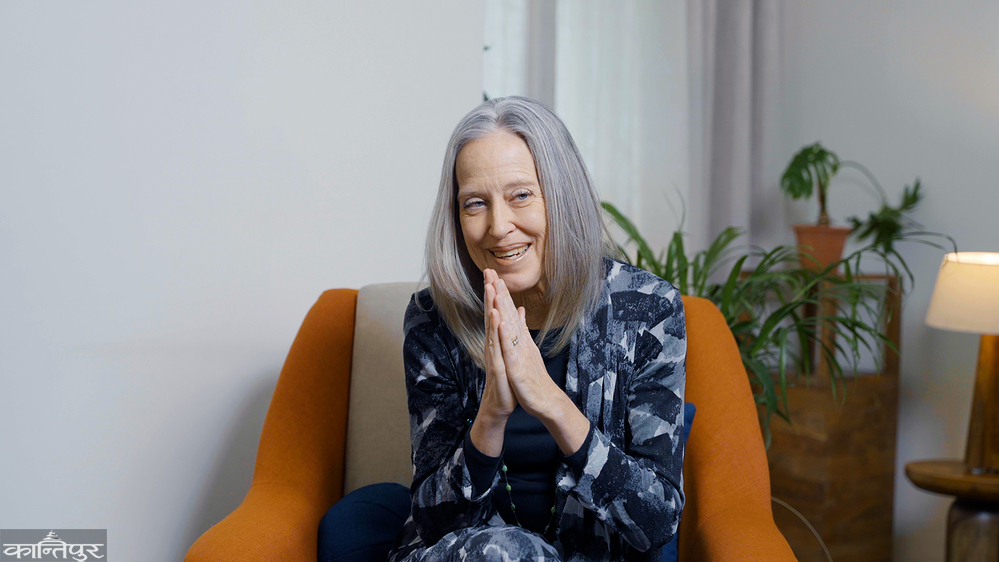
That's why teaching students to lead groups is so important in today's classroom. If we can do this, we can really move the world in a positive direction.
When the Trump administration's executive order stopped the aid coming through the Ministry of Foreign Affairs and USAID, education projects in various countries including Nepal were affected. How can we overcome this kind of problem?
Two things are true: First, as we all face such geopolitical challenges, it shows that every country needs to build its stability and resilience. This is not possible without education. Therefore, initiatives like 'Teach for All' are still important because they are involved in strengthening the education system by building local leadership capacity. Even in such a difficult situation, it is essential to strengthen local resources and leadership.
Second, the financial resources for investing in education from developed countries are very low. International aid and philanthropy goes to other important areas such as public health, but relatively little is invested in education.
However, our collective prosperity depends on the quality of the education system. Also, solutions developed in one country may have implications in other countries as well. If we can provide local leaders with more resources to learn, collaborate and innovate internationally, we can make a much faster change. This requires promoting local investment, community engagement and innovation.
In this regard, do you plan to announce something special for 'Teach for Nepal'?
We were having a thoughtful discussion about the progress of 'Teach for Nepal'. I feel privileged to have had the opportunity to interact with past and present alumni of Teach for Nepal.
What is most inspiring is that they are now running a network of multiple schools, training other teachers, developing educational technology initiatives. They are on a mission to ensure equity and access to education for all, including the most disadvantaged students and geographically marginalized communities. This has made me optimistic about the future of 'Teach for Nepal'. A strong foundation is already in place and now there is a great opportunity to take it to the next level to make an even bigger impact.