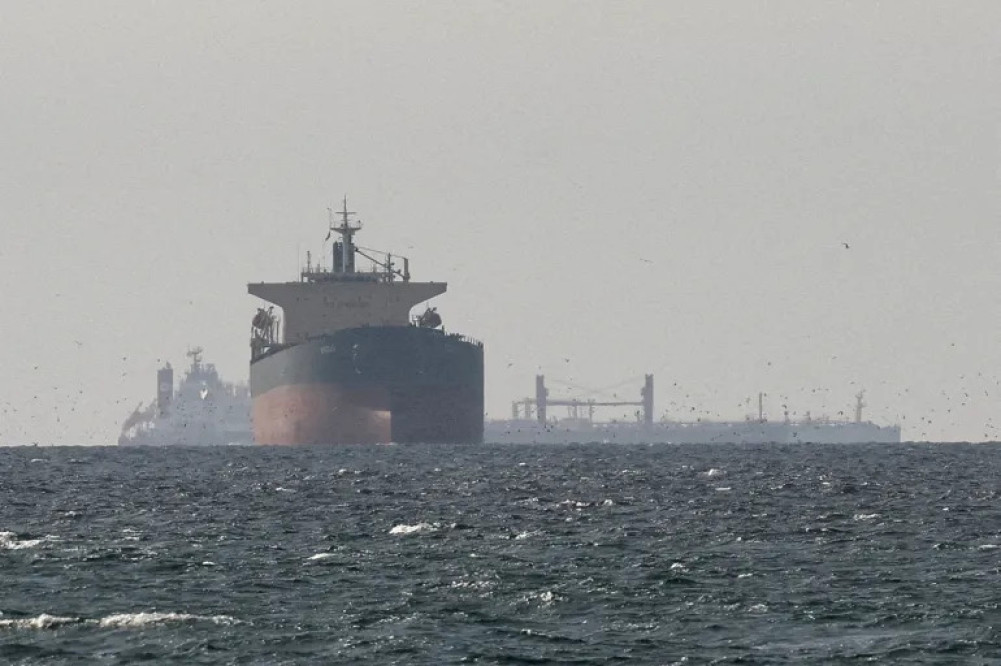
After carrying out attacks in Iran for 13 days, the United States halted military operations on Friday.
We use Google Cloud Translation Services. Google requires we provide the following disclaimer relating to use of this service:
This service may contain translations powered by Google. Google disclaims all warranties related to the translations, expressed or implied, including any warranties of accuracy, reliability, and any implied warranties of merchantability, fitness for a particular purpose, and noninfringement.
With the United States halting its attack on Iran, hopes have risen for the reopening of the Hormuz Strait. Along with this, there was a sharp decline in oil prices in the international market on Monday.
On Monday, the price of Brent crude oil fell by more than seven percent, dropping below a minimum of 90 US dollars per barrel. Earlier last week, the price of Brent crude oil had, for the first time since May, risen above 100 US dollars per barrel.
After attacking Iran for 13 days, the United States halted its military operations on Friday. The US President’s special envoy stated that President Donald Trump had given some time and opportunity for negotiations.
In response, Iran also announced that it would halt its retaliatory attacks on neighboring countries. These developments have provided some relief to shipping and the oil industry in the Gulf region.
Tensions had escalated after Iran attacked ships passing through the Omani waters of Hormuz. Following that, a fragile ceasefire was broken, and military activities between the US and Iran resumed earlier this month.
Due to the tensions, diplomatic efforts between Washington and Tehran were affected. As the conflict spread beyond Hormuz, Iran-backed Houthi rebels attacked Saudi ships in the Bab al-Mandeb Strait, the main route into the Red Sea.
However, news that shipping in the Red Sea continues has somewhat eased investors’ concerns as of Friday.
On Sunday, Iran stated that progress had been made in talks with Oman regarding the management of Hormuz.
According to Iranian Foreign Ministry spokesperson Ismail Bakayi, the talks focused on respecting the sovereign rights of both countries, ensuring the safe passage of ships through Hormuz, and establishing mechanisms for that purpose.
Meanwhile, a report mentioned that, at China’s initiative, Pakistan is attempting to restart peace talks between the US and Iran.
Sally Auld of National Australia Bank said that developments in the Middle East over the weekend had moved in a positive direction.
She noted that oil prices above 100 dollars per barrel had strengthened the view that both sides would be motivated to move towards reducing tensions.
With the drop in oil prices, concerns about renewed inflation and further increases in interest rates have somewhat eased. This has had a positive impact on most Asian stock markets.
However, investors remain concerned about whether the rapid growth in the artificial intelligence (AI) sector will be sustainable and about the returns on large investments in that sector. This has had a greater impact on the shares of technology companies.