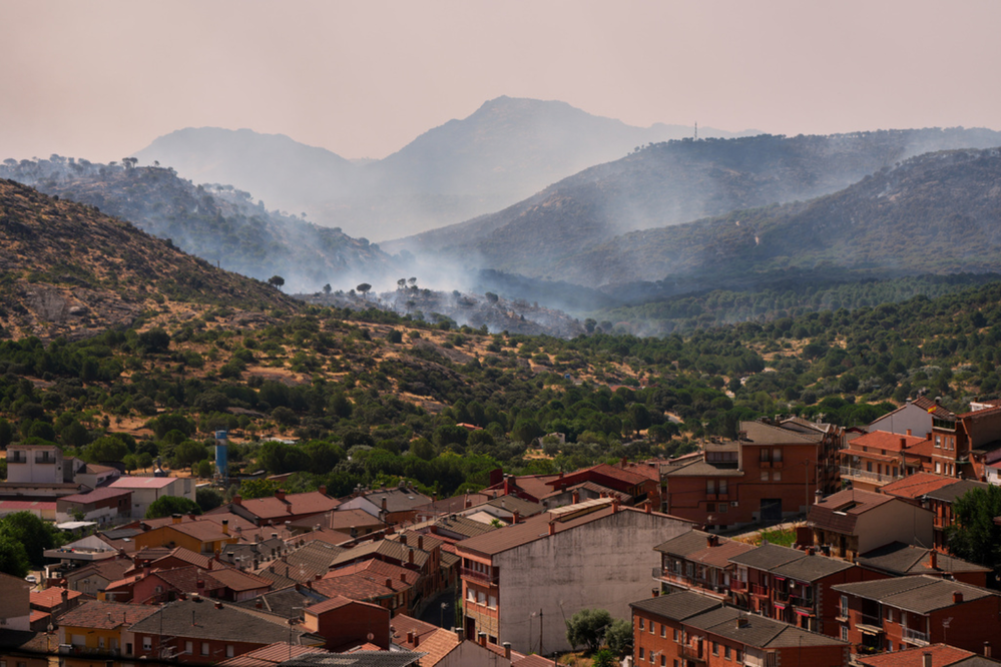
A specially modified French military A-400M aircraft has been deployed on a large scale for the first time to control wildfires. It is working together with at least 18 other planes and helicopters that drop water and fire-suppressing chemicals.
We use Google Cloud Translation Services. Google requires we provide the following disclaimer relating to use of this service:
This service may contain translations powered by Google. Google disclaims all warranties related to the translations, expressed or implied, including any warranties of accuracy, reliability, and any implied warranties of merchantability, fitness for a particular purpose, and noninfringement.
To combat the severe wildfire spreading across Southern Europe, France on Saturday deployed military cargo planes and dispersed large quantities of fire retardant chemicals.
Amid the pressure on emergency services caused by the wildfire, France has also shortened the final stage of the ‘Tour de France’ cycling competition.
Due to this week’s wildfires, more than 250,000 people in France and Spain have been forced to leave their homes. In central Spain alone, about 70,000 people have been relocated to safe areas. One person has died in the municipality of Manises, Spain, marking the first confirmed fatality from this wildfire.
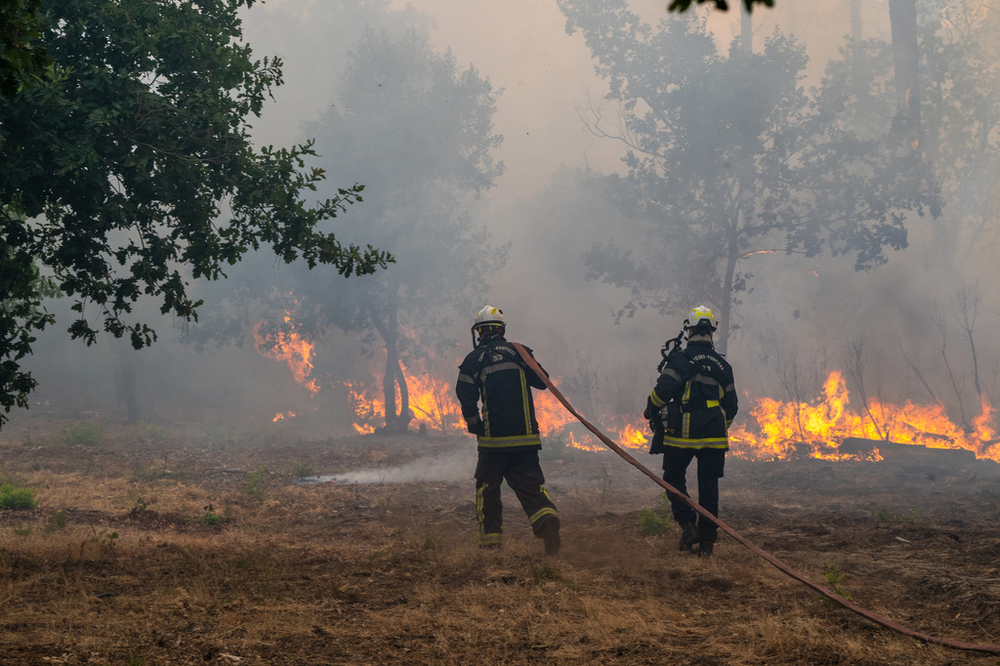
In France’s drought-affected southwestern forests, an A-400M military aircraft has been dispersing fire retardant chemicals from the air. While firefighters on the ground continue efforts to extinguish the blaze, authorities have expressed concern that the wildfire could spread toward the city of Bordeaux.
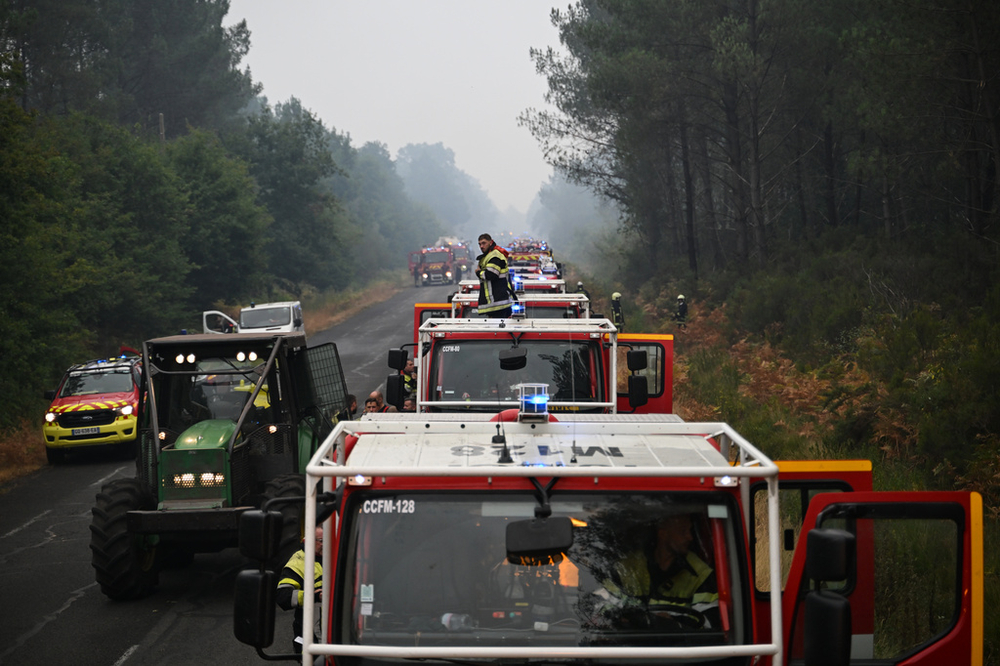 As the wind direction is expected to shift from west to east, firefighters have been digging trenches, using fire retardant chemicals, and implementing other preventive measures to stop the wildfire from reaching near Bordeaux.
France’s Interior Minister Laurent Nunez said the fight against the wildfire would be “long and extremely difficult.” According to him, the fire is about 30 kilometers west of Bordeaux and, although it weakened somewhat overnight, the risk remains.
According to Sophie Brocas, Prefect of the Gironde region, the fire that started earlier this week turned into a “firestorm” on Friday. Although firefighters have made some progress, she said the fire remains dangerous.
The government has also deployed the military to help control the wildfire. Fifteen million face masks are being sent to affected areas to protect people from the smoke.
Authorities have ordered residents of settlements between the wildfire and Bordeaux, as well as those in Bordeaux’s western suburbs, to evacuate to safe locations.
Prime Minister Sébastien Lecornu described these wildfires as “unprecedented,” saying the Gironde fire had become so powerful that it began generating its own airflow. He said hundreds of soldiers had been deployed and special respiratory masks were being distributed to protect against toxic smoke.
Thousands of displaced people in Bordeaux have been provided with shelter, food, and other facilities at the exhibition center. The mayor said preparations have been made to accommodate up to 10,000 people if necessary. While Bordeaux airport remains operational, bus and tram services have been suspended.
 Special emergency messages have been sent to mobile phones instructing affected people to evacuate their homes immediately. So far, about 140 houses have been destroyed by fire in the Gironde region.
The specially modified French military A-400M aircraft has been deployed on a large scale for wildfire control for the first time. It is working alongside at least 18 other planes and helicopters that are dropping water and fire retardant chemicals.
Officials have said that due to high temperatures and the long-term effects of climate change, wildfires in France and Spain have become exceptionally intense.
According to Spanish firefighters, the fire spread so rapidly that it was impossible to confront and control it directly. In France, after the fire reached Atlantic coastal tourist towns, some people were forced to flee by boat.
Javier Organista, a local resident of El Tiemblo, west of Madrid, said they had never seen such a situation before. According to him, after the fire entered the settlement, all the locals worked together to try to stop it.
Spain has deployed 2,600 firefighters, police, and other rescue workers to control two wildfires west of Madrid. They are being assisted by 19 water-dropping planes and helicopters.
France has deployed 1,400 firefighters in the Gironde region and hundreds more security personnel in the southern Landes region. Dozens of firefighters have been injured while fighting the wildfires.
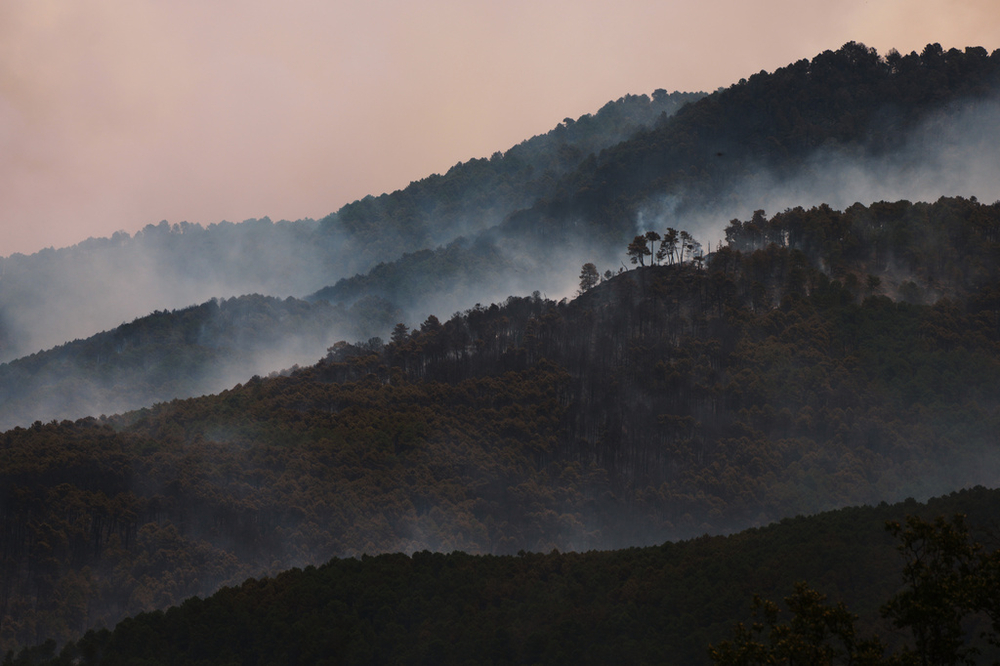 This year, an unusually early heatwave and high temperatures in Europe have left forests and shrubs highly flammable.
According to Spanish Prime Minister Pedro Sánchez, wildfires have already affected 130,000 hectares of forest in Spain this year alone. In the past decade, the annual average area affected by wildfires was 100,000 hectares.
He said that as the weather became more favorable on Saturday, there was an opportunity to bring the wildfires under control. The Madrid regional government has stated that as wind and temperatures have decreased, the intensity of the wildfires has also lessened.
To assist Spain and France, Italy, Greece, the Netherlands, Portugal, Croatia, the Czech Republic, Sweden, Slovakia, Germany, and Switzerland have already deployed or are preparing to deploy water-dropping planes and helicopters.