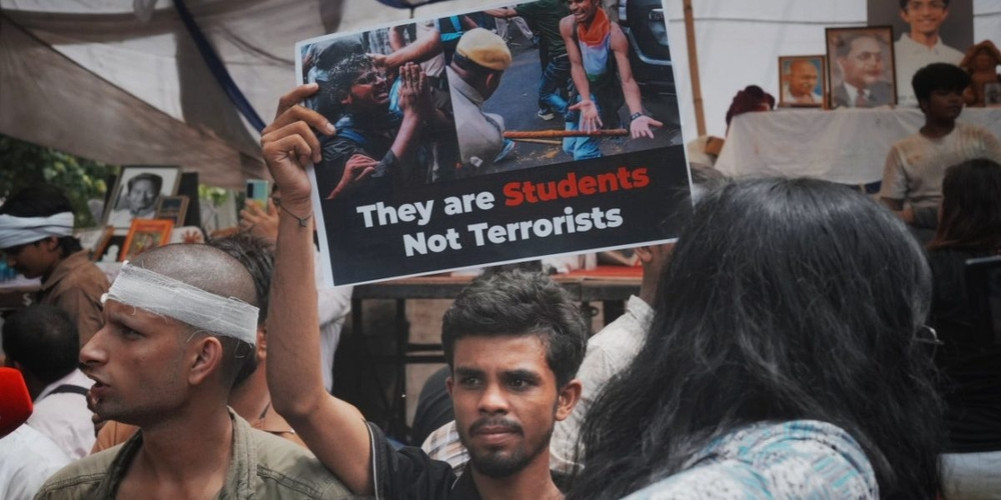
Refusing to be divided, defamed, or remain silent, this student-led movement has completely thwarted the Modi government's traditional repressive strategy.
We use Google Cloud Translation Services. Google requires we provide the following disclaimer relating to use of this service:
This service may contain translations powered by Google. Google disclaims all warranties related to the translations, expressed or implied, including any warranties of accuracy, reliability, and any implied warranties of merchantability, fitness for a particular purpose, and noninfringement.
The ordinary outrage that spilled online has now exploded onto the streets of India as a major youth rebellion. This movement, which began after repeated leaks of question papers for the National Eligibility cum Entrance Test (NEET) and other exams, has raised serious questions about the government's attitude toward the youth. On one hand, the streets of New Delhi have heated up with demands for accountability, while on the other, this anger has increased pressure on Prime Minister Narendra Modi as well.
The student march toward Parliament on Monday raised questions not only about the exam scandal but also about the Modi government's 12-year style of governance. Youths continued to protest on Tuesday and Wednesday as well.
When NEET and other exam papers were leaked and students subsequently committed suicide, the youth became enraged. They themselves laid the foundation for this movement. Afterward, they rallied around the Cockroach Janata Party (CJP), which emerged online. Their demand was the dismissal of the Education Minister. However, as the government was unwilling to dismiss Union Education Minister Dharmendra Pradhan, the question of Prime Minister Narendra Modi's style of governance has become even more pressing among the youth.
The protesters have turned this into not just a minister's failure but a referendum on Prime Minister Modi's personal leadership. Now, who stays or leaves the ministerial post has become secondary for the demonstrators.
Currently, large numbers of youths are protesting around Jantar Mantar and Parliament. Young people are participating in the movement spontaneously. They are not organized party workers.
Therefore, this movement can no longer be resolved by negotiating with any single organization or leader. This is a spontaneous political consciousness and rebellion of 'Gen Z'—the new generation—which the Modi government cannot ignore, even if it wants to.
In the past, to suppress or delegitimize mass movements, the Modi government and pro-establishment media would adopt a policy of discrediting them. They would associate these movements with certain identities and spread negative messages.
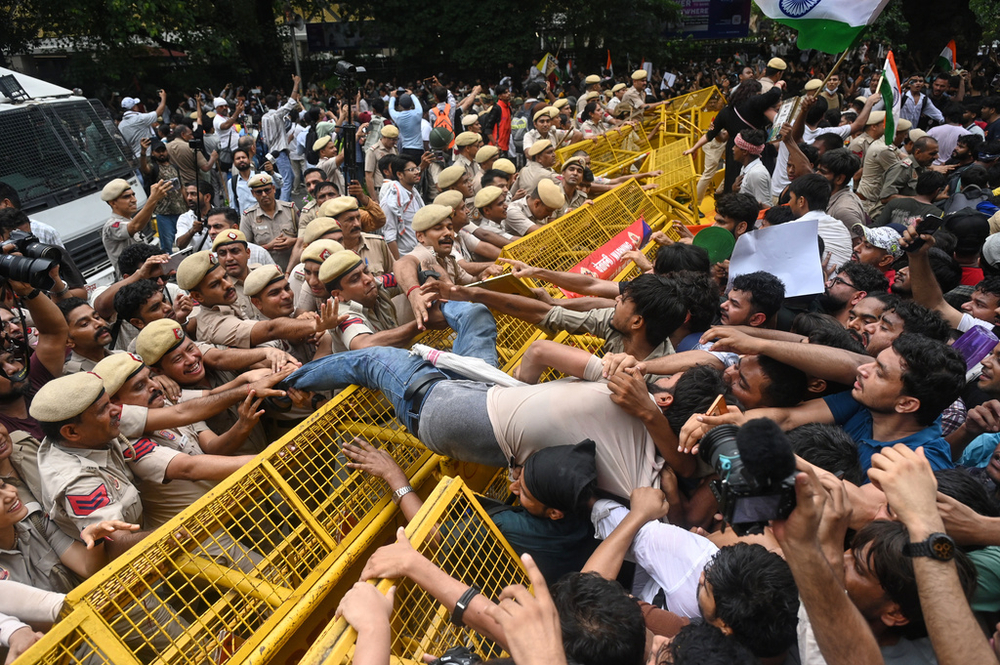
The movement against the Citizenship Amendment Act was labeled 'Muslim outrage,' the farmers' movement as 'Khalistani,' and university protests as 'anti-national' or 'urban Naxal.' However, the current student movement is focused on common issues such as exam integrity, unemployment, and trust in state institutions, which have broken the boundaries of caste, religion, and regionalism.
The majority of the protesters are students and job-seeking youths, who played a key role in Modi's political rise in the past. Therefore, it has become very difficult for the ruling party to declare this youth force as 'the enemy.'
The protesters are extremely diverse, both religiously and socially. To avoid giving the media any opportunity to portray them as violent, students themselves are being extremely cautious to maintain peaceful demonstrations. As a result, the Modi government's old strategy of discrediting has completely failed here.
The birth of the 'Cockroach Janata Party' (CJP) itself is a result of the judiciary's failure. After the Chief Justice of India commented that the youth were like parasites, the party was named 'Cockroach Janata Party' in response. This remark made unemployed youths feel insulted by the courts themselves. When they lost hope of getting concrete legal remedies from the courts in the exam leak cases, the youth concluded that protest was the only way.
In India, the public also has no trust in major media outlets. The ruling party dominates Parliament. When all doors for hearing democratic grievances are closed, the youth have been compelled to occupy the streets of New Delhi to have their demands addressed.
For the past month, the government has completely ignored the students' demands and refused to assign any minister, MP, or secretary for dialogue.
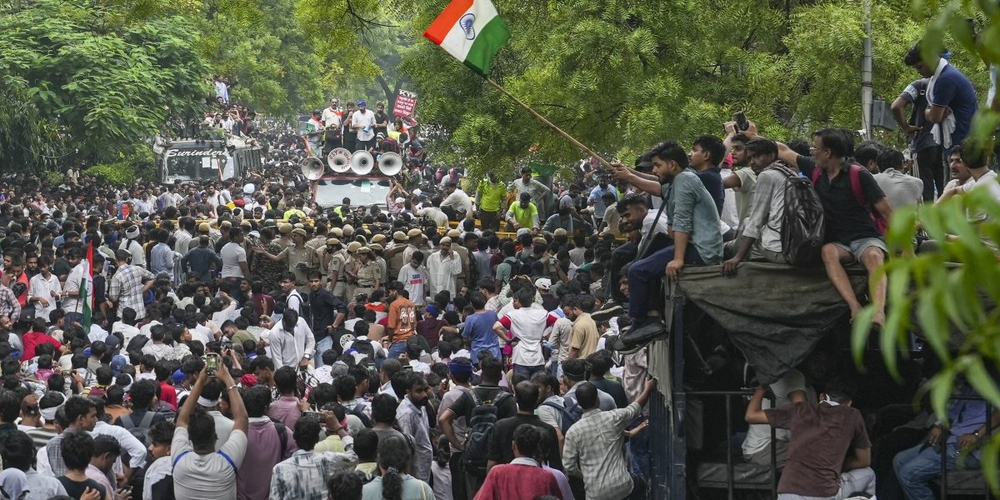
However, the protesters have taken a strong stand, forcing the Modi government to be accountable to the people. Who is responsible for the recurring exam scandals? What reforms will be made now? And, even after students have lost their lives, why has no minister taken responsibility so far? As the new cycle of college admissions begins, contrary to the government's wish for the issue to fade away, the youth are demanding political accountability.
The Modi government's response to the student movement so far has been limited to silence, administrative delays, and neglect. The strategy that once succeeded in suppressing scattered or easily discredited movements has now failed. The government has neither been able to suppress this peaceful gathering of youths on the streets nor does it appear ready for dialogue. Rather, it is clear that the government is bewildered in the face of this new generation, which has taken to the field for a long struggle.
Even if the government and its supporters do not openly admit it, they are well aware—and internally fearful—of how street rebellions have toppled powerful regimes in history when the voices of the youth went unheard.
The most distinctive and powerful aspect of this movement is that fear has disappeared from the hearts of the people. Despite heavy police deployment, widespread surveillance cameras, tear gas, and the use of force, the massive turnout of ordinary people has shattered the atmosphere of fear created by the state. People have not only come out of their homes, but they have also transformed their personal silence into a loud and collective roar.
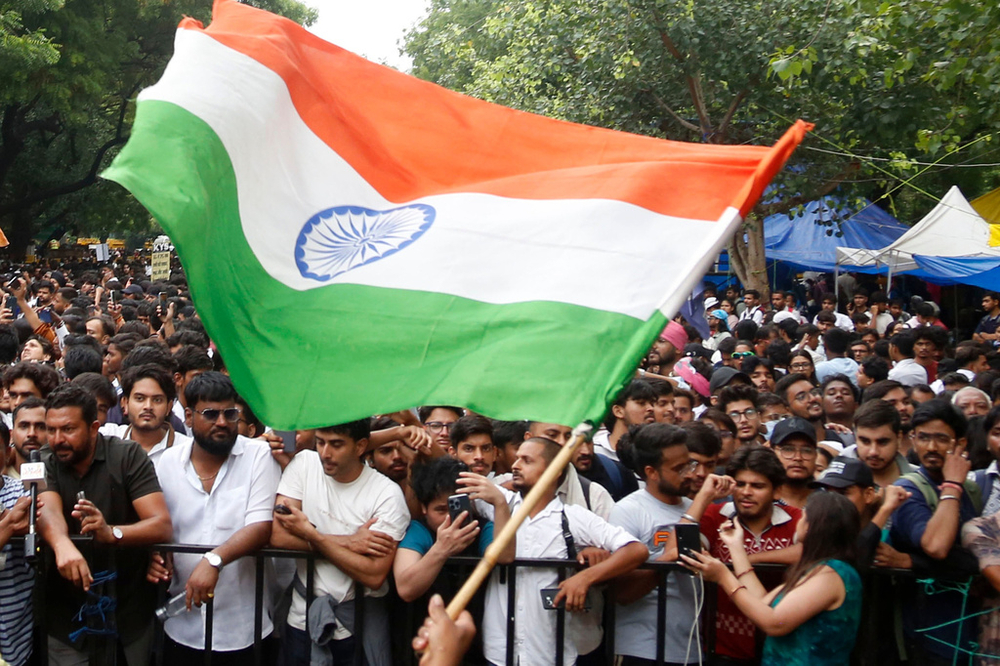
Refusing to be divided, discredited, or silenced, this student-led movement has rendered the Modi government's traditional repressive strategy completely ineffective. Even opposition parties, which for years were unable to challenge Modi's rule and were themselves divided, have now rallied in support of the youth movement.
As a result, the political leadership, which relied on Narendra Modi's strongman image, is now clearly faltering and facing an unavoidable crisis of systemic accountability.
(This article is based on material published by the Indian media outlet The Wire.)