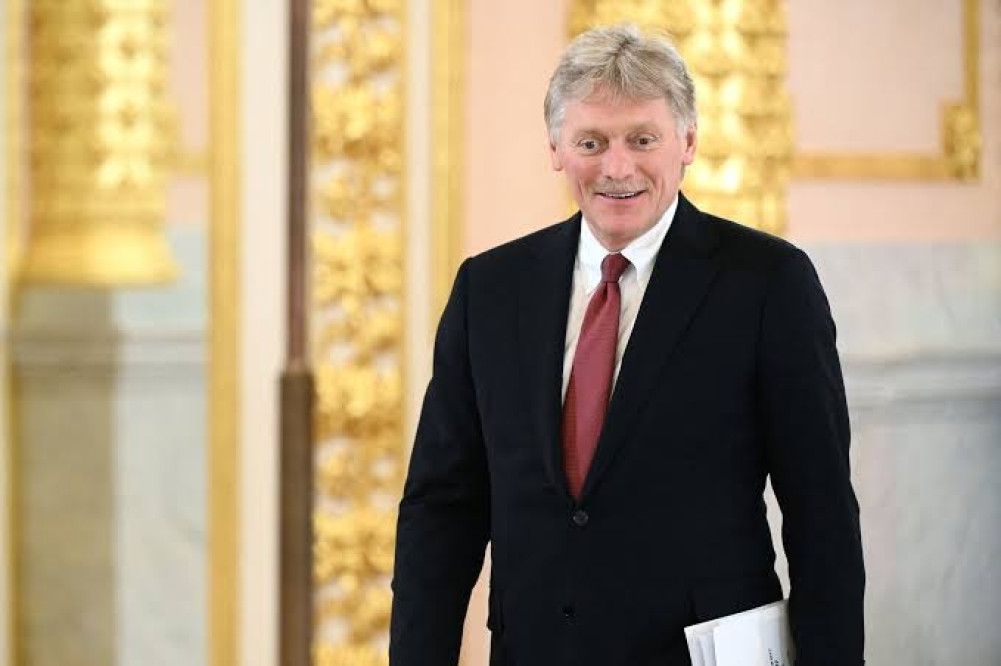
Russian President's press advisor Dmitry Peskov said the global security system is gradually weakening.
We use Google Cloud Translation Services. Google requires we provide the following disclaimer relating to use of this service:
This service may contain translations powered by Google. Google disclaims all warranties related to the translations, expressed or implied, including any warranties of accuracy, reliability, and any implied warranties of merchantability, fitness for a particular purpose, and noninfringement.
Russia has claimed that nuclear weapons are the only way to protect the world from a possible world war. Russia's statement comes at a time when global security architecture is weakening and concerns about a new multinational arms race are growing.
The last nuclear arms control treaty between Russia and the United States, New START, expired in February, lifting sanctions on the world's two major nuclear powers. Although the two countries have agreed to resume high-level military talks, there has been no concrete progress on renewing or replacing the treaty.
Addressing an event in Moscow, Russian presidential press advisor Dmitry Peskov said that the global security system is gradually weakening. 'The world has nothing left except nuclear deterrence. This is the only element that is protecting the world from a world war,' he said.
He said that with the rapid development of technology, new types of non-nuclear weapons could be developed in the future. He said that these weapons could be as destructive as nuclear weapons.
US President Donald Trump has been suggesting that China should be included in a new nuclear control treaty between Russia and the US. However, Beijing has publicly disagreed with the proposal. Although China's nuclear arsenal is expanding, it is said to be much smaller than that of Russia and the US.
Russia, on the other hand, has insisted that Britain and France should be included in it along with China. The 'New START' treaty, signed in 2010, was the last of the major post-Cold War nuclear arms control agreements. The treaty set a limit of 1,550 deployed nuclear warheads for Russia and the US.
Before the treaty expired, both countries had been accusing each other of not fully complying with the agreement.