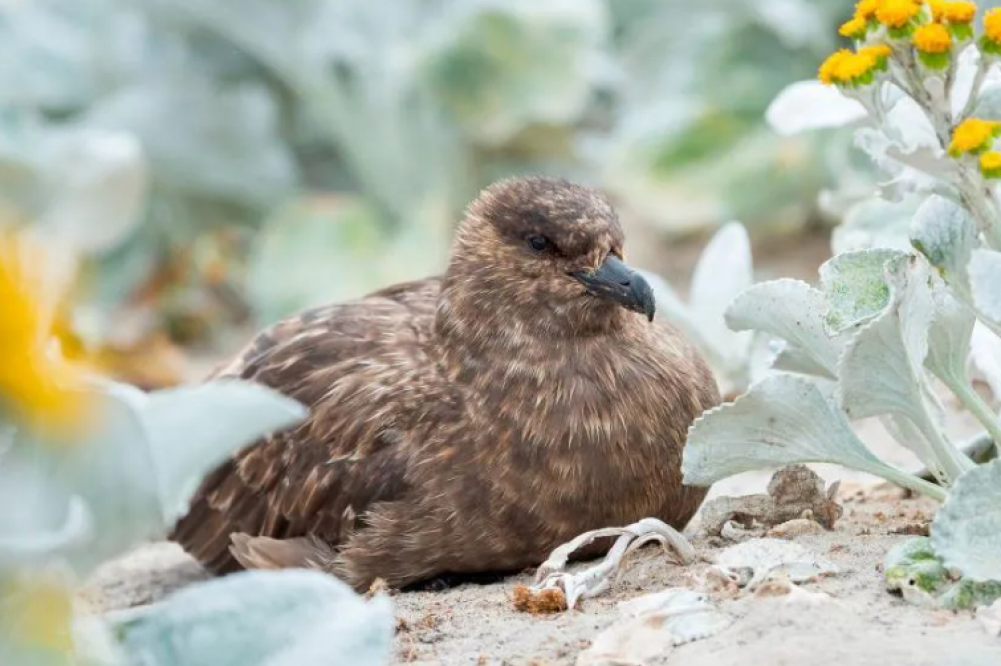
Bird flu has been confirmed on every continent of the world after a migratory brown skua was found in Esperance, Western Australia.
We use Google Cloud Translation Services. Google requires we provide the following disclaimer relating to use of this service:
This service may contain translations powered by Google. Google disclaims all warranties related to the translations, expressed or implied, including any warranties of accuracy, reliability, and any implied warranties of merchantability, fitness for a particular purpose, and noninfringement.
Bird flu (H5N1) has been confirmed for the first time in Australia. The infection has been confirmed in a migratory bird called the brown skua on the beach of Cape Le Grand National Park near the city of Esperance in Western Australia. The brown skua is a large seabird. This bird breeds mainly in the Antarctic regions. After the breeding season ends, it migrates to the north in search of food and suitable habitat. It is also known as the Antarctic skua, southern skua or sub-Antarctic skua. Bird flu has not been seen in Australia before. With this, bird flu infections have been confirmed on all continents of the world. Australia's Agriculture Minister Julie Collins told a news conference on Saturday, "We knew Australia would not be free of bird flu forever." She said a southern petrel found on the Esperance coast in a very exhausted condition was also suspected of having bird flu. "However, there is no evidence of large-scale bird deaths," she said.
Bird flu was also seen on Australia's remote Heard and McDonald Islands in October last year. But these islands are located in the southern Indian Ocean.
A study released this week found that about 13,000 of the 17,000 baby seals on Heard Island died of bird flu in August. The study also showed that the mortality rate of penguins there was higher than expected.
Bird flu first appeared in China in the late 1990s. The virus has been found to spread to domesticated birds and poultry due to seasonal migrations of birds. The infection has also been seen in humans who have come into direct contact with infected birds or animals.