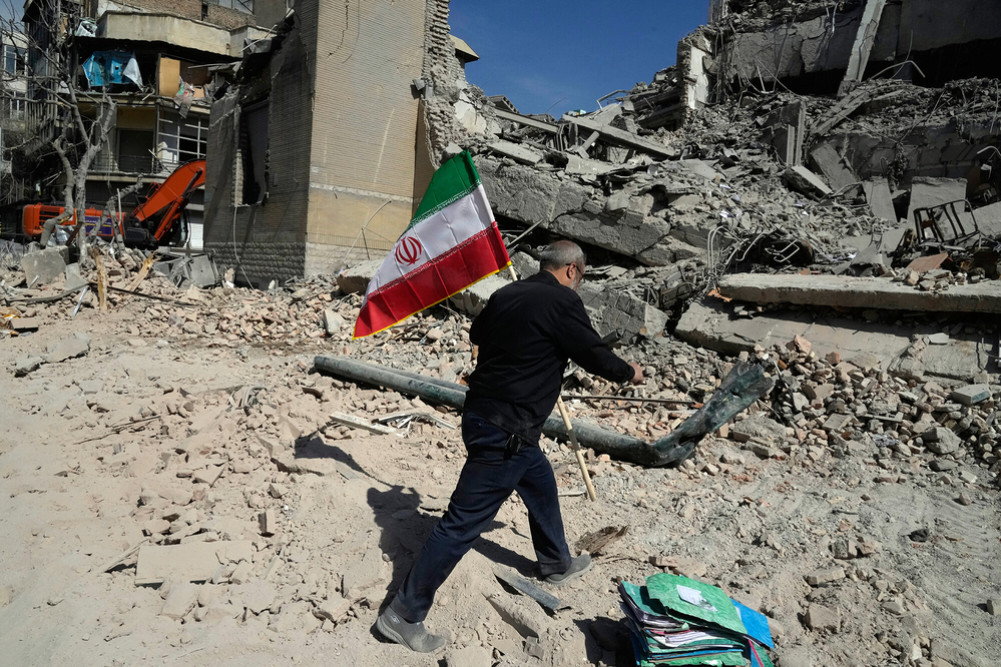
US President Donald Trump has been saying he is optimistic about a peace deal with Iran.
We use Google Cloud Translation Services. Google requires we provide the following disclaimer relating to use of this service:
This service may contain translations powered by Google. Google disclaims all warranties related to the translations, expressed or implied, including any warranties of accuracy, reliability, and any implied warranties of merchantability, fitness for a particular purpose, and noninfringement.
Sunday marks the 100th day since the US and Israel launched a war against Iran. On Sunday, the US announced that it had shot down two Iranian drones in the Strait of Hormuz. Earlier, Iran had attacked Bahrain and Kuwait on Saturday.
However, indirect talks between the two sides are continuing. Al Jazeera reported that both sides agreed to immediately stop the fighting and reach a future agreement on Iran's nuclear program. On Sunday, Pakistan's Interior Minister Mohsin Naqvi visited the Iranian capital Tehran. He conveyed the US's message to Iranian Supreme Leader Mojtaba Khamenei.
US President Donald Trump has been saying that he is optimistic about a peace deal with Iran. Iranian Foreign Minister Abbas Araghchi has also said that communication between the two countries is open. However, there has been no concrete progress in the indirect talks. Iran has demanded an end to hostilities on all fronts, including Lebanon, access to billions of dollars in frozen assets, lifting Western sanctions on crude oil exports, and lifting the US blockade on its ports. The US has demanded that Iran suspend its nuclear program, agree to send highly enriched uranium out of the country, and open the Strait of Hormuz.
More than 7,000 people have died in the Iran war so far. On February 28, the US-Israeli joint attack on Iran killed top commanders including Supreme Leader Ali Khamenei on the first target. US President Trump claimed that the Iran war would end within three weeks. On the contrary, the series of attacks and counterattacks has continued for 100 days. Iran is causing great damage to US military positions in West Asia. Similarly, maintaining control over the Strait of Hormuz has led to a global increase in crude oil and natural gas prices and deepening the crisis. Washington and Tehran agreed to a ceasefire in April. On April 11 and 12, the two countries sat down at the negotiating table in Islamabad, Pakistan. However, the talks failed to materialize. Since then, despite continuous efforts to reach a peace agreement, they have not been able to achieve any results.
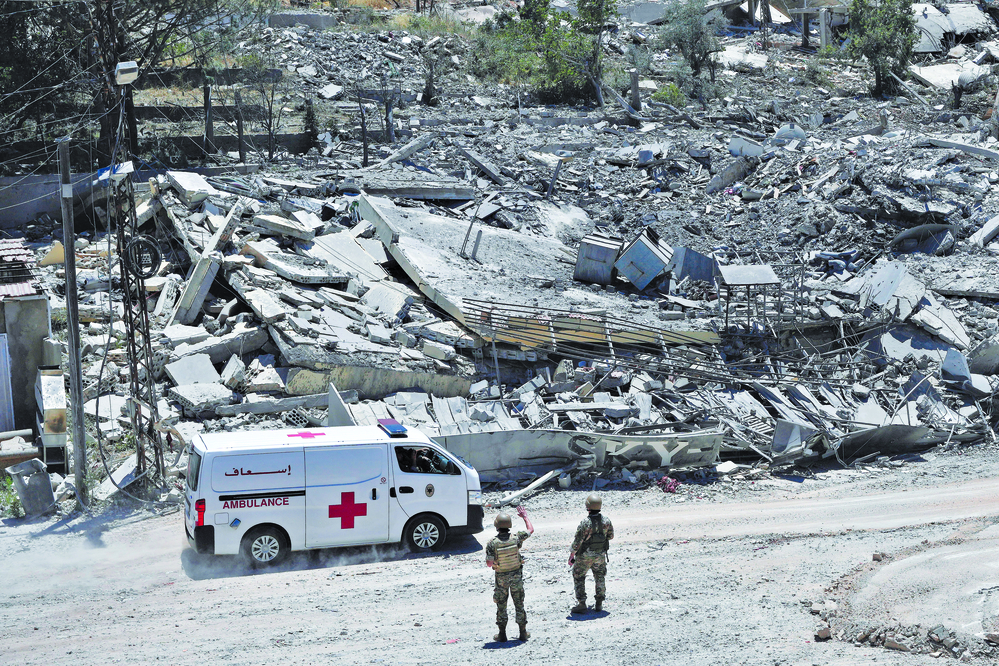 More people have been killed in Lebanon than in Iran. On March 2, the Lebanese rebel organization Hezbollah launched missiles against Israel in protest of the attack on Iran. Since then, Israel has been continuously attacking Lebanon. According to preliminary figures, at least 3,593 people have died in Lebanon, 3,468 in Iran, 29 in the Gulf countries, 26 in Israel, and 13 American soldiers have lost their lives in the war.
This figure may change as the situation changes, a series of attacks and counterattacks are ongoing, and new information emerges. In particular, in southern Lebanon, Israel has been continuously attacking public infrastructure and civilian homes. It has occupied about 20 percent of Lebanon. The ceasefire between Lebanon and Israel that came into effect on April 17 has not been implemented in practice.
Nearly one million people have been displaced from Lebanon. On June 1, Israeli forces reached the southern city of Nabatieh in southern Lebanon. They captured the Beaufort Fort. This is Israel's largest land occupation in the past 25 years. Within the first two weeks of the war, at least three million Iranians were internally displaced due to US-Israeli attacks and bombing.
Iran's control of the Strait of Hormuz has left a large number of ships stranded. Between February 28 and May 31, an average of only seven ships were allowed to leave the Strait of Hormuz per day. Before the war, 100 ships were leaving the Strait of Hormuz per day. After the talks failed on April 12, the US also imposed a blockade on Iran, affecting its oil exports. A large number of US troops are stationed near Iranian ports.
The disruption, which accounts for about 20 percent of the world's crude oil and natural gas exports, has caused gasoline prices to rise in 146 countries. According to the International Energy Agency (IEA), the current disruption is the largest energy crisis in history. Before the war, Brent crude (the international benchmark for gasoline prices) was trading around $70 per barrel. A week after the war, the price exceeded $100 per barrel. It reached a high of $126 per barrel in late April. It is currently trading around $93. During this period, prices fell when Trump indicated on social media that peace talks would succeed and rose when he announced more attacks. Asian countries are most dependent on oil coming through the Strait of Hormuz. That is why the biggest fuel crisis was seen in this region.
Meanwhile, the US military said it had attacked some radar sites in Iran. The incident is seen as a further escalation of tensions in West Asia and a fragile ceasefire. According to the US Central Command (Centcom) on social media, the US military shot down four unilateral attack drones launched towards Iran on Friday. The drones are claimed to have posed an immediate threat to maritime traffic in the Strait of Hormuz.
According to Centcom, the US military targeted coastal surveillance radar sites on Iran’s Gorek and Qashqai islands after the incident. The US side said the move was taken to prevent possible further attacks. Meanwhile, Mohsen Rezaei, a military adviser to Iran’s Supreme Leader Ayatollah Ali Khomeini, said in an interview that a potential US-Iran peace deal is currently on hold. According to him, the issue of the US government’s freezing of about $24 billion in Iranian assets has affected the talks.
Rezaei warned that the situation would become more serious if the talks were disrupted. He said that US President Donald Trump should take the initiative to resume talks. On the other hand, President Trump said in an interview with NBC News that there is no agreement with the Iranian leadership to end the war. He claimed that Iran will eventually come to the negotiating table because its options are limited. Meanwhile, Trump has expressed his belief that only about 21 to 22 percent of the missile capabilities that Iran has had since the war began remain.