US President Trump said that during his visit to China, there were positive discussions on improving relations between the two countries and that many issues had been resolved, but no formal agreement was announced.
We use Google Cloud Translation Services. Google requires we provide the following disclaimer relating to use of this service:
This service may contain translations powered by Google. Google disclaims all warranties related to the translations, expressed or implied, including any warranties of accuracy, reliability, and any implied warranties of merchantability, fitness for a particular purpose, and noninfringement.
US President Donald Trump returned to the US on Friday after a three-day visit to China. He said that a very good trade deal was reached during his visit. A delegation including CEOs of American companies arrived in Beijing with Trump.
Chinese President Xi Jinping has said that the visit is historic in bilateral relations. The presidents of both countries said that they had positive discussions on improving relations and that many problems had been resolved, but no formal agreement was announced. The meeting between the presidents of the two countries discussed issues such as the Iran war, the Taiwan issue, mutual trade, agriculture, and AI technology, according to US media.
Trump has invited Chinese President Xi to visit the US in September. Trump said that China has agreed to buy 200 Boeing jets from the US. Similarly, he said that American farmers will be happy because China will buy billions of dollars worth of soybeans.
US Treasury Secretary Scott Besant said Trump and Xi discussed building a common ‘guardrail’ for the safe and responsible use of artificial intelligence (AI). He said it was important for the world’s “two AI superpowers” to start a dialogue.
The US side said the situation in the Middle East was also discussed during the meeting. According to Trump, Xi made it clear that China had no plans to provide military assistance to Iran. He also mentioned that China is in favor of keeping the Strait of Hormuz, which is considered very important for world trade, open.
In a statement issued by the Chinese Foreign Ministry on Friday, it was mentioned that international shipping routes should be returned to normal as soon as possible, stressing the need for a “comprehensive and lasting ceasefire”. Earlier, during the meeting between Xi and Trump at the Great Hall of the People on Thursday, Xi had said that the Taiwan issue was the most important in bilateral relations.
Speaking to reporters as he left Beijing, Trump said that despite detailed discussions on Taiwan, he had not made any final decisions. He said that a decision on the new US arms package would be made later. He said, “We don’t want to go to war 9,500 miles away. I want tensions to be reduced. I want China to be calm.”
According to Trump, Xi Jinping is “very sensitive” about Taiwan and “doesn’t want to see an independence movement.” Asked if he saw the possibility of a war with China over Taiwan, Trump said, “I don’t think so. Everything will be fine. Xi doesn’t want a war.”
Chinese President Xi Jinping had called Taiwan “the most important issue in China-US relations.” He had also warned that if the Taiwan issue was handled incorrectly, there could be a conflict between the two countries. This view came some time after Trump. “The Taiwan issue is the most important issue in China-US relations. If it can be handled well, the bilateral relations will be stable. Otherwise, there may be confrontation and conflict between the two countries, which will pose a risk to the overall relationship,' the Chinese Foreign Ministry said, quoting Xi.
Although the two presidents agreed to move forward within the framework of constructive strategic stability for at least three years during the meeting, no formal announcement was made.
Economist Poshraj Pandey said that China appeared very confident with the US during this visit. 'When Trump went to China in 2017, he was in a very strong position. Now, in contrast, Xi seems to have presented himself in a strong manner. He made his point very strongly on the issue of Taiwan,' Pandey said. 'His presentation has given a message that when building a world view, we should also look at Beijing's side. It indicates that China will dominate the Indo-Pacific region. This can change the geopolitical situation and will have an impact worldwide. Being a neighboring country, it can also have an impact on Nepal. The team of businessmen that Trump has brought with him. Looking at it, it seems that both countries have prioritized trade relations and investment.’
Foreign affairs expert Rupak Sapkota said that stable relations between the two countries are important for the rest of the world and Nepal. ‘When the rivalry between the two countries is revealed, it seems that pressure has been created in the foreign relations of many countries in the world,’ he said, ‘We are in a geopolitical situation. We cannot move forward by choosing any one power and making it our only partner. Our foreign policy is to build balanced and mutually beneficial relations with neighboring China, another close neighbor India, and the powerful nation America on the basis of priorities. Therefore, cooperation and improvement of relations between the two major powers of the world will have a positive impact on our foreign affairs in some way or the other.’
Discussions to strengthen partnership and strategic cooperation
Russian President Vladimir Putin is also scheduled to visit China. The Kremlin has stated that Putin will visit China on May 19-20.
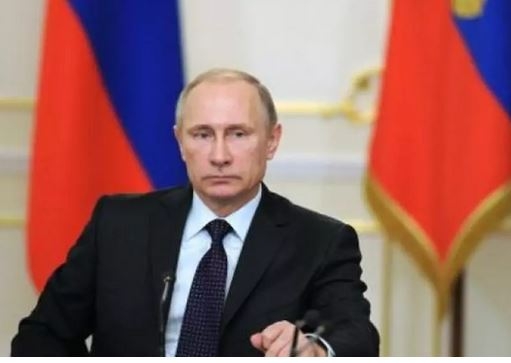
During the visit, Putin will meet with his Chinese counterpart Xi Jinping and discuss ways to further strengthen the partnership and strategic cooperation between Moscow and Beijing, the Kremlin said in a statement. Putin is scheduled to discuss economic and trade cooperation with Chinese Premier Li Keqiang. Putin's visit was announced shortly after US President Trump returned from a visit to China on Friday.
The visit is expected to play a role in reducing trade and geopolitical tensions, including the Ukraine-Russia conflict. China has regularly called for talks to end the war and has presented itself as a neutral party.
Beijing has denied providing Moscow with weapons and military equipment for its defense industry, accusing Western countries of prolonging the conflict by arming Ukraine.
China has become Moscow's main economic partner as a major buyer of fossil fuels amid economic sanctions imposed on Russia over the conflict.

