A report by the Migrant Justice Institute states that two-thirds of migrant workers are paid less than the legal minimum wage.
We use Google Cloud Translation Services. Google requires we provide the following disclaimer relating to use of this service:
This service may contain translations powered by Google. Google disclaims all warranties related to the translations, expressed or implied, including any warranties of accuracy, reliability, and any implied warranties of merchantability, fitness for a particular purpose, and noninfringement.
A new study has shown that international students, including Nepalis, who have come to Australia for study and employment, and migrant workers on temporary visas are being exploited on a large scale. According to the study, two-thirds of migrant workers are receiving less than the wage specified by Australian law, while international students alone are losing more than 3 billion Australian dollars in wages annually.
The report ‘Off the Books: Inside Hidden Systems of Workers Exploitation’ recently released by the Australia-based Migrant Justice Institute studied the situation of about 10,000 migrant workers, including Nepalis, working on temporary visas across Australia. The study included international students and workers.
According to the report, 36 percent of workers are paid less than Australia’s national minimum wage. About a quarter of workers have been cheated out of at least 10 Australian dollars per hour. The study estimates that international students alone are losing about 61 million Australian dollars in wages every week.
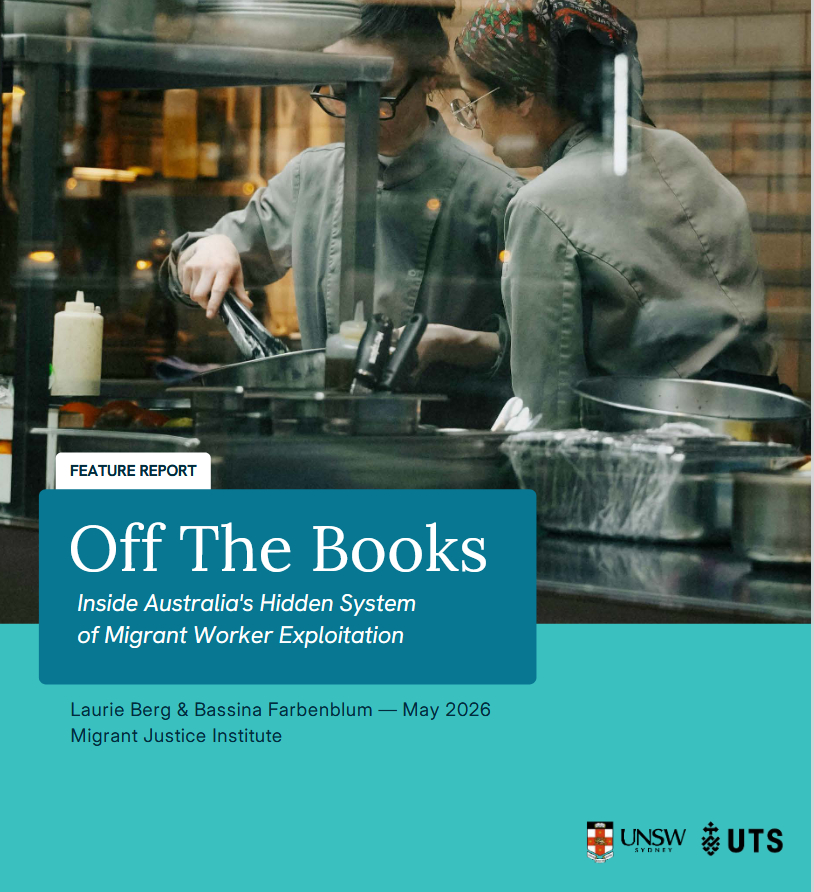 The study concluded that labor exploitation is not just a problem for a few employers, but is part of the institutional system. The report states that employers are abusing the independent contractor system to deprive migrant workers of minimum wages, leave benefits and labor protections. According to the study, 35 percent of migrant workers worked through the independent contractor system. Most of them were not given the benefits they were legally entitled to as employees. The report calls this the practice of evading labor laws by falsely presenting employees as contractors.
A Pakistani student who participated in the report said, “It’s like an eco-system, where new immigrants are easily hired for low wages.” He says that as soon as they get a good job and leave, employers bring in another student. The study also found that many employers pay wages in cash, produce false payslips, understate hours worked and do not pay superannuation. The report found that 23 per cent of workers received at least some pay in cash and 16 per cent did not receive a payslip at all.
The report also included the experience of a Nepali student in New South Wales. He said that he had to work for very low wages and was not given any leave benefits despite knowing Australian law. He said he felt “robbed and trapped”. The study also pointed out that the 48-hour work limit on student visas was a cause of exploitation. The report said that due to limited working hours, many students were forced to work in cash, work off the record or accept low wages.
The study, by researchers Laurie Barg and Vasina Farwenwald, recommends that the Australian government make further structural reforms to tackle labour exploitation. The report recommends special protection for migrants who report labour exploitation, tougher action against independent contractors, mandatory education on labour rights and a review of work time limits on student visas. The study warns that injustices against migrant workers are spread across the Australian economy, saying it is not just about low wages, it is a hidden system of exploitation.