There are signs that the country's political direction is changing as voters express dissatisfaction with authoritarian tendencies and far-right politics and elect a new pro-European leadership.
We use Google Cloud Translation Services. Google requires we provide the following disclaimer relating to use of this service:
This service may contain translations powered by Google. Google disclaims all warranties related to the translations, expressed or implied, including any warranties of accuracy, reliability, and any implied warranties of merchantability, fitness for a particular purpose, and noninfringement.
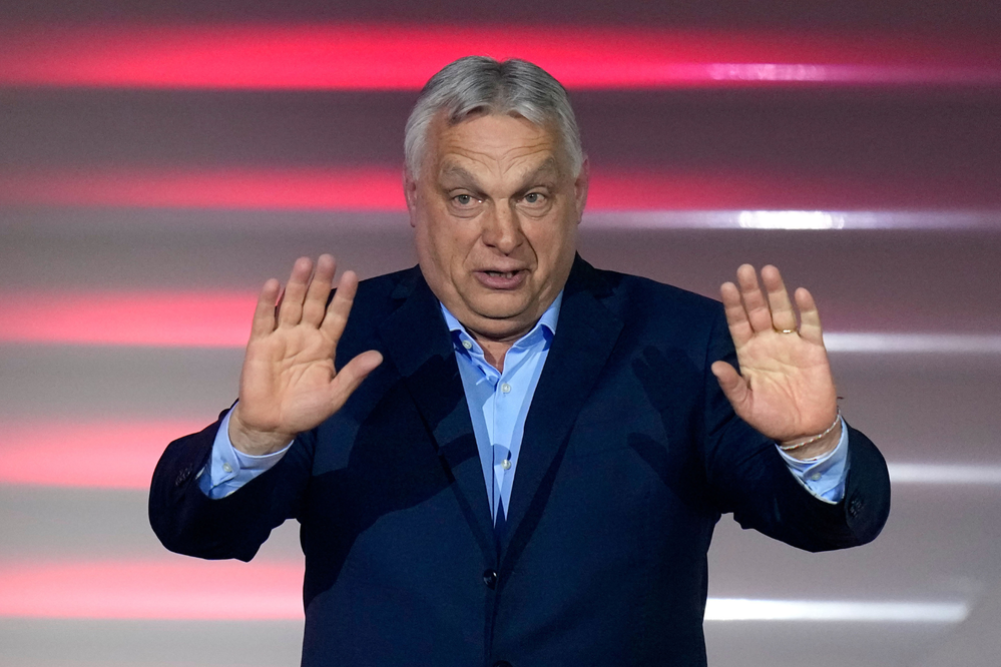
Prime Minister Viktor Orban, who has been in power for 16 years, has been defeated in Hungary. There are signs that the country's political direction is changing after voters chose a new pro-European leader, expressing dissatisfaction with authoritarian tendencies and far-right politics.
Peter Magyar, a former ally of Orban, won a historic victory on an agenda of fighting corruption, reforming public services and restoring ties with the European Union (EU) and NATO. Initial results showed his Tisza party winning about 53 percent of the vote, while Orban's Fidesz party was limited to 37 percent. Magyar emerged as the clear winner, leading in 94 of 106 constituencies.
 Accepting defeat, Orban called the result "painful" and said he would now serve the nation from the opposition. He was known as a close ally of US President Donald Trump and Russian President Vladimir Putin, which has long been a source of controversy over Hungary's foreign policy.
The Hungarian victory is expected to change the balance of power within the EU. Orbán has been accused of repeatedly using his veto to block EU decisions and of moving closer to Russia. His role in the Ukraine war in particular has made European leaders uncomfortable.
The election results were met with euphoria in Budapest. Thousands of supporters gathered on the banks of the Danube River to celebrate the victory, with chants and cheers spreading through the city's streets. 'Today, truth has triumphed over lies,' Magyar told supporters. 'We have taken responsibility for our country.'
The election, with a turnout of around 80 percent, is considered one of the highest in Hungary's post-communist history. Analysts say this clearly shows the people's desire for change.
 Orbán's rule has been accused of increasing pressure on media freedom, minority rights and institutional structures. He has also denied accusations that business groups close to power have benefited.
Now the question of whether Hungary will return to Europe under Hungarian leadership or remain in the old divided political current has become important. He has already said that this election is a 'choice between East and West'.