Mediators from Egypt, Pakistan, and Turkey sent a draft proposal for a 45-day ceasefire to both countries.
We use Google Cloud Translation Services. Google requires we provide the following disclaimer relating to use of this service:
This service may contain translations powered by Google. Google disclaims all warranties related to the translations, expressed or implied, including any warranties of accuracy, reliability, and any implied warranties of merchantability, fitness for a particular purpose, and noninfringement.
Iran has rejected the 45-day ceasefire proposal. Earlier, mediators from Egypt, Pakistan and Turkey had sent a draft of the 45-day ceasefire proposal to both countries.
The proposal mentioned opening the Strait of Hormuz and a temporary ceasefire for 45 days. Iran has said the ceasefire would help the enemies prepare for conflict. The US has also rejected the proposal, a White House official told CNN. 'We are demanding an end to such a war. This will prevent it from returning,' Iranian Foreign Ministry spokesman Esmail Baghai was quoted as saying by Iran's state news agency IRNA. Two Middle East officials told the AP that the proposal was sent by Iranian Foreign Minister Abbas Araghchi and US Middle East envoy Steve Witkoff. However, the path to an agreement seems uncertain due to distrust and hardline positions between the two sides. Some time ago, Iran said that the war could be stopped only after financial compensation and guarantees of non-retaliation were ensured.
US President Donald Trump warned on Sunday that energy facilities and bridges would be attacked if the Strait of Hormuz was not reopened within 48 hours.
He warned Iran on the social media platform Truth Social to open the Strait of Hormuz by 8 pm (Nepalese time Wednesday 5:45). Iran has also rejected this.
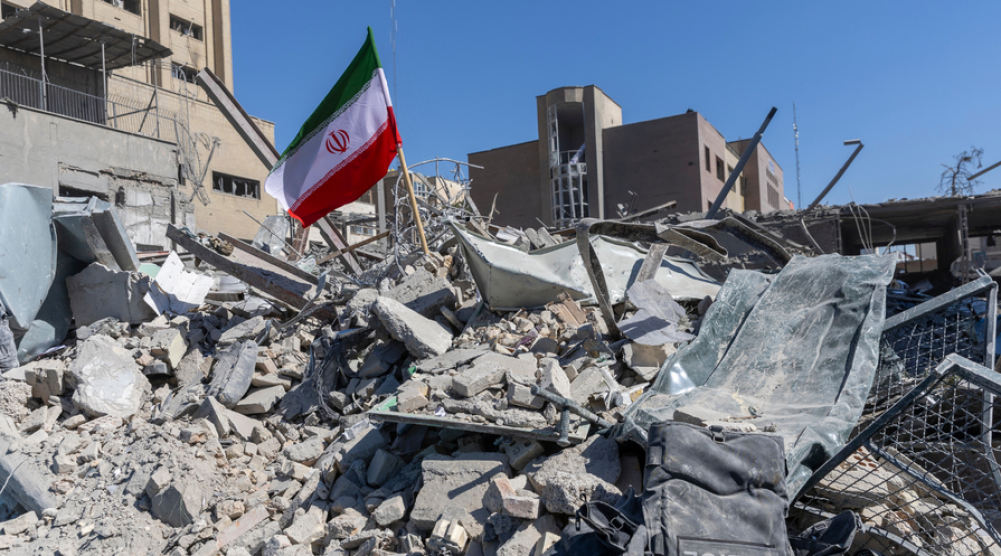
More than 25 people have been killed in attacks in various cities in Iran from Sunday to Monday.
At least 15 people were killed in the airstrike in the Eslamsar area near Tehran, officials said.
The Sharif University of Technology in Tehran was also reportedly hit, causing the university's online services to be completely disrupted and forcing students to leave campus.
Four girls and two boys under the age of 10 were killed in an attack on a residential area in Tehran's Bahrestan county on Sunday night, Iran's state-run Fars News Agency reported, citing local officials.
Iranian state media confirmed that Maj. Gen. Majid Khademi, the intelligence chief of the Iranian paramilitary Revolutionary Guard, was killed in the attack.
Israel also confirmed the operation, saying that the Guard's top leadership was gradually targeted.
Other senior Guard officials had been killed before. Israel also claimed to have caused serious damage to Iran's steel and petrochemical industries.
The war zone has expanded to the Gulf countries. An Iranian drone attack in Fujairah, United Arab Emirates, has damaged a telecommunications building.
A person has been injured in a missile interception in Abu Dhabi. Missiles are also being fired at Israel.
Residential buildings have been damaged in attacks on Haifa and various cities in central Israel. Two people have been killed in the previous attack in Haifa, and two are still missing.
The conflict, which began on February 28, has killed thousands, destabilized international markets and disrupted major energy supply routes.
In particular, the closure of the Strait of Hormuz has affected about 20 percent of the world's oil and gas supplies.
US protests against Trump's threats
US lawmakers from the opposition Democratic Party have opposed President Donald Trump's statements.
Trump had warned on social media that he would destroy all of Iran's energy centers and bridges if the Strait of Hormuz was not opened. He said that he would make Iran a living hell. Opposing this statement, Democratic House Speaker Jim McGovern said that international law should not be underestimated.
'When America weakens international humanitarian law, we are encouraging others to do the same. It makes us all unsafe,' he wrote on social media.
He said that Trump's threats are a dangerous product of a perverted mentality. 'This is a mental problem. The president needs help,' he said. Members of the upper house, the Senate, have also opposed it.
Massachusetts Senator Edward Markey said, “A tweet threatening a war crime will not open the Strait of Hormuz.” He urged Iran to negotiate to end the war and control the Gulf.
Connecticut Senator Chris Murphy called Trump’s planned actions a clear war crime. He urged Republican leaders to stop the president from doing such inhumane things.
“Republican leaders need to stop him. The Strait will not reopen by blowing up bridges and power plants and killing innocent Iranians. This is a clear war crime,” he said.
Michigan Senator Alyssa Slotkin said, “The indiscriminate killing of civilians in Iran and the destruction of civilian infrastructure like bridges and power plants is both irresponsible and wrong.” Especially when the president was saying this war was to help the Iranian people.'
She said that Americans abroad are becoming unsafe under Trump. Hawaii Senator Brian Schatz urged the American people to oppose Trump's plan.
'Bombing civilian infrastructure is a war crime, and the time to speak out against it is now,' he wrote on social media.