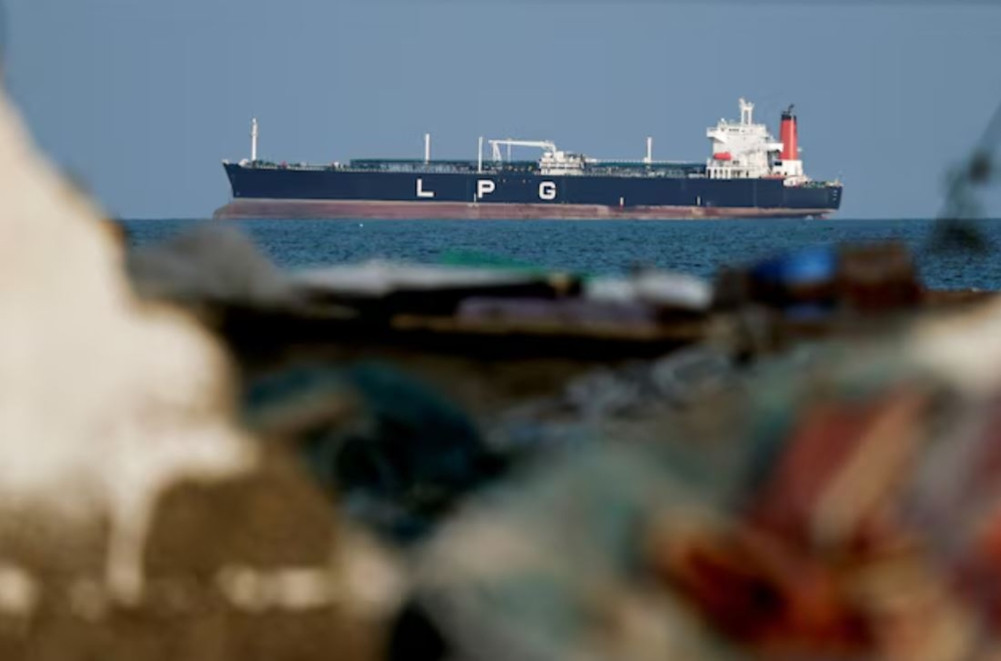
A large number of tankers and cargo ships have been denied permission to leave the Strait of Hormuz since the start of the war between Iran and the US-Israeli conflict. Three Indian crew members have been killed and one is missing in an Iranian attack.
We use Google Cloud Translation Services. Google requires we provide the following disclaimer relating to use of this service:
This service may contain translations powered by Google. Google disclaims all warranties related to the translations, expressed or implied, including any warranties of accuracy, reliability, and any implied warranties of merchantability, fitness for a particular purpose, and noninfringement.
Ambuz, 26, is an Indian national who is a member of the crew of a ship that has been stranded in the Iranian port of Bandar Abbas for two weeks. He watches the smoke from drones and missiles closely as he waits for the day he can return home safely.
A large number of tankers and cargo ships have not been allowed to leave the Strait of Hormuz since the start of the war between Iran and the US-Israeli. Three Indian crew members have been killed and one is missing in the Iranian attack.
Nearly 23,000 Indians like Ambuz, who work on ships operating in the Persian Gulf and surrounding ports, have been affected by the war between Iran and the US-Israeli. India has said it is coordinating with agencies from various countries, including Iran, to ensure their safety.
“We know how dangerous it is to cross the Strait of Hormuz without a naval escort or permission,” Ambuz said over the phone. Flights from Tehran to India are currently not operating. They plan to safely reach another port in West Asia and then fly to India from there. However, the Iranian government must allow the ship to reach another port. “If permission is granted to take the ship to West Asia or a nearby country, we will catch a flight from there to return home as soon as possible,” he said.
In early March, the Ambuz ship was heading to a Southeast Asian country. However, the Iranian Islamic Revolutionary Guard Corps (IRGC) warned the ship’s captain via wireless that there would be consequences if they crossed the Strait of Hormuz without permission. As a result, they could not proceed.
They are hoping for a safe passage. However, as the war drags on, they risk being stuck in port for weeks. India is the world’s third-largest supplier of labor to merchant ships. According to government data, more than 300,000 Indian workers are employed on merchant ships around the world.
Like Ambuz and his colleagues, stranded in the Strait of Hormuz by the war, thousands of Indian families are now in touch with their loved ones only through telephone and text messages.
M Kant, the captain of the ship heading to India, said his crew members saw drones and fighter jets flying overhead along the way. He said the crew members have been terrified since Iranian authorities shut down Starlink's internet in March.
"We heard sirens, we saw a distant ship on fire and we also received threatening messages over the wireless," he said of the harrowing journey.
He said he was finally able to contact his family regularly after getting permission to restart Starlink on March 6. But every time he hears a drone or fighter jet, his heart still beats faster.
Kant said Indian and Iranian officials and his company had instructed not to disclose the identity or location of the ship. He also said the decision may have been taken for security reasons. Another crew member said he saw a drone attack on a ship approaching the Strait of Hormuz. The ship was only a few miles from Hormuz when it was attacked, he said. “We joke with each other about what kind of plane, jet or drone we see in the sky. But we can’t sleep, there’s a lot of tension,” he said.
Meanwhile, Iran on March 13 allowed two Indian-flagged ships to pass through the Strait of Hormuz. These ships were carrying liquefied petroleum gas. Iranian Ambassador to India Mohammad Fathali also assured that Indian ships would be given safe passage.