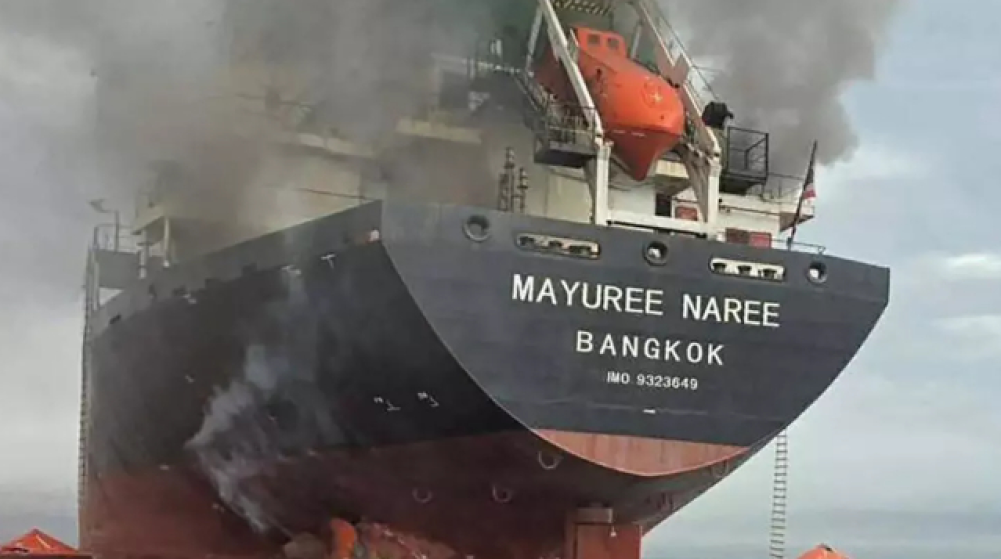
Iran claims it will not allow even a liter of oil to escape the Strait of Hormuz. It has deployed a large number of drones and warships in the area.
We use Google Cloud Translation Services. Google requires we provide the following disclaimer relating to use of this service:
This service may contain translations powered by Google. Google disclaims all warranties related to the translations, expressed or implied, including any warranties of accuracy, reliability, and any implied warranties of merchantability, fitness for a particular purpose, and noninfringement.
The International Energy Association (IEA), an organization of energy-producing countries, has decided to open the largest storage facility in history, but oil prices have not fallen. The IEA, which includes the US, UK and most Western countries, had previously decided to release 400 million barrels of oil from the strategic reserves of member countries and send it to the market.
Despite this, oil prices have increased globally. On Thursday, the price of international benchmark Brent crude rose above $100 per barrel.
Earlier, its price had increased to a maximum of $120 on Monday. However, after Donald Trump announced that the war would end soon, the price fell slightly on Tuesday. On Wednesday, the market price rose again and by Thursday it was above $100 per barrel.
Iran has maintained control over the Strait of Hormuz and has not allowed any ships to leave it. A total of 6 ships, including ships from Thailand and Japan, have been attacked trying to pass through the region. However, no one has claimed responsibility for the attack. Iran claims that it will not allow even a liter of oil to escape from the Strait of Hormuz. It has deployed a large number of drones and warships in the region. Oil is transported from most countries in West Asia to the Asian region through the Strait of Hormuz. In this way, 20 percent of the world's oil and gas market passes through Hormuz. Earlier, American intelligence had claimed that Iran was trying to place underwater bombs in Hormuz. The United States claimed that 16 ships operating for the purpose of placing such bombs were destroyed on Tuesday. However, despite this, Hormuz is under Iranian control. Iran and the United States-Israel have launched attacks on each other on Thursday as well. Oil fields, energy infrastructure, and water treatment plants in West Asia have also been targeted in this process.