Trump has claimed that the US military operation in Iran is moving towards success and that the war will end four weeks earlier than previously expected.
We use Google Cloud Translation Services. Google requires we provide the following disclaimer relating to use of this service:
This service may contain translations powered by Google. Google disclaims all warranties related to the translations, expressed or implied, including any warranties of accuracy, reliability, and any implied warranties of merchantability, fitness for a particular purpose, and noninfringement.
As the Middle East war drags on, concerns have returned to the world about the future of oil. The volatility in the fuel market has once again shaken international geopolitics. The international benchmark Brent crude traded above $100 on Monday. At its highest point, it traded as high as $120. This is the first time that Brent crude has traded above $100 since the uncertainty created by Russia's invasion of Ukraine in 2022. On Tuesday, it fell below $90.
The price rise was halted again after US President Donald Trump announced that the war would end soon. Trump has claimed that the US military operation in Iran is moving towards success and that the war will end earlier than the previously expected four weeks. However, after Iran rejected this claim and said that it would launch a powerful counterattack against the US and Israel, oil prices are rising again.
Amidst the volatility in the oil market, US President Trump has announced that he will lift fuel sanctions previously imposed on some countries to meet the global shortage. Trump told reporters in Florida on Monday, “We have imposed sanctions on some countries. We are lifting those sanctions to open the Strait of Hormuz.” The world’s largest oil exporter, Saudi Aramco, has warned that if the Strait of Hormuz continues to be closed, it will cause a major problem for the global oil market.
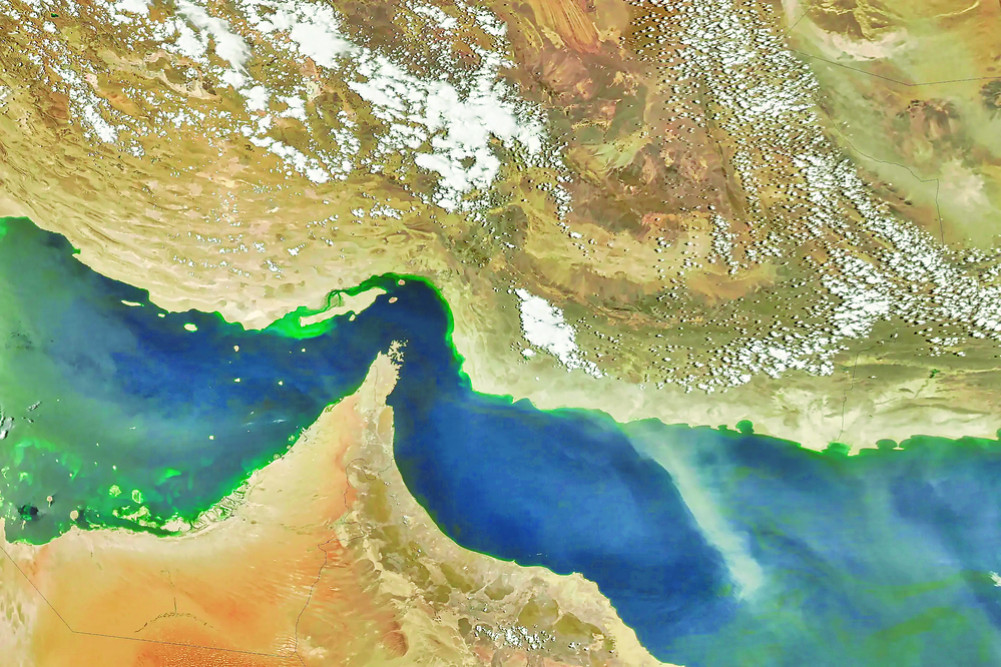
The Strait of Hormuz is the border between Iran and the rest of the Arab world. Iran has long had a strong military presence here. Oil supplies from here have been affected for some time with Iran’s threats to attack tankers coming to the region. Before the war, 20 percent of the world’s oil and 20 percent of LNG gas used to exit from West Asia through this sea route. Iran is retaliating against countries including Saudi Arabia, the UAE, Qatar, Bahrain, Jordan, and Iraq. These countries are being hit hard by their destroyed infrastructure and the disruption to their oil supply routes. Oil and gas companies here have also reduced their production capacity.
President Trump has indicated that he will lift the fuel embargo until oil and gas exports from West Asia resume. The US imposed such sanctions on Russia, Iran and Venezuela. Iran is currently at war. But since the Venezuelan government is cooperating with Trump, there is no real problem there. Therefore, international news organizations have analyzed that Trump is trying to give Russia access to the world market by announcing the lifting of sanctions. The international news agency Reuters, citing sources, reported that Trump is going to lift the sanctions on Russia. Russian President Vladimir Putin and Trump had a telephone conversation on Monday. Reuters reported that the Trump administration has also put forward the option of releasing oil from its strategic reserves or tightening oil exports from the US to prevent a rise in fuel prices. Last week, the US also granted India a waiver to buy Russian oil. While India was pressuring India to reduce its dependence on Russian oil before the Iran war started. There has also been a demand within the European Union (EU) to lift the fuel and energy sanctions on Russia. This demand was made by EU member state Hungary. ‘With the war going on in the Middle East and the Strait of Hormuz being closed, a major part of the global energy supply is now at risk. If Brussels (the EU headquarters) maintains sanctions on Russia, it will severely damage the people of Europe and the European economy. The EU should prioritize protecting the interests of Europeans, not ideology,’ Hungarian Foreign Minister Szijjarto Péter said.
Earlier, Russian President Vladimir Putin had indicated that Russia was ready to supply oil and gas to Europe in the current energy crisis. Putin, the world’s second-largest oil exporter and the largest natural gas reserve holder, believes that Russia should benefit from the Middle East crisis. But he believes that the current price increase is likely to be temporary. He has already urged Russian companies to be ready to export large quantities of oil and gas.
Trump had warned Iran to surrender or choose a new supreme leader as the US wants. However, Iran sent a clear message on Monday that the war would continue by declaring Ayatollah Ali Khamenei’s son, Mojtaba Khomeini, as his successor. Trump claimed that Iran's missile program had been destroyed. However, Iran has denied this claim and said that it would attack Israel and other countries in West Asia with powerful missiles.
The oil politics that have long influenced the rest of the world since World War II seemed to have eased somewhat after the 2010s due to the development of alternative energy. Egypt's decision to close the Suez Canal in 1956 exposed the declining influence of colonial powers to the rest of the world. During the Arab-Israeli war in 1973, the US and Western countries supported Israel. In protest, Arab countries imposed an oil embargo on countries that supported the US and Israel. As a result, oil prices in the US almost quadrupled. The desire to gain control of Kuwait's oil fields prompted Iraq's Saddam Hussein to invade there in 1990. After this attack, the cold relations with the US and the West became more difficult for Saddam. As relations and distrust deepened, the US invaded Iraq in 2003.
In January 2009, Russia briefly shut down its gas pipeline through Ukraine, Gazprom, over a payment dispute. This exposed Europe's dependence on Russian gas and oil. In recent years, oil and natural gas were expected to decline in importance as the use of environmentally friendly energy produced locally through light, wind and water increased. But the ongoing conflict in West Asia has once again exposed the world market's overreliance on oil. "Contrary to people's expectations, the old game is back," Elliott Abrams, who was the US envoy to Iran and Venezuela during Trump's first term, told Business Standard.
The Trump administration's plan to seize control of Venezuela's oil fields prompted the Trump administration to kidnap President Nicolas Maduro. In Cuba, the US has made oil a key weapon in its drive to change power. Venezuela, under pressure from Trump after Maduro's kidnapping, has been forced to cut off oil supplies to Cuba. Mexico has also reduced its oil sales to Cuba under Trump's pressure. Due to this, there is a big crisis in daily life.
The impact of the Iran-US war has reached the kitchen in India
The shortage of cooking gas in India has affected the common man and industrialists. People are lining up at gas depots. Similarly, the price of gas has increased by 60 rupees.
The hotel and tourism sector has been pushed into crisis. The government has prioritized hospitals, educational institutions and other emergency purposes in the distribution of LPG gas. Due to this, restaurants in big cities like Bengaluru, Delhi, Hyderabad and Mumbai are facing a crisis. Hotelier associations have temporarily closed their businesses and reduced operating hours. This problem has been seen because businessmen do not store gas in large quantities.
Food delivery platforms like Swiggy and Zomato have also been affected. The government has said that several steps have been taken to stop black marketing and facilitate supply. Refineries in the country have been instructed to increase LPG production. The government has issued an order to prioritize the general public over large industrialists in the distribution of cooking gas. India consumes about 31.3 million tonnes of LPG annually. About 62 percent of this is imported. Most of these imports usually come from West Asia through the Strait of Hormuz. With the blockade of the Strait of Hormuz, oil-producing countries in West Asia have also started reducing their production. Qatar Energy has said that it has temporarily stopped natural gas production after the Iranian attack.
Iraq has reduced production at its southern oil field by about 70 percent to 1.3 million barrels per day. Kuwait Petroleum Corporation has also declared an emergency and started reducing production. The ongoing tensions in West Asia have forced India to find new alternatives for LPG gas. Indian officials said that they are in talks with Algeria, Australia, Canada and Norway. (with the help of the agency)