Iran has recently been pushing for talks, considering domestic protests, international sanctions, and the weak state of its allies.
We use Google Cloud Translation Services. Google requires we provide the following disclaimer relating to use of this service:
This service may contain translations powered by Google. Google disclaims all warranties related to the translations, expressed or implied, including any warranties of accuracy, reliability, and any implied warranties of merchantability, fitness for a particular purpose, and noninfringement.
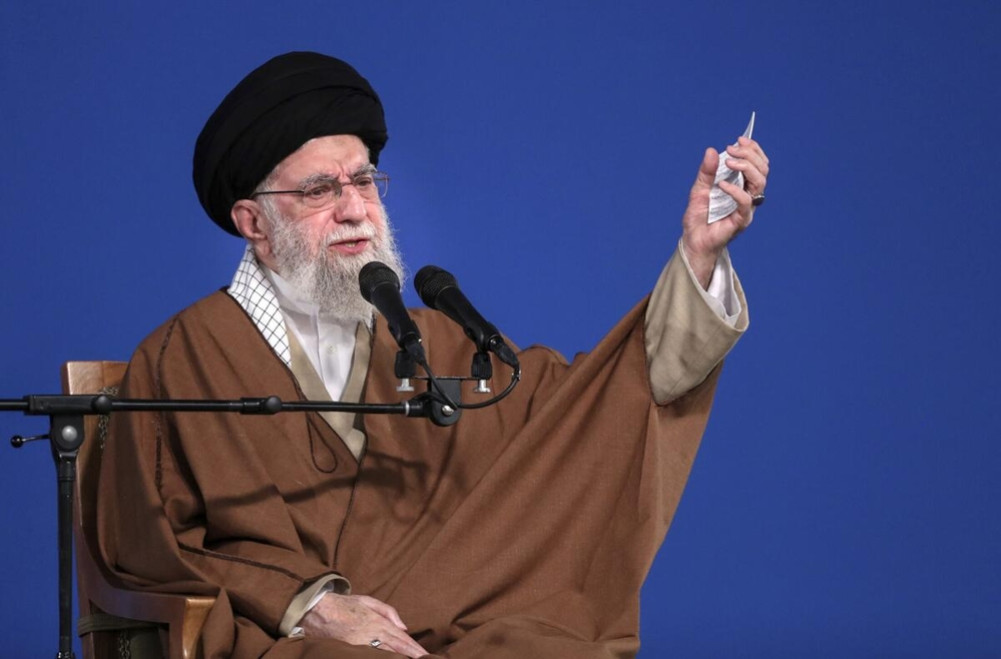
Iran's Supreme Leader Ayatollah Ali Khamenei has been killed in a US strike.
Iranian state media confirmed the death of 86-year-old Ali Khamenei on Sunday morning. Iran has declared a 40-day mourning period. Iran's semi-official Tasmin news agency reported that Khamenei's daughter, son-in-law and grandson were also killed in the attack.
Ali Khamenei became the new leader after the death of Ayatollah Ruhollah Khomeini, the founding leader of the Islamic Revolution, in 1989.
Before becoming supreme leader, he was president from 1981 to 1989. During this period, Iran fought an eight-year war with Iraq. Western countries supported Iraqi leader Saddam Hussein in this war.
This war caused great damage to Iran, which fought alone. Khamenei, who witnessed the painful conflict, then fought a war of resistance and negotiations with the United States.
“People think of Iran as a theocracy because Khamenei wears a turban and the language of the state is the language of religion. But in reality, he was a wartime president. He came out of the war with the idea that Iran was weak and needed protection,” said Vali Nasr, an Iranian affairs expert and author of Iran’s Grand Strategy: A Political History. “Khamenei believed that America was hostile to Iran and that the revolution, the Islamic republic, and nationalism needed to be protected.”
This vision transformed the Islamic Revolutionary Guard Corps from a paramilitary force into a powerful security, political, and economic institution. It was this force that expanded Iran’s influence in the region.
It played a key role in implementing the policies of the Islamic regime. During this period, strict religious practices and autocracy were promoted in the name of the Cultural Revolution.
These include mandatory hijab, banning women from driving, punishment for crimes under Sharia law, requiring women to obtain their husbands' permission to travel, execution of protesters on charges of espionage or treason, and repression of minority religious communities. This has turned a society that was liberal before the Islamic Revolution on its head.
Khamenei's tenure has been plagued by Western sanctions. He promoted a "resistance economy" to promote self-reliance, and continued talks with the West, but with great suspicion.
During his reign, liberals and democrats held large demonstrations within the country. The Iranian military used heavy force to suppress them, killing hundreds.
In 2009, Khamenei's regime suppressed public demonstrations against the Islamic government, claiming that the presidential election was rigged. Then in 2022, another movement against the hijab ban broke out.
The Islamic regime, which had also suppressed it, had difficulty suppressing the anti-government protests that began on December 28. The movement, which began as the economic crisis deepened, was the largest violent demonstration since 1979.
These brutal repressions exposed the autocratic image of his regime. Khamenei was born in Mashhad, northeastern Iran, in 1939. His father is of Azerbaijani origin. He was previously a prominent Muslim leader in Iraq.
Khamenei has described his mother, Khadija Mirdamadi, as an avid reader of the Quran and books. She instilled in her son a love of literature and poetry and later supported his son's movement against the rule of the Pahlavi dynasty.
Khamenei began his studies by learning the Quran at the age of four. He completed his primary education at the first Islamic school in Mashhad. He did not complete high school, but instead attended a seminary and studied under his father and prominent Islamic scholars of the time, such as Sheikh Hashem Ghazvini. In the following years, he received higher education in Najaf and Qom.
In 1953, the Shah of Iran, with the support of the CIA and British intelligence (MI6), overthrew the elected government. Prime Minister Mohammad Mossadegh was imprisoned.
Khamenei, who opposed this, was repeatedly arrested by the Shah's agents. He was then sentenced to exile in a remote city in southeastern Iran. He returned to participate in the 1978 protests that ended the Pahlavi regime.
After the monarchy was overthrown, Ruhollah Khamenei became Supreme Leader. Ali Khamenei became Minister of Defense in 1980. During his brief tenure as Minister of Defense, the Iran–Iraq War broke out. He was then given the role of an observer of the Islamic Revolutionary Guard Corps.
1981 proved to be a crucial year for Khamenei. This year, the opposition group Mojahedin-e Khalq attempted to assassinate him. This failed. He won the presidency that year. He is the first clerical president of Iran. During his tenure, the Iran-Iraq War lasted for 8 years.
Ruhollah Khomeini died in 1989 and was assassinated. Ruhollah's successor, Ayatollah Hussein Ali Montazeri, was controversial due to his radical nature.
The council formed to amend the constitution appointed Ali Khamenei as Supreme Leader. The council made this decision by relaxing the qualifications required to hold the country's highest office. Because Ali Khamenei did not hold the title of high-ranking Shiite cleric (Hojatoleslam) at that time.
After becoming Supreme Leader, Khamenei began to rebuild the country's infrastructure that had been destroyed by the war with Iraq. More than a million people were killed in the conflict, and the economy was devastated. In 1997, reformist leader Mohammad Khatami won a landslide victory in the presidential election. He advocated for better relations with the West. Meanwhile, Khamenei was suspicious and distrustful of the West. So he began to form his own group of confidants to challenge the country's president.
The Revolutionary Guard Corps was strengthened more than the national army. A large part of national spending was spent on it. Because it was Ali Khamenei's trusted and reliable army.
In 2009, Mahmoud Ahmadinejad won the presidential election. Like Khamenei, he was a staunch anti-Westerner. Protests broke out in the country, alleging that the presidential election was rigged.
The protesters supported the reformist candidate Mir Hossein Mousavi. According to Amnesty International, thousands were arrested and dozens were killed in the process.
The Iranian leadership accused Western countries of fomenting unrest to overthrow their religious institutions.
Khamenei was also a pragmatist. And he seemed ready to sit down with Western countries when necessary. In 2015, Iran was facing a major setback due to international sanctions.
He supported the talks that then-President Hassan Rouhani held with the West to ease economic pressure. In this historic agreement signed by Iran and world powers, Iran agreed not to use its nuclear program to build weapons. In return, Iran agreed to ensure unhindered access to international markets.
But within two years of the signing of that agreement, Donald Trump won the presidency in the United States. In 2018, he unilaterally announced that the United States would withdraw from the agreement. International sanctions were then reimposed on Iran.
In response, Iran began to increase its uranium enrichment level again. According to the latest report, Iran's uranium enrichment level is around 60 percent. Whereas, 80 to 90 percent uranium enrichment is required to make weapons.
Meanwhile, large numbers of people were killed in protests against price increases in 2019 and in 2022 over the easing of the hijab ban.
Iran has formed an alliance with Hezbollah in Lebanon, former President Bashar al-Assad in Syria, Hamas in Palestine, Houthi rebels in Yemen, and armed groups in Iraq.
Following Hamas' attack on southern Israel on October 7, 2023, Israel has repeatedly attacked Iran's allies in the Middle East. Western sanctions have also made it difficult for Iran to provide these allies with the necessary financial support.
Hamas in Palestine and Hezbollah in Lebanon have been steadily weakened by Israeli attacks. In December 2024, rebels in Syria overthrew Bashar al-Assad.
Realizing that Iran's allies were weakened, Israeli Prime Minister Benjamin Netanyahu appeared aggressive. On June 13, 2025, the Israeli army, after informing the United States, attacked Iran. In this, senior commanders of Iran's Revolutionary Guards Corps and top nuclear scientists were killed.
Nuclear sites and civilian and military infrastructure were attacked. Iran responded by launching missiles at the oil fields. A full-scale war lasted for almost two weeks. During this war, the United States attacked three of Iran's major nuclear facilities.
In response, Iran also attacked a US military base in Qatar. However, it was not on a large scale.
After the 12-day war, there was a period of pro-government sentiment in Iran. However, as the economy was in shambles throughout the region, small businessmen began to protest on December 28.
This was supported by all sections of society. The protests peaked on January 9-10. The Iranian military cracked down on the protests. US President Donald Trump has claimed that nearly 32,000 civilians have been killed in the crackdown.
Iran, facing domestic protests, international sanctions, and weak allies, has been pushing for talks in recent times.
However, although it is ready to reduce its uranium enrichment level, it is not ready to completely end its nuclear program. The last three indirect talks with the US, mediated by Oman, have ended on this issue.
The talks were held on February 6, February 17, and most recently on February 26. Iran claimed that the third round of talks was progressing. However, within two days, the US attacked Iran and assassinated Supreme Leader Khamenei.
According to a report published by the New York Times, citing US military sources, Khamenei had been missing for the past few weeks. However, He was scheduled to visit the Supreme Leader's office to discuss with his top leaders before the US-Iran attack on Saturday. This information was received by the US intelligence agency (CIA).
Then, in the attack on the office, Khamenei and some other leaders were killed. Those killed include Revolutionary Guards Commander-in-Chief Mohammad Pakpour, Defense Minister Aziz Nasserzadeh, Military Council Chief Ali Shamkhani, Revolutionary Guards Aerospace Force Commander Seyyed Majid Mousavi, and Deputy Intelligence Minister Mohammad Shirazi. The US military attacked the office at 9:40 a.m. local time.