From 1954 to 1968, blacks in the United States waged a civil rights movement against apartheid. It demanded an end to centuries of discrimination against African Americans. It included peaceful demonstrations and boycotts.
We use Google Cloud Translation Services. Google requires we provide the following disclaimer relating to use of this service:
This service may contain translations powered by Google. Google disclaims all warranties related to the translations, expressed or implied, including any warranties of accuracy, reliability, and any implied warranties of merchantability, fitness for a particular purpose, and noninfringement.
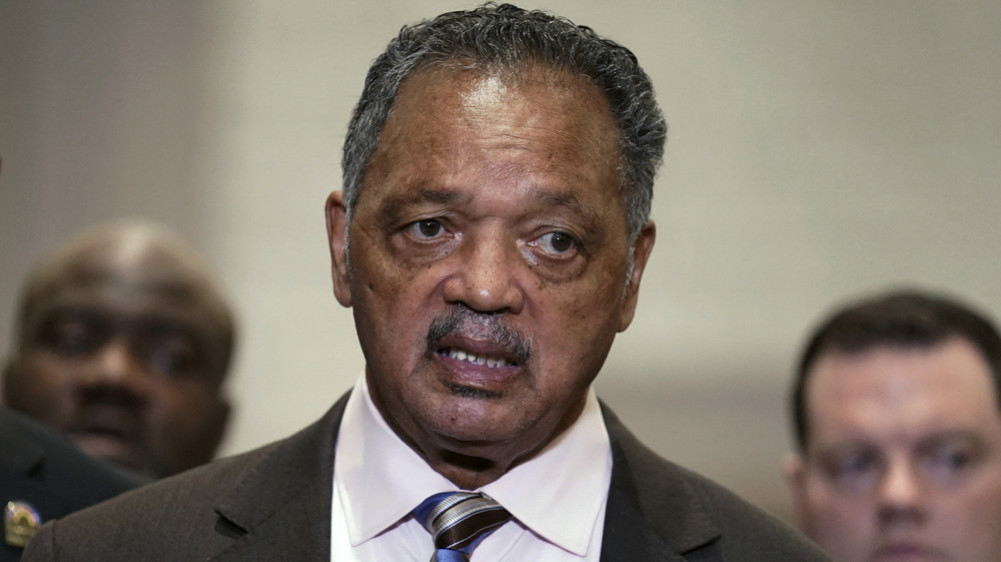
Jesse Jackson, a leader who played a key role in the civil rights movement in the United States in the 1960s, died on Tuesday.
His family said he died at the age of 84. He had twice run for president.
“Our father was a public servant. He was a leader not only for our family but also for the oppressed, the voiceless and the ignored around the world,” the Jackson family said in a statement.
The cause of his death has not been released. The Jackson family said he was surrounded by loved ones before his death and passed away peacefully. Jackson, who had been suffering from progressive supranuclear palsy (PSP) for nearly a decade, was hospitalized last November. In 2017, he revealed he had Parkinson’s disease. He was then treated for two years in a Chicago hospital.
He was born in Greenville, South Carolina. He participated in the civil rights movement with Martin Luther King. He ran for president in the Democratic Party's primary elections twice in 1984 and 1988. But he was unsuccessful. In the 1984 primary, he received about 18 percent of the vote.
What was the civil rights movement?
Although Abraham Lincoln's proclamation ended slavery in 1865, racial discrimination persisted in American society.
In particular, in the southern states, separate settlements, water, schools, and public buses were provided for whites and blacks. Although there were sufficient resources for whites, black settlements lacked basic amenities.
Southern states had imposed burdensome provisions such as literacy tests and voting fees before voting to discourage blacks from voting.
From 1954 to 1968, blacks in the United States waged a civil rights movement against apartheid. It demanded an end to centuries of discrimination against African Americans. During this period, peaceful demonstrations and boycotts were held.
Martin Luther King led this movement. In 1964, after the success of this movement, President Lyndon Johnson signed the Civil Rights Act of 1964.
This bill stated that no one should be discriminated against on the basis of skin color, color, religion, sex, or sect. It eliminated the system of segregated areas such as public schools, buses, etc. Similarly, it worked to end discrimination in employment and ensure unhindered voting rights.