Colombian representative Denia Duran Gonzalez said that the overuse of fossil fuels is the biggest factor in global warming.
We use Google Cloud Translation Services. Google requires we provide the following disclaimer relating to use of this service:
This service may contain translations powered by Google. Google disclaims all warranties related to the translations, expressed or implied, including any warranties of accuracy, reliability, and any implied warranties of merchantability, fitness for a particular purpose, and noninfringement.
The United Nations' largest climate change conference, COP30, has concluded without a new resolution to cut fossil fuels.
Despite two weeks of intensive discussions in the Brazilian city of Belém on possible steps to curb global warming, the conference ended without any mention of reducing the use of fossil fuels.
‘COP 30’ President Andrés Corrêa do Lago told delegates that the discussions had become very complicated, saying, “I know. Some of you have great ambitions on some issues.”
After repeated objections from representatives of Brazil’s two neighbors, Colombia and Uruguay, and the Central American country of Panama, President Corrêa had to stop the ‘plenary session’ and consult with various parties. He resumed the session about an hour later.
Colombian representative Denia Duran Gonzalez said that the excessive use of fossil fuels is the biggest factor in the increase in global temperatures. She said that her country would not support an agreement made without considering science. “A deal imposed without considering the climate will be a failed deal,” she said. In response, Russian representative Sergei Kononuchenko said, “Some delegates are showing childish behavior in the discussion, demanding that all the chocolates be in their own hands.”
Fossil fuel issue
The ‘COP 28’ held in Dubai in December 2023 adopted an ambitious plan to dramatically reduce the use of petrol, gas and coal, make extensive use of renewable energy and ‘reduce fossil fuel emissions to zero’ by 2050. It was also signed by 198 countries.
However, shortly after the signing, countries including Saudi Arabia, Russia, China, India and others withdrew from their commitments. They claimed that the continuation of fossil fuels was necessary to meet global energy needs.
The US, which played a key role in gathering signatures on the issue at the time, has not shown interest in it since Donald Trump returned as president. Trump has called the climate change issue ‘the world’s biggest scam.’
He did not send any official representatives from the federal government to Belém this time. In Belém, more than 80 countries from Europe, Latin America, Asia and Africa had agreed to create a clear ‘roadmap’ to implement the commitments of ‘COP 28’. However, countries such as China, India and Russia, led by Saudi Arabia, blocked the issue from moving forward. As a result, the issue of fossil fuels was not mentioned in the final agreement.
‘We are not saying that we are winning the battle on climate. But, of course, we are still in this battle and will continue to fight,’ said Simon Steele, Executive Secretary of the UN Framework Convention on Climate Change (UNFCCC), in a statement issued after the conference.
Positive to increase investment in the financial fund
Developed countries have agreed to increase investment in the Climate Change Finance Fund at the conference held in the city of Belém on the banks of the Amazon River. They have pledged to increase the annual contribution to the fund to $300 billion by 2035, which is three times more than in the past. However, experts have been saying that this investment is not enough to solve the problems caused by climate change.
Developing countries have been facing disasters such as sea level rise, extreme heat, droughts, floods and storms in recent years. The latest United Nations study report also shows that almost half of the world's population lives at high risk of climate change.
Accepting the proposal put forward by developing countries, the United Nations has included in its report a total of $1.3 billion needed annually from 2035 to work in the field of climate. It is said that cooperation, unity and investment between countries are necessary to achieve this ambitious goal. However, concrete commitments have not been made.
The ambitious plan passed by ‘COP 28’ in Dubai to dramatically reduce the use of petrol, gas and coal by 2050, to make extensive use of renewable energy and reduce petroleum fuel emissions to zero, was not addressed this time. Instead, Saudi Arabia, Russia, China, India and others backed away from their own commitments. US President Donald Trump has even accused the issue of climate change of ‘the world’s biggest fraud’. The Belo Horizonte conference has put forward a ‘Global Implementation Accelerator’ plan to support climate adaptation goals. According to this plan, rich countries will cooperate with developing countries in financial, technical and knowledge transfer for climate adaptation.
Similarly, it was agreed to continue the ambitious effort to limit global temperature increase to 1.5 degrees Celsius compared to the pre-industrial era. However, experts have concluded that a massive reduction in fossil fuels is necessary to fulfill this plan, as global temperature has temporarily crossed the ‘threshold’ of 1.5 degrees Celsius. In which 'COP 30' could not take any decision.
Nepal raised the issue of the Himalayas
A 9-member delegation from Nepal led by Agriculture and Livestock Development Minister Madan Pariyar had reached Belam. On 1 Mangsir, Agriculture Minister Pariyar had addressed the ministerial session. He had raised the issues of climate justice, snowmelt problems, unseasonal floods and landslides in Nepal's agricultural system and people's lives.
Nepal had organized the 'Sagarmatha Dialogue' last Jestha to draw the world's attention to the effects of climate change on Nepal's Himalayan region. The conference concluded that it is essential to mitigate global climate change for the protection of the Himalayas.
Maheshwor Dhakal, Joint Secretary of the Climate Change Management Division, said that the Nepali delegation interacted with various stakeholders in Belam. He said that Nepal had raised the issues of climate justice and financial support to developing countries as a priority.
Powerful countries did not give importance
The major polluters did not seem to give much importance to this conference. The US did not send any senior representatives from the federal level. Similarly, Russia did not send a ministerial delegation. China sent a team led by Vice President Ding Xuxiang.
Similarly, India was led by Environment Minister Bhupendra Yadav. According to a report released this year by the European Commission, Joint Research Centre, China, the US, India, Russia, the European Union and Indonesia account for 61.8 percent of the world's total emissions.
'These countries are home to 51.4 percent of the world's population. They account for 62.5 percent of the world's gross domestic product and 64.2 percent of global fossil fuel consumption.
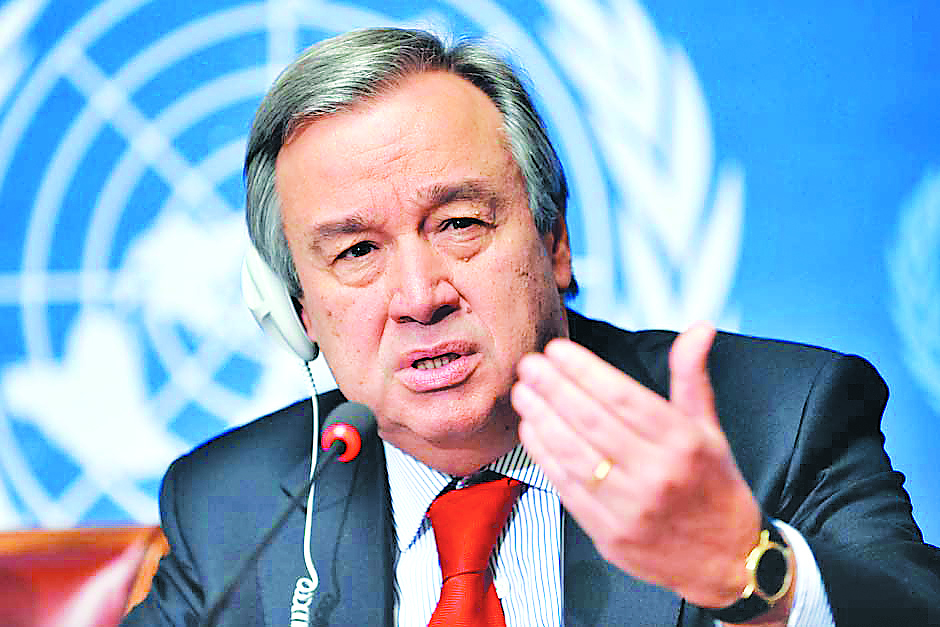 'Humanity's red line is below 1.5 degrees Celsius': Antonio Guterres, Secretary-General of the United Nations
A joint effort is needed to tackle a challenge that no country can solve alone. The conference calls for a tripling of climate adaptation finance by 2035.
That will help close the climate adaptation gap. A judicial transition mechanism has been created to help countries support their communities and workers as they transition to renewable energy.
A new dialogue is aimed at promoting cooperation in international trade. We have acknowledged that the Earth’s temperature has temporarily risen above 1.5 degrees Celsius above pre-industrial levels.
I don’t think COP 30 addressed everything that was needed. There is a dangerous gap between the demands of science and our situation. I know that many young people, indigenous peoples, and those living on the brink of climate change are shocked.
A temperature increase above 1.5 degrees is a dangerous place. We are reaching a dangerous point. Staying below 1.5 degrees by the end of the century should be the ‘red line’ for humanity. This requires a deep carbon reduction, a credible and clear plan to shift from fossil fuels to clean energy.
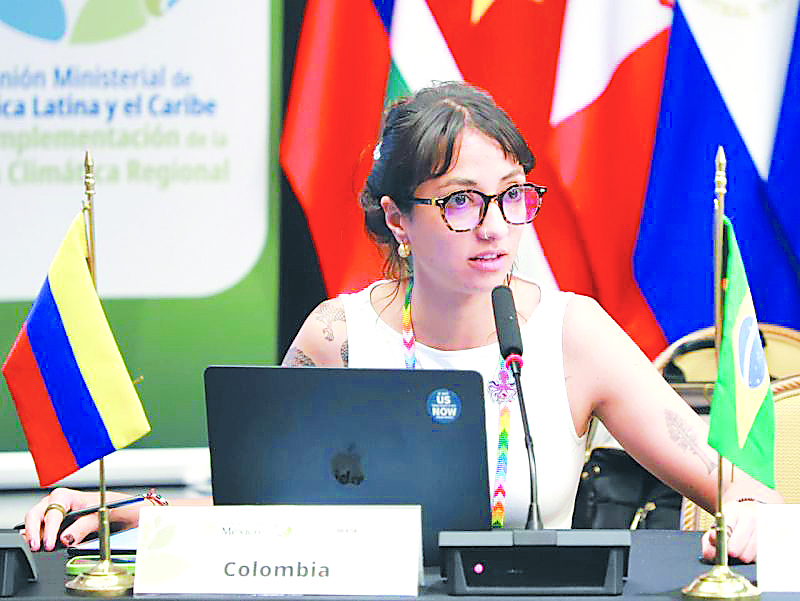 ‘Scientific evidence ignored’: Daniela Duran Gonzalez, representative of Colombia
More than 75 percent of the world’s greenhouse gas emissions come from fossil fuels. We believe that there is sufficient scientific evidence for this.
Despite this, the final agreement does not include any ‘roadmap’ to ‘phase-out’ them and we are asked to agree to it. It will not take us on the 1.5°C path set by the Paris Agreement.
This is a ‘coup’ of truth and trust. But after the procedural problems of this ‘plenary session’, we had no choice but to object. This way of doing things ignores the principles of multilateralism, justice and equity. A country like ours, which is suffering the disproportionate effects of climate change, even if its emissions are very low, cannot accept this.
We urge a renewed debate on serious issues such as fossil fuels, deforestation pathways, and fair finance. The outcome will ensure that science, justice, and the needs of developing countries are met.

