According to Transparency International Bangladesh, since the formation of the interim government, 121 people have been killed in 471 political violence in the country, including 59 Hindus and 23 women have been raped.
We use Google Cloud Translation Services. Google requires we provide the following disclaimer relating to use of this service:
This service may contain translations powered by Google. Google disclaims all warranties related to the translations, expressed or implied, including any warranties of accuracy, reliability, and any implied warranties of merchantability, fitness for a particular purpose, and noninfringement.
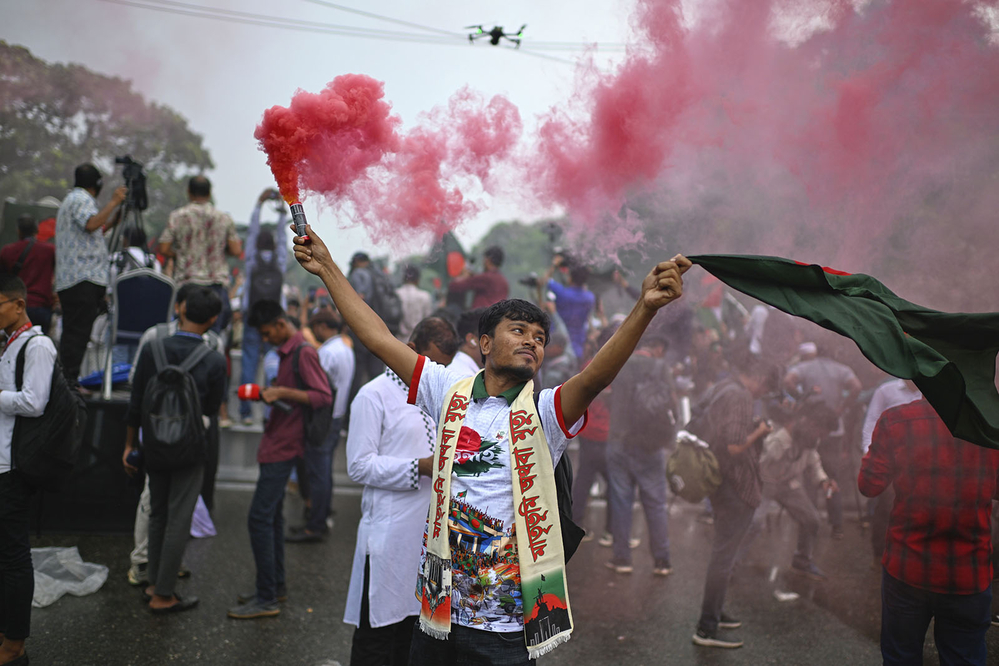
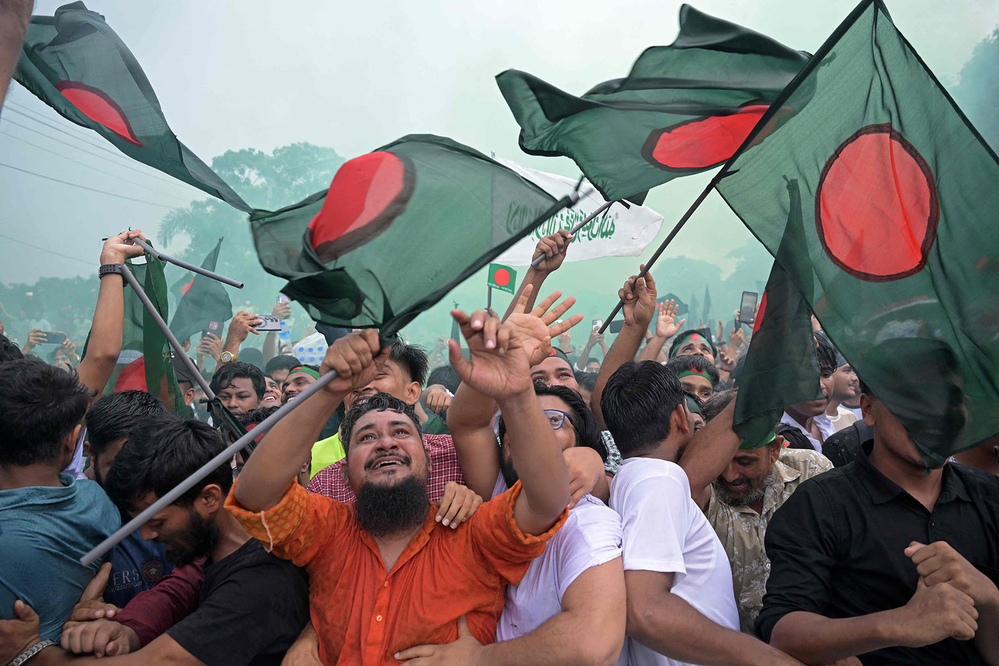
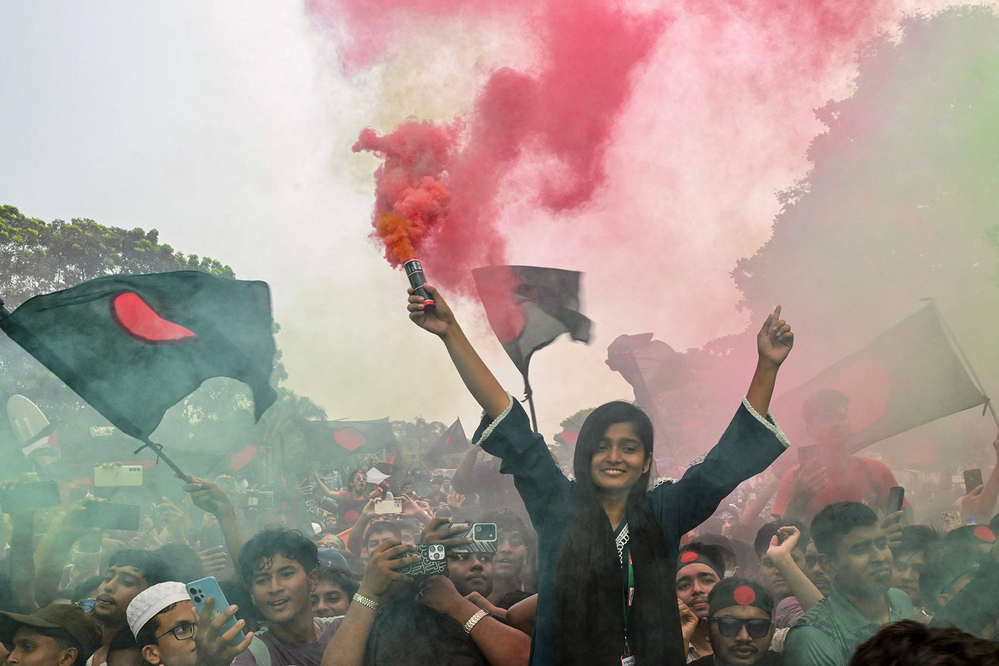
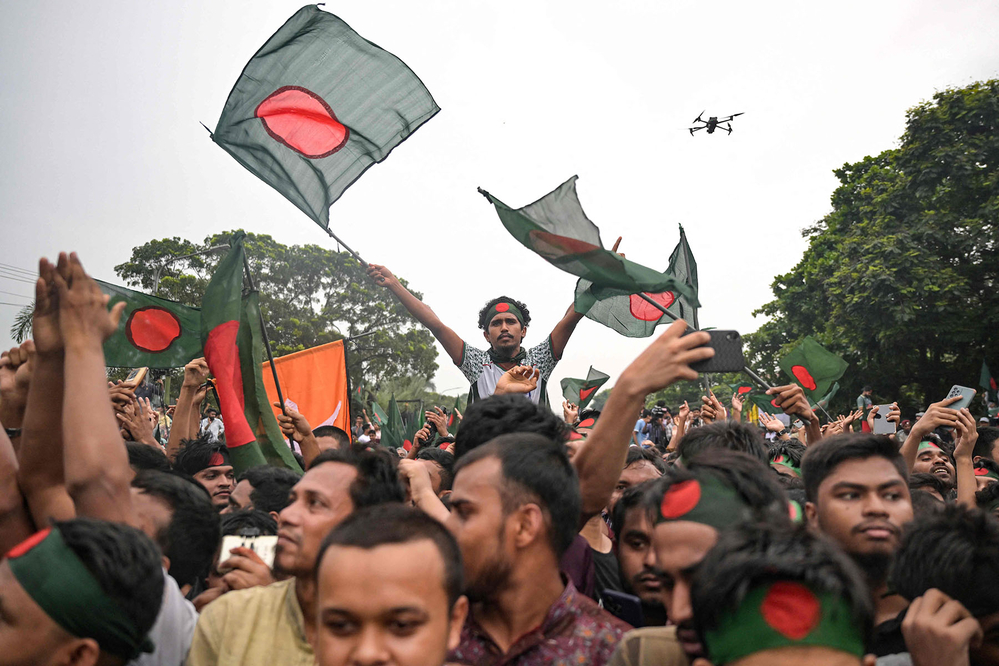
It has been a year since the change of power in Bangladesh on the strength of the student movement. Sheikh Hasina's government was ousted on 5 August 2024. Since then, Hasina has been living in exile in India. The students had been protesting since July last year. After Hasina's ouster, Nobel laureate Muhammad Yunus is the head (chief adviser) of the interim government.
Interim Government Chief Yunus issued the 'July Manifesto' during a special ceremony held in Dhaka on Tuesday on the occasion of the one year anniversary of the student uprising. It contains the political map of Bangladesh. With this announcement, last year's student-led uprising and subsequent political changes have received constitutional and political recognition. Yunus' announcement is seen as the 'Magna Carta' in Bangladesh politics. The declaration shall be included in the schedule of the constitution. In addition, Yunus, the head of the interim government, announced on Tuesday that he will write a letter to the head of the Election Commission to hold a general election before next year's Ramadan (February 17 or 18, 2026).
Even after a long time since the change of power on the strength of the student movement, Yunus has been criticized for not publishing a clear political roadmap. "The people of Bangladesh have expressed their desire that the 2024 student-led mass movement get constitutional and political recognition and that the government formed after the next general election should include the July manifesto in the constitution," Yunus said while releasing the manifesto. With the
announcement, the recognition of 'national heroes' by those who lost their lives during last year's protests got a
. Yunus has also claimed that the manifesto is intended to reflect the aspirations of the people of Bangladesh to win the people's uprising of 5 August 2024.
Even though Prime Minister Yunusu announced the roadmap for the election and democratic process, the political future of Bangladesh still seems uncertain due to the violent events that have occurred in the last one year. Even after a year since Hasina's government was ousted, Bangladesh has not calmed down. Violent activity has not stopped. Social harmony is completely disrupted. In particular, the interim government of Muhammad Yunus has been unable to stop the violence against the Hindu community and other minorities. On the contrary, the morale of the fanatics is increasing. Hundreds have lost their lives in the last one year.
Although a case was filed against former Prime Minister Hasina on charges of crimes against humanity during the agitation, the administration has shown no interest in prosecuting the perpetrators of the violent incidents since then. Due to murder-violence, democracy, political tolerance and religious harmony are now maintained in Bangladesh Political analysts say that keeping a
is becoming a challenge.
According to Meena Kashyap, deputy head of the Asia region of Human Rights Watch, a New York-based human rights group, the hope with which millions of people fought to topple Hasina's government is a challenge to fulfill their dreams. However, the interim government has been rejecting such allegations. Several protestors, who became violent during the student movement, set fire to dozens of police stations and government buildings. The prime minister's residence was also attacked.
Abdul Tarif, a 20-year-old student, started the movement with his sister Mehrunisa in anticipation of widespread political change in the country. Later, thousands of people joined his movement. In this, his sister and cousin's son also died due to police firing. At present, Tarif, the leader of the movement, is dissatisfied with the current government. It was Tarif who demanded Yunus, the head of the current government, to take over the leadership of the interim government. But he says that now the system is not established as they want. A few days ago, he said, "We wanted a country where there is no discrimination and injustice." We wanted change but we are also disappointed with the current situation.' This includes the National Consent Commission. It is mentioned in the point that the next government and political parties will cooperate with each other to improve the electoral process. But due to mutual disputes, no agreement has been reached so far. Hasina's party Awami League has been banned. The Awami League has been alleging that more than a dozen of its supporters have been killed in custody.
Delhi-based rights group 'Rights and Risk Analysis' claimed on Monday that 877 journalists were targeted in Bangladesh under the Yunus regime. According to the report, there was a 230 percent increase in such incidents last year compared to August 2023 to July 2024. Similarly, Transparency International Bangladesh (TIB) has stated in one of its reports that there have been 471 incidents of political violence in the country since the formation of the interim government. In which 121 people were killed and 5 thousand 189 people were injured.
According to TIB, former Prime Minister Khaleda Zia's Bangladesh National Party was involved in 92 percent of the incidents of political violence in Bangladesh last year. Similarly, Transparency International Bangladesh claims that five percent of the radical party Jamaat-e-Islami and one percent of the National Citizen Party, which came from the student movement, are involved in such violence.
Continuous attacks on the Hindu community
During Sheikh Hasina's rule, Bangladesh took important steps towards economic progress and secularism. Bangladesh was also the first choice of students from countries like Nepal to study medical education.
The Awami League government exercised strict control over radical organizations such as Jamaat-e-Islami. But as soon as Hasina's power was overthrown, the Yunus government lifted the ban on the organization. As a result, the Islamic fundamentalist groups there became powerful once again.
The population of Hindu community in Bangladesh is around 8 percent. Due to being a minority, the Hindu community is the most oppressed in Bangladesh. According to a report, there have been about 2,200 violent incidents since the change of power. In which Hindus were killed, temples attacked and property looted. The Dhakeshwari temple, which was the main religious center of the Hindus there, was destroyed and the houses of 15 Hindu families were demolished simultaneously in Aldadpur village of Rangpur district.
Yunus says he is trying to control violence against minorities, but he has not succeeded. Similarly, Bangladesh Attorney General Mohammad Asaduzzaman is demanding to remove the word 'secularism' from the constitution. Demands for sharia law are intensifying from Muslim political parties and radical groups. Which is sure to have a direct impact on the minority Hindus there.
Unilateral action, the series of murders did not stop
During the last one year, 59 Hindus have been killed in Bangladesh. Where 23 women were raped and 159 temples were attacked. According to the Bangladesh Hindu, Buddhist, Christian Unity Council, in the 15-day period (August 4 to 20, 2024) after the change of power, only 9 Hindus were killed and 157 houses and shops were looted and set on fire.
Bangladesh government's media advisor Safiqul Alam claims that the situation is much better than Hasina's government and that the government is active in maintaining peace. On the other hand, Dhaka Vikal Gobind Chandra says that Hindus have no participation in the government and any of its policies. Not even a single Hindu is represented in the Advisory Council and Reform Committee.
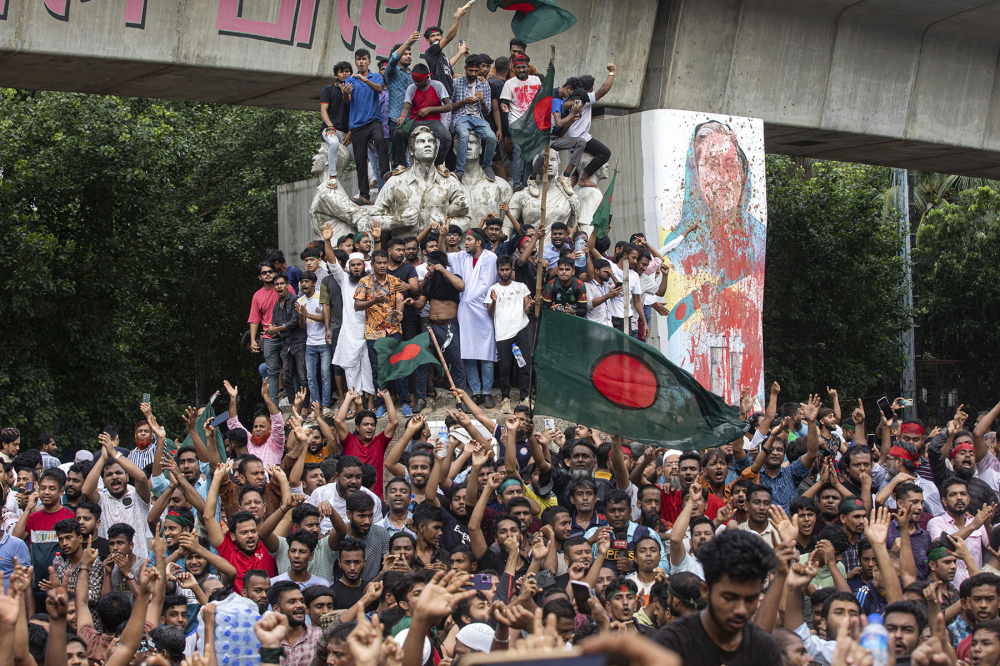
A series of attacks and attacks on Hindu community leaders, one for being close to the Awagi League, continues. Jagannath Das Jharna, who lives in Chittagong, has taken unilateral action and jailed 19 Hindus. The victims complain that no lawyer is ready to fight the case on their behalf. The Awami League has accused the Yunus government of a campaign of genocide against Hindus and other minority communities.
Moving away from India, getting closer to China and Pakistan
In the current situation, Bangladesh is leaning towards Pakistan and China. Bangladesh was close to India since independence. Because in 1971, India was the main ally to liberate Bangladesh from the barbarism of Pakistan. India freed Bangladesh from Pakistan by sending troops.
But the same Bangladesh is now closer to Pakistan. Bangladesh has resumed sea trade that has been closed for years. Pakistan's Deputy Prime Minister and Foreign Minister Isaaq Dar is scheduled to visit Dhaka on August 23. This will be the first bilateral visit by any Pakistani foreign minister in the last three decades. A journalist gave an aggressive answer to the question of Bangladesh's foreign affairs adviser Mohammad Tauhid Hussain on India's response to Bangladesh increasing its ties with Pakistan. He said, "I cannot decide what kind of relationship India will have with Pakistan." In the same way, India cannot definitely decide what our relationship with Pakistan will be.'
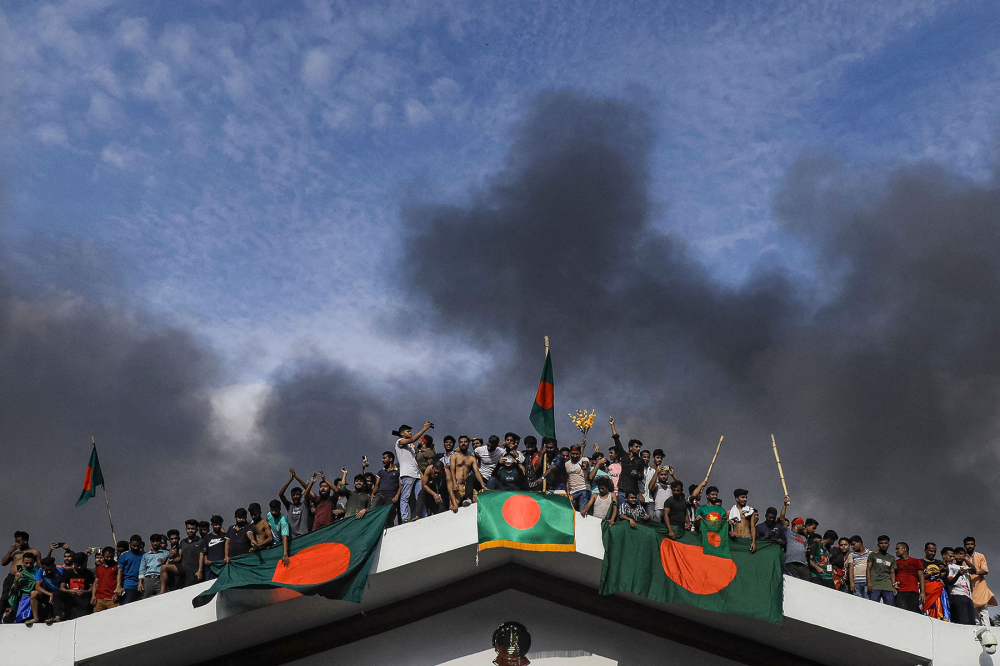
Recently Bangladesh has been strengthening its relationship with China. Yunus also celebrated his 50th political anniversary during his visit to Beijing last March. At the same time, China signed an agreement with Bangladesh on investment, loans and grants worth 2.1 billion dollars. These include schemes like Chittagong Sugar Industrial Economic Zone and Mongla Port Modernization.
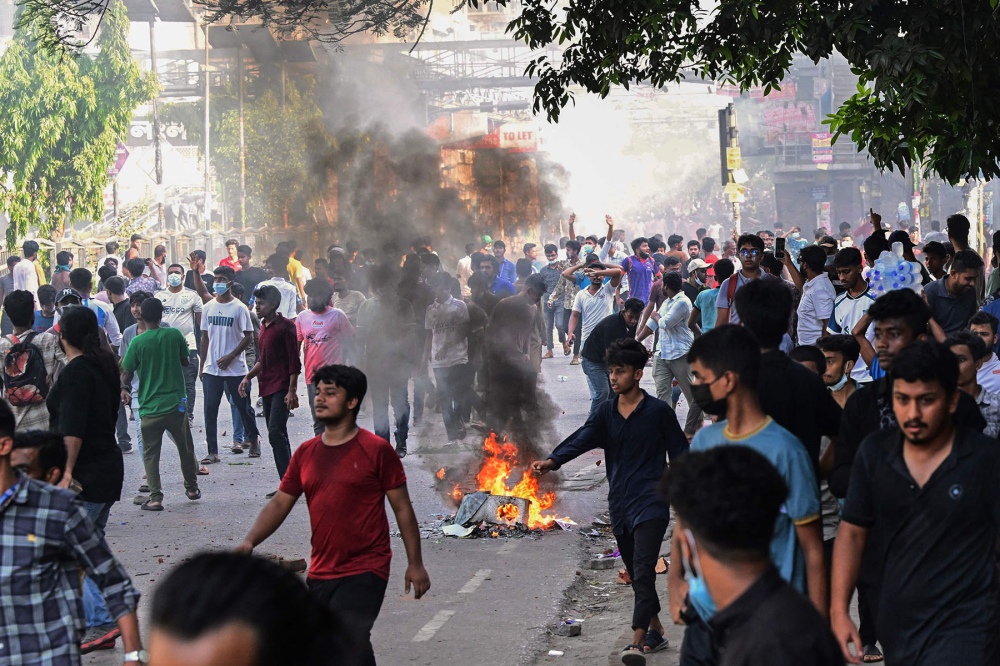
India has not taken this step of Bangladesh lightly. In the background of India considering the entire South Asia as its sphere of influence, the growing proximity between China and Bangladesh is not good news for India. On top of that, getting closer to China and Pakistan, a country that became independent with its own help, has become a headache for India.
(with agency help)

