As of Wednesday, 585 people were killed in Iran, more than 1200 were injured, and 24 people were killed in Israel.
We use Google Cloud Translation Services. Google requires we provide the following disclaimer relating to use of this service:
This service may contain translations powered by Google. Google disclaims all warranties related to the translations, expressed or implied, including any warranties of accuracy, reliability, and any implied warranties of merchantability, fitness for a particular purpose, and noninfringement.
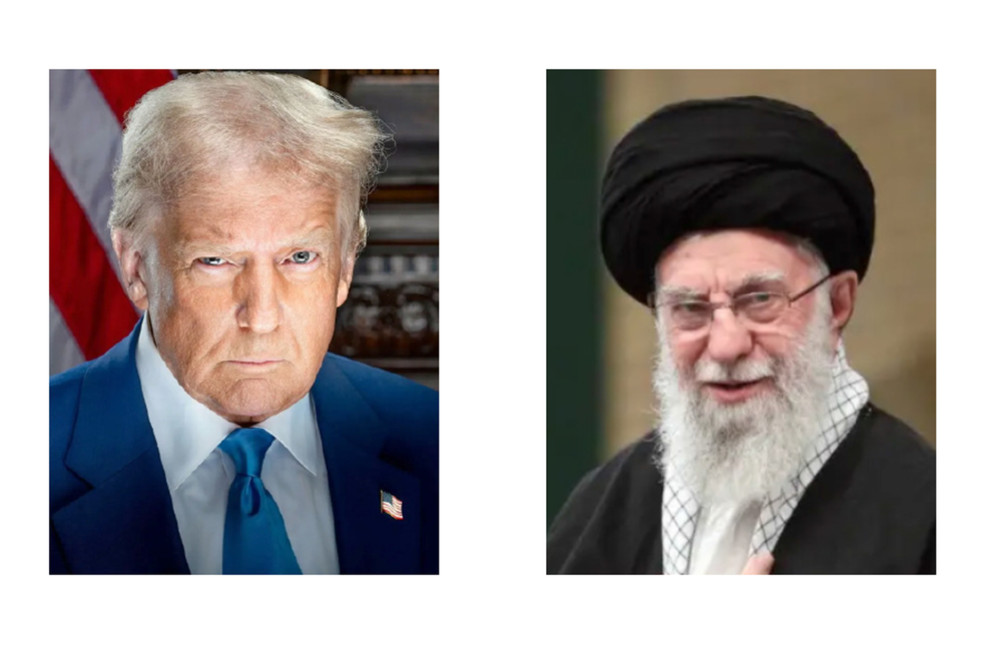
Iran's Supreme Leader Ayatollah Ali Khomeini has declared war in response to US President Donald Trump's threat of unconditional surrender. Khomeini declared war against Israel on Tuesday night through social network X.
He wrote, "The war has begun. We respond strongly to terrorist Israel. We will not show any mercy against them. He also said that he will not make any agreement with Israel.
Previously, American President Trump had threatened Iran to surrender unconditionally by posting on his social network Truth Social. He said that they know where Iran's supreme leader Khomeini is hiding and targeting him is not a big deal. Trump wrote, "We know very well where the so-called Supreme Leader is hiding." She is an easy target. But now he is safe.'
After Trump's warning, Khomeini declared war in response. Immediately after Khamenei's declaration of war, Iran fired 25 missiles at Israel. According to Iranian media, Iran's military wing, the IRGC, fired a Fatah missile into Israel on Wednesday morning. This is the first time Fatah-1 has been used in combat.
The Fatah missile is hypersonic. Its speed is five times that of sound. According to the IRGC, Fatah missiles have targeted Israel's defense systems and other safe areas. However, the official information on how much damage was caused by this missile in Israel has not yet been received.
After Israel attacked Iran on June 13, the war between the two countries continues. The American Human Rights Group has claimed that 585 people have died in Iran due to Israel's attack. The Iranian government has not yet released the exact details of the dead. According to the information given till Monday, 224 people have been killed and 1277 people have been injured. On the other hand, in Israel, 24 people have been killed in Iran's attack.
The New York Times mentioned that the US official said that Iran is already preparing to attack the US military. U.S. officials say Iran has prepared missiles and weapons and could launch an attack against the U.S. if necessary. If the US participates in the war on behalf of Israel, it is estimated that Iran will also attack the US military area.
While Trump is warning Iran, 60 percent of Americans are against war. In a survey conducted by the Age of America, the majority of American citizens suggested that the United States should not participate in the Israel-Iran conflict. Only 16 percent agreed that the United States should participate in the war. 24 percent are confused about whether America should participate in the war or not. Politically, 65 percent of Democrats opposed US participation in the war. Among Republicans, 53 percent oppose it.
The economic impact of the Iran-Israel conflict is growing
Concerns about the global economic impact of the Israel-Iran war are beginning to grow. Now the energy market and the aviation sector have been affected. The price of crude oil has increased by more than 11 percent to reach $75.32 per barrel. Experts have warned that it will reach 120 dollars per barrel if the war continues.
From an economic point of view, countries have become cautious, especially regarding the Gulf of Hormuz. Iran has threatened to close the sea route. Doing so will affect the global energy market. It can be estimated that its effects will reach even Nepal. Because, India imports 85 percent of its crude oil through the narrow sea route in the Gulf of Hormuz. If that route is closed, oil prices will skyrocket. India does not buy oil directly from Iran due to US sanctions on Iran. However, Iran remains an important player in the global oil market.
Between Iran in the north and Oman and the United Arab Emirates in the south, the Strait of Hormuz is an important sea route for international trade and shipping, connecting the Persian Gulf and the Arabian Sea. It is considered as the biggest 'check point' of crude oil trade. According to the US Energy Information Administration (EIA), about 20 percent of the world's oil and 20 percent of liquefied natural gas are transported through this narrow passage. Every day, about 20.9 million barrels of oil and related products go to different countries of the world, especially India, China, Japan, South Korea, through this route.
Iran has threatened to close the route after Israel attacked its military and nuclear facilities. Since the oil of major oil producing countries like Saudi Arabia, Iraq, Kuwait, Qatar is exported from here, any disruption in this may cause problems in the global oil supply. If the Strait of Hormuz is closed, oil prices could reach $120 per barrel, according to JP Morgan analysis.
According to international media, until the fourth day of the war on Tuesday, it is estimated that Israel is spending about 725 million US dollars (about 95 billion rupees) per day for attacks. According to Reserve Brigadier General Riem Aminakh, former economic advisor to the Chief of the Israeli Army, Israel spent 1.45 billion dollars in the first two days of the war. Of that, $593 million was spent on offensive spending and the rest on defense and reserve military deployments.
Due to the ongoing war, the Ministry of Finance of Israel has reduced the economic growth rate of 2025 from 4.3 percent to 3.6 percent. The budget deficit limit for the current fiscal year has been set at 4.9 percent of gross domestic product (GDP) or about $27.6 billion. Although emergency resources are managed in Israel's annual budget, most of those resources have been spent due to the war in Gaza, Economic Times wrote citing Wynet News. It is mentioned in the news that the emergency resources allocated in the Israeli budget for the current war with Iran are not sufficient.
There are indications that this war will affect the energy supply system of the Middle East region. After the Israeli attack, the price of Brent crude oil rose to $74.60 per barrel. This is an increase of about 7 percent compared to the past. It is said that the price of oil may reach over 100 dollars as the risk of closure of the Strait of Hormuz, which supplies nearly one-third of the world's marine oil, has increased. However, it is not easy for Iran to close the Gulf of Hormuz as it will also hamper Iran's exports. This route is important for Iran to export oil, iron, plastic chemicals, especially to China.
However, experts are pointing out that if the price of oil increases due to the war, the price of energy, food and consumer goods may increase around the world. That will increase pressure on global inflation. Similarly, due to the war, the capital markets of the world have also been affected. Indices in the US, Europe and the Middle East fell. Share prices of defense and energy companies have seen an increase. The price of gold has increased. Investors have started shifting investments to alternative sectors, including gold, which are considered relatively safe. The airline sector has been equally affected.
Major airlines including Emirates, Etihad, Qatar Airways have suspended flights to Iran, Iraq, Lebanon and Jordan. The closure of their airspace by Iran, Iraq and Jordan has affected the flight routes between Europe and Asia.
As the conflict continues, a large number of people have started leaving Tehran, the capital of Iran. With a population of around one million, this city is one of the largest cities in the Middle East. AP reports that the city has been deserted since Tuesday morning. Most of the shops are closed and the historic Grand Bazaar also seems to be at a standstill.
On Monday morning, the Israeli army ordered about 330,000 people living in the central area of Tehran to evacuate the city. However, many people had already started fleeing after the attacks on the city. Most people are heading to the Caspian Sea region, AP said.