We use Google Cloud Translation Services. Google requires we provide the following disclaimer relating to use of this service:
This service may contain translations powered by Google. Google disclaims all warranties related to the translations, expressed or implied, including any warranties of accuracy, reliability, and any implied warranties of merchantability, fitness for a particular purpose, and noninfringement.
In the four-day conflict between India and Pakistan this month, both countries have declared a ceasefire, claiming victory. But in that war, China's defense industry has emerged as an unexpected winner.
The confrontation between the two countries started after India attacked the 'terrorist structures' in Pakistan on May 7. In response to the terrorist attack in Pahalgam on April 22 that killed 26 people, India launched an attack on Pakistani soil.
Most of those killed in the Pahalgam attack were tourists. Delhi accused Pakistan of supporting the terrorist group involved in the massacre. Pakistan has been denying the accusation. India's retaliatory action was named 'Operation Sindoor'. As India launched the attack, military operations involving drones, missiles and fighter jets took place between the two countries.
India used fighter jets made in France and Russia, while Pakistan claimed to have used J-10 and JF-17 jets made in collaboration with China. Both sides said their aircraft did not cross the border and that the missile was fired from a long distance.
Islamabad claimed to have shot down at least 6 Indian aircraft, including the French-made Rafale. But Delhi has not given a formal response to the claim. Air Marshal AK Bharti of the Indian Air Force responded that "casualties in war are normal". But he refused to respond to Pakistan's claims. "We have achieved our objectives and all our pilots have returned safely," he said.
India has claimed to have killed about one terrorist by attacking the headquarters of banned terrorist organizations Lashkar-e-Toiba and Jaish-e-Mohammed in Pakistan. But the actual details of the war are not clear yet. Some media have reported that the plane crashed in Punjab and Indian-administered Kashmir, but the Indian government has not responded. According to
news agency Reuters, Pakistan probably fired a missile at an Indian fighter jet from a Chinese-made J-10 aircraft. Analysts say that Pakistan's use of Chinese-made weapons and their effectiveness has become a big opportunity for China's defense industry.
China's ex-military senior colonel Zhou Bo says that the real test of Chinese weapons was in the Indo-Pak war. "This air war showed that China's weapon system was a real test," he said, "Now China has some such systems, which are the best in the world." After the incident, the shares of China's J-10 aircraft manufacturer Abhik Chendu Aircraft Company increased by 40 percent. But some experts say it is still too early to call it the superiority of China's weapon system.
Walter Ludwig, a professor at King's College in London, said, "It has not yet been confirmed that the Chinese aircraft actually defeated the Indian Air Force aircraft." According to him, according to the general military strategy, the enemy's air defense system should be neutralized before the air attack. He said, "It seems that the purpose of the Indian Air Force (IAF) flight is not to anger Pakistan."
China has not made any official comment on the claim that the Indian Rafale aircraft was shot down by the J-10 aircraft. But China's social networks are excited about it. Carlotta Rinaudo, a researcher at the Security Studies Group in Italy, said, "Perception is now more important than reality." From that point of view, China seems to be the winner.'
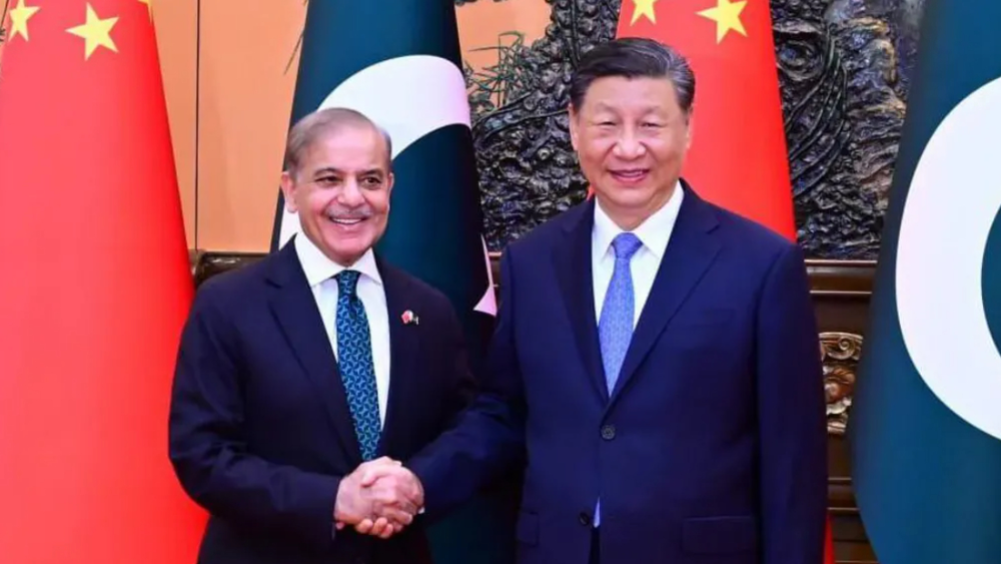
Pakistan is a strategic and economic partner for China. China is developing infrastructure under the 'China-Pakistan Economic Corridor' by investing more than 50 billion dollars in Pakistan. Pakistani analyst Imtiaz Gul said, "This time China has played a decisive role". India did not even imagine the level of military coordination between Pakistan and China.'
Western countries are also watching the performance of the J-10 aircraft with interest as it can affect the global arms trade . Previously, Chinese weapons were accused of technical deficiencies and poor quality. Myanmar grounded the JF-17 aircraft while the Nigerian Army also reported a problem with the Chinese F-7 aircraft.
India also lost a MiG-21 in an aerial encounter with Pakistan in 2019, the pilot of which was captured by Pakistan. India claimed that the pilot shot down the Pakistani F-16 aircraft.
Professor Ladwig says that even though India has attacked various military targets of Pakistan this time, there is little discussion about it in the international media. "This time, it seems that India first targeted Pakistan's air defense system and then hit the ground target," he said.
India launched missile attacks on 11 Pakistani airbases, including the strategic Noor Khan airbase near Islamabad. One of the most distant targets was Bholari, 140 kilometers from the southern city of Karachi.
Ladwig says that this time the Indian Air Force is attacking the Pakistani air defense and radar systems and focusing on ground targets. The Indian Air Force has claimed that despite the Chinese 'H-Q' air defense system, it hit the target accurately.
'It appears that the attacks were relatively precise and targeted . The craters were in the middle of the runway . "I cannot say how long it would have taken the Pakistan Air Force to operate these facilities again if it had been a protracted conflict," Ladwig pointed out . But he says that India has lost "control of the details" of the war by not making its mission statement public.
Pakistan has also claimed to have attacked India's frontline airbase, but India has claimed that it did not cause any damage. After the interest of the US and Western countries, both sides have agreed to a ceasefire. But for India, experts say that this incident shows the need to speed up domestic production and international procurement in the defense sector.
China has given early models of the J-10 to Pakistan, but China itself is using the more advanced J-20 stealth fighter jet, which can evade radar . The longstanding border dispute between India and China has not yet been resolved. India was defeated in the 1962 war. In 2020, there was a clash between the soldiers of both countries in Ladakh. But after the latest confrontation, the brilliance of China's defense industry seems to have increased.