We use Google Cloud Translation Services. Google requires we provide the following disclaimer relating to use of this service:
This service may contain translations powered by Google. Google disclaims all warranties related to the translations, expressed or implied, including any warranties of accuracy, reliability, and any implied warranties of merchantability, fitness for a particular purpose, and noninfringement.
Israel's blockade of the Gaza Strip has resulted in food shortages. Photos of Palestinians struggling for food at the distribution center in Beit Lahiya, north of the Gaza Strip, have been released.
The BBC reported that 10 different aid agencies said the humanitarian situation in the Gaza Strip was deteriorating. Israel's withholding of aid to Gaza has become one of the most contentious issues of the war.
Israel blocked all food and humanitarian aid distribution routes on March 2 in order to pressure Hamas to release the remaining hostages. Hamas has been accusing Israel of stealing aid and claiming that it imposed a blockade to pressure it.
Israel and the US have argued that a new aid delivery system is needed . But the UN and its humanitarian partners rejected their proposal as an attempt to weaponize aid. They maintain strict surveillance on the entry and distribution of supplies during the war. 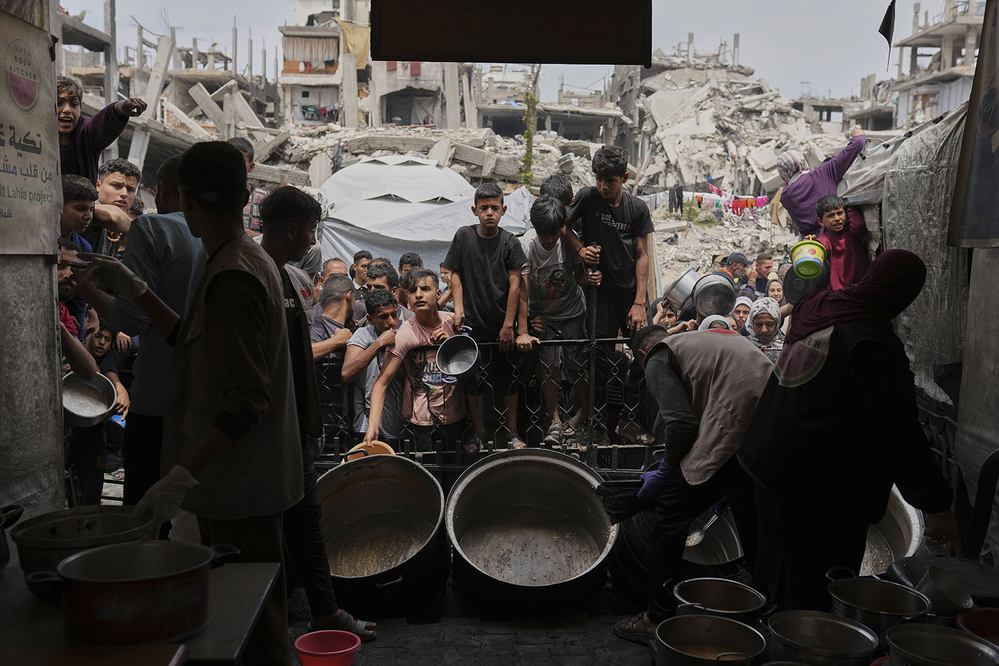
Earlier this week, a report by the global food monitor, the Integrated Food Security Phase Classification, indicated that at least five million people in Gaza are facing starvation and the entire population of 2.1 million is experiencing acute food insecurity . The report states that the Gaza Strip is at risk of famine due to the planned expansion of Israel's military offensive, the disruption of aid supplies and the displacement of large numbers of locals.
But Israeli government spokesman David Menser has claimed that there is no shortage of food in Gaza. "There is food in Gaza, that is our information," he said, "more than 25,000 aid trucks entered during the last hostage release." Markets are still open in Gaza today, so there is food, no famine.' 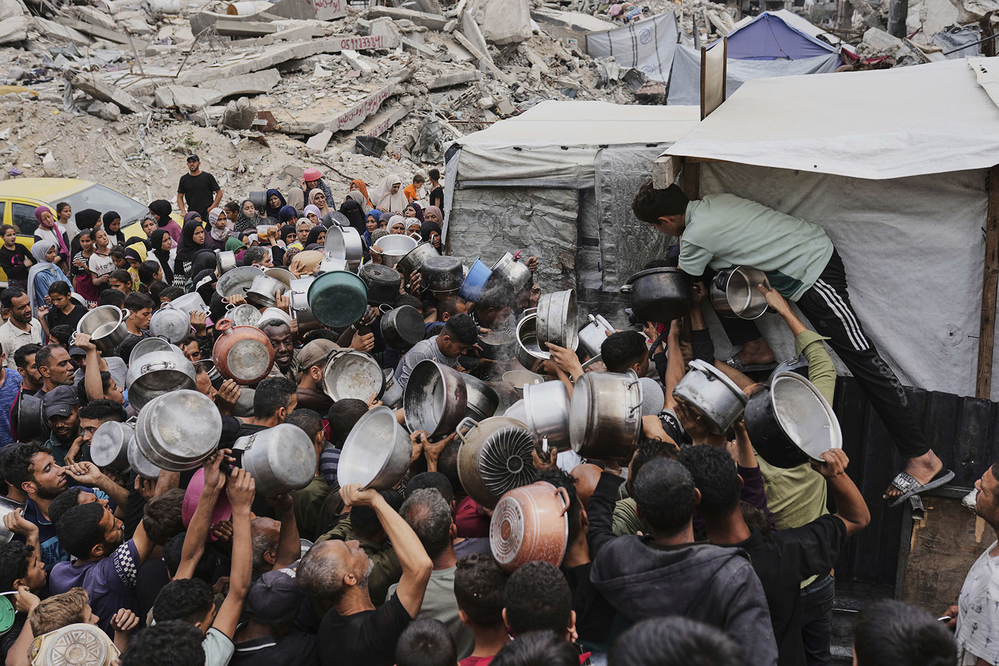
Earlier, hundreds of aid trucks entered Gaza every day during the two-month ceasefire. However, with most of Gaza's population now dependent on aid agencies, food stocks dwindled rapidly .
According to the United Nations Humanitarian Office, OCHA, on Wednesday about 65 community kitchens were in operation . The BBC mentioned that the three prepared food for about 249 people.
There is still some fresh food available in Gaza. But because of its high price, many people cannot buy it. Most of the arable land is in areas occupied by the Israeli army . Fishermen sell seafood. 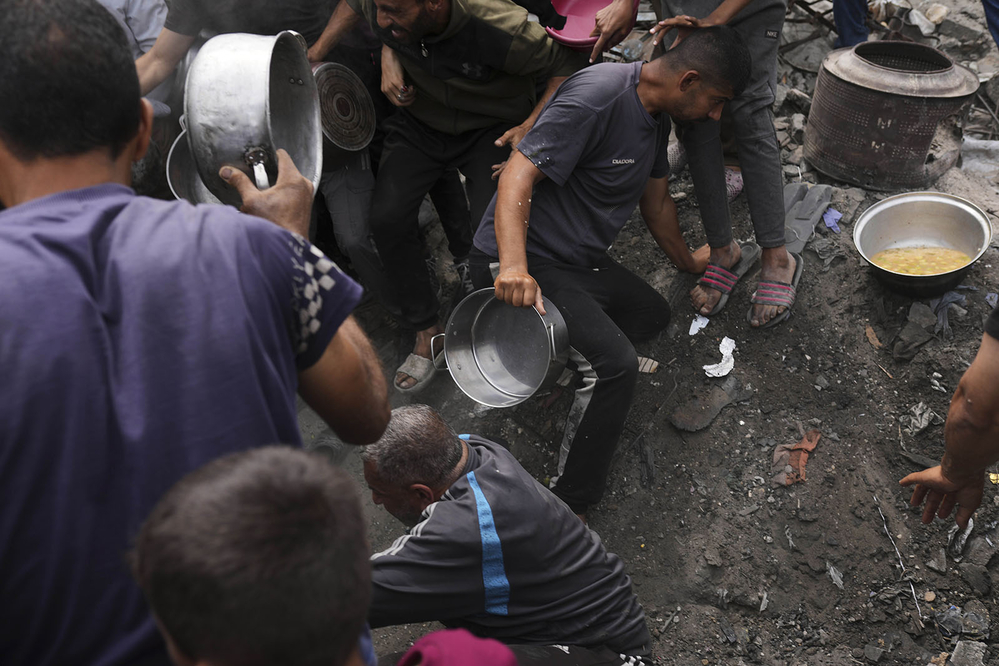
Shops and markets are selling a limited number of dried and canned foods. Expired items are also on sale . Locals in Gaza said that the price of flour is 50 times higher than during the ceasefire, the BBC mentioned.
'Lucky to get one meal a day'
Salma Altavel, support manager for the Norwegian Refugee Council charity, spoke to the BBC about the latest situation in Gaza City. "I feel so weak from hunger that I can hardly lift my head," she said in a voice note from Gaza.
He says that even if someone gets to eat once a day, he should be considered lucky. It's not just happening to some people, it's happening to everyone in Gaza,' she says, 'most families no longer have food at home and many don't even have money to buy very expensive food.'
According to him, on Thursday, the price of a kilo of flour (most of which contains worms) was US$12, a kilo of rice was US$20 and a liter of cooking oil was US$30 . He says there is no cooking gas and families are burning furniture and clothes to cook a meager amount of food. "Children cry because they are hungry and their mothers also cry because they have nothing to feed their children."

