We use Google Cloud Translation Services. Google requires we provide the following disclaimer relating to use of this service:
This service may contain translations powered by Google. Google disclaims all warranties related to the translations, expressed or implied, including any warranties of accuracy, reliability, and any implied warranties of merchantability, fitness for a particular purpose, and noninfringement.
Nepal has drawn attention to the effects of global climate change and protection of the Himalayan region among the representatives of various countries in Beijing.
The Nepali Embassy in Beijing organized a comprehensive seminar on Tuesday with the support of Silk Road Cities Alliance and the participation of Chongqing Agricultural Group, Wan Cheng Wu Chye International Cultural Exchange and other organizations to draw attention to the effects of climate change. In the
program, social representative for China Liu Chunmin, German Ambassador to China Patricia Hildegard Floor, United Nations Resident Representative in China Siddharth Chatterjee, representatives from various countries and regions, as well as Nepali and foreign scientists and experts working in China and Nepal participated. In the
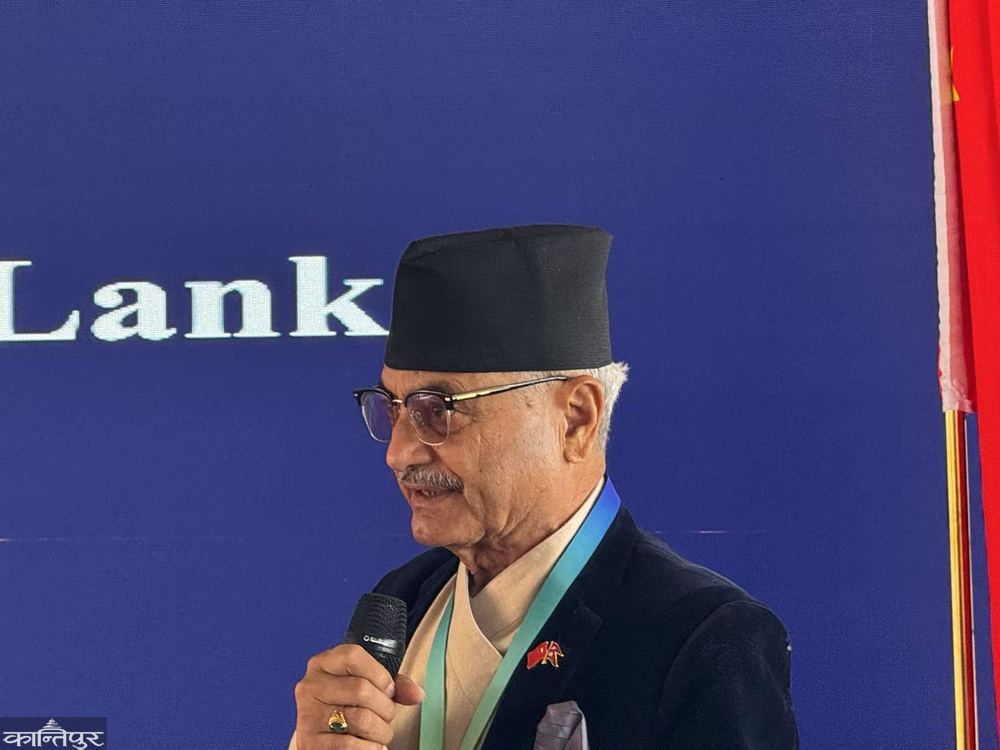
seminar, through the video message of Prime Minister KP Sharma Oli, it was informed that Nepal is going to draw the world's attention to the effects of climate change by organizing the Everest Dialogue. He pointed out the efforts of Nepal and the need for cooperation of all countries in protecting the Himalayan region and the Tibetan region as the world's water resources and environment. He said, 'The mountains are not only Nepal's, but the world's heritage.'
Nepal, China, Bhutan, India and other nations are interconnected through the Hindu Kush Himalayan region and are interconnected with the ecological civilization.
Nepalese Ambassador to China Krishna Prasad Oli said that Nepal is concerned to draw attention to the situation of the Himalayan region due to environmental impact. Manish Pandey, an expert from the Nature Conservation Fund of Nepal, presented a working paper on climate crisis response policy and Everest dialogue.
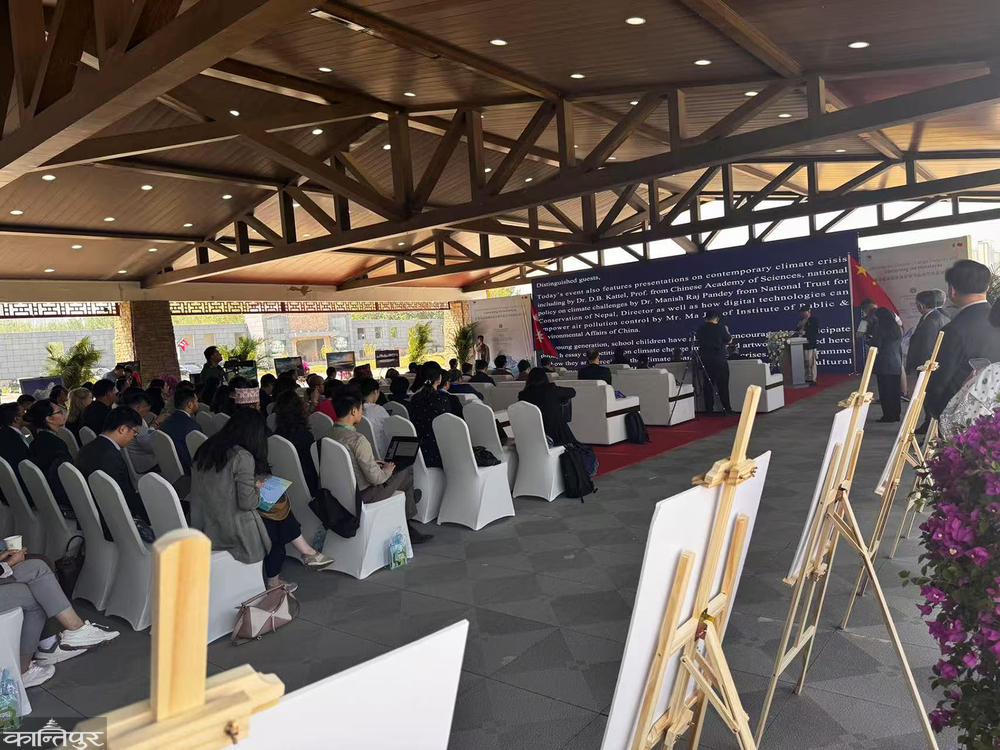
DB Kattel, Associate Professor of the Institute of Tibetan Plateau Research, Chinese Academy of Sciences, presented a preliminary exploration of the recent diversity of climate and snow-covered regions at the Third Pole. According to his paper, there is a high difference in snow cover trends and erosion rates are high between the northern and southern slopes of the Eastern Himalayas .
Saying that the global temperature is increasing, he discussed that rainfall is increasing around the Karakoram but decreasing around the Brahmaputra basin on both sides of the eastern Himalayas. In the
program, professors, scientists and experts working in the field of climate and environment gave a presentation on climate change, environmental impact and its impact.
In the program with the participation of experts from different countries, it was emphasized on the need for coordinated and enhanced utilization of common natural resources through dialogue and cooperation between different countries on issues such as local and traditional understanding, scientific studies and research and the need for effective policies in the field of climate change. The second session of the
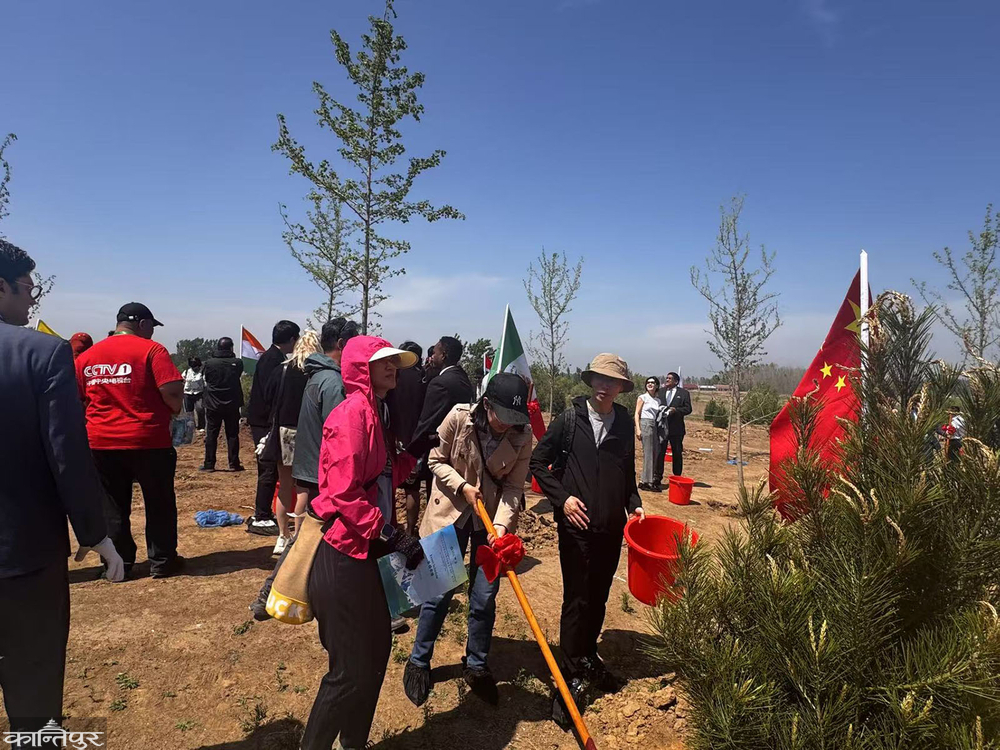
seminar included a presentation on investment in Nepal's climate sector. Nepali Consul General for Lhasa Lakshmi Niraula, Nepali Consul General for Kwangchau Bharat Khanal and others discussed various aspects of climate investment . At the
event, a message was given about the role of trees for environmental protection by planting trees, while the winners of the painting and essay writing competitions were awarded. In addition, a documentary prepared by China Media Group on climate was also presented, said Liu Wan Sumegha, head of CMG Nepali Service.

