Last year, the people of America, India, Russia, Sri Lanka as well as European countries elected new leaders. The exit of Sheikh Hasina in Bangladesh, the fall of Bashar al-Assad in Syria, the political developments in South Korea and the impeachment of the president, the election of a new prime minister in Canada were discussed throughout the year.
We use Google Cloud Translation Services. Google requires we provide the following disclaimer relating to use of this service:
This service may contain translations powered by Google. Google disclaims all warranties related to the translations, expressed or implied, including any warranties of accuracy, reliability, and any implied warranties of merchantability, fitness for a particular purpose, and noninfringement.
Amid various ups and downs, the year 2081 took a beating. This year, along with the geopolitical conflict, the global economy, natural disasters, and political events focused the attention of the world community. This year, elections were held in five dozen countries around the world to elect new leaders. The results of some of these countries were unexpected. The people of America, India, Russia, Sri Lanka as well as European countries elected new leaders.
Similarly, the international community's interest in the departure of Sheikh Hasina in Bangladesh, the fall of Bashar al-Assad in Syria, the political developments in South Korea and the impeachment of the president, and the election of a new prime minister in Canada.
At the end of the year, with US President Donald Trump assuming his second term, there were some initiatives for the ongoing war in Russia-Ukraine and West Asia and its solution. But they have not reached the end. Similarly, Trump's tax and immigration policies, the deteriorating relations with neighboring countries Canada and Mexico as well as China and European countries have also increased the interest of the world community.
With the return of Trump, turmoil around the world
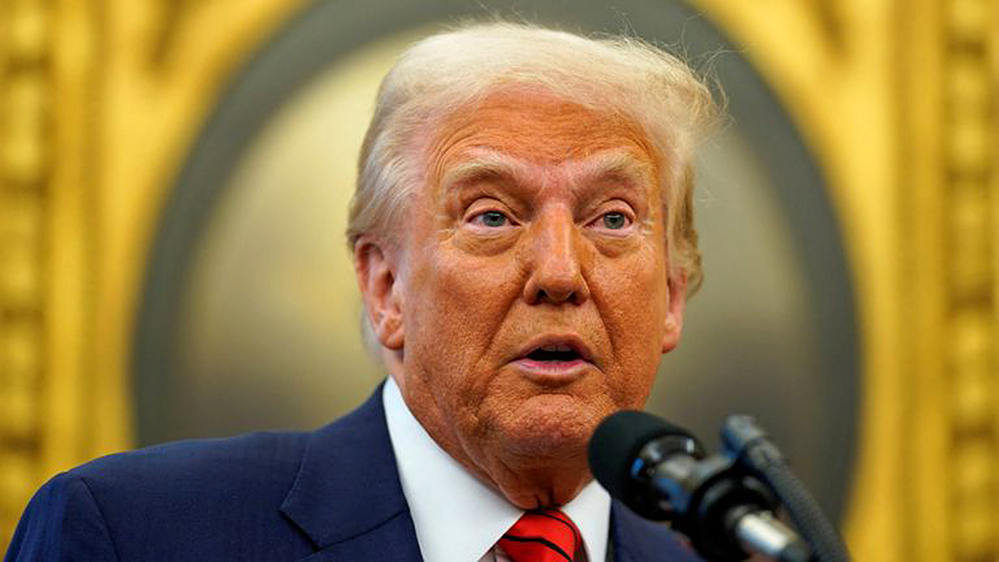
About three months ago in the United States, Donald Trump brought a kind of upheaval around the world when he assumed the office of president. Most of the world's countries have been affected by his strict immigration and economic policies. With Trump's return, the process of arresting illegal immigrants in the United States was accelerated, and those who were arrested began to be returned to their countries.
Since Trump took office, thousands of immigrants have been arrested in America. Most of them have been sent back to their countries by the US. Since Trump's second term, 63 Nepalis have been deported from America. They have been returned in stages and have been handed over to the Immigration Office at Tribhuvan International Airport.
Trump's policies on the economy have also created a global stir. As he announced high tariffs on all foreign goods entering the US, it affected the world economy. It is seen that the trade of 185 countries including Nepal will be affected by Trump's new announcement. President Trump announced US retaliatory tariffs on imports from nearly 90 countries and a 10 percent tax on all imports from other countries. Trump's announcement stated that the 10 percent tariff will be implemented from April 5 and other tariffs from April 9. But the announcement has been postponed for 90 days. The Trump administration has also decided to close the United States Agency for International Development (USAID) and stop foreign aid. Because of this, developing countries including Nepal have been affected.
America failed to stop the Ukraine war
Russia and Ukraine, which have been at war for more than three years, took various initiatives to end the war this year. Especially with the return of Trump, there have been talks between the representatives of the two countries at various stages. Since becoming president, Trump has had two telephone conversations with Putin to discuss the Ukraine war. Likewise, the delegation led by the US Secretary of State has held separate talks between the teams of both Russia and Ukraine. Ukraine has already agreed to a one-month ceasefire, according to the US proposal. But Russia has rejected saying that the temporary ceasefire will give Ukraine a chance to be more organized.
After that, in a telephone conversation between Trump and Putin, it was said that an agreement was reached for a ceasefire in the Black Sea. But for that, Russia has put forward a demand to remove some of the economic sanctions imposed by Western countries. Lately, Trump has sent special envoy Steve Wittkoff to Russia twice. He also had an hour-long conversation with Putin. Russian President's Office and Putin's Special Envoy Kirill Dmitriev stated that the talks were very fruitful. President Trump has previously claimed to end the Russia-Ukraine war within 24 hours of taking office. But even after 100 days, no concrete progress has been seen.
Trump-Zelensky tussle in the White House
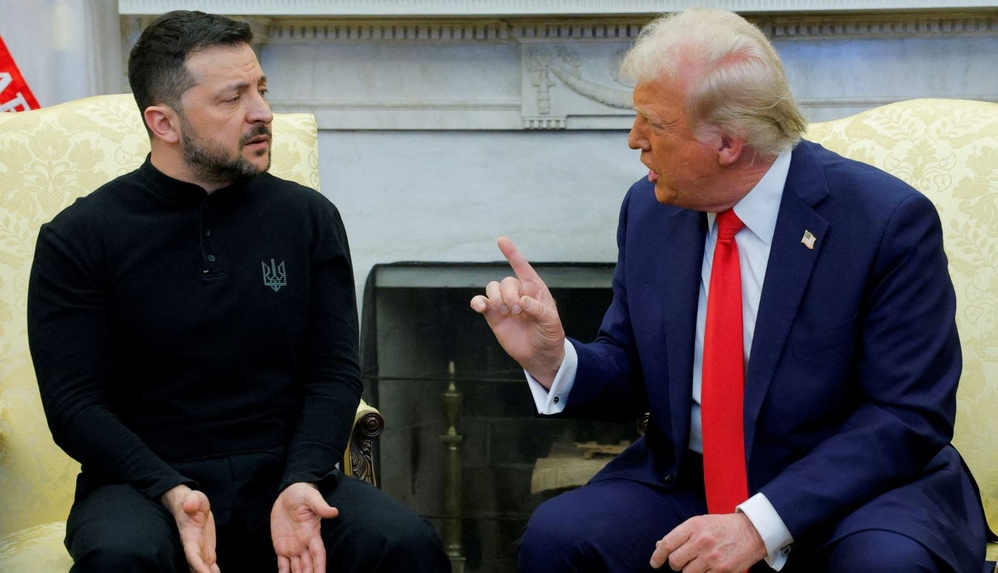
Ukrainian President Volodymyr Zelensky, who reached the White House to reach a mineral agreement with the US to end the war with Russia, had a heated argument with the US President and Vice President this year. After a heated exchange with President Trump and Vice President J.D. Vance in the Oval Office of the White House, Zelensky was forced to retreat in frustration. Zelensky, who reached the Oval House on February 28, initially had a cordial conversation with the American side.
Tensions flared when Vice President Vance said peace was possible through diplomatic means, and Trump was doing just that. Disagreeing with Vance's statement, Zelensky noted that Russia had been under attack for nearly a decade and referred to the failed ceasefire in 2019. Saying that no one has stopped Russian President Vladimir Putin, Zelensky asked Vance, "What kind of diplomacy are you talking about?" During that time, Vance said it was insulting for Zelensky to come to the Oval Office and make accusations in front of the American media. During the conversation, President Trump became angry when he said that America is not at war and will know the pain of war in the future. Zelensky was then asked to leave the US presidency. But by inviting the president of a warring sovereign country to his country, the Trump administration insulted him.
The tension in West Asia is the same
The war between the Palestinian rebel group Hamas and Israel, which started a year and a half ago, continued this year. The war between the two sides began when Hamas attacked southern Israel on October 7, 2023. 1200 people were killed in the attack and 251 people were taken hostage.
After nearly 16 months of war, Hamas and Israel reached a cease-fire agreement. Hamas has released 33 Israeli and 5 Thai hostages during the first phase of the ceasefire. In exchange, about 1900 Palestinians in Israeli prisons have also been released. Iran-backed group Hamas still holds 59 hostages. But only 24 of them are alive, according to the Israeli Prime Minister's Office.
According to the Ministry of Health in Gaza, 50,423 Palestinians have lost their lives in the war since October 7. More than half of them are women and children. At least 114,638 were injured in the Israeli attack. The war displaced 94 percent of Gaza's 2.3 million people. More than 60 percent of the structures were destroyed.
The exit of Hasina and Assad
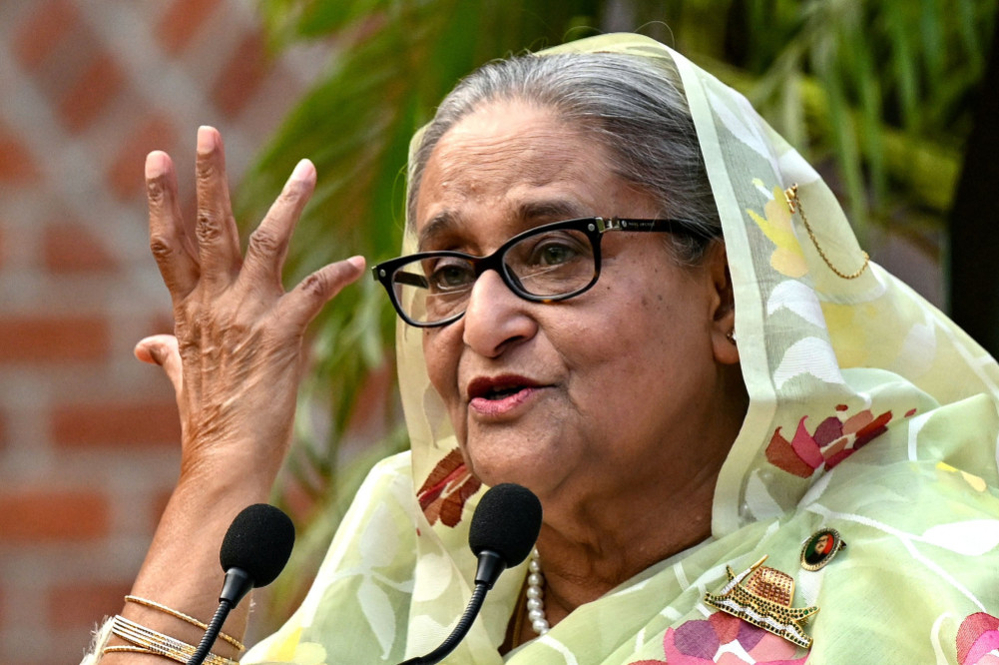
This year, Bangladesh and Syria experienced great upheaval in world politics. Bangladesh Prime Minister Sheikh Hasina was forced to leave the country after nationwide student-led protests erupted. With the end of her 16-year rule, 77-year-old Hasina is living in exile in India. With his exit, an interim government led by Nobel laureate Muhammad Yunus is ruling Bangladesh. According to the interim government of Bangladesh, about 1,500 people including students and workers were killed and 19,931 people were injured in the protest against the Hasina government.
The government of Bangladesh, which has filed various cases against Hasina, has recently been taking initiatives to bring Hasina back home. The Dhaka-based International Criminal Tribunal (ICT) has also issued arrest warrants for Hasina and various ministers, advisers, and military officers of her tenure in the case of "crimes against humanity and genocide". Hasina has been accusing the Yunus-led interim government of committing "genocide" in Bangladesh and failing to protect minorities including Hindus.
Similarly, the regime of President Bashar al-Assad, who has ruled Syria for 24 years, has also fallen this year. As the rebels took control of the capital Damascus, Assad is taking refuge in Russia. Since suppressing the 2011 uprising, Assad has faced challenges from the rebels. Russia and Iran were in favor of him while America was against. Both sides have been bombing Syrian settlements under the pretext of defeating each other. But recently, Assad was forced to flee after the rise of the Islamist rebel Hayat Tahrir al-Sam (HTS).
Assad became the head of state of Syria on July 17, 2000. On June 10, 2000, on the same day that his father, Hafiz al-Assad died, the constitution was amended and the minimum age to become president was changed from 40 years to 34 years, opening the way for Assad to become president. Assad, known as a reformist leader, later became a dictator under the pretext of suppressing the opposition.
Canada in Carney
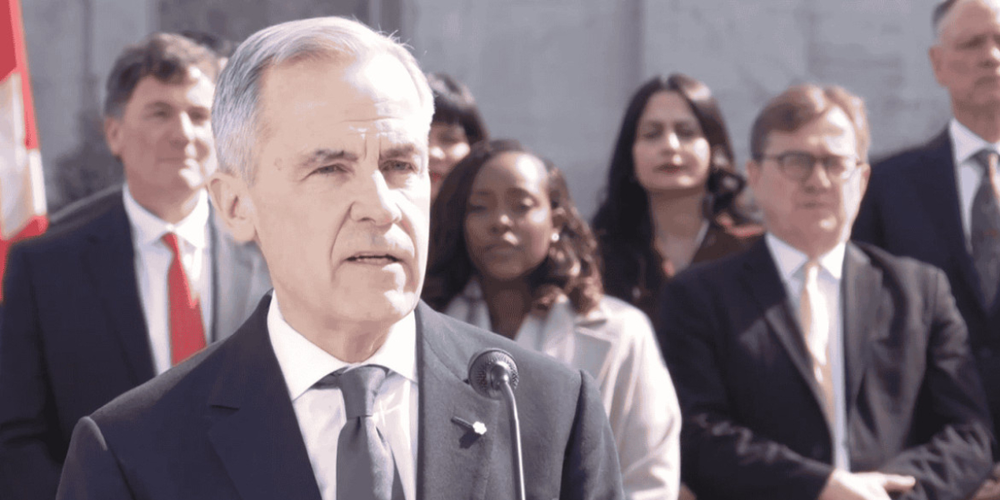
In Canada, 60-year-old Carney has become Prime Minister with the departure of Justin Trudeau. He took over as Prime Minister only a month ago. Carney was chosen by the Liberal Party to succeed Trudeau in the March election with more than 85 percent of the vote.
Born in Fort Smith, Northwest Territories, Carney grew up in Edmonton, Alberta. He studied economics at Harvard and Oxford universities. Carney is making the most of his short tenure and has already met with British Prime Minister Keir Starmer and French President Emmanuel Macron.
Carney is a familiar figure to many in Canada and the UK. Financial expert Carney took a strong stance against US President Trump. The elections to be held on 28 April will determine his political future. If his Liberal Party loses the election, Carney will have to step down as the shortest-serving prime minister in Canadian history.
With the impeachment of the Korean president
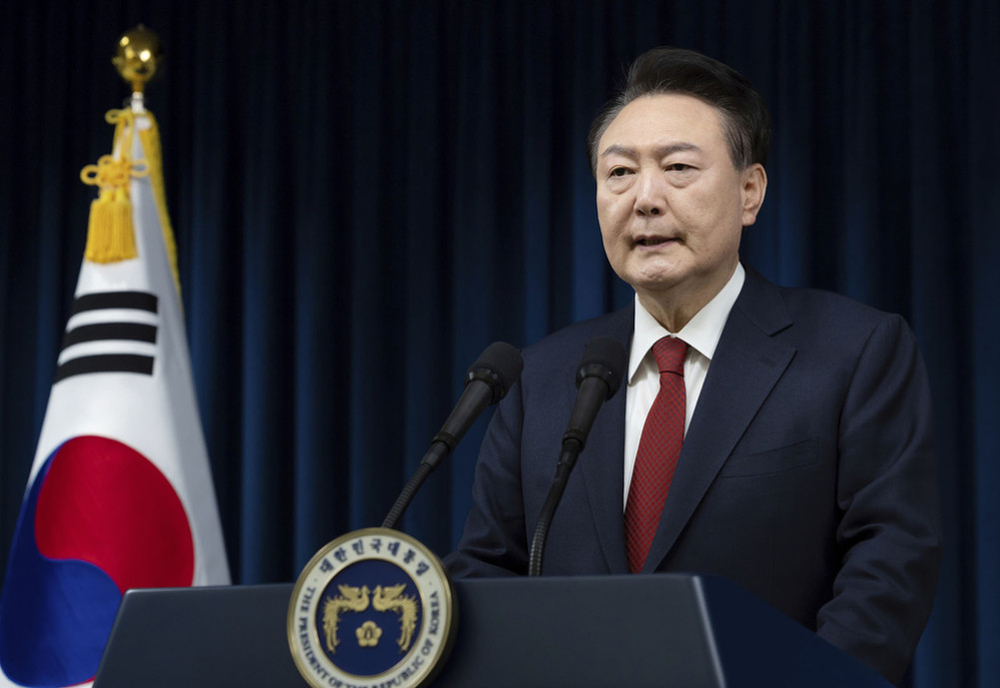
The political developments in South Korea also caught the attention of the world community this year. South Korea's Constitutional Court has removed President Yoon Suk-yeol from office after unexpectedly declaring martial law. After the declaration of military rule, the parliament passed the impeachment motion against Yun. With that he was suspended. The impeachment motion passed by the Parliament was recently approved unanimously by the Constitutional Court.
The acting chief judge of the court, Moon Hyung-bae, said that the impeachment was dismissed because President Yun had defied constitutional institutions and violated people's fundamental rights. Yun unexpectedly declared military rule on 3 December. He claimed that military rule had to be declared to save the country from anti-state and North Korean forces. But soon after the parliament passed the impeachment motion, he failed. With the decision of the Constitutional Court, South Korea is voting to elect a new president on June 3.
Powerful earthquake in Myanmar
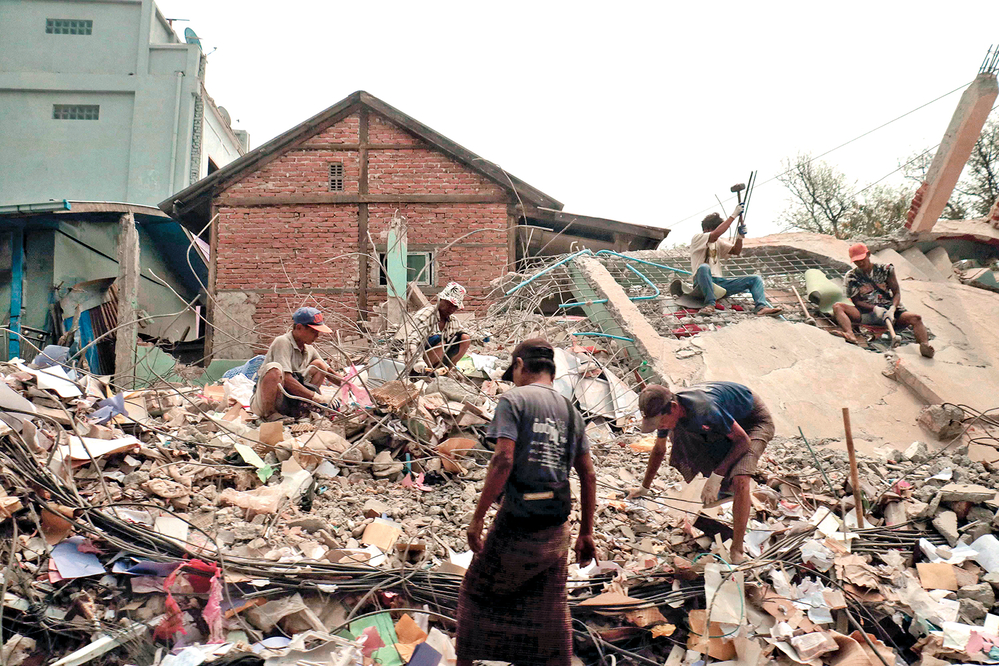
At least 3,689 people lost their lives in the powerful earthquake that occurred in Myanmar two weeks ago. According to Myanmar's military junta, 5,020 people have been injured and 139 people are still missing. Due to the earthquake, at least 18 people lost their lives in Bangkok, the capital of Thailand. 1,591 houses were damaged in Mandalay, the epicenter of the earthquake. An earthquake of 7.7 magnitude occurred two weeks ago in the north-west of Sagaing city in Myanmar.
Indian Prime Minister for the third time Modi
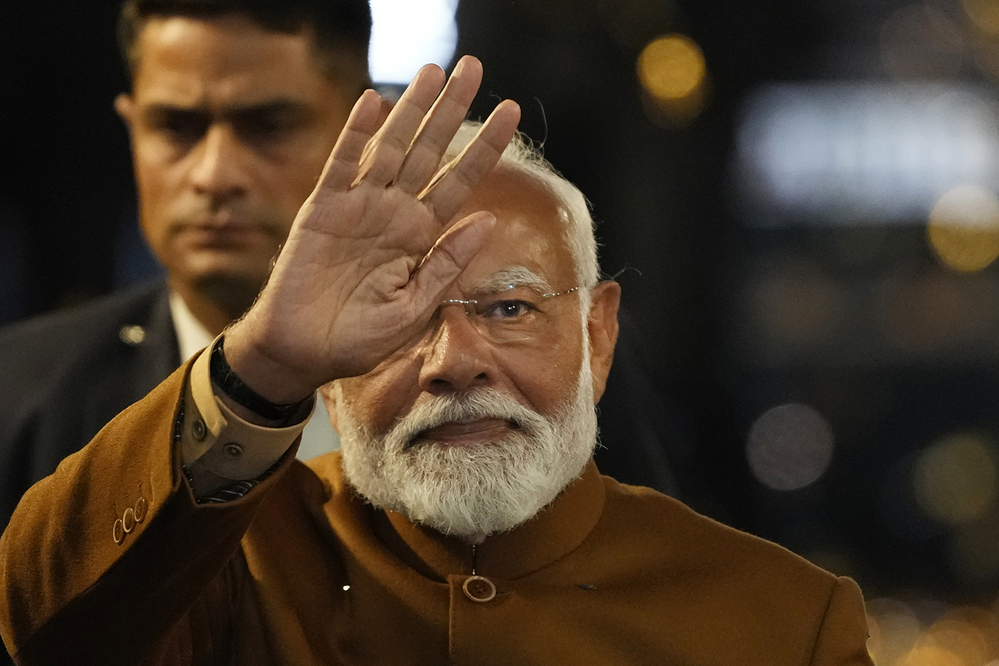
In the year 2081, Narendra Modi was elected as the Prime Minister of India for the third term. However, in the last election, his party failed to get a majority to form the government. This means that Modi will not be able to use the third term as he wants. Modi's party, BJP, was reduced to 240 seats in India's seven-phase elections from April 19 to June 1. Before that, in the elections held in 2014 and 2019, the BJP won the 272 seats needed to form the government.
South Asian countries Pakistan and Bangladesh also held elections this year. Political tensions increased with disputed elections in Pakistan and Bangladesh. Because of this, Bangladesh Prime Minister Sheikh Hasina was forced to flee the country. The BJP has returned to power after 27 years through the elections held this year in the Indian capital, Delhi. He won two-thirds of the seats in the Delhi assembly elections. The BJP formed the government in Delhi after 27 years by winning 48 seats in the 70-member assembly. Delhi's ruling Aam Aadmi (AAP) shrunk to 22 seats, while the Congress could not win any seats.
Rise of Dissanayake in Sri Lanka
Left-wing leader Anura Kumara Dissanayake became president in Sri Lanka, which is struggling to recover from economic crisis. For the first time, he defeated Sajith Premadasa in the second round of the election. With this, the reign of the Rajapaksa family in Sri Lankan politics is over. Earlier, Dissanayake was defeated in the 1999 and 2005 presidential elections. Dissanayake unexpectedly won the victory, saying that he would stop the rampant corruption in the country and establish good governance. His party Janatha Bhimukti Peramuna (JVP) won the election. JVP has won 159 seats in the 225 member parliament. Dissanayake's party JVP is considered close to China.
(with agency help)

