We use Google Cloud Translation Services. Google requires we provide the following disclaimer relating to use of this service:
This service may contain translations powered by Google. Google disclaims all warranties related to the translations, expressed or implied, including any warranties of accuracy, reliability, and any implied warranties of merchantability, fitness for a particular purpose, and noninfringement.
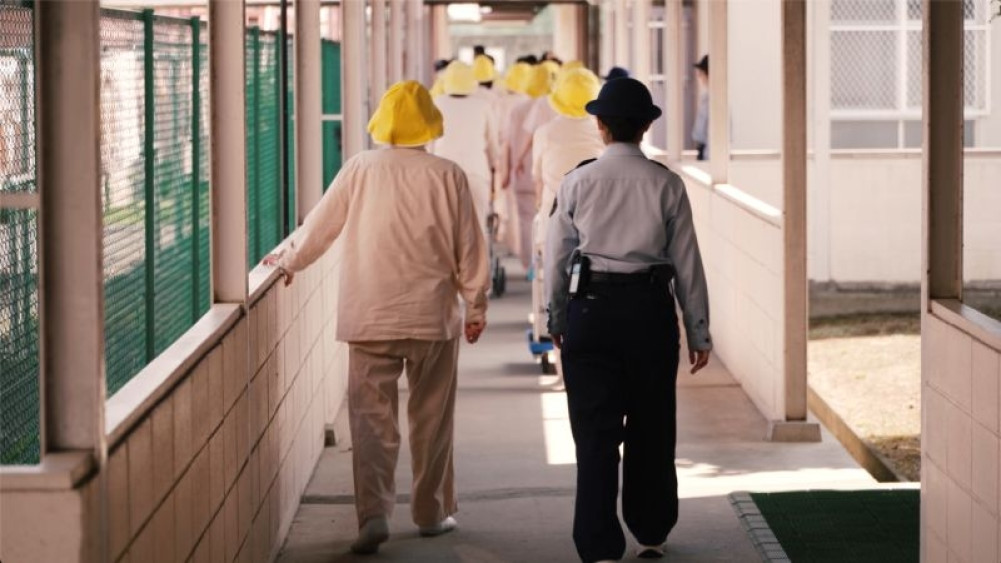
Recently, Japan's largest women's prison has started to look more like a 'nursing home' than Tochigi Prison. The reason for this is that the prison cells are full of old women.
Some are seen walking slowly leaning on the walls of the prison's corridors, while others are seen walking with helpers . Prison workers help them bathe, eat, walk, take medicine .
Some women always want to stay in prison . They are also ready to pay 20,000 to 30,000 Japanese yen per month. But they don't want to be released from prison. Many women who suffer from loneliness outside of prison find life in prison easier than outside life. According to the police, the main problem of elderly prisoners is loneliness.
Tochigi Women's Prison officer Takayoshi Shiranaga told CNN, "Some of the inmates here want to stay in this prison forever." Those who can live by paying money are ready to live by paying.' However, according to CNN, there is a surprising peace in the prison.
81-year-old Akio, who is serving a prison sentence for stealing food, told CNN that prison life would be easier for her. She says, 'Prison life is the most stable for me.' She says there are good people in Tochigi.
The women in Tochigi also have to work in the prison factory. Which is also good for those who live alone outside the prison . They also get regular meals, free health care and good care for the elderly in prisons . In this way, the old women are getting inside without getting out of the prison.
Similarly, 51-year-old Yoko went to jail five times in 25 years. She went to jail several times in the case of drunkenness. "Every time I return to prison, I have seen the population of elderly people increase," Yoko says.
Prisoner Akio was also living a lonely life. She was also bound by poverty. So Akio dared to steal food from a store at the age of 60. "Even if I was financially capable and living a comfortable life, I definitely would not have done such a thing," she said.
Interestingly, after being released from prison, she stole again and went to prison. This is his second prison stay . Pension alone was not enough for Akio who was living on her 'pension'. She says, "Pension was two weeks away." There were only 440 vehicles left. So I stole it knowing it was wrong.'
Akio lived with her 43-year-old son . But his son was not helping him . As a result, Akio had no hope for the future. I wanted to die. My life had no meaning", she said. However, Akio said that her son kept telling her to leave the house.
According to Japanese government statistics, most prisoners have stolen. Especially women steal. In 2022, more than 80 percent of elderly female prisoners in Japan were serving life in prison for theft.
Similarly, according to the OECD, 20 percent of people over 65 years of age in Japan are living in poverty. An average of 14.2 percent of people in OECD member countries live in poverty.
Therefore, according to prison guard Shiranaga, many inmates come to prison to survive. Even in the hope of getting free treatment, some people want to stay in jail. At Tochigi Women's Prison, one out of every five inmates is elderly . From 2003 to 2022, the number of prisoners aged 65 and over in Japan has quadrupled.
Security guard Shiranagaka says, "Now we have to help change the prisoners' diapers, bathe them, and feed them". It now looks more like a nursing home than a prison full of criminals.' However, he argues that the same problem will repeat itself after they are released and return to normal life. He said, "Some people have been abandoned by their families and they commit crimes again."
Japan's Ministry of Welfare admitted in 2021 that elderly inmates receiving post-prison support could reduce their chances of reoffending . After that, the ministry has promoted community support centers to help the vulnerable elderly.
The Japanese government is considering proposals to make housing benefits for the elderly available to more citizens. Municipalities are taking initiatives to support the elderly across Japan. Due to the rapid growth of the elderly population, Japan may need 2.72 million workers to care for the elderly by 2040.