We use Google Cloud Translation Services. Google requires we provide the following disclaimer relating to use of this service:
This service may contain translations powered by Google. Google disclaims all warranties related to the translations, expressed or implied, including any warranties of accuracy, reliability, and any implied warranties of merchantability, fitness for a particular purpose, and noninfringement.
About 15 months ago, when the Palestinian group Hamas attacked Israel, the war between the two sides started. On October 7, 2023, Hamas attacked northern Israel and killed at least 1,200 people. In addition, Hamas took about 250 hostages. 96 of them are still under the control of Hamas.
Due to the war, more than 45 thousand Palestinians have died. More than a third of those killed are children. According to Palestinian officials, the number of children killed since October 7 is 18,000. This means that one child dies every 30 minutes.
Most of those killed are in the age group of 6 to 12 years. 700 under one year, More than 1,800 children aged one to three years, 1,200 aged four to five, 4,200 aged 6 to 12 and 3,400 aged 13 to 17 have died.
According to United Nations data, 14,500 children have died in a period of 15 months. According to the United Nations, the Gaza Strip has become a graveyard for thousands of children. According to the United Nations, when children are rescued from the ruins of war-torn areas, they are often found injured and alone.
An estimated 17,000 children are missing or separated from family members who care for them. Some young children don't even know their names. Because of this, they have not been identified. The United Nations agency UNICEF said that it has succeeded in reuniting a total of 63 children with their parents or guardians.
After the Hamas attack on October 7, the Israeli army (IDF) ordered 1.1 million people to move south, signaling an attack on northern Gaza. Millions were displaced in the attacks that followed. Thousands were killed and disappeared who were unable to leave their homes.
Many people have appealed to the International Committee of the Red Cross (ICRC) to search for the missing. Along with the detailed description of the missing persons, the committee contacts the sources within its reach, including the list of hospitals and the names of returned prisoners. But only about 2100 of them have been closed. According to the ICRC, family reunification is possible for very few people out of 2100. Those who make
applications don't know if their family members are alive or not,' says ICRC's Sara Davies. In some cases, the doctors and staff of the hospital have also contacted the patients with their loved ones.
About a year ago, the BBC publicized the news about a newborn baby who was taken out of the womb of a mother who died in an Israeli airstrike. After the operation, the doctors called the girl 'Hannah Abu Amsha's daughter' and released information about her in the hope that her relatives would be able to find her. The BBC reported that 'Hannah Abu Amsha's daughter', who was in the nursery of Al-Aqsa Martyrs Hospital in Deir Al-Balah, was handed over to her father.
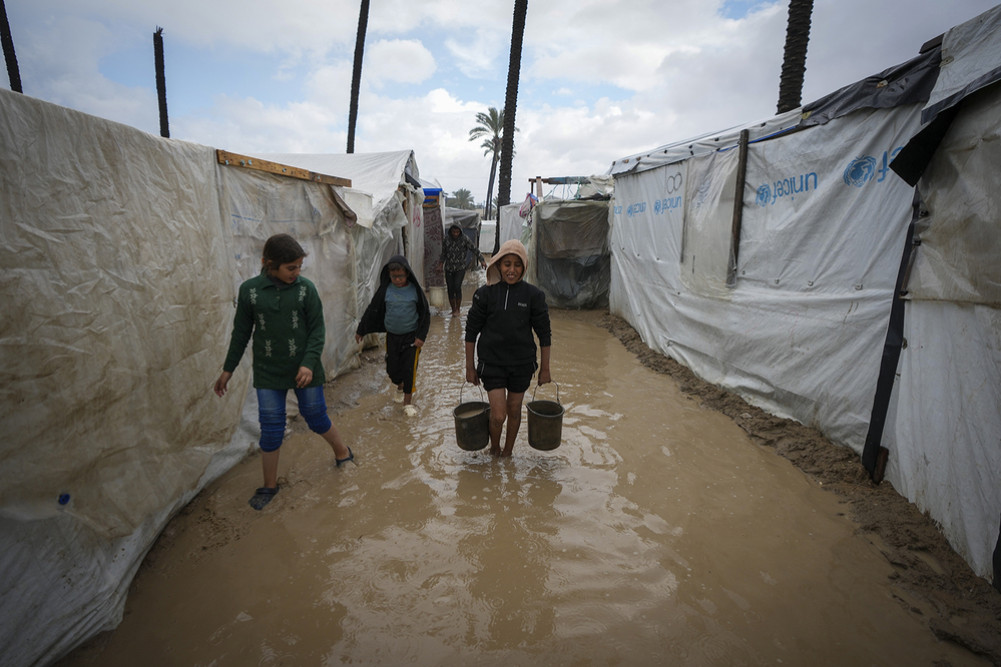
With the increase in cold, children have been facing more problems lately. The head of the United Nations agency for Palestinian refugees has warned that children are dying of cold in Gaza due to cold weather and a lack of shelter. "The children of Gaza are dying of cold due to cold weather and lack of shelter," Philip Lazzarini wrote on the social network X on Friday. 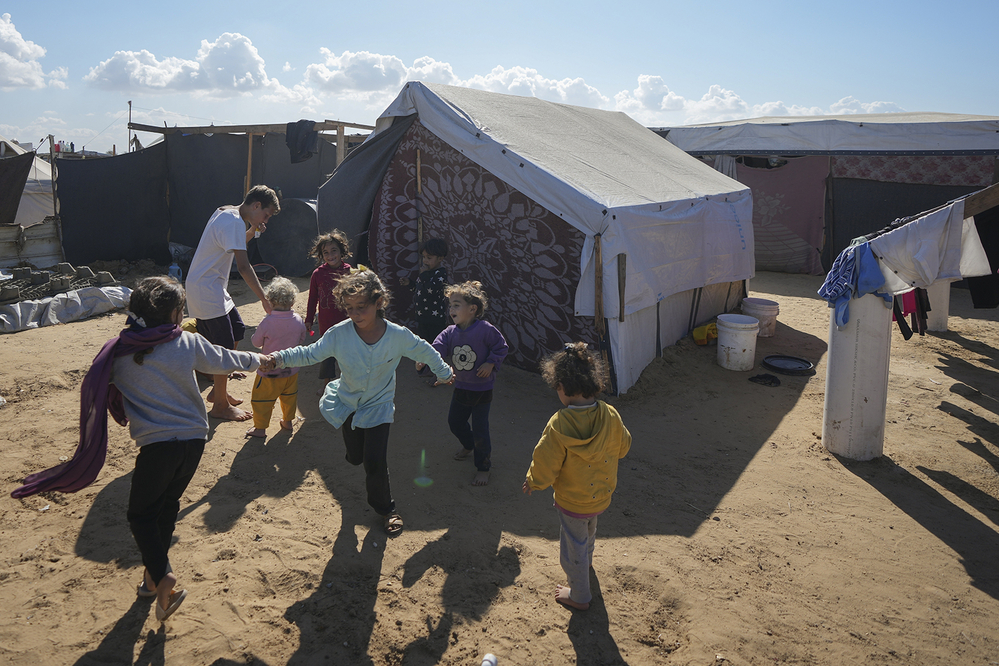
On Thursday, Munir al-Barsh, director general of Gaza's health ministry, told Anadolu that three Palestinian children died in a temporary displacement camp last week due to cold temperatures.
Two-week-old Sila Mahmoud Al-Fasih died of cold in the displaced camp in Al-Mawasi, Khan Younis last Wednesday. She was the second child to die in the camp after the death of Aisha Adnan al-Qassas on December 20.
He says that those displaced due to the war have been waiting for approval to return home for months, but Israel has not allowed them to return home. Lazzarini says the Israeli blockade is inhumane. The United Nations has repeatedly called for an immediate ceasefire in Gaza.
Two weeks ago, the ceasefire talks between Israel and Hamas were said to be the closest they have ever been. Hamas and two other Palestinian militant groups said they were 'closer than ever' to a Gaza ceasefire deal with Israel.
Hamas, Palestine Islamic Jihad (PIJ) and the left-wing Popular Front for the Liberation of Palestine (PFLP) issued a joint statement saying that there will be a cease-fire if Israel does not set new conditions. "If the enemy does not impose new conditions, the possibility of concluding a cease-fire and prisoner exchange agreement is closer than ever," the statement said.
A few weeks ago, there was progress in the talks mediated by the US, Qatar and Egypt. It was said that the indirect talks between Israel and Hamas in Doha, Qatar, with the mediation of three countries, are about to reach an agreement.
US Secretary of State Antony Blinken said he was hopeful for a ceasefire agreement. He said that a ceasefire agreement is also necessary for the release of hostages. 'It should be . It also needs to be . We need to get people home,' he said.
In a meeting held in Cairo, Egypt, Hamas stated that 90 percent of the talks on the cease-fire between the two sides and the release of hostages between Israel and Hamas have been completed. According to Hamas, an agreement was yet to be reached on some issues. The situation remains the same and since then no news of further progress has been published.
There is no agreement on the presence of Israeli forces in the Philadelphia Corridor. The Philadelphia Corridor is strategically important land bordering Egypt and southern Gaza. The area is currently under the control of the Israeli army .
Israeli Prime Minister Benjamin Netanyahu has repeatedly stated that he does not want to withdraw Israeli forces from the Philadelphia corridor. Similarly, it is said that the agreement could not be finalized due to the issue of the post-war governance of Gaza. This issue has become very controversial even in the Palestinian leadership. Israeli officials have also said that the military presence in the area will continue .
It is said that the ceasefire agreement will be concluded only after these issues are resolved and will be implemented in three phases. In the first phase, 20 Palestinian prisoners will be exchanged for every female soldier to be released, the civilians of northern Gaza will be returned home under the monitoring system of Egypt and Qatar, and the final phase will end the 14-month-long war and the Gaza region will be inspected by a committee of experts who have no political affiliation before. .