It's been a year and a half since Siddharth and Gabriel started street dancing together. Since then, they have not only transformed from friends to close friends, but have also become teachers to each other.
We use Google Cloud Translation Services. Google requires we provide the following disclaimer relating to use of this service:
This service may contain translations powered by Google. Google disclaims all warranties related to the translations, expressed or implied, including any warranties of accuracy, reliability, and any implied warranties of merchantability, fitness for a particular purpose, and noninfringement.
Ratnapark, a busy place in Kathmandu. Travelers rushing towards their destinations. But amidst this rush, some people stand still on one side of the road. Some take out their mobile phones and start filming the scene, while others stare at the scene. Some reach into their pockets and reach for a hat placed on one side of the road. In an instant, a crowd of people forms.
Taking all this scene as normal, the bodies of two young men start moving to the rhythm of the music. The steps repeat. Their gestures seem to be trying to say something. Like participants in a dance competition, they dance in a 'free-style' manner, as if the leaves are playing in the rhythm of the wind.
Who are the two young men dancing on one side of the road? We followed them to a hotel room in Sundhara. Sitting in this small room, they plan where to go every day, which song to dance to. A small speaker and a big hat and a few clothes and a few desires and dreams. They are Siddharth Chhetri from Gauradaha, Jhapa, and Jibrial Alam from Champasari, Darjeeling.
It has been more than three weeks since they came to Kathmandu and started staying at the hotel. Sometimes they go to Ratna Park or sometimes to the roadside of Sundhara. They choose a wide place. They place a speaker next to it and start dancing according to their own plan. 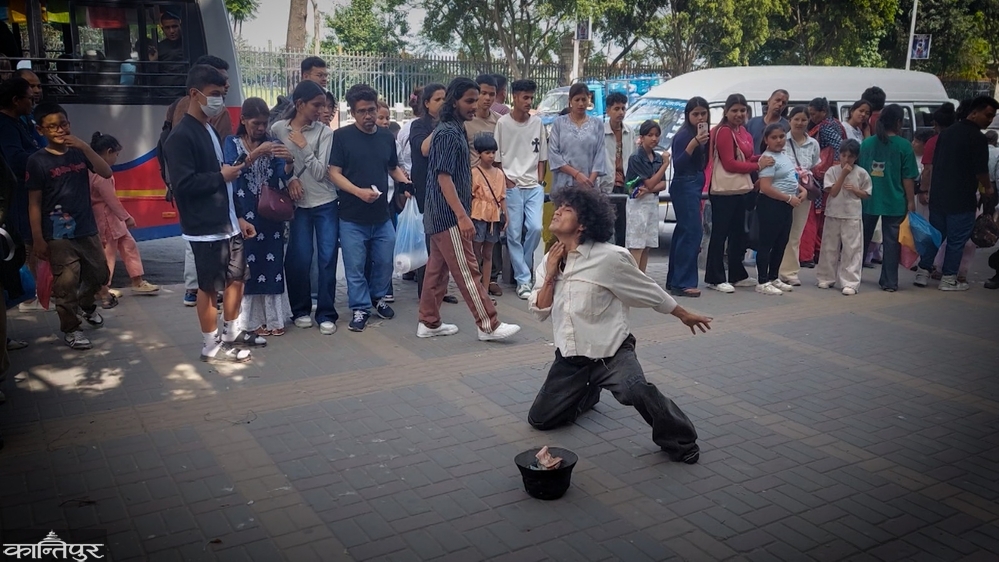
It has been one and a half years since Siddharth and Jibrial started traveling together like this. Since then, they have not only changed from friends to close friends, they have also become teachers who teach each other.
Their journey also started by chance. Even before meeting Siddharth, Jibril used to go somewhere and sometimes to do street dancing alone. According to Jibril, he has gone from Sikkim, Darjeeling, Kalimpong to Bhutan in India just to dance. Reaching new cities, choosing wide squares with many people there and showing street dances had become his regular daily routine.
It had been about 6 months since Jibril had reached Jhapa showing street dance. He was touring the small and big cities there. At that time, Siddharth Chhetri of Gauradaha, Jhapa used to teach dance at a local dance center. Siddharth had also heard about a boy walking alone showing street dance from somewhere. One day Jibril arrived in Damak showing dance. That's when Siddharth and Jibril met. Their dance backgrounds were shared at the first meeting. It was at that time, when a fair was held in Damak. They suggested, why not dance together. This joint dance bound them in friendship forever. It has been a year and a half since they met. Since then, they have not been separated.
Since meeting in Damak, they have been on the streets together. They are dreaming together and struggling together. Jibril recalled the old days, saying, 'The initial days were not easy. Some did not look kindly on us when we danced on the streets. Some even made fun of us. But we did not give up.'
Siddharth and Jibril do not stay in the same city and in the same square. Like birds, they go wherever they want. But wherever they go, they make the roadside their dance hall. They captivate the travelers walking somewhere. Their energy, rhythm and confidence attract the crowd even more. 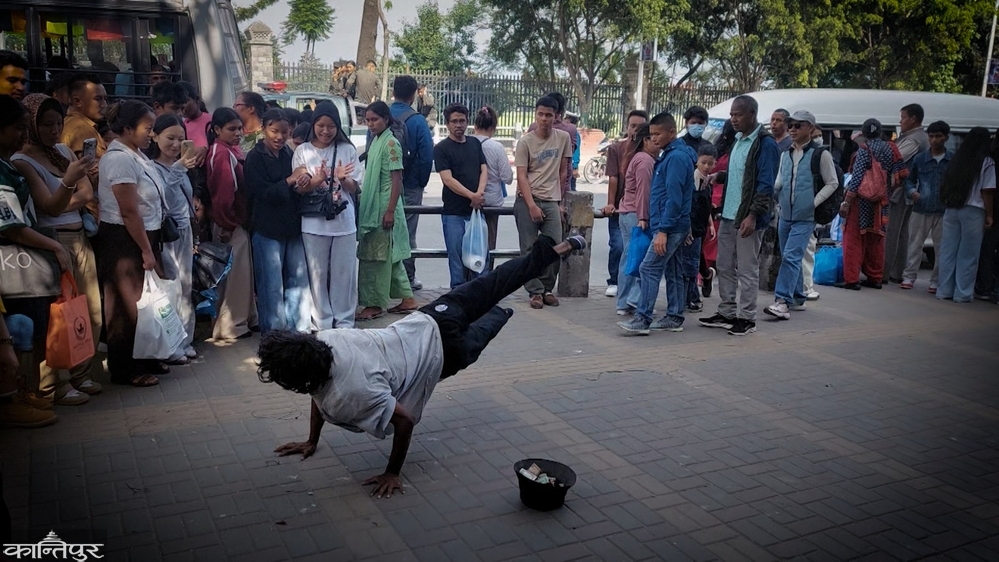
They danced and danced through most of the cities of eastern Nepal and reached Kathmandu about three weeks ago via Hetauda and Chitwan. After coming here, they understood the city, understood the interests of the people here. And they came to the conclusion that this city understands the meaning of dancing. They prepared for street dancing every day.
The audience, who are fascinated by their dance, happily give money to the hats placed on the ground. Some praise them with words, some by clapping. This is how they live their lives. They earn five to seven thousand rupees by dancing on the street for one to two hours every day. But the income is not the same every day.
Siddhartha shared his experience while dancing on the side of the road, 'Rather than any fixed choreography, the body starts moving according to what the mind feels along with the music.' He said that the dance steps come to him automatically when he goes out on the street and listens to music. He said, 'That's when he feels the most self-satisfaction.'
For Siddharth, this is not just a way to earn money. Because with the money collected in this way, Siddharth is supporting the education of his three brothers who are studying in a village in Jhapa. He is supporting his family financially. Sometimes he has also been helping those in need. Jibril has also been helping his family, including his father, mother and six brothers, in Darjeeling, as much as he can with this income.
According to Siddharth, the dance they do is 'free-style'. Rather than any fixed choreography, the body starts moving according to what the mind feels along with the music. The dance steps come to him automatically when he goes out on the street and listens to music. And he says that that moment gives him the most self-satisfaction.
Siddharth had once learned 'hip hop' dance. He is not that knowledgeable about other dance styles. He said, 'When I go out on the street wearing clothes that are comfortable for dancing, a different energy comes automatically. The emotion of the song is revealed from within.' 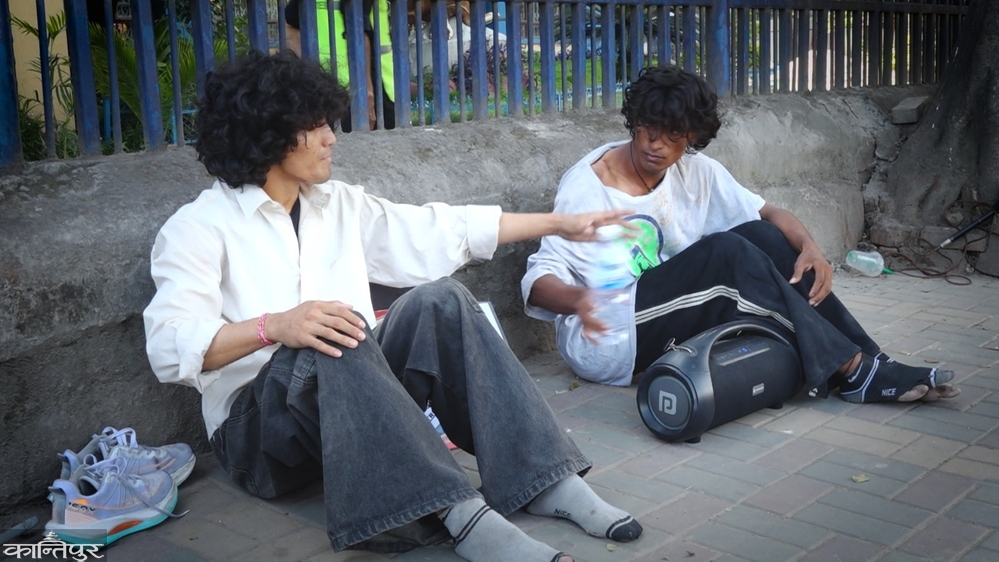
Performing art in public places is not easy in all places. Their experience also says the same. Sometimes the local administration obstructs them, sometimes rude people walking on the side of the road. Jibril said, 'Sometimes they have to hear questions on the road about what they are doing.'
They do not have to face such unpleasant experiences everywhere. Sometimes they not only get praise but also get a personal experience. For example, when they were dancing near Ratna Park, a woman who was watching the dance saw their socks that were about to fall out and offered them two pairs of socks. Jibril said, 'Some people praise each other so openly that they feel proud.' Both of them have been publicizing their art through the TikTok page named Siddharth Chhetri and Street Dancer Thirteen. They seem to be getting a lot of praise there too. They are easily reaching out to people they don't know directly through social media.
Sameer Parajuli, who was watching their dance, said that he was watching Siddharth and Jibril's dance through TikTok. He said, 'Today we got to see them face to face. We got to see them dancing such difficult steps.' Khimlal Gautam was watching Siddharth and Jibril's dance with a blank stare. He said, 'You danced really well. I wanted to watch.'
Jibril and Siddharth have planned to perform similar dances in all the major cities of Nepal. Jibril said, 'We plan to go to another country only after we have traveled all over Nepal and shown dances. But we will go to a country where street dancing is possible.'

