The case has intensified a global debate about the potential impact of online addiction on children, with some countries moving towards banning or placing strict limits on social media for children.
We use Google Cloud Translation Services. Google requires we provide the following disclaimer relating to use of this service:
This service may contain translations powered by Google. Google disclaims all warranties related to the translations, expressed or implied, including any warranties of accuracy, reliability, and any implied warranties of merchantability, fitness for a particular purpose, and noninfringement.
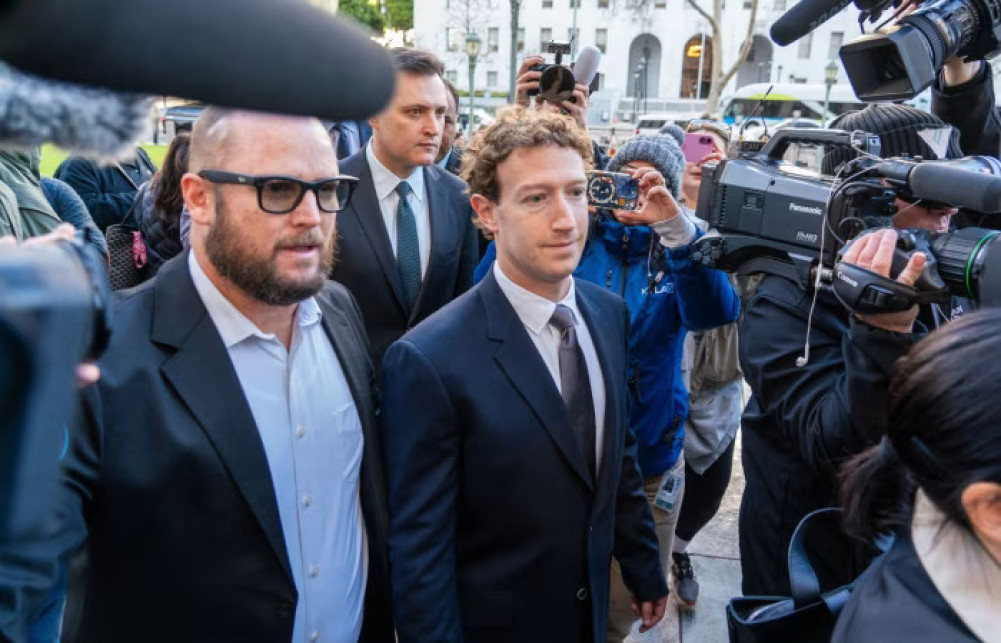
Meta CEO Mark Zuckerberg has testified in Los Angeles Superior Court in California, USA, in a lawsuit related to addiction to the social media platform. A teenager has filed a lawsuit claiming that excessive use of Facebook and Instagram at a young age led to depression and suicidal thoughts.
The lawsuit accuses Meta and YouTube of deliberately designing the app to attract children and teenagers and increase ‘engagement’. During the statement, Zuckerberg denied the claim that he was deliberately targeting children.
‘A significant number of users knowingly lie about their age,’ he said during the statement, ‘Enforcing age limits is a very difficult issue. Meta has tried to build different versions of the service that children can use safely.’ During the statement, the owner of Facebook and Instagram reiterated that children under 13 are not allowed to use the platform.
‘Our goal is not to increase the time users spend on the app, but rather to provide them with a useful service,’ Zuckerberg said. ‘If users don’t get a good experience in the app, why do they keep using the app?’ It is not in our business interest to provide a bad experience.’
Apple and Google (App Stores) suggested that they build age verification systems into mobile devices to prevent children and teenagers from accessing apps. ‘We have been slow to implement age verification technology,’ he said. ‘We believe that people should be allowed to use filters to express themselves, but we have a balanced policy of not recommending beauty filters.’
Internal documents presented by the plaintiffs at the hearing indicated that the strategy of increasing children’s ‘engagement’ was prioritized, Reuters reported.’
‘Just as cigarette companies knew that nicotine was addictive, so these tech companies knew that their features were damaging children’s mental health,’ argued attorney Lanier, ‘Meta’s own employees warned about the impact on children.’
The social media design is currently being debated in Los Angeles Superior Court. The court is examining whether the designs of such apps are legally ‘addictive’. The hearing focuses on the key question of whether the social media app’s various features and algorithms have directly harmed the plaintiffs. The plaintiffs’ lawyers presented internal conversations between top Meta executives to the jury as evidence. The conversations show a strategy to keep teenagers hooked on the app. Zuckerberg claimed that while such a strategy was in place before, the focus is now on the app’s usability and quality.
“If you are trying to say that my previous parliamentary statement was inaccurate, I strongly disagree with that,” he told the court. Meta has presented measures such as default privacy settings for teen accounts and parental monitoring tools as evidence of its commitment to child protection. Analysts say the ruling in the case could have long-term implications for the legal liability of technology companies and the global regulatory framework.
Outside the court, governments in Europe and Asia are also engaged in a serious debate about the impact of social media on children. In Germany, Chancellor Friedrich Merz has called for a mandatory age limit on social media for under-16s. He compared it to a risky situation, citing the fact that 14-year-olds in Germany spend an average of 5.5 hours online a day, comparing it to giving children free rein to drink alcohol.
In France, the National Assembly, with the support of President Emmanuel Macron, has passed a bill to ban children under 15 from using social media. This includes a proposal to make age verification mandatory. In India, a private member's bill has also been introduced to ban children under 16 from opening or operating social media accounts. In India, the Prime Minister's Chief Economic Advisor V. Ananth Nageswaran has also suggested the need for age-based limits and strict age verification systems.
Countries including the UK, Denmark, Greece and Spain are discussing age-based restrictions or controls for children. This signals a new phase in the global policy debate about the potentially harmful and addictive effects of social media on children and adolescents.