Speakers at the 'TIG Conference 2026' held in Kathmandu on Sunday analyzed that data will be the power of the new era in this sector as well, as traditional accounting and banking systems are being displaced.
We use Google Cloud Translation Services. Google requires we provide the following disclaimer relating to use of this service:
This service may contain translations powered by Google. Google disclaims all warranties related to the translations, expressed or implied, including any warranties of accuracy, reliability, and any implied warranties of merchantability, fitness for a particular purpose, and noninfringement.
Experts have pointed out that in the current digital era, the traditional requirement to pledge a house or land to obtain a loan is gradually disappearing and that reliable financial data will be the collateral of the future.
Speakers at the ‘TIG Conference 2026’ held in Kathmandu on Sunday analyzed that data will be the power of the new era in this sector as the traditional accounting and banking system is being displaced.
According to Suman Pokharel, Assistant Chief Executive Officer of Global IME Bank, the banking system is now focusing on ‘project financing’ and ‘cash flow-based lending’. ‘Even today, we have the idea that loans should not be given without collateral or fixed asset collateral, but ultimately project financing and cash-flow-based financing are the future,’ he said, ‘Banks no longer give loans based on collateral, but on business. Banks have started giving loans based on all this data, such as what your stock is, what your receivables are.’
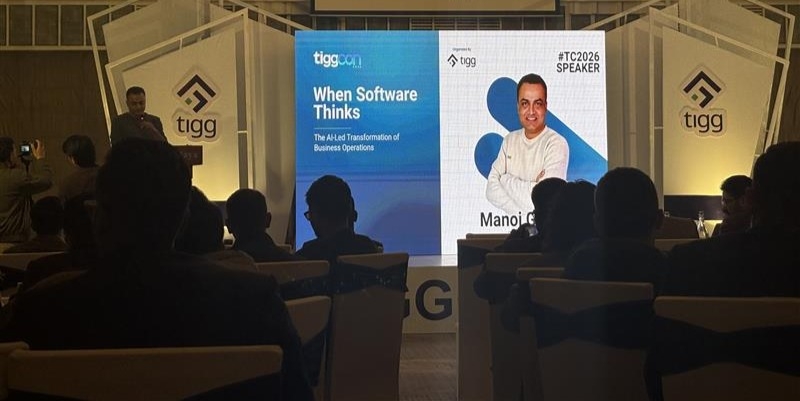
Experts argue that artificial intelligence (AI) and software systems have made such a transformation possible in the banking and financial sector. Manoj Ghimire, co-founder of Rara Labs, said that AI will completely automate the tedious task of data collection and analysis. “When real-time data is available from a trusted source, with digital signatures, then audits and risk assessments can be done immediately,” he said. “This eliminates the need for banks to wait years to understand the real state of any business.”
Chartered Accountant Arun Raut also said that the use of technology has reduced 90 percent of the work in the accounting sector and that the role of accounting staff is now to assist organizations in the decision-making process. “Accountants are no longer data entry or auditing employees, this work is done by software,” he said. “Our role is transforming into experts who teach businesses future strategies.” He noted that technology will bring greater transparency to the financial system as there is no room for manipulation of data since bank statements and accounting systems will be directly connected.
They argue that this new system will provide relief especially to small and medium enterprises. Speakers pointed out that entrepreneurs who do not have land or physical assets but are doing good business can get loans from banks by showing their digital track record.