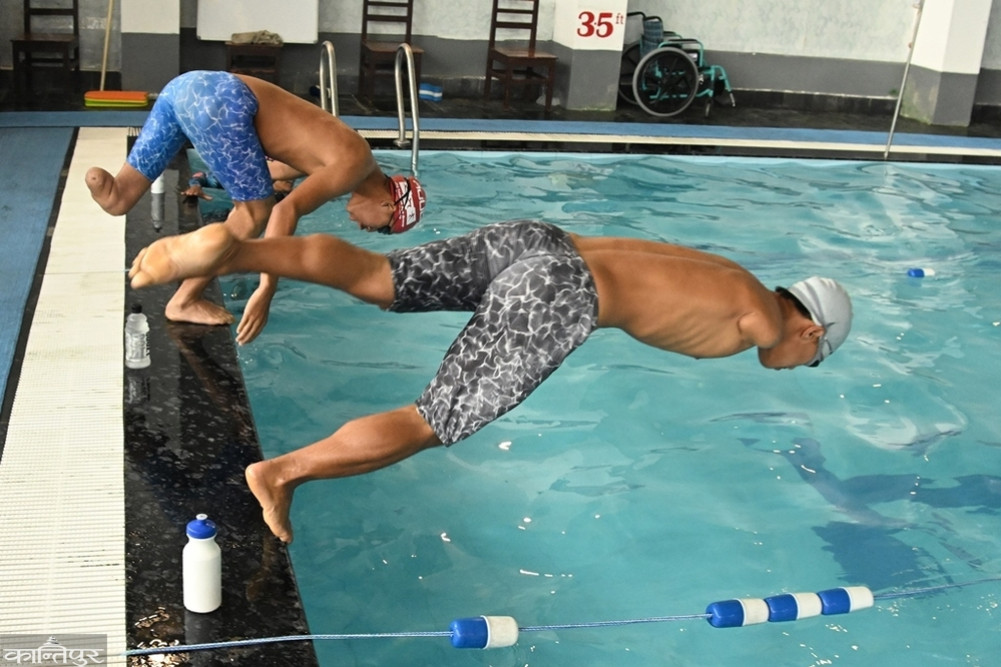
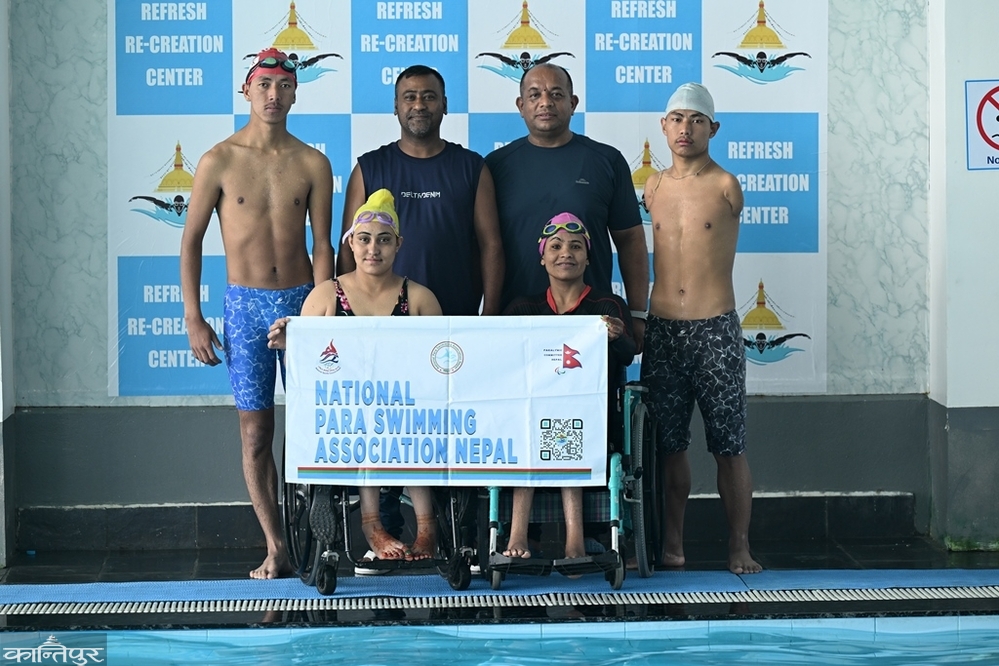
Four para swimmers are currently undergoing regular training for the Para Asian Games to be held in Aichi/Nagoya, Japan.
We use Google Cloud Translation Services. Google requires we provide the following disclaimer relating to use of this service:
This service may contain translations powered by Google. Google disclaims all warranties related to the translations, expressed or implied, including any warranties of accuracy, reliability, and any implied warranties of merchantability, fitness for a particular purpose, and noninfringement.
Do they really swim? That’s the kind of reaction you might have when you first hear about them. But when you actually see them swimming with your own eyes, it can seem extraordinary. You can’t help but say, “Wow, this is truly unique.”
Jenisha Kadayat is 26 years old. At first, she too thought she wouldn’t be able to swim. She has a spinal injury. The lower part of her body doesn’t move. She can’t feel anything in that part.
Jenisha from Kailali had an accident in 2070 BS. She was riding a bicycle somewhere when a tree, being cut down by someone else, fell directly on her waist. She was seriously injured. Before that, she had a big dream of swimming.
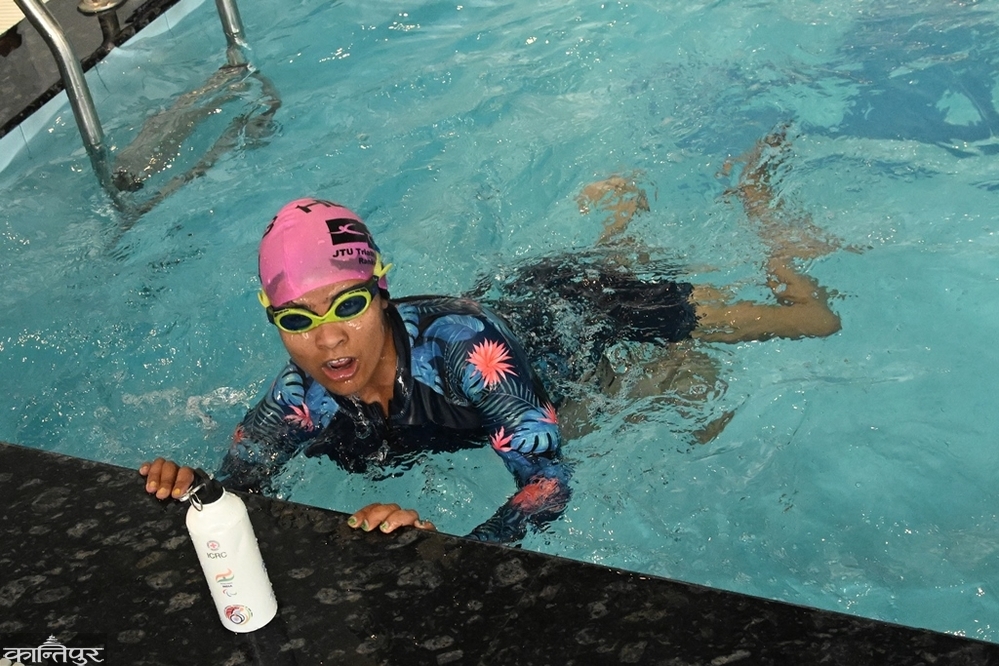
Her family hadn’t given her permission. But now, Jenisha herself has become a para-athlete. This year, she will represent Nepal at the Asian Para Games to be held in Aichi/Nagoya, Japan. “At first, I didn’t believe it myself when someone told me I could swim. Even now, when someone hears that I swim, they don’t believe it,” she said.
Jenisha will compete in the S6 group’s freestyle 50 and 100 meter events. When we saw her practicing at the Refresh Recreation Center in Boudha, it changed all our perceptions. “I’m happy that I’ve been able to change someone’s perception like that,” she said with a sweet smile.
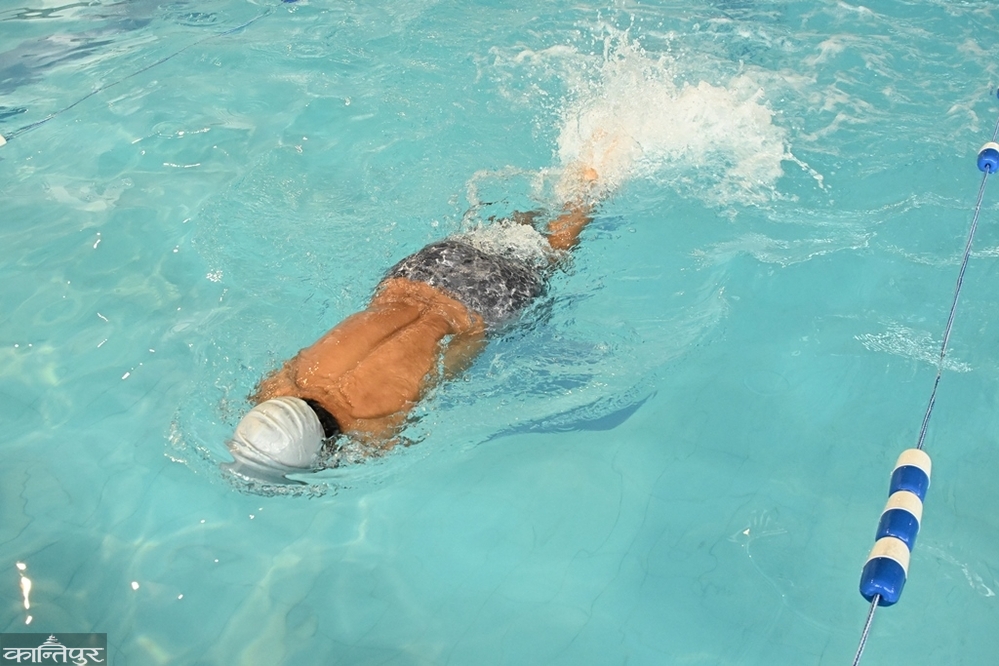
She has already achieved the Minimum Qualification Score (MQS). Another athlete to achieve such a feat is 21-year-old Harkaman Gharti. He will compete in three events in the S5 group: 50 meter butterfly and 50 and 100 meter freestyle. He has no arms. Both arms were amputated from the shoulders.
Seven years ago, he was playing as usual in Rasuwa. He touched a live insulator and was seriously injured. Even before that, while playing, he used to touch insulators, but they never had current. He has just completed grade 12 in computer studies. He plans to continue studying computers. He also draws pictures with his mouth. He writes with his feet. He also operates the computer with his feet.
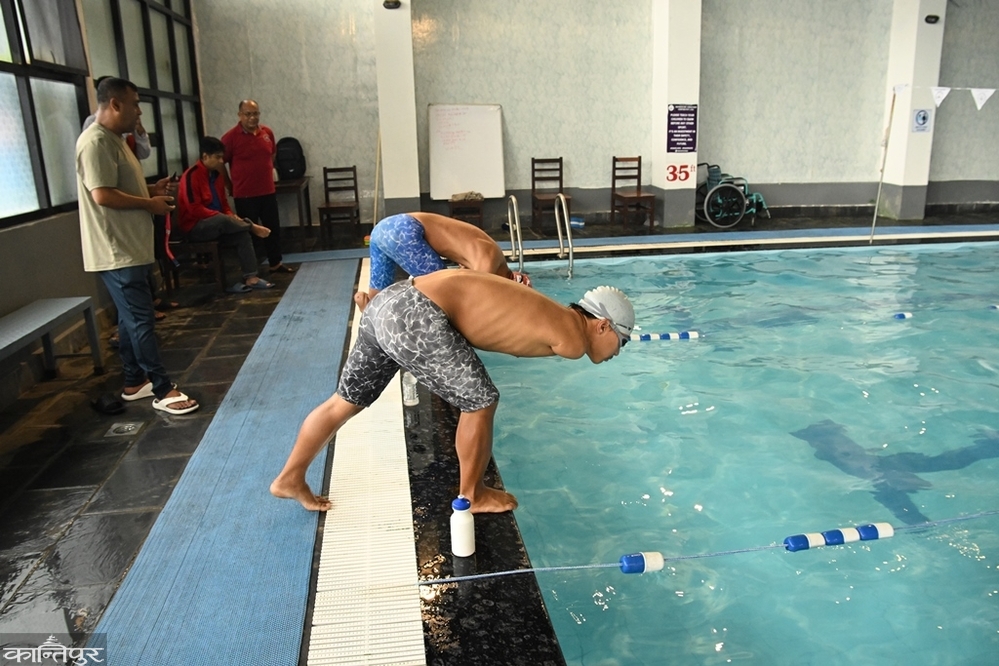
Moreover, he believes that whenever he participates in any competition, he must try to win a medal. That’s why he is working hard now. He may not win a medal this time, but he has similar plans for other major competitions in the future. He says, “My dream is to touch the sky, a very big dream.”
In the upcoming Asian Para Games, four Nepali swimmers will participate. The other two athletes are Member Singi Syangwa and Sirjana Sarki. Member is missing the part of one leg below the knee. He will compete in the S10 group. He was hit by a vehicle near the Chinese border in Rasuwa. Now, for training purposes, 26-year-old Member has made Kathmandu his residence.
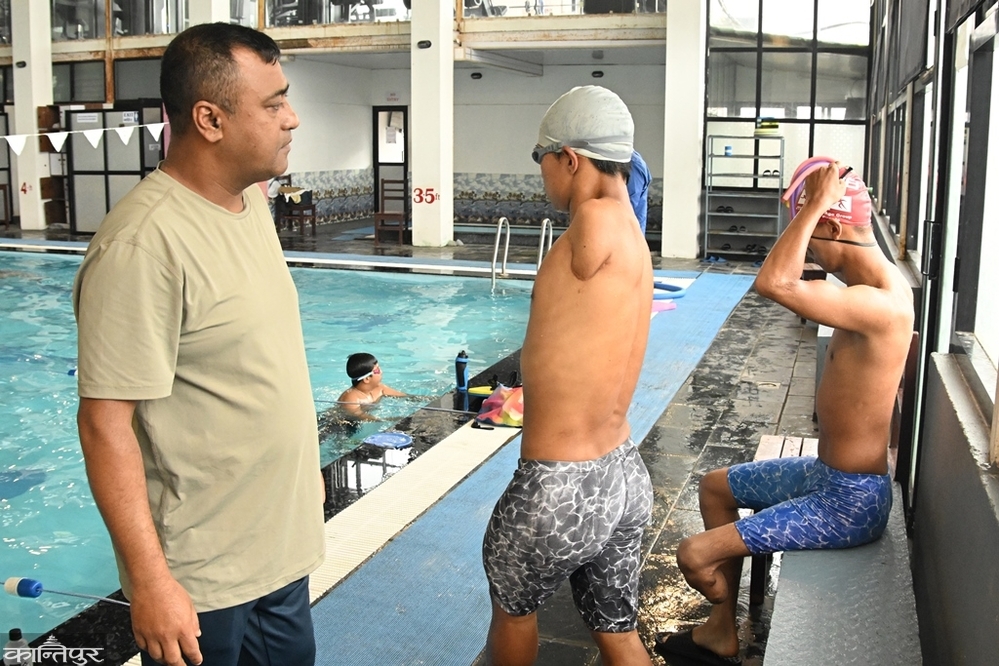
Sirjana also cannot move the lower part of her body. She too had a spinal injury. This 17-year-old from Jumla was working in the fields when a landslide hit her waist. After that, the lower part of her body stopped functioning. Now, she says, she can’t feel anything in that part. She will compete in the S6 group. The lower the number associated with the S, the more difficult the athlete’s condition.
It’s been about a month since regular training began. The coach training these four athletes is Shubha Shrestha. This volunteer coach is happy and equally proud to be able to train para-athletes. He says, “For me, it’s like a new experience, a new challenge as well. The training format itself needs to be different. This work has given me a different kind of happiness.”
He believes that even having the courage to participate in swimming as a para-athlete is a great act of bravery. He says, “In swimming, both arms and legs are equally important. Arms help you move forward, while legs help you maintain balance. If one doesn’t balance with the other, it becomes extremely difficult. This clearly shows how hard it is for these para-athletes.”
Indeed, since Jenisha and Sirjana cannot move the lower part of their bodies, it’s hard for them to maintain direction. Even if they manage to keep direction, it’s difficult to keep the lower part of the body afloat. Harkaman has no arms, so he swims only with his legs. It’s hard to even imagine how difficult it must be for him to move forward. But these athletes have not only ignored such hardships, they have also overcome them.
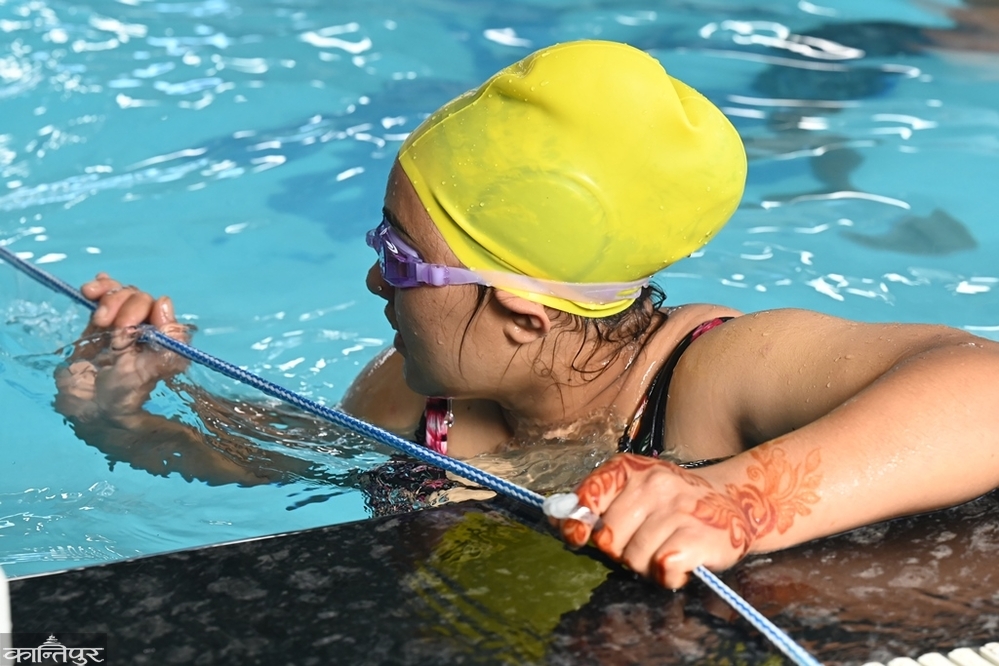
All four athletes and their coach share the same view: people with different abilities like themselves should take up some sport and participate regularly. Jenisha is currently pursuing a master’s degree in public administration and works as a receptionist at the Rastriya Swatantra Party’s Balaju office during the day. She also plays basketball.
She says, “The early days after the accident were extremely difficult. I had unpleasant thoughts too. But now I’m happy, I’m very busy. Still, I make time for practice. Especially after I started swimming, my confidence has returned, I’ve found happiness. Through sports, I’ve created a different identity for myself. My health has also improved.”
Harkaman’s friends also used to swim, but he only watched. It was only because of their insistence that he entered the swimming pool. What happened after that is history. People still ask him how he swims without arms. He considers himself a bit shy. But once he enters the pool, all his shyness disappears.
Coach Shrestha is equally enthusiastic about these athletes. He says they can achieve something big. Member also feels that his personality has changed since he started swimming. He says, “People with physical disabilities should get involved in some kind of sport. It’s just like being conscious about your own health.”
That said, the challenges ahead are not easy for these athletes, nor for their coach. The association linked to para-swimming faces equal difficulties. The president of the National Para Swimming Association Nepal is Saroj Shrestha. He is also a member of the National Paralympic Committee Nepal. He says, “We face a mountain of challenges, but we are moving forward, we are not discouraged.”
In the upcoming Asian Para Games, Nepal will participate in 10 sports. Among them, swimming is the main one. The number of participating athletes is around two dozen, but the budget received from the government is only 2.5 million rupees. President Shrestha says, “If only the government had been a bit more generous in supporting us, it would have been so much better.”