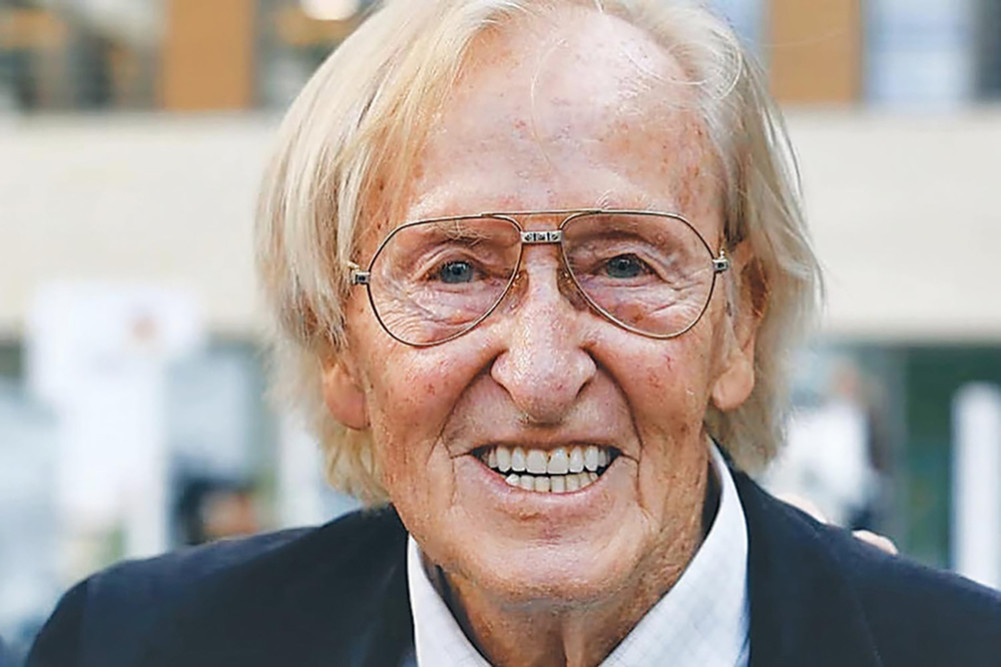
Nepal's four-decade journey to formal entry into international football has been filled with stories of unfulfilled dreams, historic successes and many controversies. From Rudy Guttendorf to Guglielmo Arena, Nepali football has experienced coaches from many corners of the world - some were kings of strategy, some were darlings of the media, some were rebels who clashed with the players.
We use Google Cloud Translation Services. Google requires we provide the following disclaimer relating to use of this service:
This service may contain translations powered by Google. Google disclaims all warranties related to the translations, expressed or implied, including any warranties of accuracy, reliability, and any implied warranties of merchantability, fitness for a particular purpose, and noninfringement.
One day, we were sitting in Thamel with the coach of the Nepali national team, Guglielmo Arena. It was nothing more than a coffee meeting. He used to say, ‘Whatever happens, it is not for the media to publish.’ He used to call it a meeting of brothers who love Nepali football. Despite all this, he enthusiastically narrated his programs about the Nepali national team.
In particular, he was a devotee of Pep Guardiola. His plan was to introduce Guardiola's style to the Nepali team as well. He wanted to prepare for the SAFF Championship. However, at that time, Nepal was banned by FIFA. Just as he had quietly come to Kathmandu, he returned to his home. Needless to say, he was definitely disappointed, his plans to do something good for the national team were dashed. After
, news also came that he had left his coaching duties. Under his leadership, Nepal played only one game and that too was defeated by Laos. He stayed in Nepal for a very short time. So he could not do much. He was a French-speaking Swiss coach. Along with him, the story of another foreign coach associated with the Nepali national team came to an end.
Nepal's formal entry into international football has been a little over four decades long, and if we were to make a list of foreign coaches associated with the national team during this period, it would be long. Nepal is believed to have started its international journey with the Asian Games held in New Delhi in 1982, and the Nepali team's coach was Rudi Guttendorf.
This is the most famous coach Nepal has ever had. He has managed a dozen national teams, starting with the German Bundesliga club. He is considered to have introduced modern football to Nepal. Otherwise, the only football Nepal had heard and watched before that was the football of West Bengal, India. With him, the time of the then West Germany's contribution to Nepali football begins.
Another German coach entered Nepal immediately after the breakup. He was John Figi. Under his leadership, Nepal won the gold medal in football at the first South Asian Games in 1984. When Nepal first qualified for the World Cup in 1985, the famous Joseph Patrick 'Joe' Keener was the coach. Nepal has never had and will never have a coach like him.
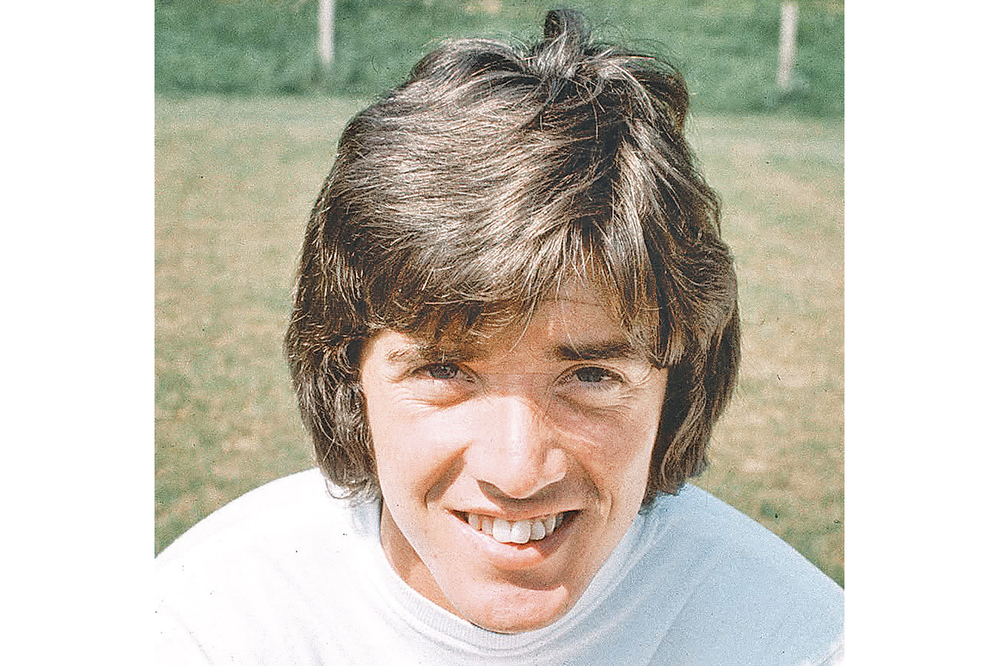
A few years after taking charge of the Nepali team, he also took charge of Newcastle United in the English Premier League. In the same year, when Nepal participated in football at the South Asian Games in Dhaka, the coach was Brazilian Santos. He is the only coach Nepal has had from South America. There is an interesting story about how he came to Nepal.
He was more of a player than a coach, he came to give trials to join East Bengal or Mohun Bagan. He was selected and made a coach. He also practiced with Nepali players. In 1987, Nepal got a coach from the then East Germany. His name was Heinz Jörgen Michalek.
Nepal played its first Olympic qualifiers under his leadership. It is said that he was more of a businessman than a coach. After him, in 1989, Nepal got another German coach. He was Reinhard Fabich. Under his leadership, Nepal played the World Cup qualifiers in 1989. He was the last coach to come from West Germany.
When Nepal played the Asian Games in Bangkok in 1998, the coach of the Nepali team was South Korea's Yu Ki-hyung. He is also a legend in his country, having managed the South Korean women's team. He liked to give players a lot of physical rewards. He was so tough that he would really beat the players.
But, the man himself was a very good man. When the SAFF Championship was played in Goa in 1999, he was the coach, Frank Stipler. After the unification of Germany, he was the first coach from there to come to Nepal. He also came quietly, although he disappeared soon. When the 8th South Asian Games were held in Nepal in 1999, a coach who liked to be in the news came – Stephen Constantine, who liked to sit and chat with the Nepali media. He was an English coach. He was probably the first coach to develop a rapport with the Nepali media. Since returning from Nepal, he has managed teams from India and Pakistan to Rwanda.
During his tenure, the football controversy in Nepal had reached its peak. On one hand, there was the president of the All Nepal Football Association – Ganesh Thapa, who was recognized by FIFA. At the same time, there was another parallel ANFA, which also occupied the ANFA complex in Satdobato. That ANFA was led by – Geeta Rana. Amidst that confusion, he stayed in Nepal for some time. Later, he came to Nepal again on a few occasions. At that time, he used to talk about his stay in Kathmandu with great enthusiasm.
In 2005, during the SAFF Championship in Karachi, most of the players got the opportunity to debut and those players were the first generation of the ANFA Academy. And the coach was Toshihiro Shibazawa from Japan. He was the first coach to come to Nepal from Japan. Soon after, in 2006, when Nepal played in the AFC Challenge Cup, the coach was Shyam Thapa.
Whether you consider him Nepali or Indian is up to you. He came to develop Nepali football. But he did not stay long. There were only a few journalists at his farewell program. At that time, he had many complaints about Nepali football, and many regrets that he could not do what he had imagined.
After him comes the last German coach Thomas Flath. He was a coach associated with the academy of Schalke and also the highest-ranking coach to come in recent times. He interacted very little with the Nepali media. The 2008 SAFF champion Nepal played under his leadership. At that time, one of his sayings was very famous. He used to say, ‘I need players like Mercedes, not like Maruti.’
The coach who came after him was the exact opposite of him – he had to talk a lot. He was Graham Roberts. He was the most famous player who came to Nepal. He was the captain of the English club Tottenham. Under his leadership, Tottenham won the UEFA Cup in 1984.
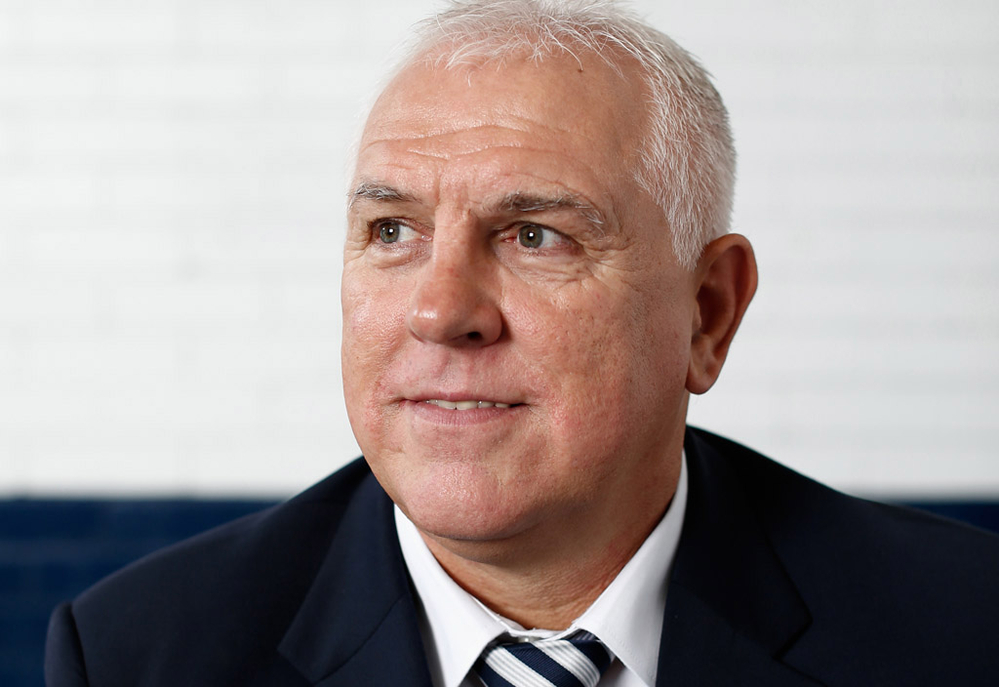
In 2013, an American coach born in Poland came to Nepal. His name was Jack Stefanowski. During his time, there was a match-fixing scandal. Information about this came out only much later. In 2015, Nepal got another foreign coach – Patrick Asmes. Under his leadership, Nepal played the SAFF Championship.
Asmes also did not stay in Nepal for long. At that time, controversy had flared up again in Nepali football, and internal conflict had reached its peak. Later, ANFA President Ganesh Thapa himself was banned for ten years by FIFA.
In 2016, another Japanese coach came, who spoke English with great difficulty. He was Koji Gyotuku. Under his leadership, Nepal won the AFC Solidarity Cup. In 2019, Nepal got a Swedish coach in the form of Johan Kalin. He initially came to Nepal to manage Machhindra Club, and later got the opportunity to watch the national team.
Then comes the turn of Kuwaiti coach Abdullah Almuteri. He watched the Nepali team from 2021 to 2022. During his time, Nepal also played against teams ranked much higher than them and even made it to the finals of the SAFF Championship held in the Maldives. This is Nepal's highest performance so far in the biggest tournament in South Asian football.
Due to that performance, he was also declared the best coach at the NSJF Pulsar Sports Awards. At that time, he used to say, ‘I never got along with journalists, but they considered me the best.’ He was very popular throughout his stay in Nepal. He was very popular on social media. At first, he liked to be loved by everyone, but later he had to face the players’ rebellion.
He used to smoke cigarettes as if he were the chimney of a brick kiln. He is the first and only coach to face the players’ rebellion. He liked to do many dramas. A separate investigation committee was also formed in ANFA to take action against him. At that time, he used to claim, ‘I need the safety of my life.’
Initially, when he came to Nepal, captain Kiran Limbu said that this coach is like a father to the players, he loves them like that. Later, when the rebellion took place under his leadership, there was a situation of water and dust between them. How much he was a tyrant, during the players’ rebellion, he went to Kuwait with his second-choice players to play in the Asian Cup qualifiers. Most of the players in that team were from the police, army and APF.
A unique opportunity arose when Nepal played a friendly football match against Bangladesh in 2022. The coach in that match was Pradeep Humagain. This once-three-star coach later went to America and settled there. So should we consider him an American coach of Nepali origin? He is also a coach who is often embroiled in controversy and has never had a good relationship with the Nepali media.
When Nepal played the SAFF Championship in Bengaluru in 2023, it was an Italian coach, in the form of Vincenzo Alberto. He also did not stay long. He was the first Italian coach to watch the Nepali team. Soon after, in 2025, Nepal got an Australian coach. He was a coach who liked to experiment with many things, but he left his contract with ANFA midway and did not return to Nepal.
Under his leadership, Nepal played in the third round of the Asian Cup qualifiers. It is said that by the time he decided to leave the Nepali team, his relationship with ANFA had cooled. It was after him that Arena came to Nepal. His stay in Nepal was not a happy one in many ways. His last words at that Thamel meeting were, ‘I never got a chance to do anything in Nepali football.’