The Congress believes that amendments can only be made to address shortcomings in implementation while keeping the basic issues including the form of governance, electoral system, and federal structure intact.
We use Google Cloud Translation Services. Google requires we provide the following disclaimer relating to use of this service:
This service may contain translations powered by Google. Google disclaims all warranties related to the translations, expressed or implied, including any warranties of accuracy, reliability, and any implied warranties of merchantability, fitness for a particular purpose, and noninfringement.
The Congress and the UML have backed away from the issue of amending the electoral system. In the past, both parties had agreed to amend the current electoral system, concluding that no party could win a majority and that political instability would continue. However, after the Rashtriya Swayamsevak Sangh (RSS) won a two-thirds majority in the February 21 election, both parties backed away from the issue of amending the electoral system, saying that their views were divided.
The Congress has placed the issues of reducing the constituency, reducing the number of ministries and ministers, clarifying the jurisdiction between the local level, the province and the union, and reducing the number of MPs, ministries and ministers in the province at the center of the amendment. However, the Congress does not have a view on changing the system itself. Although the UML has not yet formally expressed its view, its view is also similar to the Congress.
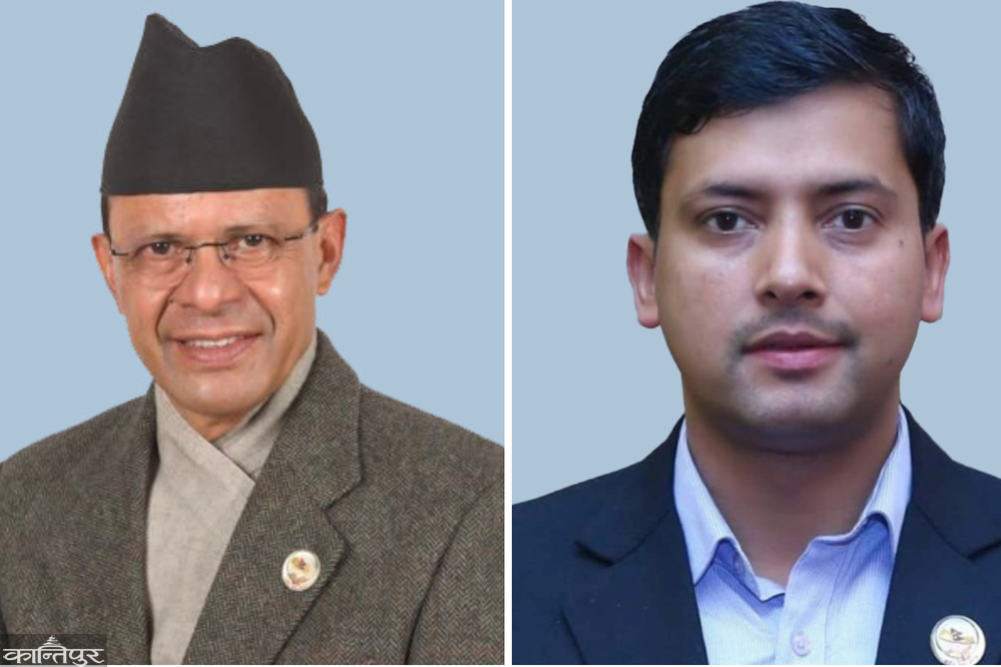
Congress President Gagan Thapa had made public the party's formal view on amending the constitution last week. He had said that amendments could only be made to address shortcomings in implementation, keeping the basic issues including the form of government, electoral system and federal structure intact. Both parties have formed a task force to study the issue of constitutional amendment internally. The Congress has formed a task force under the leadership of party vice-president Pushpa Bhusal and the UML has formed a task force under the leadership of vice-president Bishnu Poudel and held discussions.
After the conclusion of discussions with law and constitutional experts, representatives of various communities, civil society representatives, and Gen-G representatives, party president Thapa made public the party's formal view on what amendments to make to the constitution and what not on Asad 25. Based on the view made public by Thapa, the Bhusal-led task force is now preparing to separate the issues of amendment and based on that, the Congress is preparing to try to form a common view with other parties. UML has a similar plan.
The Congress and the UML had formed a power alliance in the past with the issue of constitutional amendment as the main agenda. The Congress, which was the first party in the then House of Representatives, and the second largest party, UML, had reached a seven-point agreement on Asad 17, 2081, the foundation of which was the issue of constitutional amendment. The seven-point agreement stated that ‘we will review the strengths and weaknesses in the implementation of Nepal’s constitution and amend the constitution for political stability.’ The main issue for the two parties under this point of the agreement was the electoral system. It was concluded that the electoral system had caused instability in politics due to the repeated formation and collapse of equations. With the inner aim of moving the country towards two-party polarization, the two parties were preparing to amend the electoral system to increase the threshold from 3 percent to 5 percent. The government led by the then Prime Minister KP Sharma Oli formed a task force to study the constitutional amendment in principle, but the Oli government was ousted by the Gen-G rebellion without completing it. The Oli-led government had already prepared the initial document for the law amendment to increase the threshold from three to five percent in the union and from one and a half to three percent in the provinces. UML General Secretary Shankar Pokharel had repeatedly emphasized the need to increase the threshold.
In the session titled ‘Election Reforms: Policy or Trend’ organized by Kantipur in 2024, Pokharel had said that preparations are being made to increase the threshold system to end Nepal’s political instability. According to the election law, to become a national party, one percent threshold must be crossed for direct and 3 percent for proportional representation. In the provinces, 1 seat must be crossed for direct and 1.5 percent thresholds must be crossed. Even if one seat is not crossed for direct representation, only parties that cross the specified threshold (proportional vote limit) can elect proportional representatives based on vote percentage. ‘Why do governments keep changing in the provinces today? The question arises, that is the result of the low threshold. In that sense, if we are to reform the law, we can improve the current instability by making the threshold system a minimum of 5 percent,’ Pokharel had said at that time. After small parties strongly opposed the plan to increase the threshold, the two parties immediately withdrew from amending the law.
Both the Congress and the UML had agreed in principle to amend the electoral system while keeping the form of government intact. They had discussed various options for the electoral system at their respective political party meetings and public forums. According to Congress leader Minendra Rijal, the options discussed at that time were mainly to make the House of Representatives a direct-election assembly only and make the National Assembly inclusive, to make the direct constituencies proportionally inclusive at the same percentage as they are now, or to go for full proportional representation.
The Congress and the UML, which have been considering the change in the electoral system as the basis for political stability, have now come to the conclusion that only necessary reforms should be made within the basic structures of the constitution while keeping it intact. Why? Mahesh Bartaula, who was also the UML's chief whip in the then House of Representatives, says that the idea that a majority cannot be obtained through the current electoral system has been shattered after the 21 Falgun elections. The formal view of the Congress is also similar. Behind the argument that the electoral system should be amended was the political experience of recent years.
After the 2079 elections, four power equations were formed at the center in a period of one and a half years. Immediately after the elections, the UML-Maoist Center (now the CPN) alliance was formed. Then a new equation was formed between the Congress and the Maoists. After some time, the UML-Maoist Center collaborated again, and finally a new alliance was formed between the Congress and the UML. The frequent changes in the power equation at the center also had a direct impact on the provincial governments. The governments changed repeatedly in most provinces. From the Chief Minister to the ministers, there were frequent changes in the same term. Citing this situation as an example, the Congress and the UML concluded that the mixed electoral system could not provide political stability.
The issue of the form of government is that the Congress has rejected the idea of a directly elected president or prime minister system from the beginning. President Thapa said that the parliamentary system is suitable for Nepal based on the debates during the constitution-making process and the experiences of various countries around the world. 'In the first Constituent Assembly, we ourselves had serious discussions about the option of a directly elected executive. But when it came to the second Constituent Assembly, we came to the conclusion that a directly elected president or prime minister system does not work in a diverse country like Nepal,” Thapa said while giving his formal view on the constitutional amendment.
The Congress has put forward the idea that the electoral system can be improved while maintaining the current mixed system. The two parties have also backed away from the amendment because the previous view that the majority cannot be obtained from the current electoral system was shattered after the last election. “The House of Representatives must be inclusive. Instead, its number should be reduced. The constituencies should be reduced. Let’s discuss this. Let’s go from a system where party leaders choose from proportional representation to a system where people choose from the citizens. Let’s amend the constitution for this,” said President Thapa. “But trying to go on a new ‘adventure’ will cause great harm to the country.”
Leader Rijal does not agree with his own party’s formal view. Rijal, who has been studying the electoral system for a long time, said that he cannot agree with the argument that if the Rashtriya Swayamsevak Sangh (RSS) gets a majority of close to two-thirds, there is no need to amend it. According to him, the RSP will return to the alliance once the vote percentage in the election drops to 36/37 percent.
‘In any election since 2016, the Congress has not been able to get more than 39 percent of the vote. The RSP got the highest vote share in history, 44 percent. If we look at it directly, the RSP alone has brought three-fourths. If we keep it proportional, it is not enough to get two-thirds,’ Rijal said, ‘It is only superficial to say that the debate on the electoral system is over. Serious discussions and debates are still needed to finalize this issue. It should be concluded before the next election.’
UML leader Bartaula, on the other hand, says that although there may be debates and discussions about amending it over time, the need to amend it these days has been shattered by the election. ‘It has been established that this electoral system can also provide two-thirds when the people want it. No party could get a majority yesterday. "We went through the pain of not being able to form a stable and efficient government because we could not get a majority," he said. "That's why we said we would change it because we thought we would not be able to get a majority from this electoral system. But that is not the case now." On the other hand, the view of the Rashtriya Swayamsevak Sangh (RSS), which is leading the government, is different. The RSSS has concluded that amendments are necessary to the level of rewriting the constitution. The party has put forward issues such as a directly elected chief executive, a fully proportional electoral system, and restructuring of the federal structure. The party has concluded that amendments are necessary in about 245 articles of the constitution.
When other political parties were included in the task force led by the Prime Minister's political advisor Asim Shah, formed to prepare a discussion paper on the constitutional amendment, the Congress did not go along with it from the beginning. Concluding that it would not be appropriate to take a sensitive issue like the constitutional amendment forward through the government's political machinery, the Congress demanded that a commission be formed from within the parliament to prepare suggestions for the constitutional amendment. The government did not agree to it, the Congress did not send members.
Other parties that initially participated in the task force also later expressed dissatisfaction and withdrew. UML, CPN, LOSPA, JSP and Janamorcha announced their withdrawal from the task force, saying that the task force had gone beyond its jurisdiction and was oriented towards rewriting the constitution rather than amending it, and that it was trying to interfere with the basic political consensus of the constitution.