The NCP has drawn the government's attention to the term ”buffer state” and urged it to use the term used in the constitution.
We use Google Cloud Translation Services. Google requires we provide the following disclaimer relating to use of this service:
This service may contain translations powered by Google. Google disclaims all warranties related to the translations, expressed or implied, including any warranties of accuracy, reliability, and any implied warranties of merchantability, fitness for a particular purpose, and noninfringement.
The NCP has drawn the government's attention to protecting democracy, promoting people's livelihood, employment and prosperity with social justice, adopting good governance and non-aligned foreign policy, and controlling price hikes.
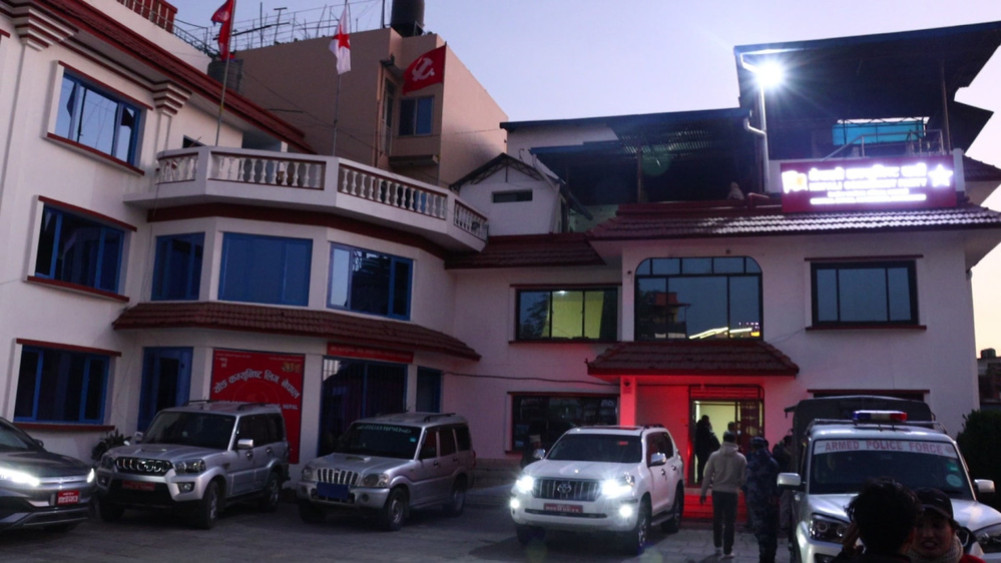
The Central Coordination Committee meeting held on Tuesday for the first time after the unification between the Maoists and the Unified Socialists passed a contemporary resolution and decided to support the government's good works and oppose its wrongdoings.
'The government should move forward in the direction of protecting national independence and democracy, promoting people's livelihood and employment, promoting prosperity with social justice, adopting good governance and non-aligned foreign policy,' NCP spokesperson Prakash Jwala announced the decision after the meeting, 'Our party will play the role of a constructive and responsible opposition by supporting the government's good works and opposing its wrongdoings.'
The NCP has alerted the government to control the price hike and black marketing of petroleum products. ‘Due to the skyrocketing price of petroleum products, the prices of daily necessities including cooking gas, public transport fares, food, fruits and others have increased uncontrollably,’ the NCP said. ‘The meeting has demanded to control the excessive price hike and black marketing in consumer goods and services and to facilitate the supply system.’
The NCP has stated that the rapid removal of squatter settlements from various parts of the country without identifying the actual squatters and providing alternative housing has created panic among thousands of disabled, children, elderly, helpless and destitute squatters. ‘Squatters are facing a livelihood crisis, health risks and disasters. This meeting, reminding them of the constitutionally guaranteed right to housing, demands the government to arrange safe housing for the displaced squatters as soon as possible and to find a long-term and scientific solution to the squatter problem,’ Jwala said.
The NCP has demanded good governance without prejudice, commenting on the arrests of party leaders, employees and industrialists in the name of investigation.
The NCP has drawn the government's attention to the fact that Nepal is a buffer state and urged it to use the word used in the constitution. 'Drawing serious attention to the fact that our country has never been a 'buffer state' in history and is a sovereign, independent and sovereign nation, this meeting appeals to all parties, including the government, not to use a different wording than that used in the constitution, keeping in mind our geopolitical sensitivity regarding Nepal's foreign policy,' the NCP said.
The NCP has demanded that the 'impracticable decision' be withdrawn, saying that the locals have been suffering from the government's decision to levy customs duty on goods worth more than Rs 100 purchased and brought to the Nepal-India border area. Similarly, the Nepal government has also objected to the restrictions and bans being imposed on student organizations and trade unions, contrary to the commitments expressed in national and international forums in favor of the constitution and human rights.
The meeting concluded that the report of the Karki Commission formed to investigate the incidents of 23 and 24 Bhadra is unbalanced and insistent. ‘The report does not show that a complete investigation has been conducted into the devastating incidents of 24 Bhadra,’ the NCP decided, ‘This meeting demands a fair investigation into the incidents of 24 Bhadra and demands action without prejudice against the perpetrators of the incidents of 23 and 24 Bhadra.’