Congress' 'roots campaign', UML in homework for renaissance and reorganization, NCP's claim to change policy and leadership from the general convention, Madhesh-centric parties digging up old foundations, RPP also demands a general convention, Rajma will raise the issue of nationality
We use Google Cloud Translation Services. Google requires we provide the following disclaimer relating to use of this service:
This service may contain translations powered by Google. Google disclaims all warranties related to the translations, expressed or implied, including any warranties of accuracy, reliability, and any implied warranties of merchantability, fitness for a particular purpose, and noninfringement.
The National Independent Party (NISP), which was born about four years ago, won a landslide majority in the House of Representatives elections. The Congress, which became the largest party in the 2079 parliamentary elections, became the main opposition party, but its number of seats remained very weak (38). The UML and the NCP shrank to 25 and 17 seats.
With the election results, these parties are not only fighting for survival, but the issue of party transformation and leadership succession is also being raised with great urgency. All parties, including the NISP, have started preparing for the local and provincial elections to be held in 2084.
Political analysts say that small and large parties have a role and relevance in a multi-party system. 'Tsunami does not always come in elections,' says political science professor Lokraj Baral, 'that is why the Congress remains the main competitor of the NISP.' Other leftists also exist in some form. But he says that to sustain itself in the political competition, it is necessary to bring improvements in policy, organization and working style. ‘Under the leadership of Gagan Thapa, the Congress seems to be on the path of change,’ says Baral, ‘Leftist parties are also not happy without making changes in organization, leadership and policy. Without doing so, they may not exist.’
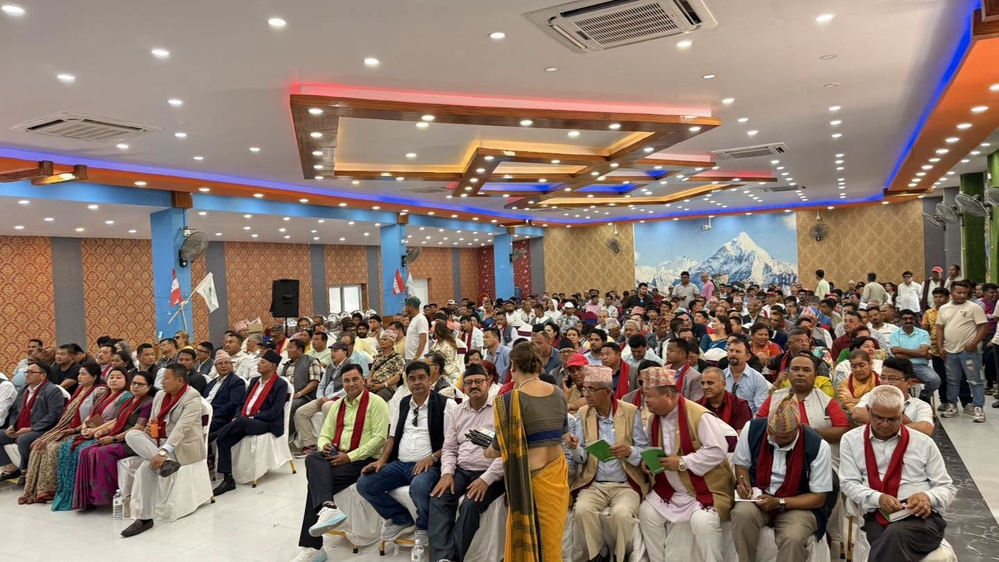
The main opposition Congress was itself in a legal battle until last week. After the Supreme Court granted authorization to the special general convention supporters on Friday, the Congress has decided to start building the organization.
The Congress is conducting party awareness programs in all seven provinces along with an election review. On Monday, the Bagmati province-level review was held in Hetauda. ‘After reviewing the elections in seven provinces, the Congress is embarking on an awareness campaign,’ he said. ‘We are making the organization more active by keeping the election results in mind.’
The Congress has prioritized membership expansion in the first phase. Along with this, the Congress is preparing for the 15th General Convention. Focusing on the General Convention to be held in the second week of Asoj, it has started a nationwide active membership renewal campaign since last Tuesday.
The Congress has named the membership renewal work in the ward as ‘Roots Campaign’. Earlier, the Congress had about 900,000 members. Ghimire said that after receiving fewer votes than the number of active members in more than 16 constituencies in the 21 Falgun elections, the membership renewal is being expanded.
The election symbol is that the roots of a tree reach the ground, and the membership campaign is figuratively called ‘Roots Campaign’, according to President Thap.
Congress has decided to select candidates for all upcoming elections through ‘primary elections’ like the Rashtriya Swayamsevak Sangh (RSS). To organize it, it is creating a Congress ID. For that, the concerned member will have to go to the ward and get ‘biometric’ done. For membership renewal, the party has already appointed representatives in 165 constituencies in 77 districts.
After the membership renewal campaign is over, the ward convention will be held on Bhadra 2, the village-town convention on Bhadra 7, the provincial assembly regional convention on Bhadra 17, the House of Representatives regional convention on Bhadra 24, and in cases where there is only one constituency, the district convention will also be held on the same day. Similarly, the district convention will be held on Asoj 2 and 3, the province convention on Asoj 7 and 8, and the central general convention will be held on Asoj 16-19.
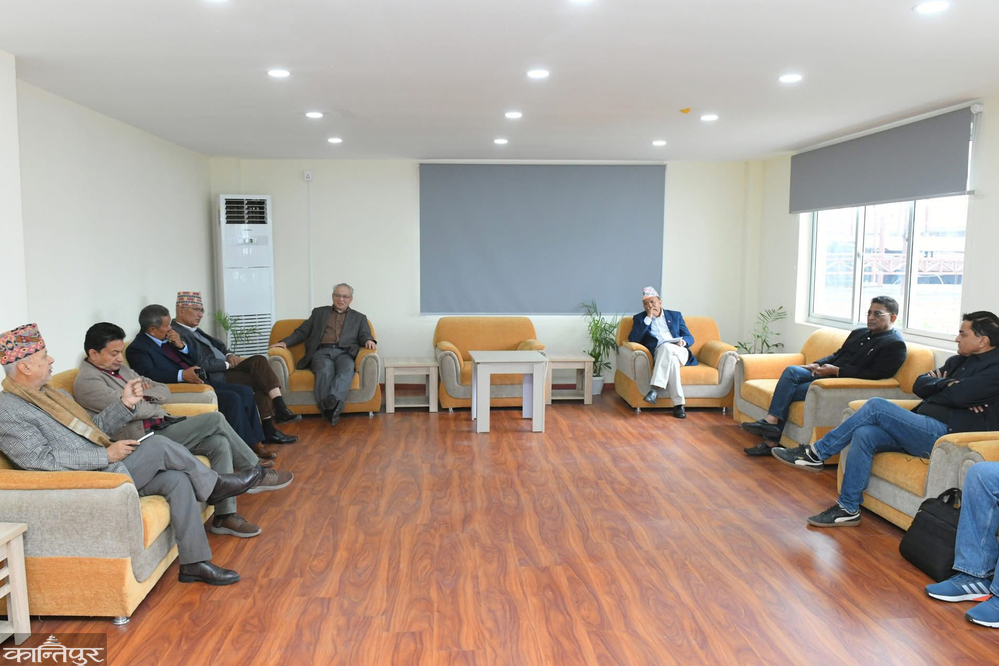
UML in the homework of revival and reorganization
‘Silence’ has descended on UML after the arrest of Chairman KP Sharma Oli. He was arrested on Chaitra 15 and released on Chaitra 26. He is recovering in Gundu, Bhaktapur after undergoing a stone surgery at Tribhuvan University Teaching Hospital last week.
After Oli's arrest, UML elected Vice President Ram Bahadur Thapa as the leader of the parliamentary party. There is a dispute in UML about taking responsibility for the huge defeat suffered by the party, which has put forward the slogan of building a 'decisive force' in the elections. Vice President Bishnu Poudel, Deputy General Secretary Yogesh Bhattarai and other leaders have raised the voice of leadership reorganization, saying that Chairman KP Sharma Oli is the main person responsible for the election defeat.
Oli has started discussions on the upcoming strategy. UML has stated that it will raise its voice in parliament about price control, raise awareness about the problem of squatters, launch a public awareness campaign on the streets and accelerate the party organization.
General Secretary Shankar Pokharel has revived the party based on the election review. and reorganization. ‘Currently, UML has entered the review phase after the defeat it suffered in the 2082 general election. The election review work is being conducted at the ward, municipality and district levels.’ General Secretary Pokharel says.
UML is also collecting personal suggestions from leading cadres in the election review. Pokharel claims that the party will be revived and reorganized in a planned manner based on the election review.
Secretary Rajan Bhattarai also says that debates are ongoing within the party regarding the election results. ‘There is a debate within the party regarding the election results.’ He said, ‘We will make a program after considering all these issues.’ The main thing is not to blame each other for the election results, but to see what can be improved.'
UML has given internal instructions to the local committee to help register in the voter list targeting the 2084 local and provincial elections. According to UML Election Commission Chief Niraj Acharya, internal instructions have been given to compile and update the voter list.
UML has instructed the lower committee to renew membership and add new members. UML claims to have 672,000 organized members in the party.
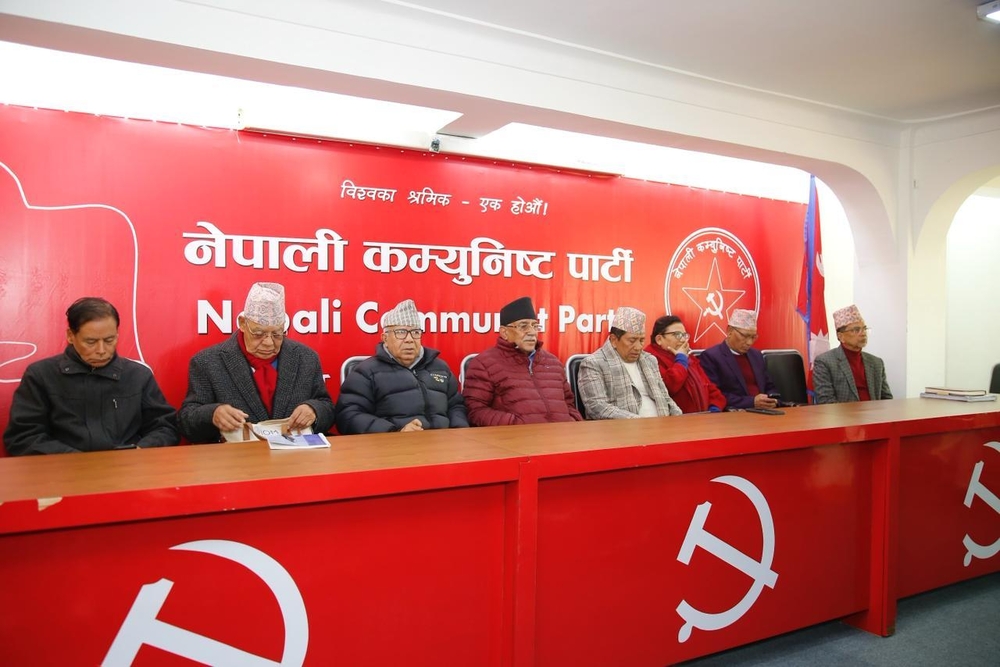
NCP claims to change policy and leadership from the general convention
Pushpa Kamal Dahal-led NCP is also preparing to hold a general convention in Asoj and elect a new leadership. Even though the NCP was formed by uniting with various leftist elements, the fraternal organizations are in the same state. The NCP has said that it will go to the general convention only after all those organizations are integrated. Despite the unity between the Maoists and the CPN-UML in the third week of Kartik, the mass organizations have not been integrated. The number of the central committee is 2,500. The 45-member central coordination committee is currently taking necessary decisions. The voice that the leadership should be restructured is also being raised loudly within the party. ‘Our main emphasis is to restructure the party policy and leadership from the general convention. After adjusting the organization from the party center to the local level, we will focus on the general convention,’ said CPN senior leader Barshaman Pun. He said that he will raise awareness about the government’s wrongdoings in parliament and launch an awareness campaign on the streets.
CPN coordinator Dahal has submitted a written report on the election to the central coordination committee and submitted a proposal for the upcoming program. ‘It is necessary to move forward by making a solid organizational map and action plan. The party needs to be transformed and operated in a transformed state,’ Dahal’s proposal states.
Dahal has announced a new organizational transformation of party organizations and party-affiliated mass organizations. He has announced that all organizations up to the party level will be integrated within a month and new organizations will be formed in places where there are none, and the organization will be expanded to all wards within three months.
The NCP has also adopted a policy of renewing party membership within three months and expanding to wards, municipalities, districts and provinces within five months. ‘The party’s unity national general convention will be held within the next six months,’ Dahal has proposed, ‘It is necessary to transform not only the party organization but also the leadership. For that, we should move forward by making a regular concrete action plan.’
Along with the integration and transformation of party organizations, a curriculum will be developed to conduct intensive theoretical/ideological training campaigns. According to the NCP’s socialist roadmap, preparations are underway to develop a curriculum by prioritizing the issues of the lower classes.
The NCP has stated that it will formulate a concrete action plan to improve the working style, lifestyle and conduct of its leaders and cadres, which it has always raised.
Leader Prakash Jwala said that a comprehensive program is necessary for the reform of the party organization. ‘It is necessary to formulate a concrete action plan related to policy, leadership and working style to rebuild the party,’ he said, ‘A review is being conducted accordingly.’
Madhesh-centric parties: Digging up old foundations
The Madhesh-centric parties, which have shrunk to zero in the House of Representatives, are busy with internal review. Before the elections, the Janata Samajwadi Nepal and the Loktantrik Samajwadi Party were united. JSP Nepal is engaged in the homework to complete it.
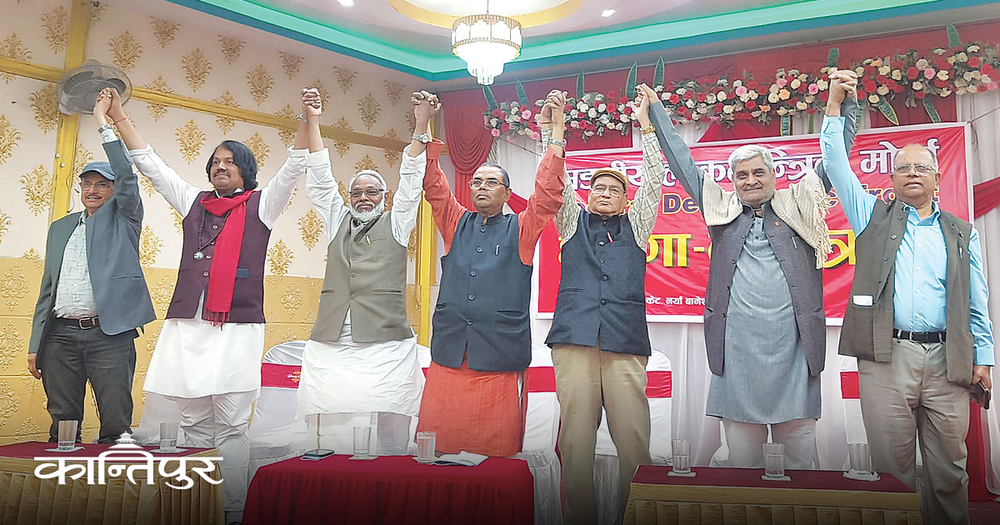
‘We will change the leadership by uniting all the committees of both parties and holding a conference,’ said leader Manish Suman, ‘We have started the reorganization from the lower committees.’ He also said that discussions are underway on forming a common front of the Madhesh-centric parties. ‘Let the Madhesh parties sit under one umbrella. Let us sit in favor of identity,’ Suman said. Out of 101 Madhesh Provincial Assembly members, 29 are from JSP Nepal. ‘The reason for our defeat is the Balen wave. We, the identity supporters, will be evaluated again,’ Suman said.
Janmat Party Chairman CK Raut said that he would take leave from his executive role, but he has become active again. General Secretary Chandan Singh said that he is preparing to launch a campaign on the issues of agriculture and discrimination in Madhesh. ‘Under the leadership of Chairman Rautji, we are preparing to go to the people again on the issues of Madhesh.’
Demand for a general convention in RPP too
A gathering held in Kathmandu on Sunday under the leadership of Rastriya Prajatantra Party (RPP) General Secretary Dhaval Shamsher Rana has demanded a general convention within the unity week.
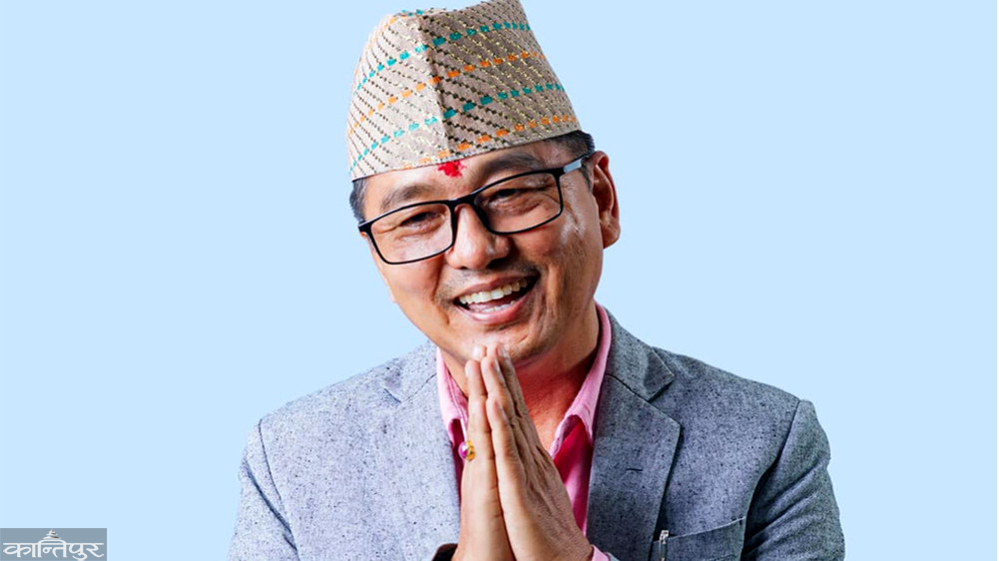
Chairman Rajendra Lingden has called a central working committee meeting on April 16 to discuss the general convention. Rana, on the other hand, has accused the leadership of not being ready to call the general convention.
The RPP had decided to postpone the general convention by six months before the Falgun 21 elections. The demand letter addressed to Chairman Lingden by the RPP faction states that a general convention organizing committee will be formed under the coordination of an impartial person to hold the central convention in a balanced and credible environment.
RPP spokesperson Mohan Shrestha said that the program will be decided according to the central working committee meeting. There is a dispute between Chairman Lingden and General Secretary Rana over raising the issue of ‘constitutional monarchy or active monarchy’ in the RPP.
Rajmo to raise issue of nationality
Rastriya Janamorcha (Rajmo), which has not won a single seat in the House of Representatives, is going to raise the issue of nationality from the streets. Leader Manoj Bhatta said that the party will hold a central committee meeting in Butwal next week to strengthen the organization and raise issues of the movement.
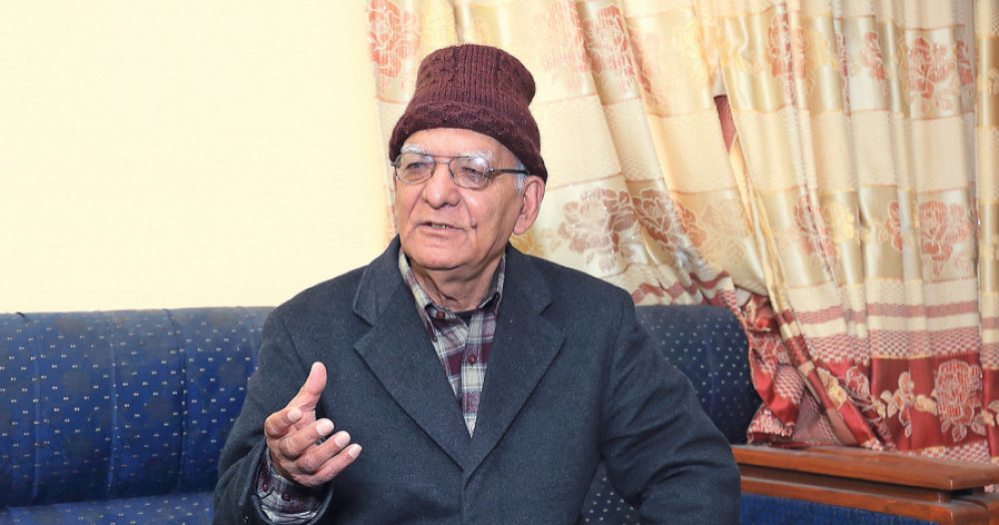
‘Even though we are not in parliament, we are preparing to raise the issue of nationality from the streets,’ he said. It has been opposing federalism during the constitution-making process.

