The chief ministers also complained about the correspondence sent by the Office of the Prime Minister and Council of Ministers to only give government advertisements to government media. They said this would curtail the rights of the provinces.
We use Google Cloud Translation Services. Google requires we provide the following disclaimer relating to use of this service:
This service may contain translations powered by Google. Google disclaims all warranties related to the translations, expressed or implied, including any warranties of accuracy, reliability, and any implied warranties of merchantability, fitness for a particular purpose, and noninfringement.
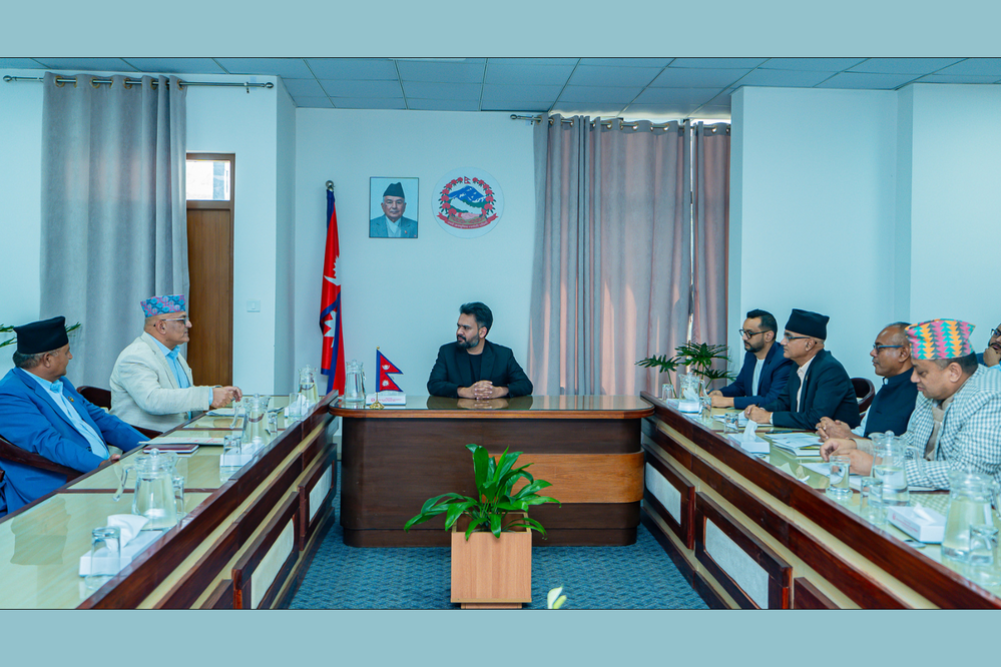
The Chief Ministers have demanded that Prime Minister Balendra Shah ensure the rights granted to the provinces by the constitution. They have also expressed dissatisfaction saying that the Union government is trying to limit the provinces to only an administrative structure.
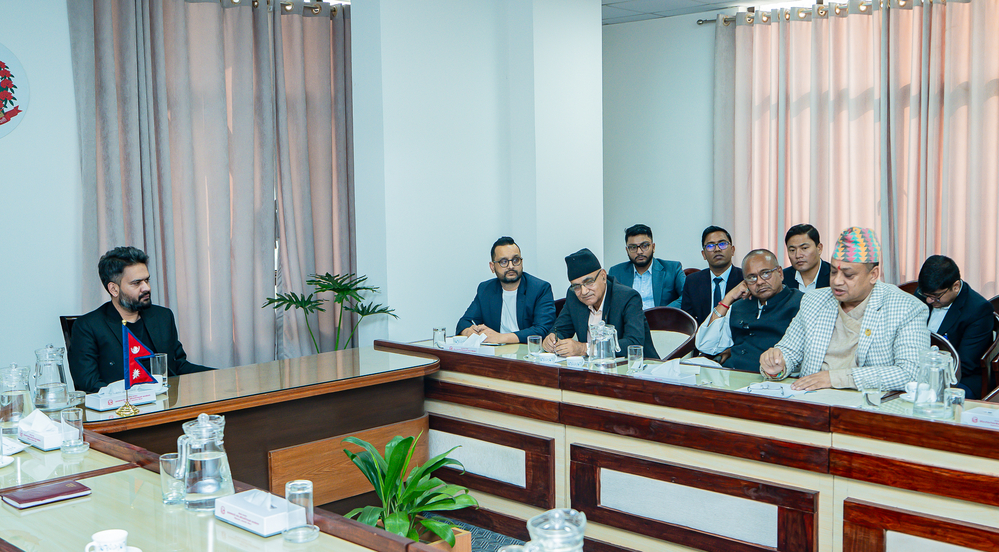
Prime Minister Shah listened to the expectations and complaints of the Chief Ministers for about three hours at the Office of the Prime Minister and Council of Ministers on Thursday. This is the first discussion that Shah had with the Chief Ministers after becoming the Prime Minister. During the discussion, Prime Minister Shah also assured that he would strengthen the provinces.
Addressing his first election rally in Janakpur on 25th Magh in Maithili, Shah had said that the provinces should be strengthened. He said that ‘Pradesh aro balgar banabeke hai’, meaning that the provinces should be further strengthened. This statement made his views on federalism and the provincial structure clear to a large extent.
 However, in the 2079 elections, there was some doubt about his view on the matter of the provinces as he did not vote for the provinces even though he voted in the House of Representatives in the elections held on the same day. The Chief Ministers who had similar doubts in their minds and met the Prime Minister have left happy with the Prime Minister's clarity and positive attitude towards federalism and the provinces.
After concluding the discussion with all the members of the House of Representatives, the Prime Minister held discussions with the Chief Ministers. Unlike the traditional style of speaking in turns according to 'protocol' and the Prime Minister speaking at the end, Prime Minister Shah presented himself in an 'interactive' style with the Chief Ministers. 'The Prime Minister did not show any doubts, suspicions or ambivalence regarding the provinces. We found him clear that the provinces should be strengthened,' said Gandaki Province Chief Minister Surendra Raj Pandey. 'Overall, the conversation was productive and clear. He said that he would not only listen to the issues we raised but also resolve them soon. We are optimistic.'
Koshi Chief Minister Hikmat Bahadur Karki and Sudurpaschim Chief Minister Kamal Bahadur Shah, who is in Delhi for treatment, were absent from the meeting due to family reasons. The Chief Ministers of Madhesh, Bagmati, Gandaki, Lumbini and Karnali informed the Prime Minister about the shortages and challenges faced by the provinces.
The Chief Ministers shared the view that the effectiveness of the provinces has not been seen because the Union has not made laws despite the constitution's authority. It has been 9 years since the provincial structure was put into practice. With the elections next year, the provinces are completing two terms of 5 years each. However, Chief Minister Pandey said that even after all this time, the attention of the Prime Minister has been drawn to the fact that the provinces have not been able to use the single right granted by the constitution.
The Chief Ministers also complained that the budget was not distributed by the Union as per the rights granted to the provinces by the constitution. On the contrary, they urged that the supplementary and special grants received by the provinces be reduced and that they should be improved. Pandey said that the grants given to the provinces were requested to increase while the Union government was preparing to bring the budget. Prime Minister Shah had assured that there would be no injustice to the provinces in the budget distribution.
The issue of state police and peace and security within the state was raised by all the Chief Ministers, but the state has no role in it. They urged that no federal government in the past has worked towards police integration and implemented it as soon as possible. ‘The responsibility of peace and security within the state lies with the state government. However, the state has not been given police. It has been years since the Police Integration Act was introduced. However, the federation does not want to implement it,’ said Madhesh Chief Minister Krishna Prasad Yadav. He told Kantipur that they had drawn the Prime Minister’s attention to the fact that the state should not be hindered or obstructed in exercising the powers granted by the constitution.
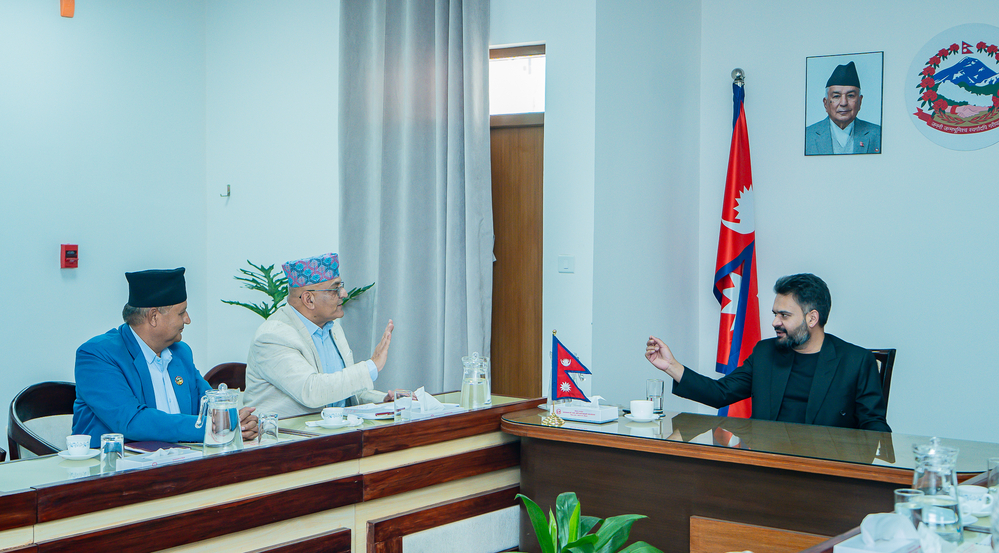 The Chief Ministers also raised issues such as the shortage of employees in the state and problems in recruitment, and problems facing the state in acquiring land. While the Chief Ministers were speaking, Prime Minister Shah tried to be more clear and also expressed his views. The Prime Minister has suggested that the Chief Ministers to take on the work by making clear performance agreements with the employees and to be strict in doing so.
The constitution provides for a three-tier governance structure, namely the federal, provincial, and local levels. The constitution has given all three levels the right to exercise state power. The constitution lists the individual and common rights of all three levels. The Office of the Prime Minister and Council of Ministers has clarified which level will do which work by expanding those rights in 2073 BS. However, since no law has been made, conflicts have occasionally arisen between the three levels regarding rights. The Chief Minister has also urged for legal arrangements regarding the elaboration of which level will do what work according to the rights specified in the constitution.
The constitution has provided for an inter-provincial council chaired by the Prime Minister for coordination between the federal and provincial governments. The Prime Minister has said that some issues will be formally resolved by calling a council meeting during the discussion. Similarly, the 100-point governance reform action plan introduced by Shah after becoming Prime Minister on 13 Chaitra states that a bill related to the civil service will be formulated within 45 days.
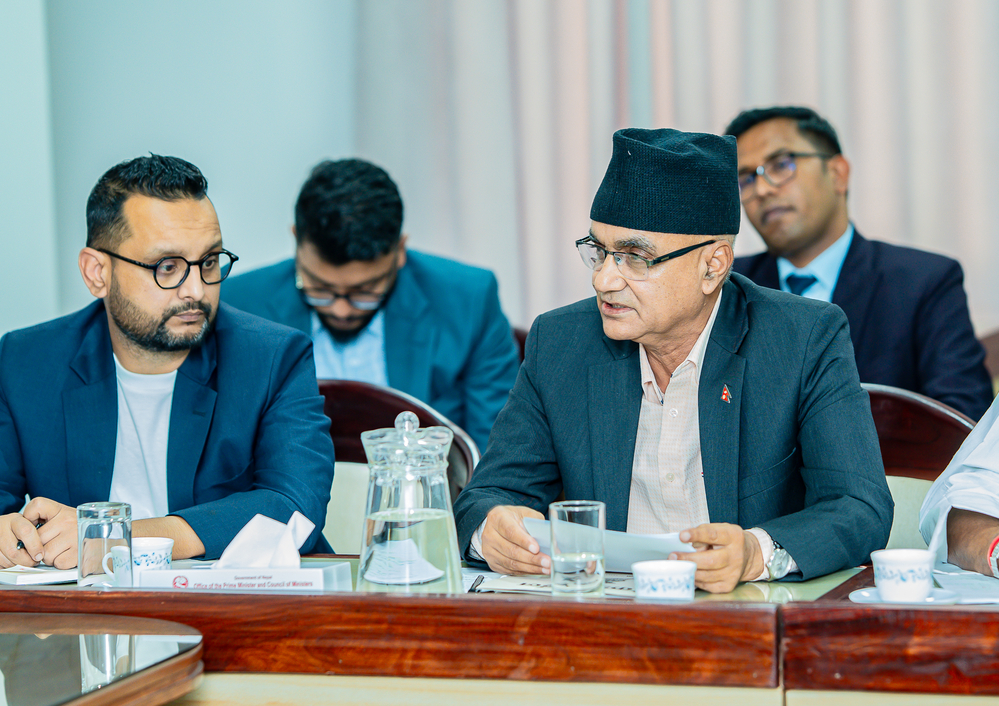
Lumbini Province Chief Minister Chetnarayan Acharya said that he has urged the Prime Minister to formulate laws related to civil service, education, police, land acquisition, forests, national parks, and public procurement, which are urgently needed to strengthen federalism and the province. ‘We have raised the issues and problems that have arisen in the implementation of the constitution due to the failure to enact laws on time,’ he said, ‘Some new laws will have to be made. Some amendments to existing laws are necessary.’ He said that he had two-way discussions with the Prime Minister on all issues. ‘The discussions have been very cordial. We are excited, and we are hopeful that the problems facing the province will be resolved soon,’ he said.
 The Chief Ministers also complained about the correspondence sent by the Office of the Prime Minister and Council of Ministers to give government advertisements only to government media. They said that this would curtail the rights of the provinces. The Chief Ministers also drew the Prime Minister’s attention to the delays in federal development projects being run within their provinces.
During the discussion, the Prime Minister said that the federal government and the provinces should work together to build the nation, informed the Prime Minister's press expert Deepa Dahal. "The Prime Minister has said that no one will be discriminated against in the budget, political issues will not be considered, and the budget will be distributed in a fair and equal manner," Dahal said.