The study committee recommended that the then Prime Minister Oli, Home Minister Lekhak, Police Chief Khapung, Chief District Officer Rijal, and others be investigated for taking action as per their responsibilities.
We use Google Cloud Translation Services. Google requires we provide the following disclaimer relating to use of this service:
This service may contain translations powered by Google. Google disclaims all warranties related to the translations, expressed or implied, including any warranties of accuracy, reliability, and any implied warranties of merchantability, fitness for a particular purpose, and noninfringement.
The National Human Rights Commission's study committee has concluded that the government used unnecessary force during the Gen-G movement on 23 Bhadra and recommended that action be taken against the then Prime Minister KP Sharma Oli and other responsible officials. The committee's conclusion is that action should also be taken against those involved in the demolition on 24 Bhadra. The commission formed to investigate the incidents of 23 and 24 Bhadra has also submitted its report to the government.
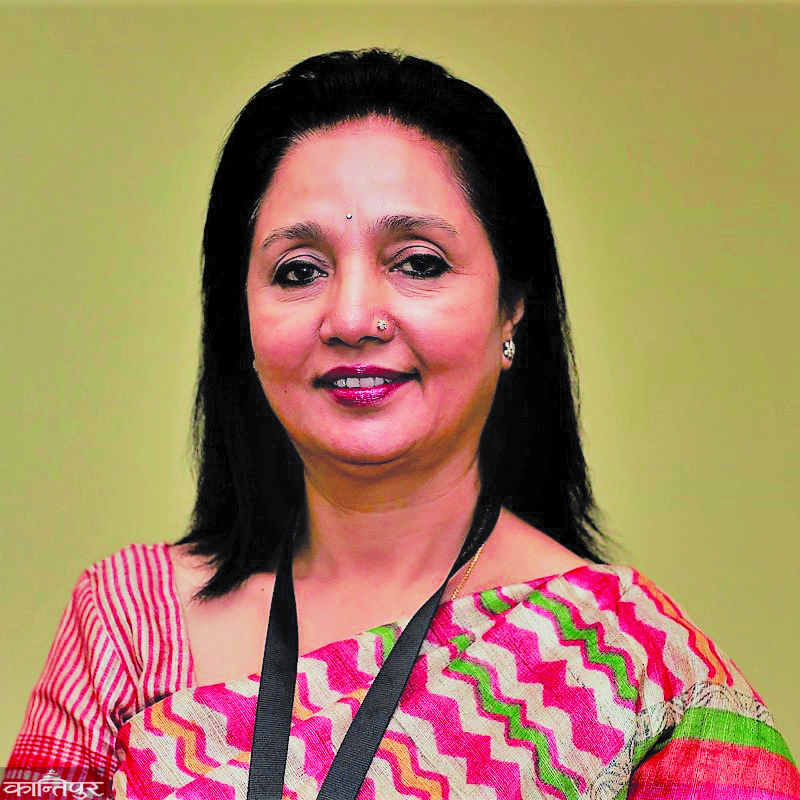
After the incidents of 23 and 24 Bhadra, the Human Rights Commission formed a committee led by member Lily Thapa to study the incident. The committee submitted its report to Commission Chairman Tapa Bahadur Magar on Friday. According to Commission spokesperson Tikaram Pokharel, the report will be made public after the commission meets next week and approves it.
The committee's report states that serious human rights violations occurred on 23 Bhadra. According to a member of the commission, the report recommends that legal action be taken against the then Prime Minister Oli, the then Home Minister Ramesh Lekhak, the then Inspector General of Police (IGP) Chandrakuber Khapung, the then Chief District Officer of Kathmandu Chhabi Rijal, and other officials in charge. The committee also said that the then AIG (currently IGP) Dan Bahadur Karki should be investigated.
We have recommended separate action against those involved in repression and destruction as per the law and constitution, the report will be made public after the commission approves it: Lily Thapa, coordinator, study committee The then AIG Karki was in charge of the Valley Police Chief on 24 Bhadra. The previous day, Om Bahadur Rana was in charge of the acting chief. “The committee has recommended investigation and action against many people in charge, from the then Prime Minister to the lower levels,” said a member of the commission. “Some have been told to file a case against some, while others have been recommended to take general action.”
During the study, the committee took statements from the National Security Council, Central Security Committee, District Security Committee, organizers of the 23 Bhadra movement, security personnel deployed on both days, etc. The then mayor of Kathmandu Metropolitan City, Balendra Shah, was also questioned.
‘We have recommended separate action against those involved in repression and destruction as per the law and constitution. The report will be made public after the commission approves it next week. It is not possible to comment on it right now,’ said Thapa, coordinator of the study committee.
The committee stated that 546 people were questioned during the study. The committee analyzed CCTV footage and ‘forensic-ballistic reports’. According to a member of the committee, 400 video footage was analyzed.
The committee has also stated that it has studied the use of security forces and who is responsible. According to a member of the committee, the study of the 23 Bhadra incident focused on where and how the bullets landed, and whether there was a need to fire the bullets. ‘We studied who was involved in the destruction of 24 Bhadra,’ he said.
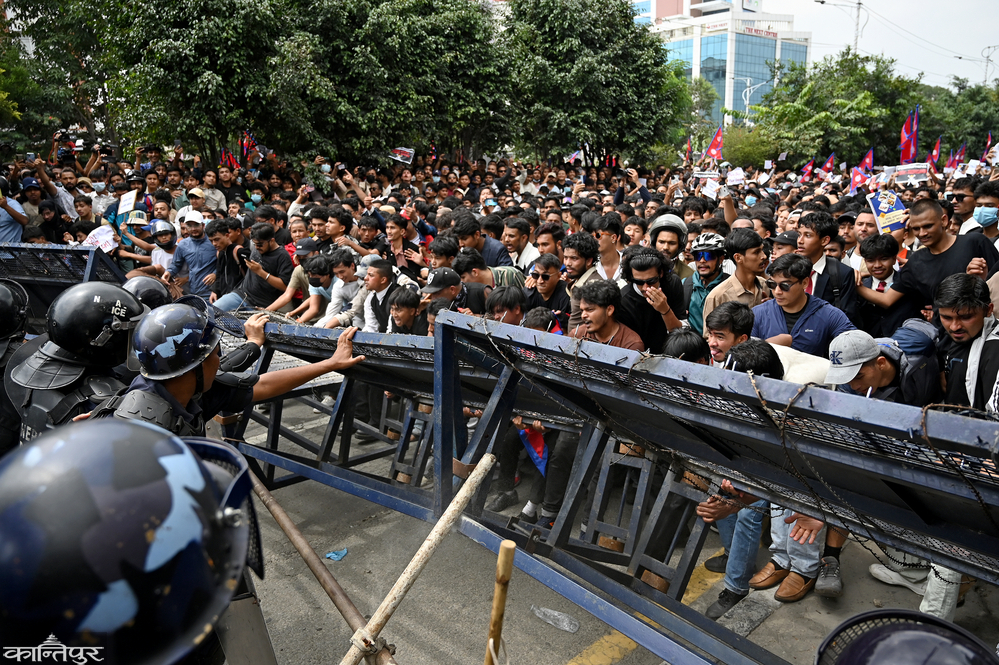
According to the committee, it has been found that unnecessary shots were fired on 23 Bhadra. The committee has mentioned in its report that chaos spread the next day due to the repression of 23 Bhadra. ‘Although the demonstration was peaceful in the morning of the first day of the demonstration, it has been seen that some protesters died due to arson and shooting at protesters after noon, and the incident turned violent,’ the report said.
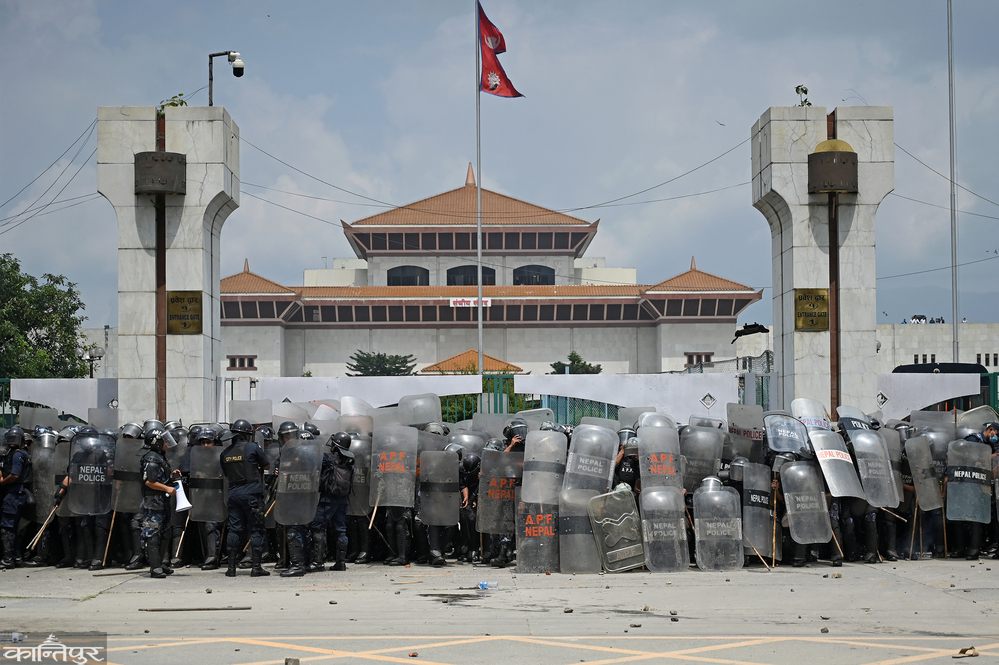
The committee has recommended that those involved in arson and vandalism in government and private buildings, media outlets, and commercial areas such as shopping centers be brought under the ambit of action. The committee concluded that the government misjudged the movement and caused great damage on Bhadra 23. The commission had also issued a statement on Bhadra 23, stating that excessive force was used against the protesters.
While the government formed a commission led by former judge Gauri Bahadur Karki to investigate the incidents of Bhadra 23 and 24, the Human Rights Commission had also formed a separate committee to study them. The report submitted to the government by the commission on Falgun 24 has not yet been made public.
Officials questioned
– KP Sharma Oli, then Prime Minister
– Ramesh Lekhak, then Home Minister
– Arju Rana Deuba, then Foreign Minister
– Prithvisubba Gurung, then Minister of Communications
– Manveer Rai, then Minister of Defense
– Balendra Shah, then Mayor, Kathmandu Mahanagar
– Eknarayan Aryal, then Chief Secretary
– Gokarnamani Duwadi, then Home Secretary
– Image Rizal, then CDO of Kathmandu
– Chandrakuber Khapung, Former Inspector General of Police
- Dan Bahadur Karki, Inspector General of Police
- Raju Aryal, Inspector General of Armed Police
- Hutraj Thapa, then head of the National Investigation Department
- Nepali Army representative
- Gen-G activists (including Purushottam Yadav, Sudhan Gurung, Raksha Bam and Jasmin Ojha)
- Gen-G movement Injured including

